Ch. 8 Water movements
Lake Mixing Classification
Dimictic Lakes: mix twice a year
spring and fall overturn
Holomictic Lakes: mix totally sometimes
Amitic Lakes: permanently sealed off by ice = no wind and no mixing
Cold Monomictic Lakes: circulate once per year; Tmax is less than 4oC
mix once a year when ice is gone
no stratification in spring or fall
Warm Monomictic Lakes: circulate once per year; Tmin is greater than 4oC
no ice cover
very stratified because of heat
when cooled the wind will mix
Oligomictic Lakes: rarely circulate; Tmin is very much greater than 4oC
under intense heat all year long
very rare that the lake will mix
Polymictic Lakes: many mixings per year
shallow lakes = wind can mix lake very easily many times
Meromictic Lakes: part of the water column almost ‘never’ mixes because they have a deep level of salt layer
Chemical Stratification
Dissolved chemical substances (e.g. salts) can greatly affect the density of lakes (much more than temperature)
doesnt take too much salt to change the density
Ex. floating in the Dead Sea because of the high salinity and the dense water
Salinity and Density
a salt concentration of 1g/L increases the density of water by about 0.0008
a change in temperature between 4oC and 5oC changes the density of water about 0.000008
So, there are about 2 orders of magnitude (100x) more change with the increase in salinity
Water of higher salinity is more dense = water will sink
Meromictic Lakes
Meromictic lakes contain a dense chemical gradient
Monimolimnion layer: lower, more dense, concentrated, deep portion of the lake that almost never mixes
will not get oxygen
major habitat of bacteria (NO higher eukaryotes because of no oxygen)
Mixolimnion layer: upper, less dense part of the lake that mixes like a regular dimictic lake
Chemocline layer: zone/barrier marking the chemical gradient between the mixolimnion and the monimolimnion
Lakes that have bigger depths are more susceptible to meromixis, whereas lakes with minimal depth are less susceptible
Lakes that have some sort of barrier around the lake (like trees or tall buildings) will be more susceptible to meromixis because the barrier does not let wind get through to mix the lake
Chemical Meromixis
For meromixis to occur, they need 3 sources of salts to set up the chemical gradient:
1) Ectogenic meromixis: external source of dissolved material (salts)
e.g. salts coming from outside the lake
ex. marine incursions (lakes near the ocean) or human activities that add salt to lakes (salting icy roads)
2) Crenogenic meromixis: chemical gradient from saline spring
groundwater can be salty because the longer the water satys in contact with the rocks at the bottom of groundwater, the more salt will be added to the lake
3) Biogenic/Endogenic meromixis: formed by processes within the lake basin, from biological sources
e.g. when organisms die in the lake, they release the salt contents within their body when decomposed, adding more salt into the deep waters of the lake when they sink
Surface Water Movements
Surface Waves (progressive waves)
mainly affects near-shore environments
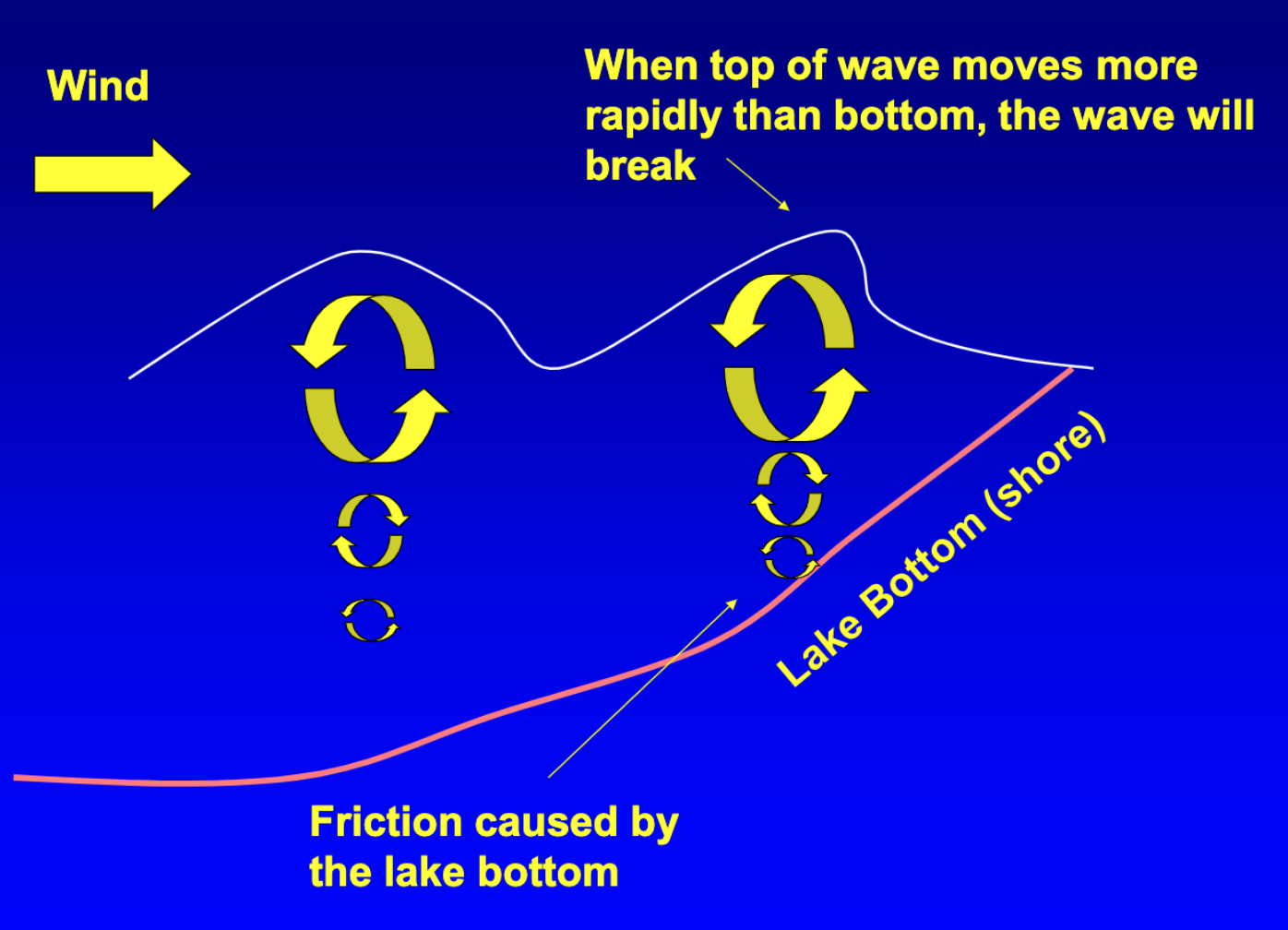
once the waves break at the bottom of the shore they will affect deeper waters
ex. wave erosion
Surface Currents
generated by external sources
ex. Coriolis effect - northern hemisphere waters shifts to the right
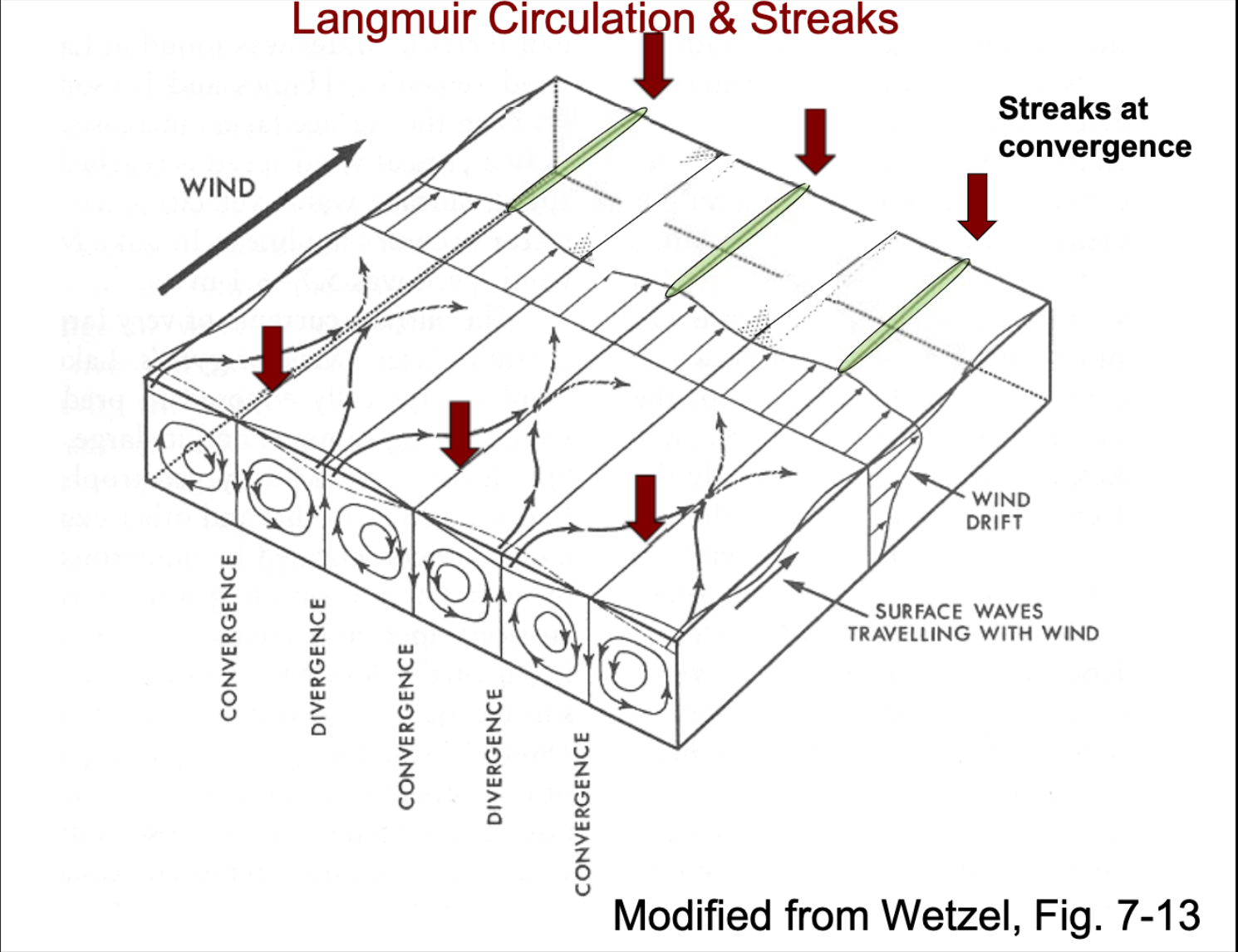
Langmuir Circulation & Streaks
when the wind blows it will mix as deep as the epilimnion layer goes, then streaks will be caused by convergence and collect algae and other particles
Internal Wave Movements
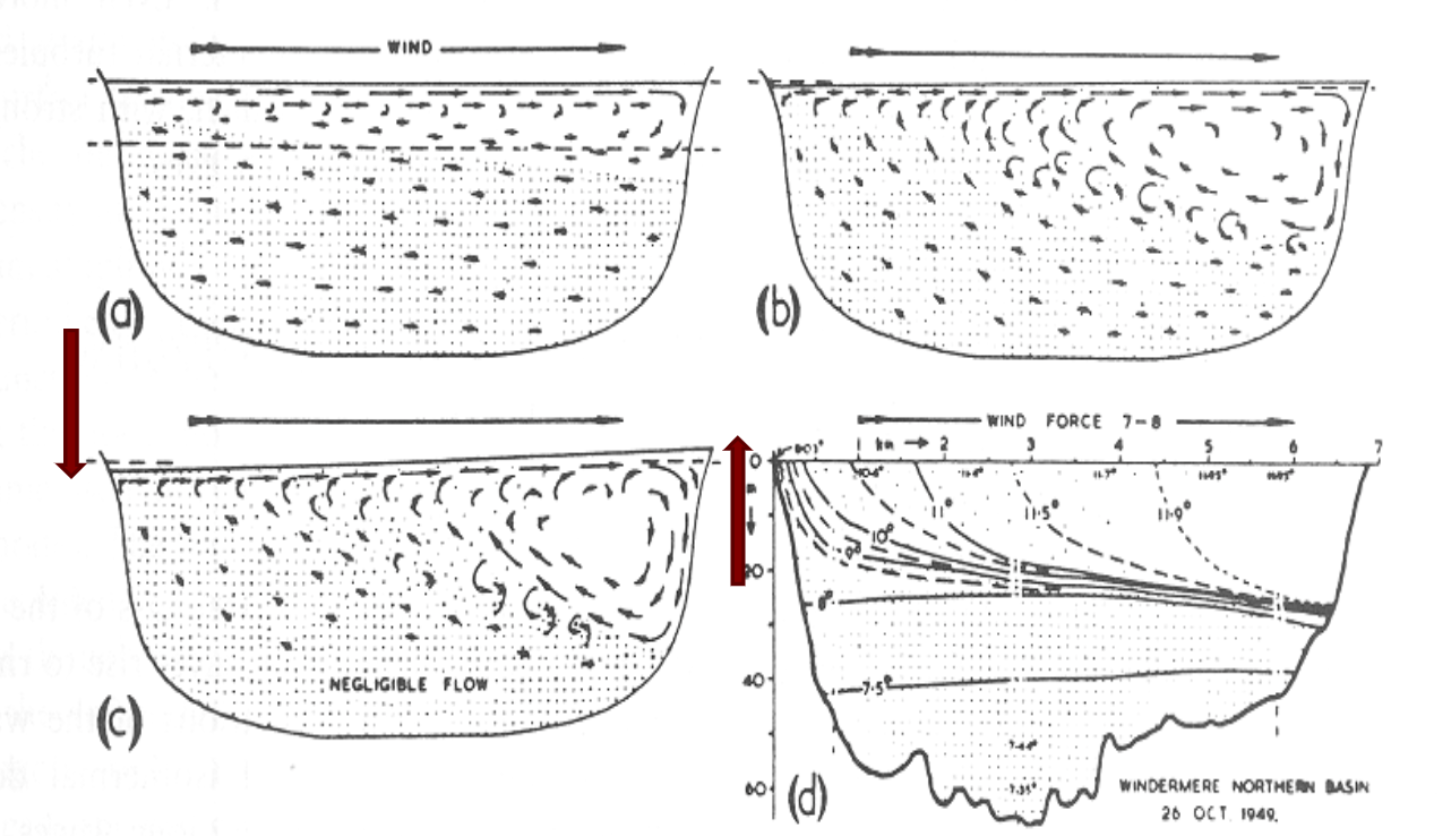
Water movements affecting the whole lake:
Surface seiche
wind is pushing water on one side of the basin (drying out one side of the land)
when wind stops it comes back and does it to the other side (goes back and forth)
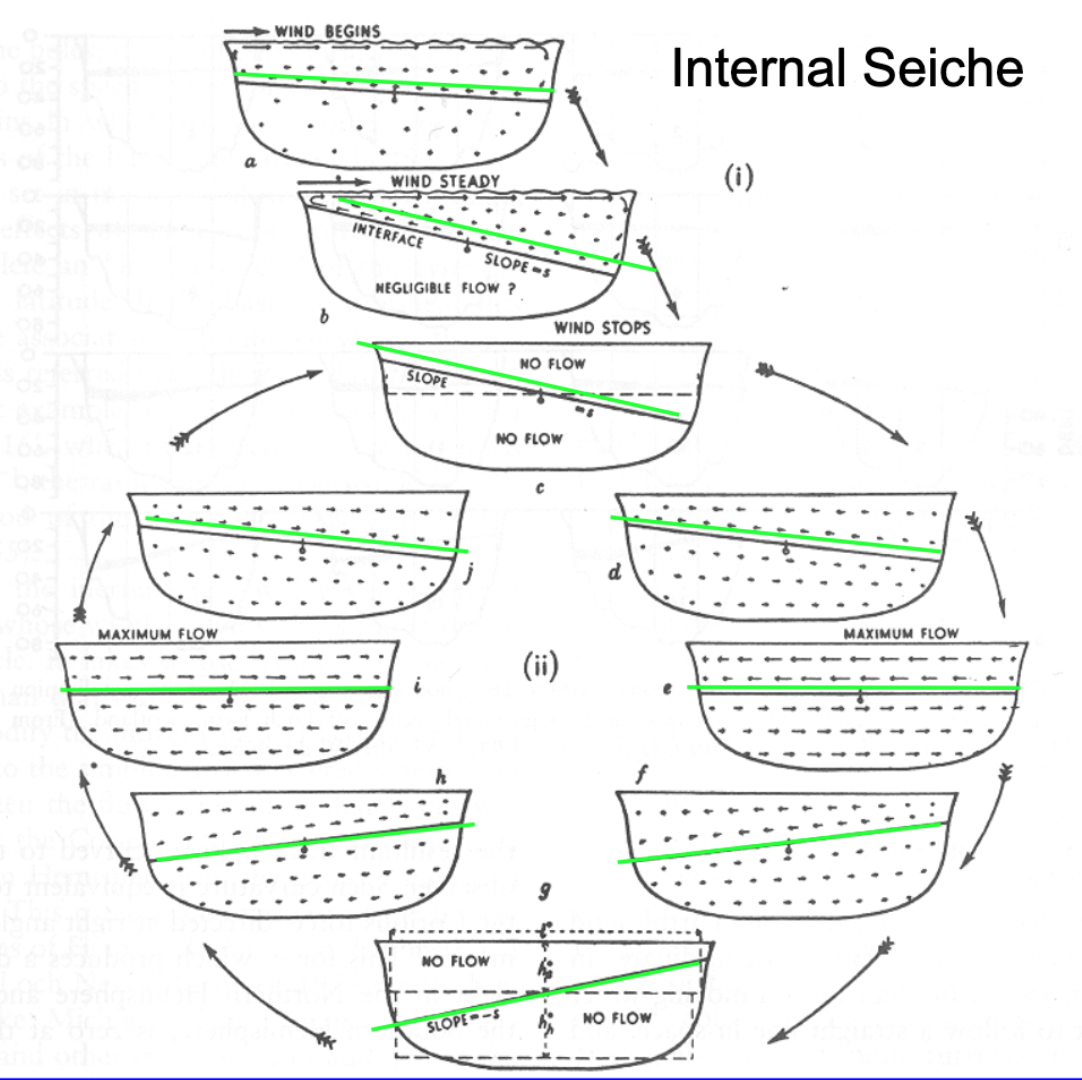
Internal seiche
piles water on one side under water at the thermocline
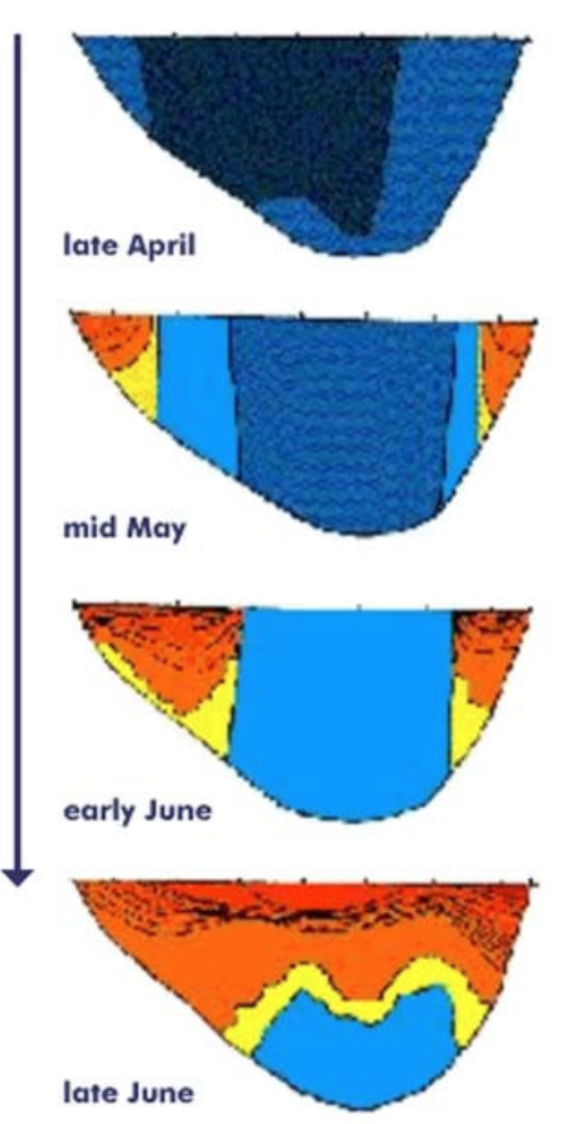
Thermal bars
occurs during spring progression
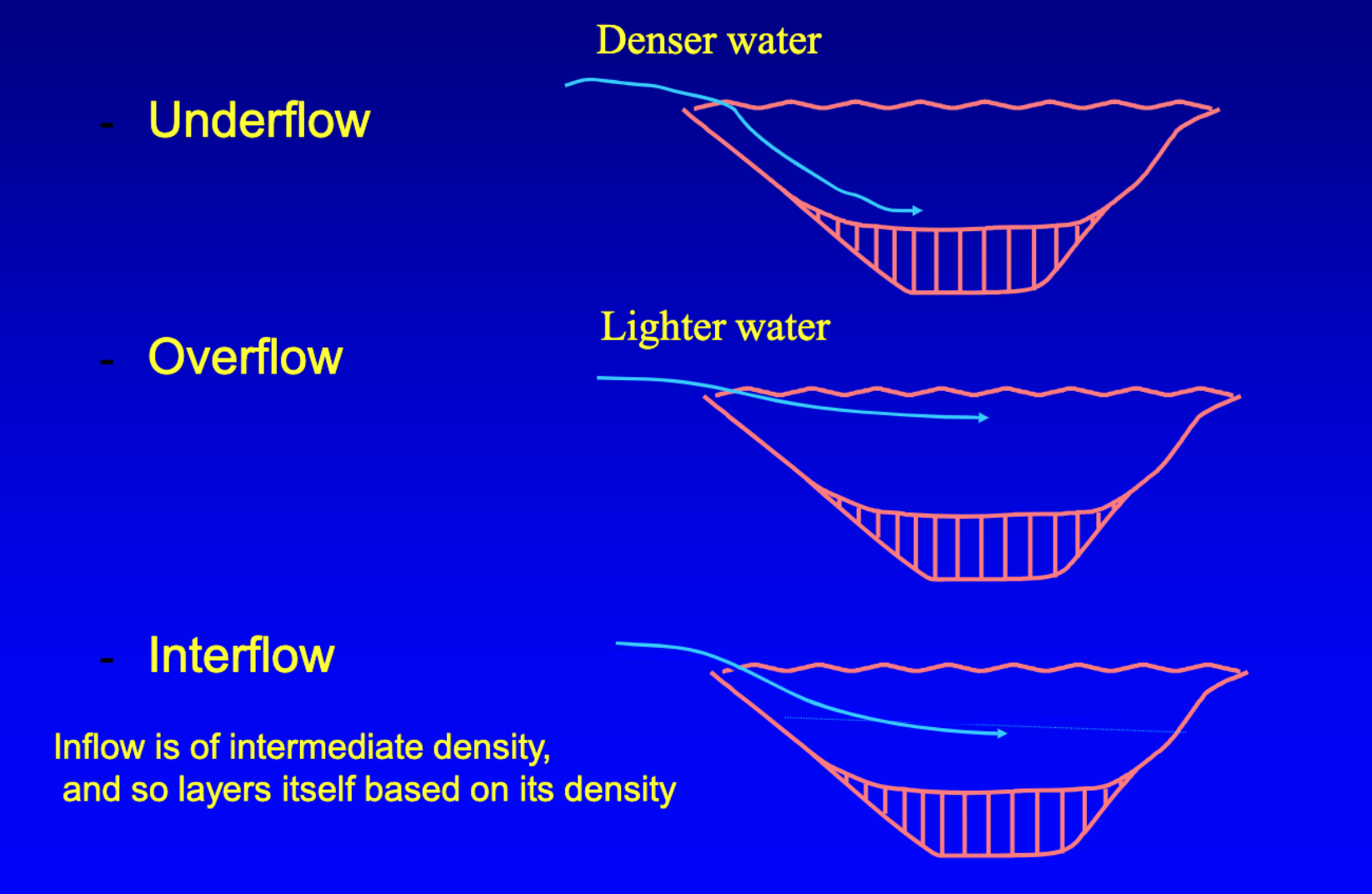
Influence of rivers
Currents under ice
typically minor, but some currents may occur
slow currents occur die to release of heat from sediments (convective currents)
most of this heat was accumulated during the previous summer