Chapter 16 - Therapy and Treatment
History
Treatment in the Past
Medieval Europe:
Exorcism
Trephining (drill hole in skull, usually results in death)
Imprisonment
Execution
1400-1600 (Witch Hunts)
The Rise of Asylums and the Call for Reform
18th century
Philippe Pinel
He suggested that they be unchained and talked to, and that’s just what he did for patients at La Salpêtrière in Paris in 1795. Patients benefited from this more humane treatment, and many were able to leave the hospital.
19th century
Dorothea Dix
Willard Psychiatric Center
Medical Advances and Deinstitutionalization
Mental Retardation Facilities and Community Mental Health Centers Construction Act (1963)
Deinstitutionalization
The closing of large asylums, by providing for people to stay in their communities and be treated locally.
Current Times
The Current State of Mental Health Treatment
Voluntary Treatment:
something the person WANTS to do to get mental health treatment
means the person chooses to attend therapy to obtain relief from symptoms.
Involuntary Treatment:
forced by courts, etc
therapy that is not the individual’s choice.
Modern Treatment Setting Types
School counselor
School psychologist
School social worker
An incarcerated person might receive group therapy in prison.
Mental Health Parity and Addication Equity Act (2008)
There are still Gaps, still access issues
Still a lot of funding issues
Deinstitutionalization
Incarceration
Unhoused Individuals
Types of Therapy
Psychotherapy
A psychological treatment
Employs various methods to help someone overcome personal problems, or to attain personal growth.
Focuses on how the unconscious mind and childhood conflicts influence current behavior.
Ex) Discussing past experiences to uncover hidden patterns.
Biomedical therapy
A medical treatment
Involves medication and/or medical procedures to treat psychological
disorders
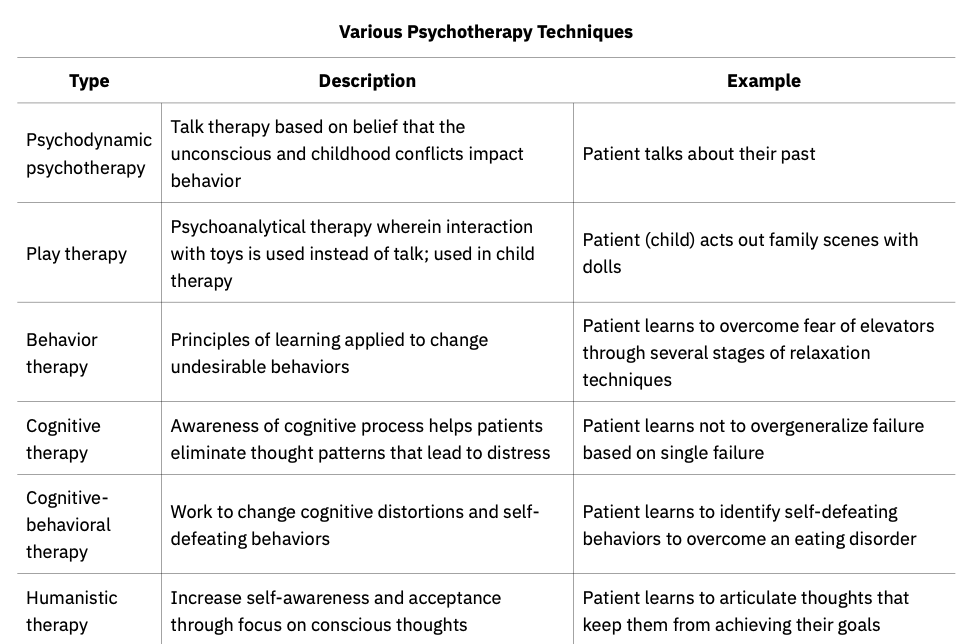
Psychotherapy Techniques:
Psychoanalysis
Therapists help their patients look into their past to uncover repressed feelings.
Free Association
the patient relaxes and then says whatever comes to mind at the moment.
Dream Analysis
a therapist interprets the underlying meaning of dreams.
Transference
the patient transfers all the positive or negative emotions associated with the patient’s other relationships to the psychoanalyst.
Play Therapy
Usually with kids
Uses toys and interaction rather than traditional talk; primarily for children.
EX) A child using dolls to act out scenes from their home life.
Non-directive Play Therapy
Children are encouraged to work through their problems by playing freely while the therapist observes
Directive Play Therapy
The therapist provides more structure and guidance in the play session by suggesting topics, asking questions, and even playing with the child
Behavior Therapy
A therapist employs principles of learning to help clients change undesirable
behaviors, rather than digging deeply into one’s unconscious.
Uses learning principles (like conditioning) to replace undesirable behaviors.
Ex) Using relaxation techniques to systematically overcome a phobia.
Classical Conditioning Techniques:
Counterconditioning: a client learns a new response to a stimulus that has previously elicited an undesirable behavior
Aversive Conditioning: uses an unpleasant
stimulus to stop an undesirable behavior.
Exposure Therapy: a therapist seeks to treat clients’ fears or anxiety by presenting them with the object or situation that causes their problem, with the idea that they will eventually get used to it.
Systematic Desensitization: Using this method, a person creates a hierarchy of anxiety, ranging from the least-anxiety-producing stimulus to the feared object.
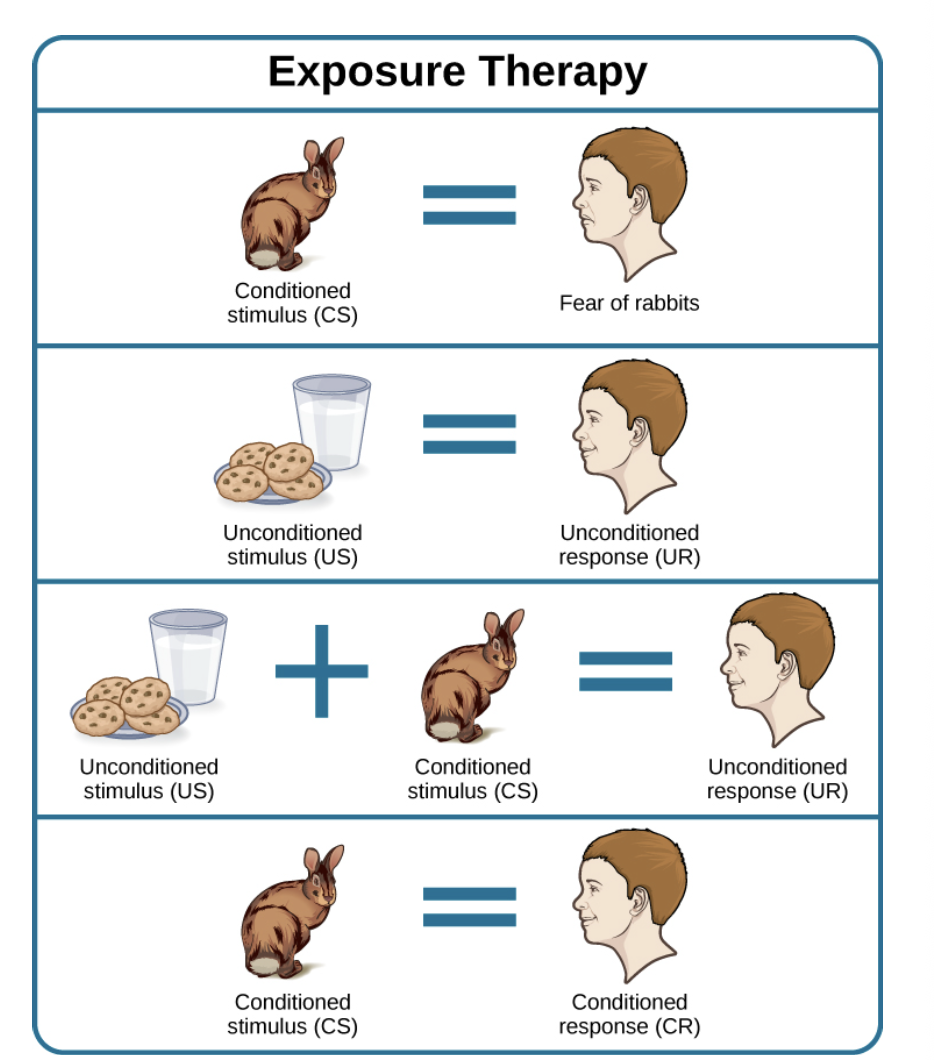
Operant Conditioning Techniques:
Token Economy: involves a controlled setting where individuals are reinforced for desirable behaviors with tokens, such as a poker chip, that can be exchanged for items or privileges.
Cognitive-Behavioral Therapy (CBT)
helps clients examine how their thoughts affect their behavior. It aims to change cognitive distortions and self-defeating behaviors.
A form of psychotherapy that focuses on how a person’s thoughts lead to feelings of distress
A hybrid approach aimed at changing both cognitive distortions and self-defeating behaviors.
EX) Identifying triggers and behaviors to manage an eating disorder.
ABC Model
A - Activating Event
B - Beliefs about event
C - Consequences
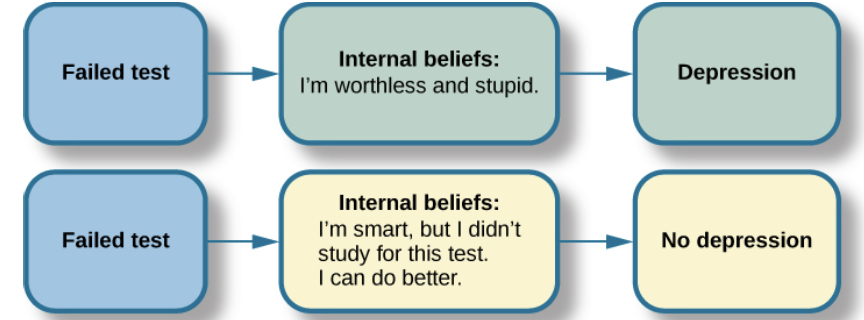
Common Cognitive Distortions
All or nothing thinking
Overgeneralization
Jumping to conclusion
Cognitive Therapy
Focuses on identifying and eliminating distorted thought patterns that cause distress.
Ex) Learning to stop overgeneralizing a single failure as a total defeat.
Rational emotive therapy (RET):
Form of cognitive-behavioral therapy
Humanistic Therapy
to help people become more self-aware and accepting of themselves
Emphasizes self-awareness and acceptance by focusing on conscious thoughts and future goals.
EX) Learning to articulate internal barriers to personal achievement.
Rogerian, or client-centered therapy
Active listening
Unconditional Positive Regard
Genuineness and Empathy
Biomedical Therapies
Psychotropic Medications
Antidepressants
Mood Stabilizers
Antipsychotics
Other Biomedical Treatments:
Electroconvulsive Therapy (ECT)
can cause short term memory
involves using an electrical current to induce seizures to help alleviate the effects of severe depression
Transcranial Magnetic Stimulation (TMS)
Medications are often paired with therapy for treatments!!
Medication can have side effects such as: weight gain, drooling, etc that makes the patient NOT want to continue medication.
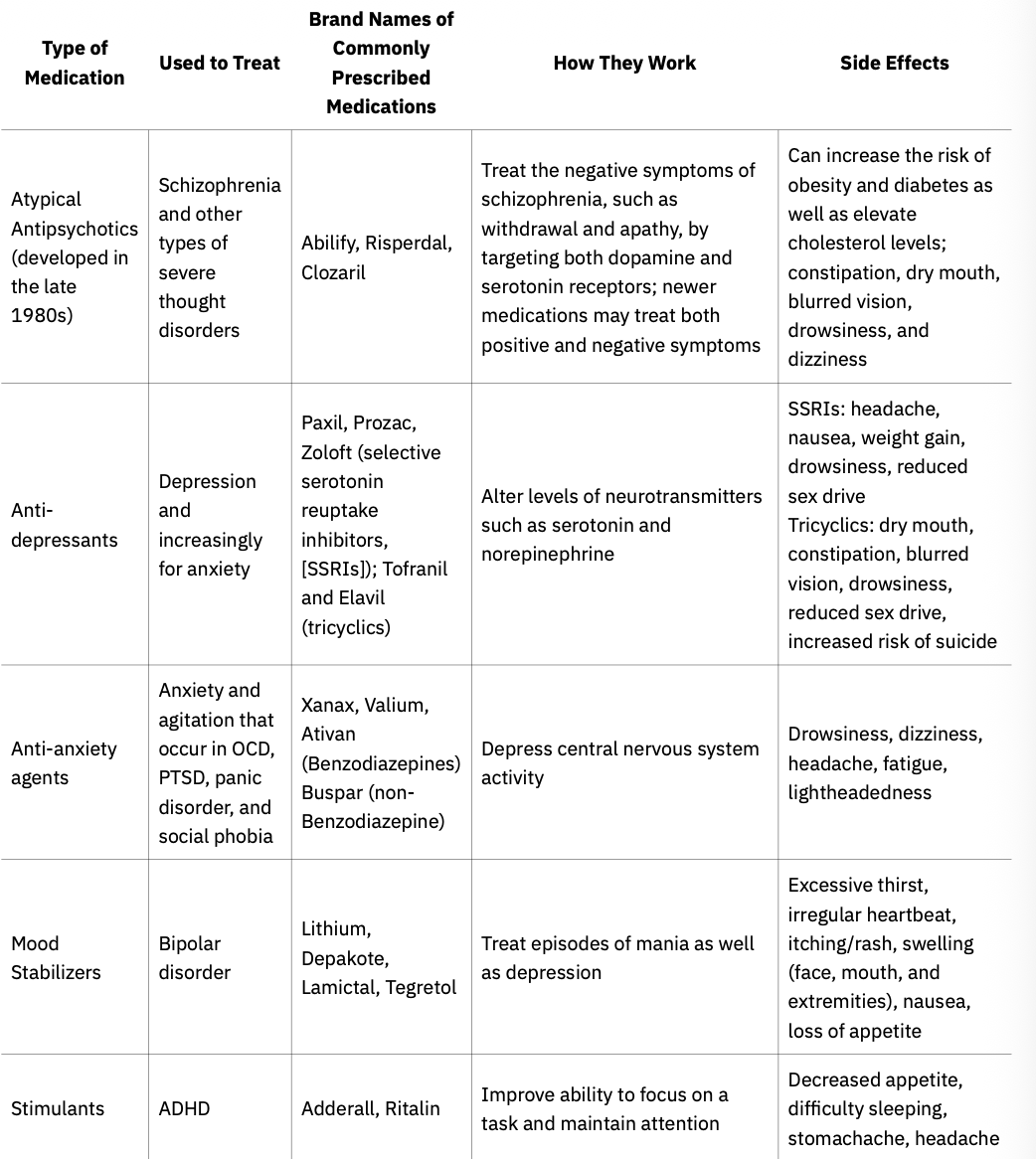
Type of medication
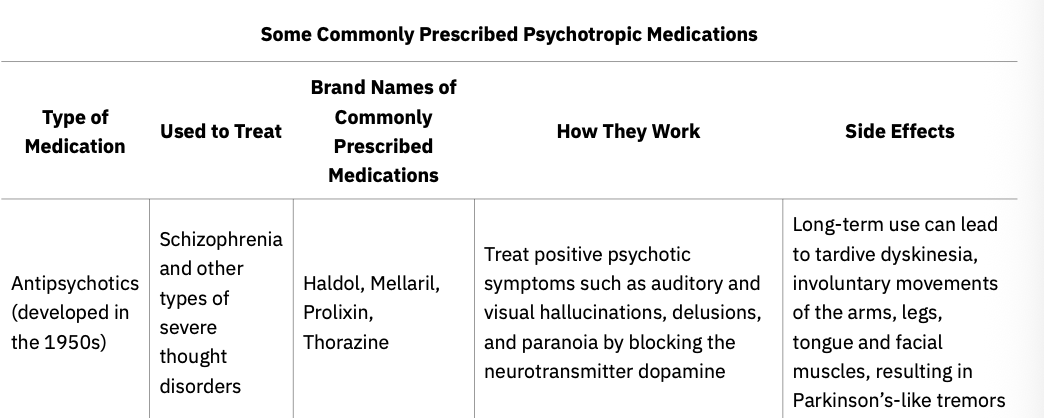
antipsychotic medications
Used to treat schizophrenia and other severe thought disorders by blocking the neurotransmitter dopamine.
Long-term use may cause tardive dyskinesia, characterized by involuntary movements and tremors similar to Parkinson's disease.
Atypical Antipsychotics
Used for Schizophrenia and severe thought disorders
Side effects: Obesity, diabetes risk, high cholesterol, dry mouth
Anti-depressants
Used for Depression and anxiety
Side effects: Nausea, weight gain, drowsiness, risk of suicide (Tricyclics)
Anti-anxiety Agents
Used for Anxiety, OCD, PTSD, panic disorder
Side effects: Drowsiness, dizziness, fatigue, lightheadedness
Mood Stabilizers
used for Bipolar disorder
Side effects: Excessive thirst, irregular heartbeat, nausea, loss of appetite
Stimulants
used for ADHD
Side effects Decreased appetite, difficulty sleeping, headache
Treatment Modalities
The therapy intake process and the types
Individual Therapy
also known as individual psychotherapy or individual counseling
Helps you take about goals and changes in life
Clients can attend a few sessions or more long term
Helps you understand your emotions and reactions
Group Therapy
Common topics:
Greif
Divorce
Eating disorders
Substance abuse
Anger management
Benefits
Helps with social skills
Members can confront each other about their patterns
Helps make client feel less shame about their condition
Limitations
Concerns about confidentiality
Arguments among group members
Couples Therapy
involves two people in an intimate relationship who are having difficulties and are trying to resolve them
non bais
Couples meet with a therapist to discuss conflicts and/or aspects of their relationship that they want to change.
Family Therapy
Special type of group therapy
Dysfunctional patterns of communication that develop between family members can lead to conflict
Sometimes one specific member can cause influence on other members with their behavior (substance use, alcohol, behavior in general, etc)
Structural family therapy:
focuses on boundaries and rules
who makes the rules, who sleeps in the bed with whom, how decisions are made, and what are the boundaries within the family.
Strategic family therapy:
More time limited and goal structured
Address specific problems within the family that can be dealt with in
a relatively short amount of time.
Addiction and Treatments Modalities
Addiction is NOT moral failing, rather chronic disease
Treatments Goals and Approaches
To stop long term substance use
Treating both biological and psychological
Treatment typically involves:
Behavior therapy
Medication
What makes treatment effective
typically a month but its not enough most of the time
Treatment also usually involves medications to detox a person with addiction safely after an overdose, to prevent seizures and agitation that often occur in detox, to prevent reuse of the drug, and to manage withdrawal symptoms
Group therapy is the most effective!
Sometimes have to cut off people that influence addition
Treatment modalities and medications
Comorbid Disorders: means the individual has two or more diagnoses
Some medication can be addictive
Everyone different, so treatment is different for everyone (can be effective for some and not for others)
The Sociocultural Context
Culture plays a HUGE rule!!!
Cultural Competence
Ability to understand and respect clients cultures, race and background
Multicultural counseling and therapy
Aims to offer both a helping role and process that uses modalities and defines goals consistent with the life experiences and cultural values of clients.
Barriers to treatment:
Perceptions and stigma
Discrimination against minorities
Prejudice and shame
Doubt about therapy
Concerns about confidentiality, shame, etc
language
availability of culturally sensitive
Time, insurance, transportation, etc