Comprehensive Review: The Global Tapestry (1200–1450) — The Americas, Africa, and Europe
State Building in the Americas
During the period of 1200–1450, the Americas witnessed the rise and consolidation of massive, sophisticated empires and complex societies. Unlike Afro-Eurasia, these developments occurred in isolation, without large pack animals (horses/oxen were absent) or iron metallurgy.
1. North American Cultures
While often less centralized than their southern counterparts, North American societies built complex trade and settlement networks.
- Mississippian Culture:
- Centered in the Mississippi River Valley.
- Cahokia: The largest earth/mound-building city (near modern St. Louis), acting as a massive trading hub.
- Matrilineal Society: Social standing was determined by the woman's side of the family.
- Southwestern Cultures (Chaco & Mesa Verde):
- Adapted to the arid climate by building multi-story homes into cliff sides using sandstone and bricks.
- faced decline by the late 13th century due to climate shifts.
2. The Aztec Empire (The Mexica)
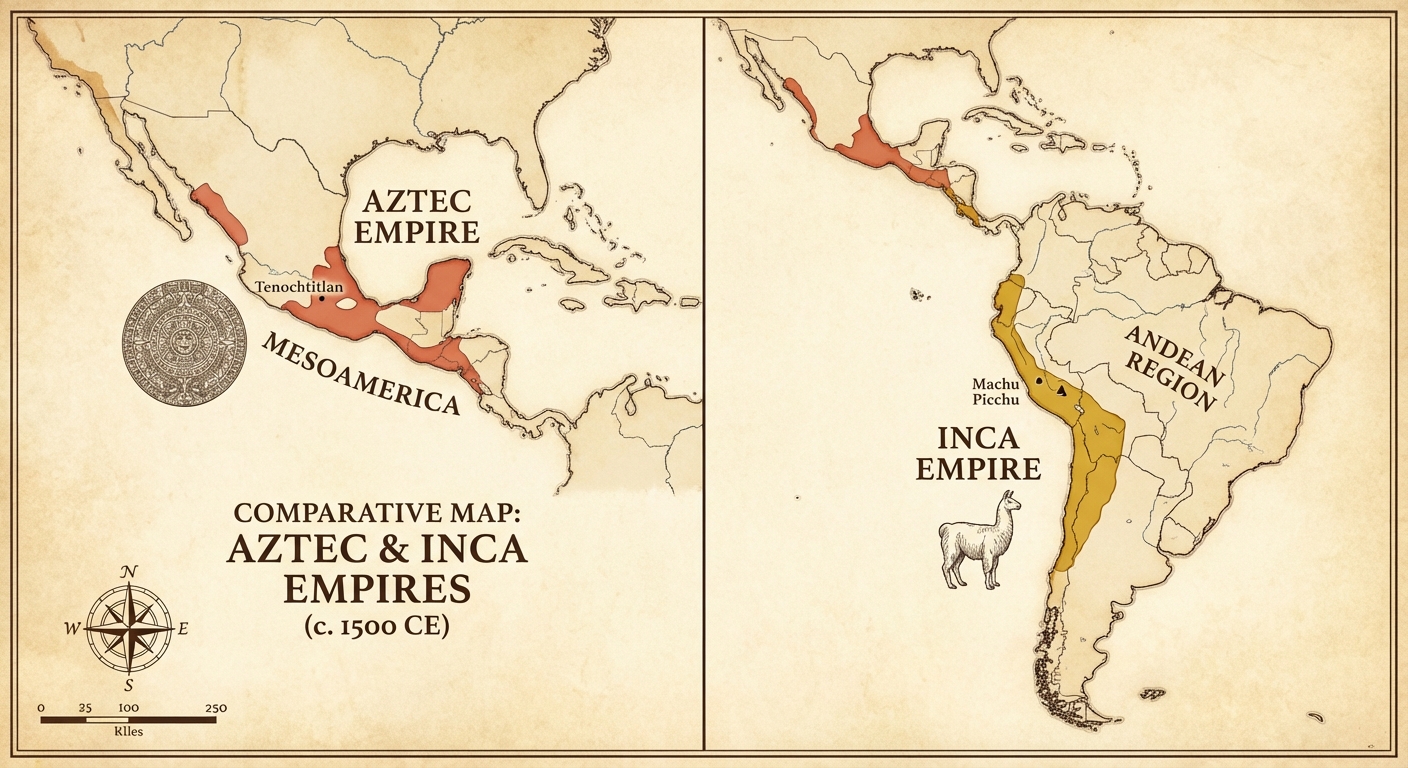
Originally hunter-gatherers, the Mexica founded Tenochtitlan (modern Mexico City) in 1325 and established a powerful empire in Mesoamerica.
- Political Structure:
- The Tribute System: The Aztecs ruled loosely. Conquered people were forced to pay tribute (goods, food, luxury items, and sacrificial victims) and surrender land. This allowed political dominance without direct administrative control, but it bred resentment among subject peoples.
- Theocracy: The Emperor (Great Speaker) was the divine representative of the gods.
- Technology & Agriculture:
- Chinampas: Artificial floating islands built in the middle of the lake to increase agricultural space and efficiency. This allowed for year-round farming.
3. The Inca Empire
Located in the Andes Mountains (South America), the Inca established a highly centralized state extending from modern-day Ecuador to Chile.
- Political Administration:
- Unlike the Aztecs, the Inca incorporated conquered people into the empire using a centralized bureaucracy.
- The Mit'a System: A mandatory public service system. Instead of paying tribute in goods, men between 15-50 provided labor (farming, road building) to the state. (Note: The Spanish later adopted and abused this system).
- Innovations:
- Carpa Nan: A massive roadway system (25,000 miles) used by the military and runners to send messages.
- Quipu: A system of knotted strings used to record numerical information (census, trade data) in the absence of written language.
- Waru Waru: Agricultural technique raising beds with channels to capture rain and prevent soil erosion.
State Building in Africa
African state-building in this era was diverse, ranging from kin-based networks to powerful empires connected to the global economy through the Indian Ocean and Trans-Saharan trade.
1. Political Structures
- Kin-Based Networks: Many sub-Saharan communities did not have a central imperial power. Instead, families governed themselves. A male head usually mediated conflicts.
- Limitations: As populations grew after 1000 CE, kin-based networks became difficult to sustain, leading to increased competition and larger kingdoms.
2. West Africa: The Hausa Kingdoms
- A collection of city-states (modern Nigeria) established by the Hausa people.
- Decentralized: No single central authority; states were loosely connected by kinship.
- Trade: Benefited immensely from the Trans-Saharan Trade network. Kano became a major trading hub for salt, cloth, and leather.
3. East & Southern Africa
- Great Zimbabwe:
- Dominant kingdom in Southeast Africa (modern Zimbabwe).
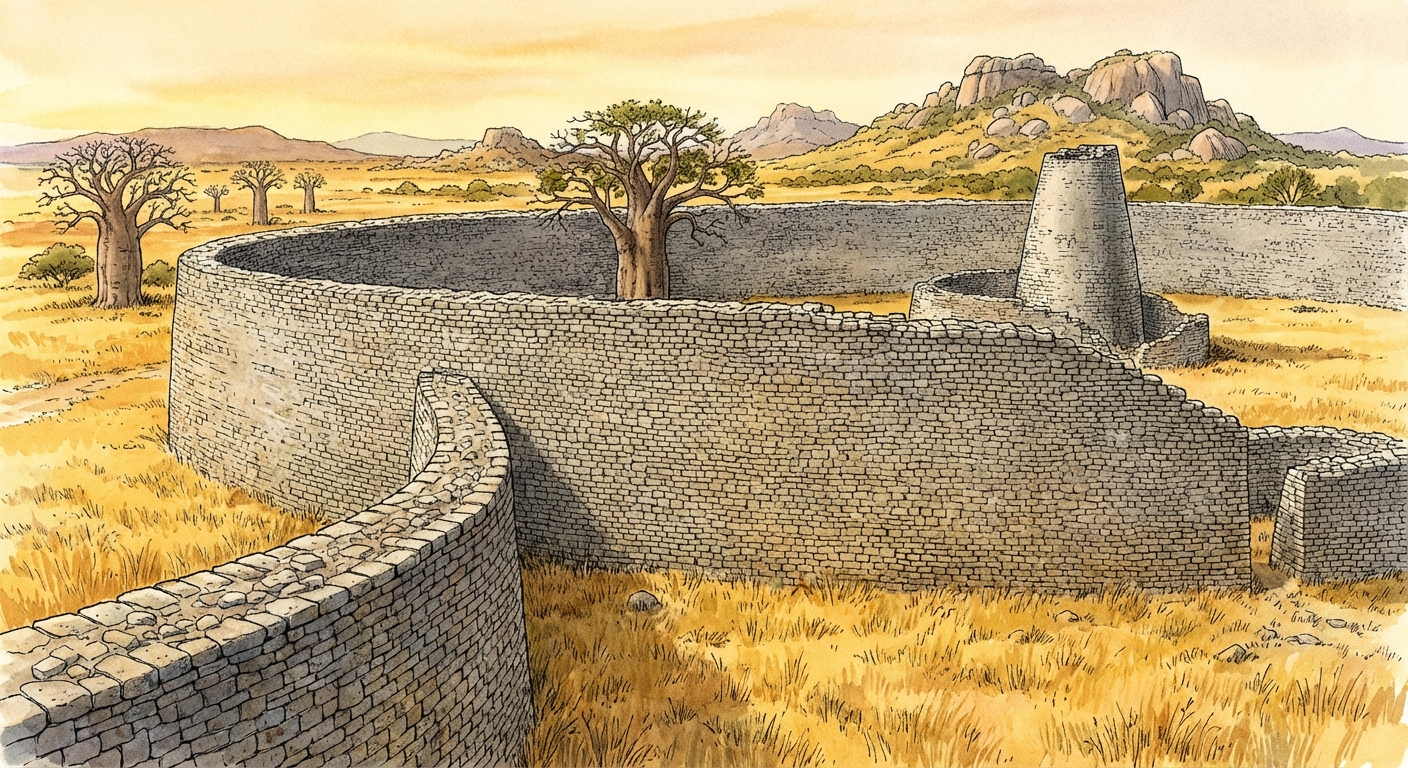
- Architecture: Famous for massive stone walls (30 feet tall) built without mortar.
- Economy: Wealth was based on agriculture, gold, and trade with the Swahili city-states on the coast (linking them to the Indian Ocean Trade network).
- Ethiopia (Axum):
- A "Christian Island" in a predominantly Islamic region.
- Developed independently from the Roman Catholic and Orthodox churches, combining traditional faith traditions (ancestor veneration) with Christianity.
- Constructed massive 11 rock-hewn churches.
4. Social & Cultural Life
- Griots/Griottes: Oral storytellers who preserved history and lineage. They were feared and respected because they held the power of knowledge.
- Gender Roles: Generally, women in Sub-Saharan Africa enjoyed more freedom than in Europe or Asia. Many societies were matrilineal.
Developments in Europe
While Asia and Africa saw the rise of centralized empires and trade, Europe (1200–1450) was largely characterized by political fragmentation and gradual recovery from the fall of Rome.
1. Feudalism: A Decentralized System
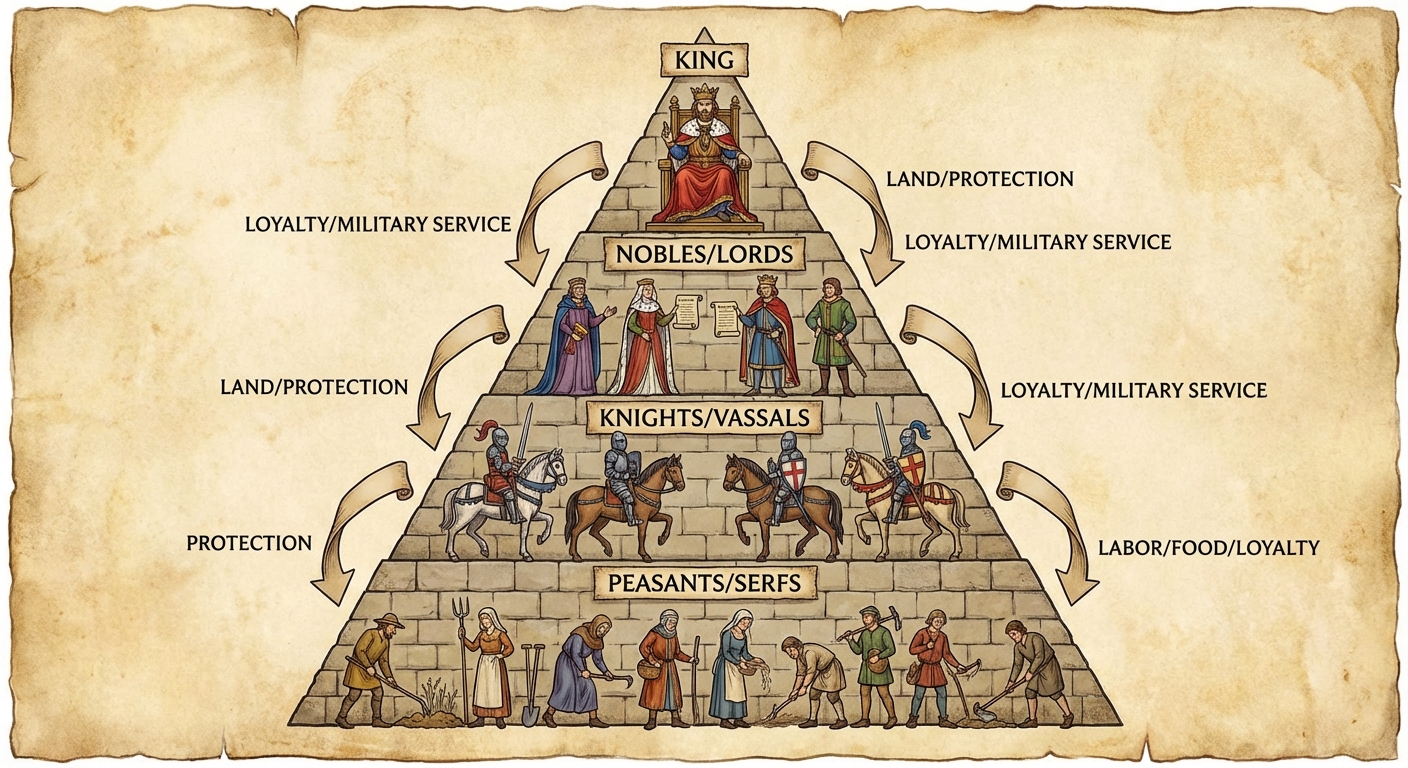
European society was organized around Feudalism, a system of exchanges of land for loyalty.
| Class | Role & Exchange |
|---|---|
| Monarch | Granted land (fiefs) to lords. |
| Lords | Provided land to knights; owed military service to the King. |
| Knights | Protected the land; owed loyalty to the Lord. |
| Peasants | Worked the land; received protection. |
- Manorialism: The economic counterpart to feudalism. The manor (large estate) was self-sufficient. Trade was limited because everything needed was produced on the manor.
- Serfdom: Peasants were often serfs—not slaves (could not be sold), but tied to the land. They required permission to leave or marry.
2. Political Changes (High Middle Ages)
- Rise of Monarchies: Kings began to consolidate power, reducing the influence of feudal lords.
- France: Establishment of the Estates-General (though less powerful than English Parliament).
- England:
- Magna Carta (1215): King John was forced to sign, limiting the King's power and protecting noble rights.
- Parliament (1265): Established as a legislative body representing the desires of the nobility and clergy.
- The Hundred Years' War (1337–1453): Fought between England and France. It solidified a sense of national identity in both countries and popularized the use of gunpowder (via Asia).
3. Religious Power: The Roman Catholic Church
In a politically fragmented Europe, the Church was the single most powerful unified entity.
- Education: The Church established the first universities.
- Art: Most art was religious in nature.
- State Conflict: The Church often vied for power with monarchs (e.g., Investiture Controversy).
4. Social & Economic Shifts
- The Little Ice Age: A cooling period beginning around 1300 reduced agricultural productivity, leading to famine and hampering population growth.
- The Renaissance (Origins): By the end of this period, a revival of interest in Classical Greek and Roman literature, art, and culture began (centered in Italy), signaling the transition to the Modern Era.
Comparison in the Period 1200–1450
The College Board often asks students to compare state-building techniques across regions.
Comparison Table: State Building
| Feature | The Americas (Aztec/Inca) | Europe | Africa |
|---|---|---|---|
| Centralization | High (especially Inca; Aztec via tribute). | Low (Feudalism) but rising by 1450. | Varied (Kin-based to Centralized Kingdoms like Zimbabwe/Ethiopia). |
| Legitimacy | Religion (Human Sacrifice, Sun God). | Religion (Divine Right, Papal blessing). | Religion/History (Islam, Christianity in Ethiopia, Griots). |
| Economy | Agriculture (Chinampas, Terracing) & Tribute. | Agriculture (Manorialism) & rising Guilds. | Trade (Trans-Saharan & Indian Ocean) & Agriculture. |
Key Comparisons for Exam Writing
- Use of Religion: Both the Aztecs and European Monarchs used religion to legitimize rule (Human sacrifice vs. Divine Right). However, in Europe, the religious authority (The Pope) often clashed with political authority, whereas in the Aztec empire, the ruler was the spiritual leader.
- Labor Systems: Compare the Inca Mit'a system (state-mandated public service) with European Feudalism/Serfdom (coerced labor in exchange for protection).
Common Mistakes & Pitfalls
- Confusing the Aztecs and Incas:
- Correction: Aztecs were in Mexico (Mesoamerica), had a tribute system, and used writing. Incas were in the Andes (South America), used the Mit'a system, and had no writing (Quipu).
- Assuming Europe was "Advanced":
- Correction: In 1200, Europe was technically and intellectually behind China and the Islamic World. They were the ones importing technology (gunpowder, paper) from Asia.
- Thinking Africa was entirely "Tribal":
- Correction: Africa had massive, wealthy, urbanized empires (Mali, Great Zimbabwe). Do not apply the "kin-based" label to the entire continent.
- Equating Serfdom with Chattel Slavery:
- Correction: Serfs were tied to the land, not property of the person. They had legal protections that slaves did not.