Glucose Regulation
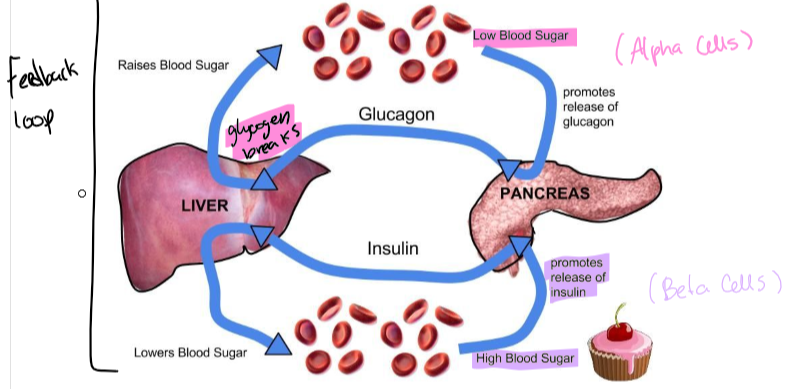
Insulin → secreted by islets of Langerhans in pancreas, which lowers blood glucose level
Glucagon → a peptide hormone secreted from the alpha cells of the pancreatic islets of Langerhans which raises blood glucose level
Pancreas
Islet of Langerhans → endocrine cell clusters inside the pancreas that produce insulin and glucagon
Alpha cells → in islet of Langerhans releases glucagon
Beta cells → in islet of Langerhans releases insulin
Glucocorticoids → help control blood sugar
adrenocorticotropic hormone (ACTH) → released by pituitary gland and causes secretion of glucocorticoids
Auto-immune condition
insulin resistance
Normal Regulation of Glucose
Islet of Langerhans
Beta cell → releases insulin = decrease blood sugar
Alpha cell → release glucagon = increase in blood sugar → by glucagon breaking down glycogen
pancreas releases insulin → insulin connects to receptor (doorbell) on outside of cell → tells GLUT4 (door) to allow glucose to come in
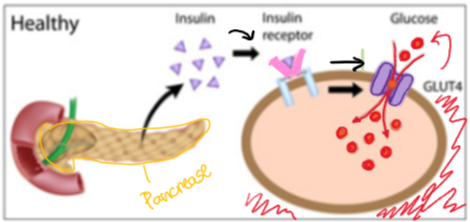
low sugar = glucagon releases by alpha cell → then liver breakdown glycogen
Long-term consequences for diabetes
high risk of developing cardiovascular disease
kidney failure - due to high kidney stress & blood rot
Nerve damage
Amputations - feet
vision loss
Management strategies for diabetes
diet and exercise
exercise increase the body’s uptake of glucose
diet → limit carbohydrate intake to reduce glucose in blood
→ increase fiber = slows the intake of sugar in the stomach
→ eating smaller portions = makes easier for body to manage
Hormone Controls
Hypothalamus detects stress & low blood sugar → activates pituitary gland
Pituitary gland releases ACTH
Adrenal gland releases glucocorticoids → breakdown proteins or fats
Diabetes
Type 1 | Type 2 | Gestational |
|---|---|---|
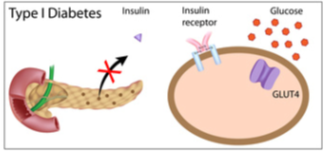
- insulin producing cells in pancreas are destroyed by auto-immune - early onset - white blood cells attack beta cells → insulin won’t make it to receptor = body won’t reabsorb glucose
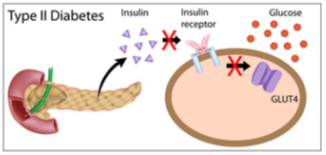
| - able to make insulin but the insulin receptors are harder to trigger - insulin does not stick to receptor - late onset - cells require more insulin before they will allow glucose in
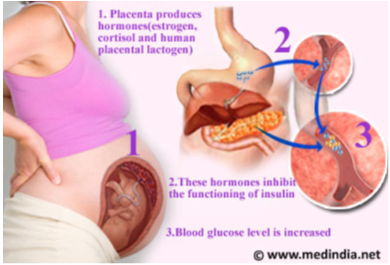
| - specific to pregnancy - body requires more insulin for glucose uptake - happens because the growing baby and changed hormones interfere with normal glucose pathway - the diabetes disappears when baby is born - if untreated babies can very large and may develop type 2 later on
|