the neuromuscular junction
the point where a motor neurone meets a muscle fibre is called the neuromuscular junction
one motor neurone can form multiple neuromuscular junctions to a muscle and all of the muscle fibres triggered by the same motor neurone are called a motor unit
-the number of motor neurone which are triggered to contract determines the size of the force of contraction
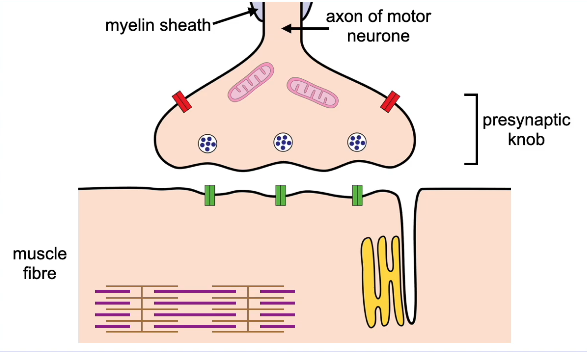
there are voltage gated ion channels on the presynaptic knob which are closed when the muscle is not contracting
within the presynaptic knob there are vesicles containing acetylcholine
the presynaptic knob is close to the sarcolemma
in the sarcolemma there are sodium ion channels with binding sites for acetylcholine
and also contains T tubules that run close to the sarcoplasmic reticulum
when triggering muscle contraction:
an action potential arrives at the membrane of the presynaptic neurone
triggering the voltage gated calcium ion channels to open
calcium ions now move into the presynaptic knob by facilitated diffusion
increased concentration of calcium ions causes the vesicles to move to and fuse with the presynaptic knob
acetylcholine is now released into the synaptic cleft
it diffuses across the synaptic cleft and attaches to the Na+ channels on the sarcolemma
triggering Na+ channels to open and Na ions move into the muscle fibre by facilitated diffusion
this influx of Na+ ions causes the membrane of the muscle fibre to depolarise
this depolarisation travels down the T tubules which are in contact with the sarcoplasmic reticulum
the sarcoplasmic reticulum has a higher concentration of Ca+ ions than the sarcoplasm
when the depolarisation reaches the sarcoplasmic reticulum this causes Ca2+ channels to open on the sarcoplasmic reticulum membrane
Ca2+ ions now diffuse out of the sarcoplasmic reticulum and into the sarcoplasm
this increased concentration of Ca2+ ions in the sarcoplasm triggers the muscle to contract