FR FR chapter 1
POSITION
cartesian coordiantes - describe the postion using x,y and z. these coordiantes consider the postion at a particular time. a vector has magntude and direction. magnitude is how much and direction is which way. so position is a vector telling you where you are relative to an origin. Like (3,1) right three and up one.
PATH LENGTH
path length is S. it is distance traveled along a trajectory in time. S is always postive. Path length is the total distance covered and can only increase with time.
DISPLACEMENT(m)
displacment is the change in postion. displacment is final postion - intital postion.
SPEED
uniform speed is continous same speed and it is V = delta s/ delta T
so velocity = change in path length / change in time.
nonuniform motion is motion that is not always contatnly at the same speed but does have a average. so the equation for this is through average velocity.
instantaneous velocity is the limit of average vecloty as the change of t gets small.
kinematics - description of motion
postion - your coordinates
displacment - change of s = change in postion
velocity - rate of change of postion
average velocity = delta s or x / deta t
instantenouys is the slope of x vs t
acceleration is the rate of change of velocity
average acceleration
VECTOR ALGEBRA -
displacement is an example of a vector, a physical quantity has both magntidue and direction. other vectors are velocity, acceleration, force, and electromagnetic fields. these have directions and magntiudes.
scalars are things that dont have direction on speed, mass, legnth , temperature and only have magnitude.
VECTOR ADDITION -
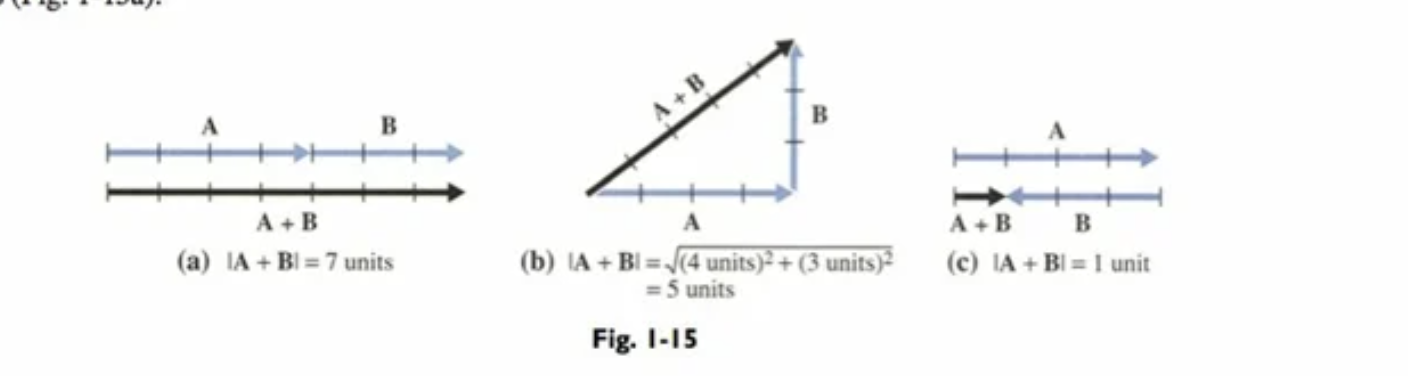
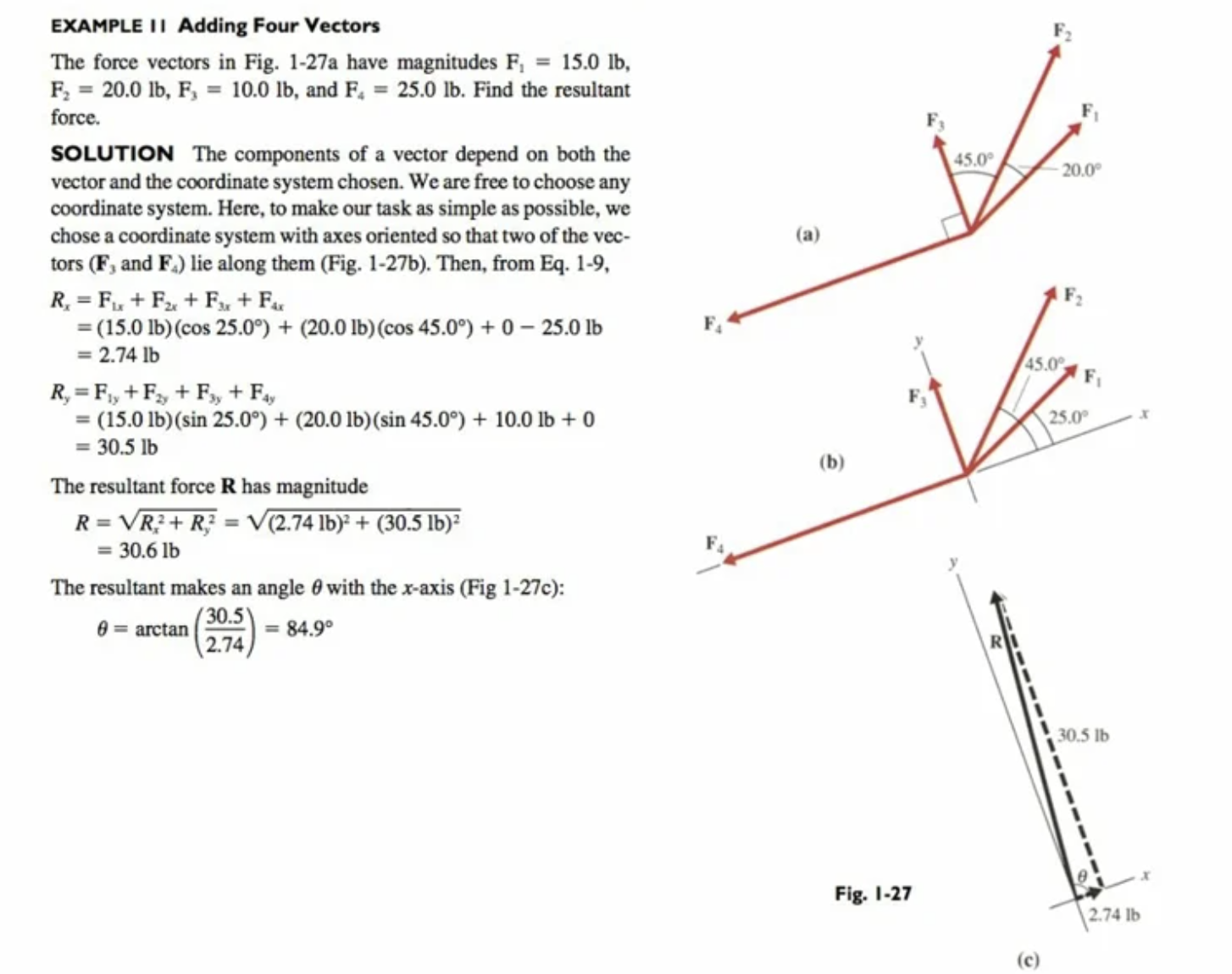
it is the combination of two vectors and result with vector R. so we can add them.
POLYGON RULE
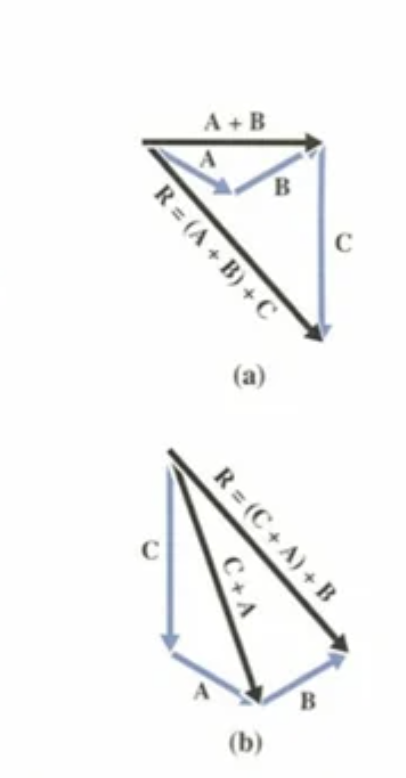
to add three or more vectors we will do the R = A + B + C
first we solve for the A+ B = R and then add the C
VECTOR SUBSTRACTION
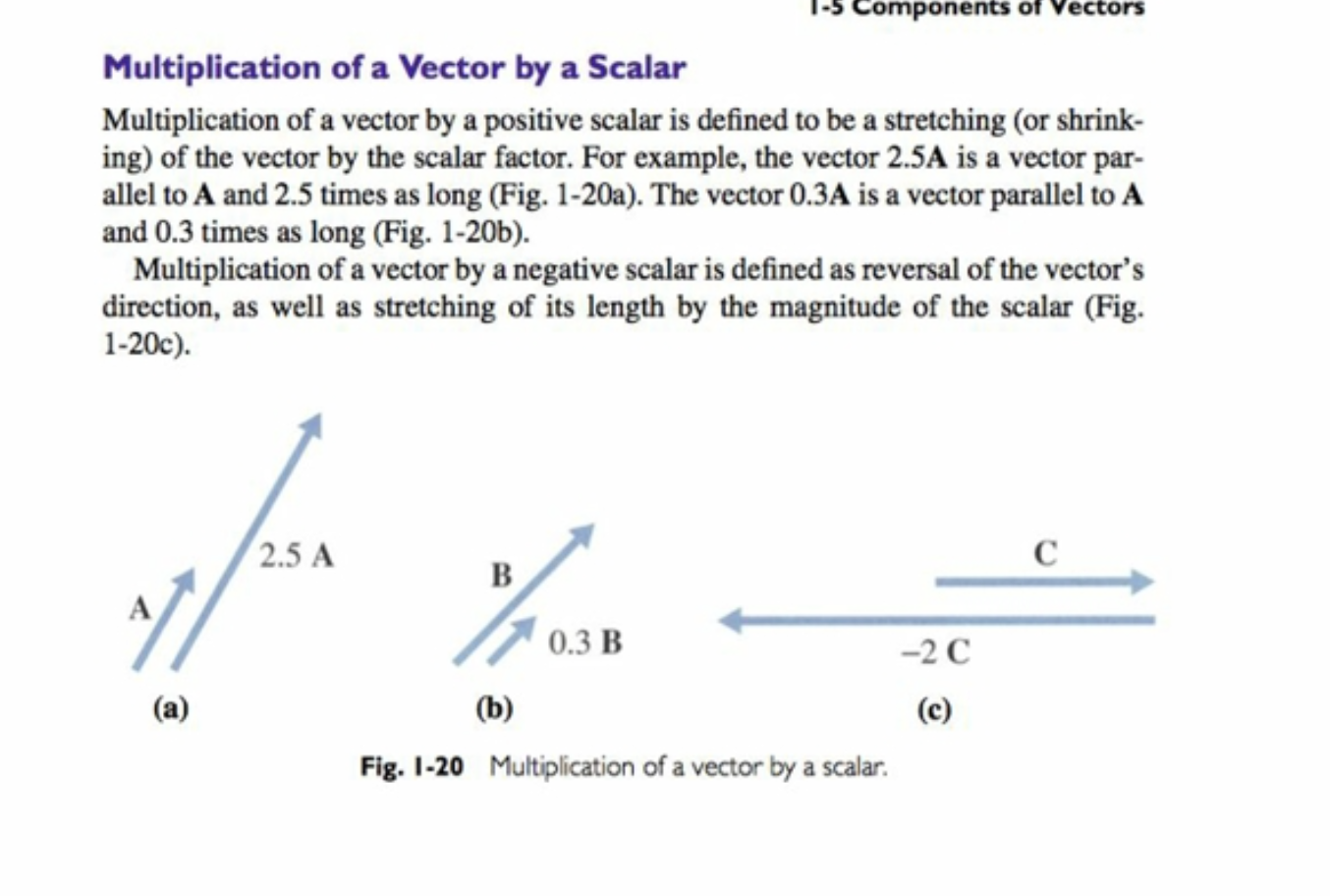
the negative of vector a is the same legnth as vecto a but poinin in the opposite direction. so A - A = 0
components of vectors -
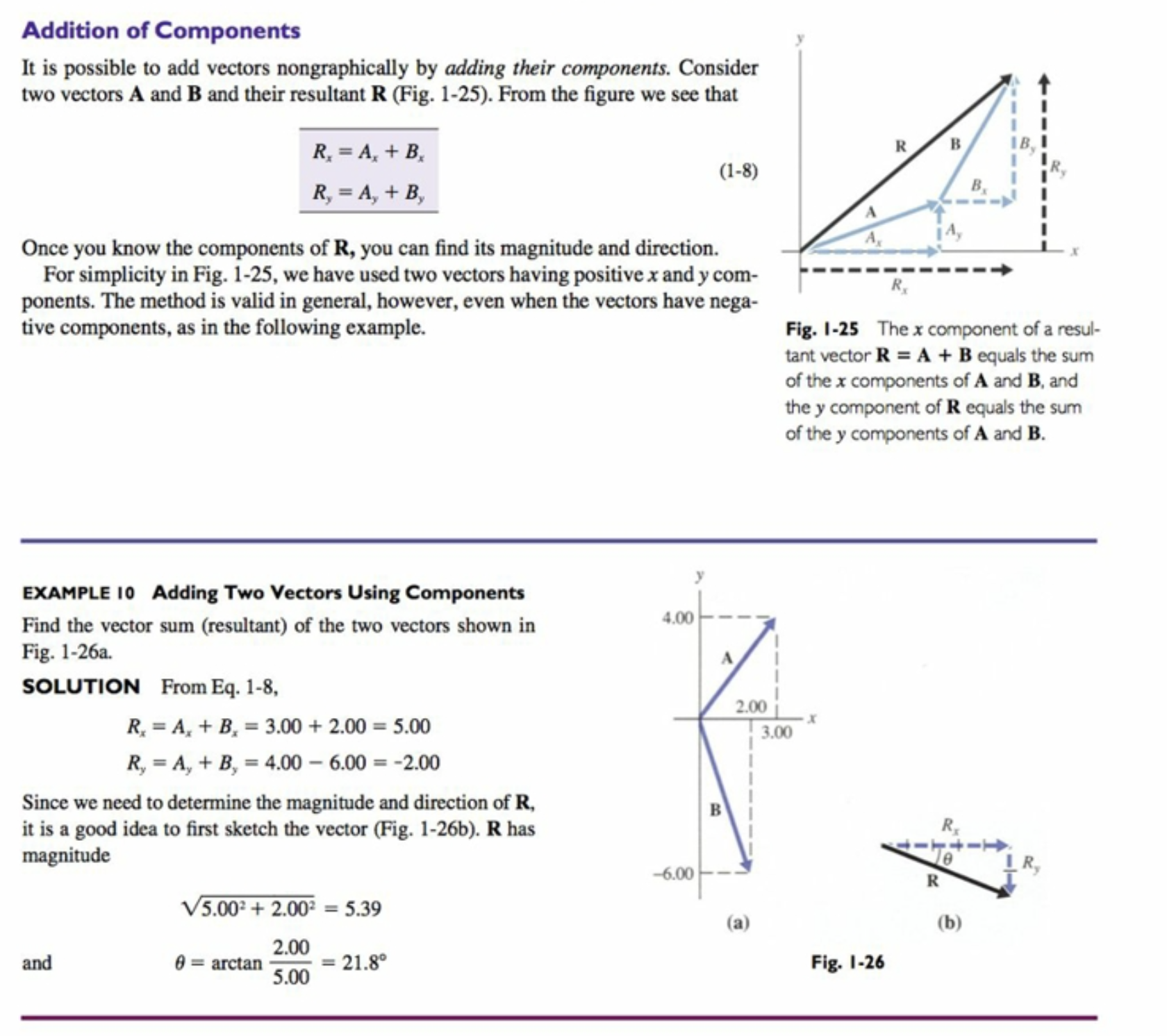
speed is a scalar quanitty but velocity is defined to be a vecto quantitiy that gives the directionof motion as well as its rate. average velocity over time interval is displacement divded by change of time. if we take the traingle formed by the displamcent vector we can divded each side of the tringle by the time interval. so average velocity x = delta x/ delta t
and velocity y = delta y / delta t
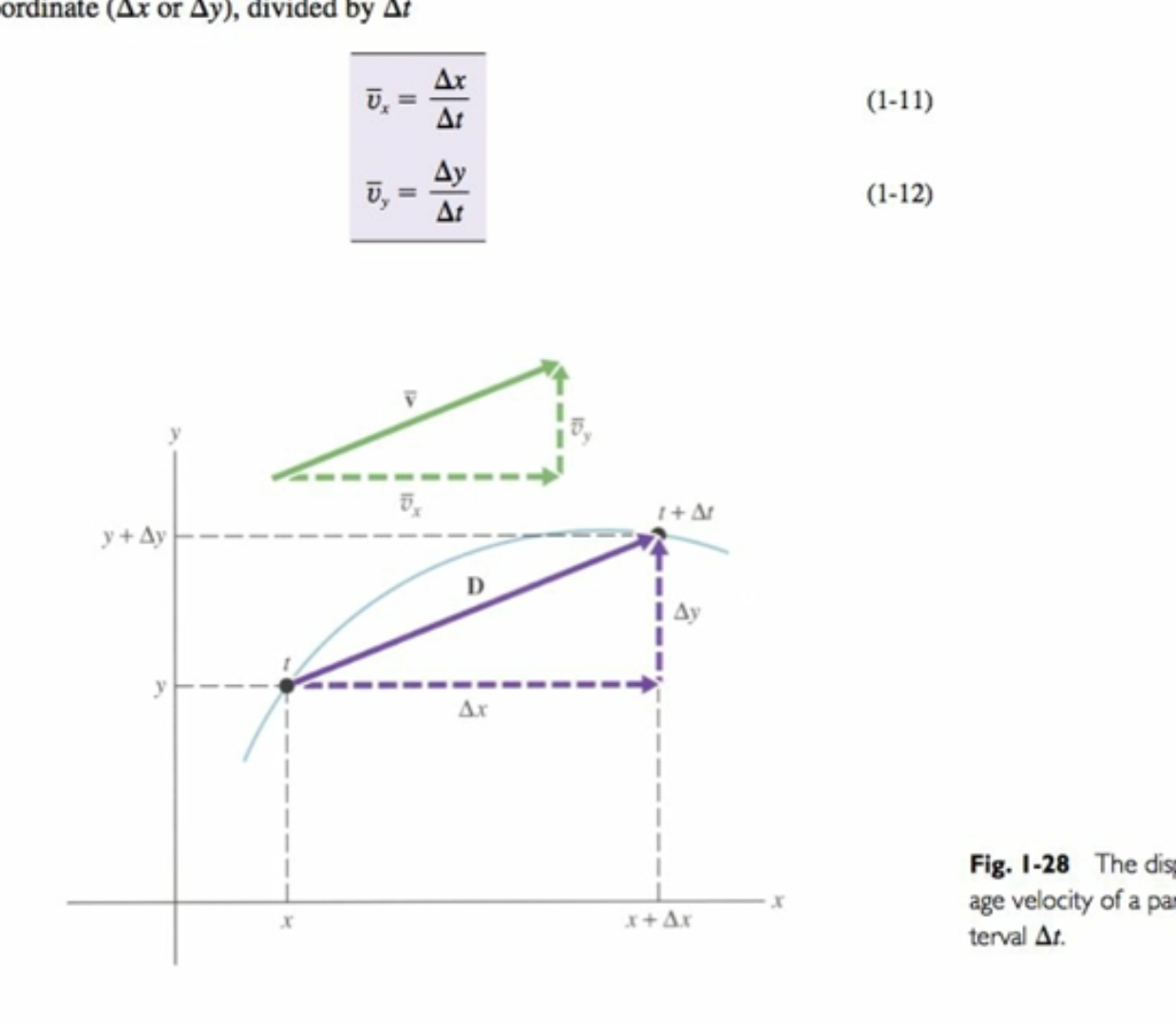
and then once u find those u can do vx² + vy² and then square root it to find the average velocity
INSTANTENOUS VELOCITY - the average bvelocity apprages delta t = 0.
we will calculate the bodys average speed over short time itnervals and find the matidue the bodys instantous speed. average velocity is cputed over diminishtime time intervals delta t. we will see that as delt at approaches - the displacment amgntidue appraches a path length delta s.
Chapter 2
- x is for horizontal movement and y is for vertical motion. for motion along the Vx is dela x/delta t. change in direction means that motion is not linear and acceleration is present. acceleration is the rate of change of velocity and velocity is the rate of change of position. averagye acceleratioin = delta v / delta t… we can find the acceleration or the deceleration.
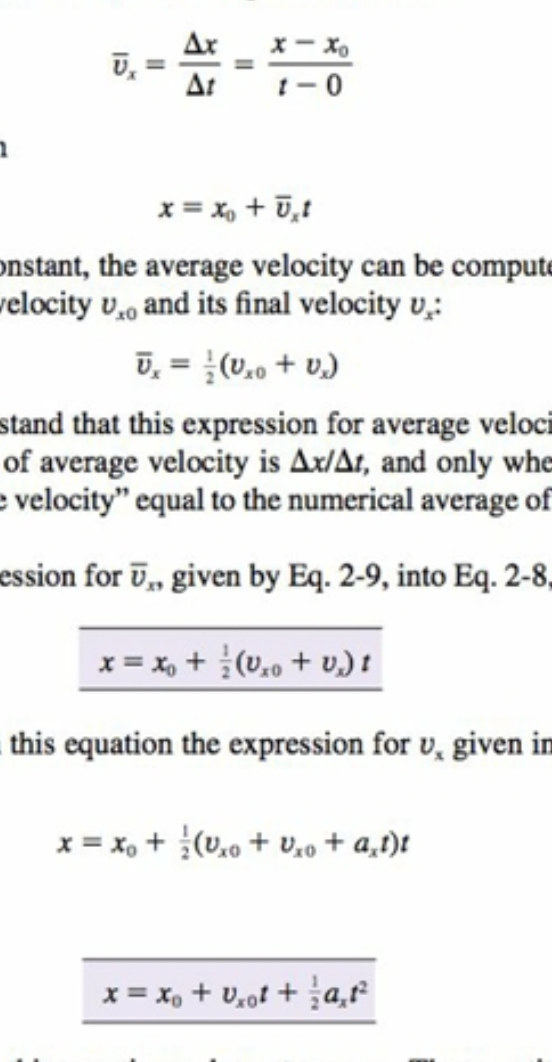
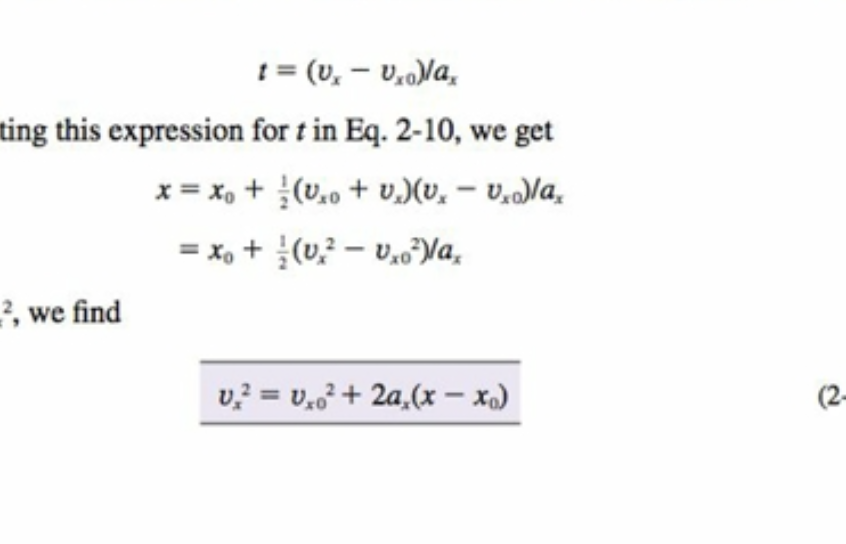
the bodys acceleration and its intial velocity is possible to predict how fast the body will be movingt.
FREE FALL -
we are allf amiliar with the phenomnon we call gravity the earth pull on bodies closed to it. gravit pulls all objects towards the earth but also accelerates those object whule they are falling. the spped of any body falling freely contin ously increase. when air restistance is neglible all bodies near the earth surface fall same constant accelerationd enoted by g.
g = 9.78 or 9.83 but we assume 9.8
instead of x we will use y
vx = vy
ax = ay= g
friction is the force between two surfaces tending to prevent the surface from sliding over eachother if a road is covered in ice then it is difficult to walk or drive a car on it because the rictional force between the ice and iether yor feet or the tires of your car may not be great enough to prevent slipping. oil can prevent friction to make doors glide smoothly. a book lying on the table since the book since its not moving then the resultant force on it must be zero.
kinetic friction - friction between surfaces that slide over eachother
static friction - friction between surfaces at rest respect to eachother.
we find that the maximum firvctional force increases in direct proprtion to the magnitude of the normla force. coefficien of static frctgion and denoted bu the mu.
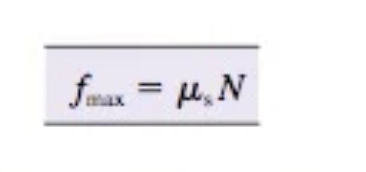
mu depends on the surface in contact and their condition. kinetic friction is proprtional to N with mu that is less than or equal to mu s.
chapter 3 - acceleration on a curved path
acceleration is the rate of change of velocity. for a non linear motion - there is acceleration even when the speed is constant. this is because there is a change of direction. chapter two its just a. = delta v/ deta t
but now with a curve its Ax and Ay
PROJECTILE MOTION -
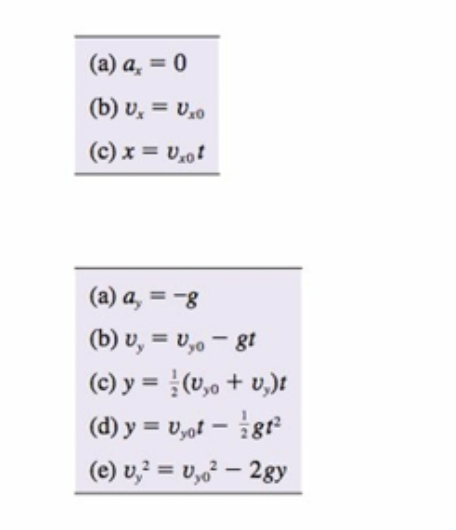
in the absence of air resistance a free falling object near the surface of the earth has constant acceleration. we want to describe motiono f an object that is thrown into the air with an intial velocity but not veritcally directed. the object is projected. the intial v- makes a angle.
CIRCULAR MOTION -
a particle moving along a circular path at a constant speed is said to undefrgo uniform cicular motion.