ch 22 23 26
phylogeny = evolutionary history of a species or group of related species
systematics =
binomial nomenclature
system of taxonomy based on resemblances
two part names for species and hierarchical classification
two part scientific name of a species = binomial
first part: genus
second part: specific epithet (unique for each species within the genus)
hierarchical classification
grouping species in increasingly inclusive categories
linking classification and phylogeny
carnivora (order)
3 families, 4 genus, and 5 species
what to take away from phylogenetic trees
these represent a hypothesis about evolutionary relationships
rooted tree
includes a branch to represent the most recent common ancestor of all taxa in the tree
cladistics
grouped by common ancestry
monophyletic groups = consist of ancestor and its descendants
paraphyletic group
polyphletic group
average heterozygosity = measures gene variability, the average % of gene loci that are heterozygous
nucleotide variability = measures the mean level of difference in nucleotide sequences among individuals in a population.
formation of new alleles
altering gene number or position
large chromosomal mutations that delete, disrupt or rearrange many loci are usually harmful
if duplicated, mutations can accumulate and new functions may arise
occurs due to errors in meiosis
increases in gene number likely played a major role in evolution
sexual reproduction
most genetic variation in sexually reproducing organisms results from recobination
new combinations of existing alleles occur through three mechanisms
crossing over
independent assortment
fertilization
gene pools and allele frequencies
a population is a group of individuals of the same species that live in the same area and interbreed
geographically isolated populations rarely exchange genetic material
if populations are not isolated, individuals still usually only breed with members of their own population
gene pool = all copies of every allele at every locus in all members of the population
a locus is fixed if all individuals in a population are homozygous for the same allele
two or more alleles for a locus - individuals may be homozygous or heterozygous
calculating frequency
p = frequency of C^r = 800/(800+200) = 0.8 (80%)
q =1 = p = 0.2 (20%)
hardy-weinberg equation
describes the expected genetic makeup for a population that is not evolving at a particular locus
if the observed genetic makeup of the population differs from expectations under hardy weinberg, then the population may be evolving
natural selection
based on differential success in survival and production
selection results in alleles being passed to the next generation in proportions that differ from those in the present generation
can cause adaptive evolution (traits that enhance survival or reproduction increase in frequency over time)
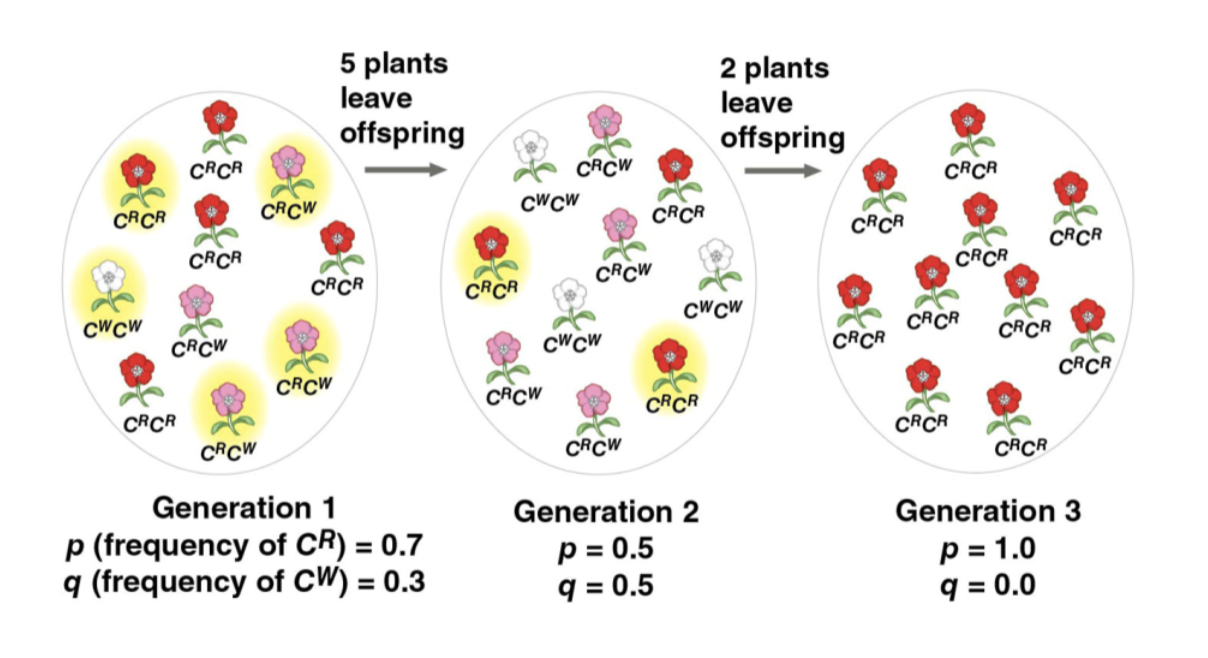
genetic drift
process in which chance events cause allele frequencies to fluctuate unpredictably from on gen to the next
reduces genetic variation due to random loss of alleles
ex:
Directional selection = favors individuals at one extreme end of the phenotypic range
Disruptive selection = favors individuals at both extremes of the phenotypic range
Stabilizing selection = favors intermediate variants and
acts against extreme phenotypes
sexual selection = process in which individuals with certain heritable traits are more likely to obtain mates than other individuals of the same sex
sexual dimorphism = difference in secondary sexual characteristics between the sexes
intersexual selection = direct competition among individuals of one sex (often males) for mates of the opposite sex
occurs when individuals of one sex (usually females) are choosy in selecting their males