Power, Strategy and the firm
Market power
An attribute of a firm that can sell its product at a range of
feasible prices, so that it can benefit by acting as a price-setter (rather than a
price-taker).
• The firm has bargaining power in its relationship with its customers to set a
high price without losing them to competitors
Sources of market power:
barriers to entry
brand loyalty
copyrights and patents
differentiated products
willingness to pay
consumers demonstrate their willingness to pay for different products.
• But how does the firm identify or find this information?In theory, firms can estimate the demand for their product by surveying large number of consumers (e.g: loyalty schemes/apps – data collection).
• They can also look at the demand curve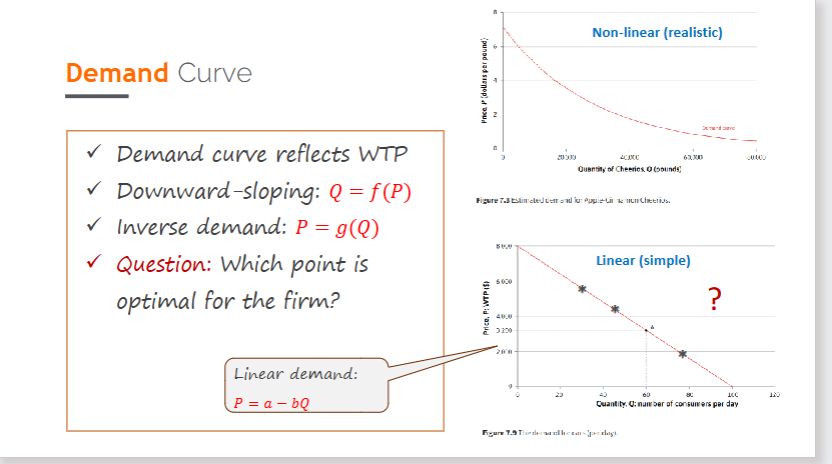
Profit Maximisation
The firm’s constrained optimization problem is analogous to the
consumer’s.Demand curve = FF, Slope =MRT
Iso-profit curves= indifference curves =MRS
Firm maximizes profits by choosing point
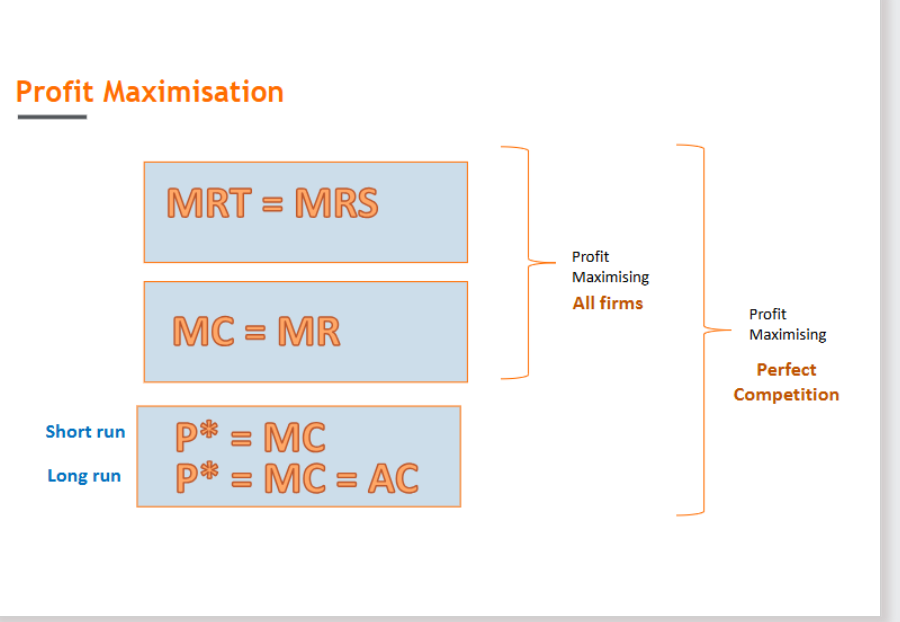
where MRS = MRT
Isoprofit curves
Isoprofit curves show price-
quantity combinations that give the same profit.The shape of a firm’s cost
function affects the shape of
their isoprofit curves.(Economic) Profit = Total revenue – Total costs
(Costs include the opportunity cost of capital)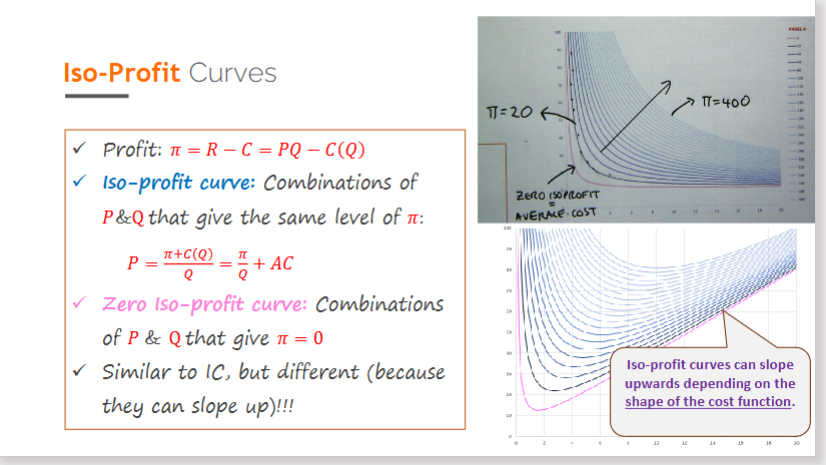
1. Iso = same profit.
2. Higher curve = higher profit.
3. Zero iso-profit = average cost line
costs
The average cost (AC) is defined as the total cost divided by the number of items produced.
The marginal cost (MC) is the rate at which costs increase if 𝑄 increases (the cost of producing one more item).
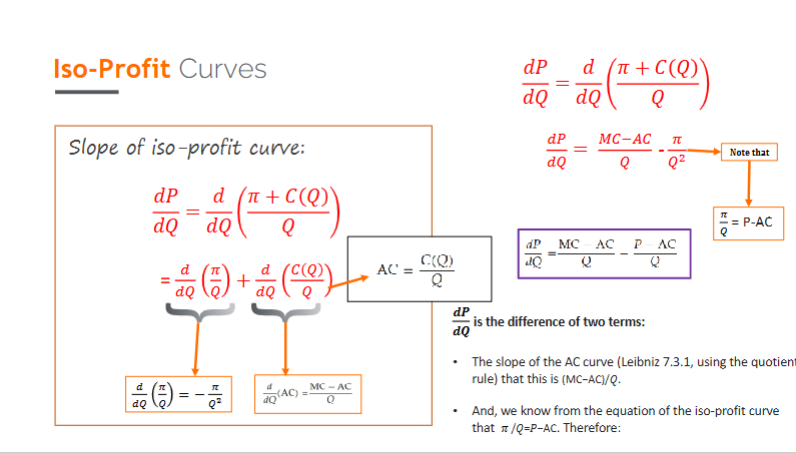
the slope of iso-profit curve = (MC-P)/Q
this is the MRS
the top half of the equation is the profit margin
constrained optimisation
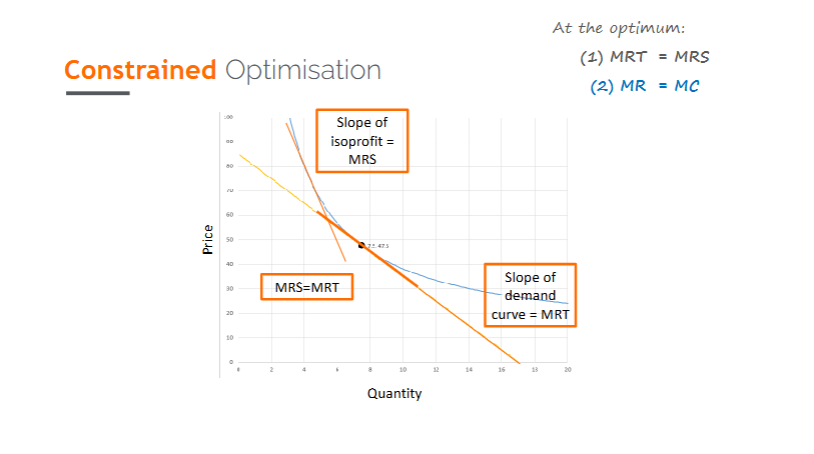
We establish that the firm’s pricing decision depends on the
slope of the demand curve.
Elasticities
A firm’s pricing decisions depends on
the slope of the demand curve.Price elasticity of demand = degree of
responsiveness (of consumers) to a
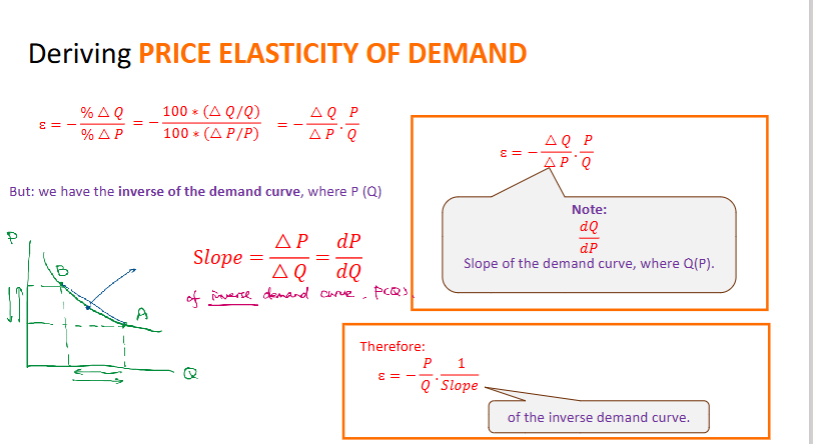
price change.ε=− (% change in demand) / (% change in price)
MR is always positive when demand is
elastic.When the elasticity is below
1, MR <0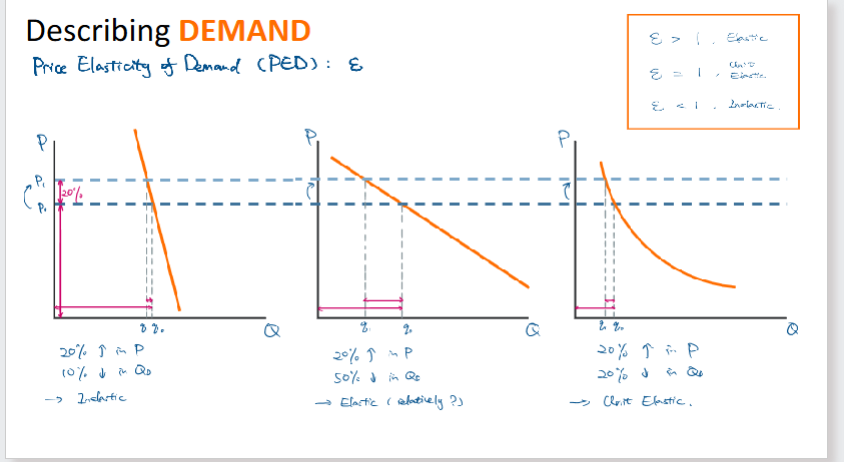
deriving price elasticity of demand
elasticities and markups
Mark-up: price minus the marginal cost divided by the
price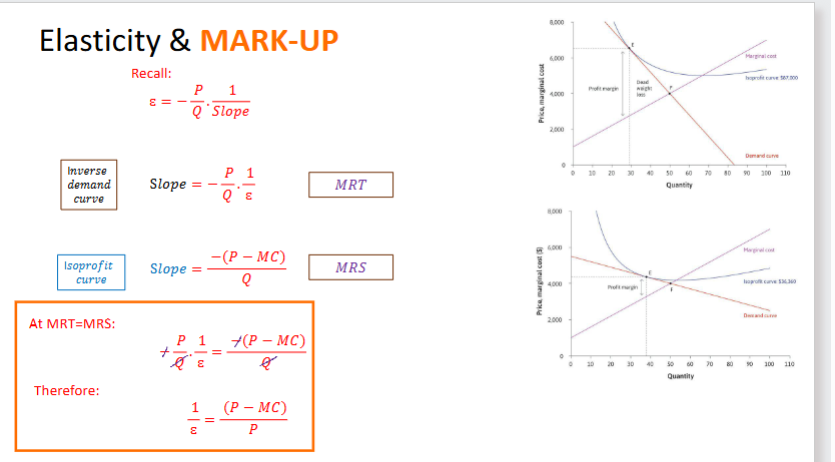
The Mark-Up (𝑃 − 𝑀𝐶)/P is inversely proportional to elasticity.
A lower markup means that there is a higher elasticity of demand, meaning there is more competition
Gains from trade
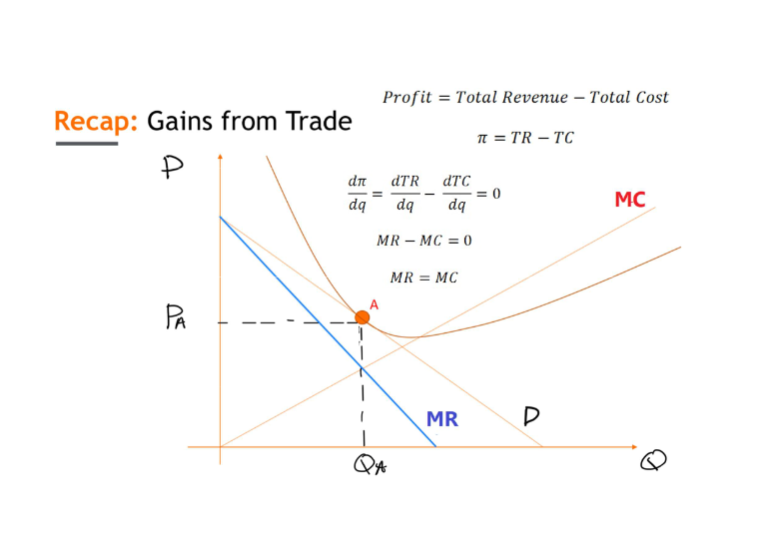
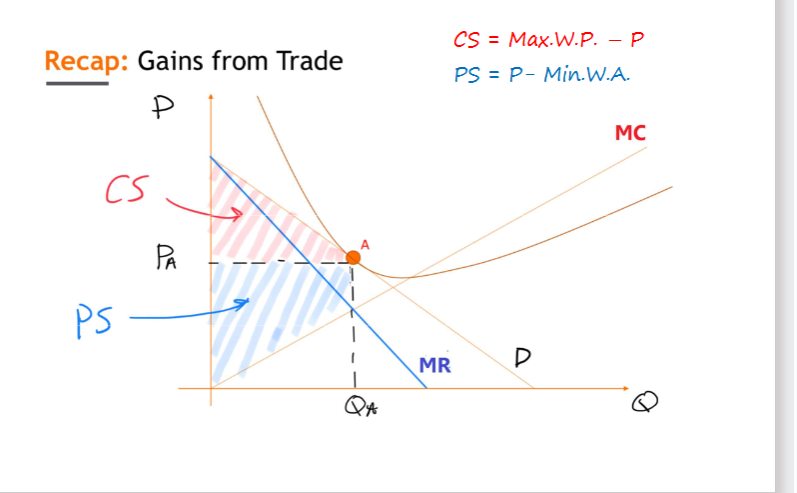
For CS and PS to me maximized at equilibrium:
buyers and sellers both price-takers
the equilibrium allocation maximizes the sum of the gains achieved by trading in the market, relative to the original allocation
Competitive equilibrium is pareto efficient
However , it may not be fair if PS and CS aren’t equal, and also depends on elasticities of supply and demand
Price setters vs takers
Price setting firms have market power - they set a positive price margin
They have downward sloping AR and MR curves
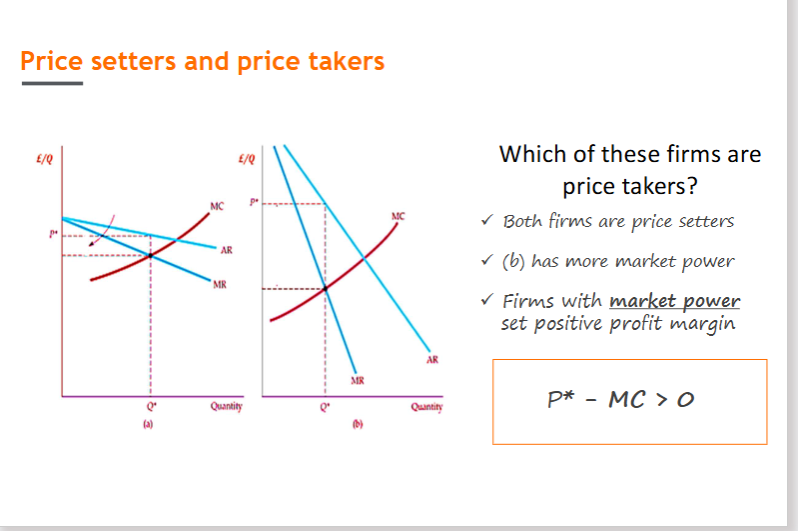
Price-taking firms have a horizontal demand curve
their price is the same no matter how much they want to sell
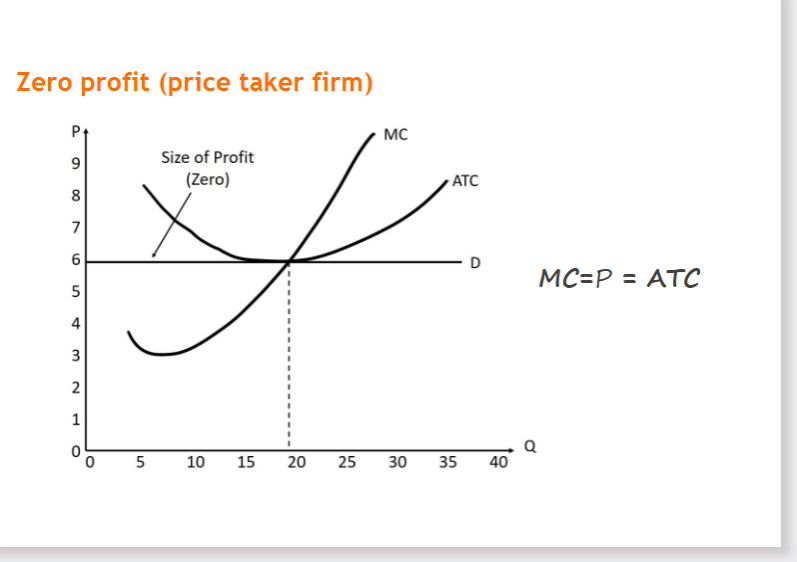
they have zero profit margin (p*=MC=ATC) at the optimal price and quantity
degrees of competition
Monopoly:
Price setting power
Differentiated Products
Barriers to entry
Single Producer
Supernormal Profits possible
Pareto inefficiency possible
Perfect competition:
Price takers
Homogenous Products
No barriers to entry
Many sellers
Many buyers
Normal profits
No deadweight loss
Nash equilibrium and Feasible set
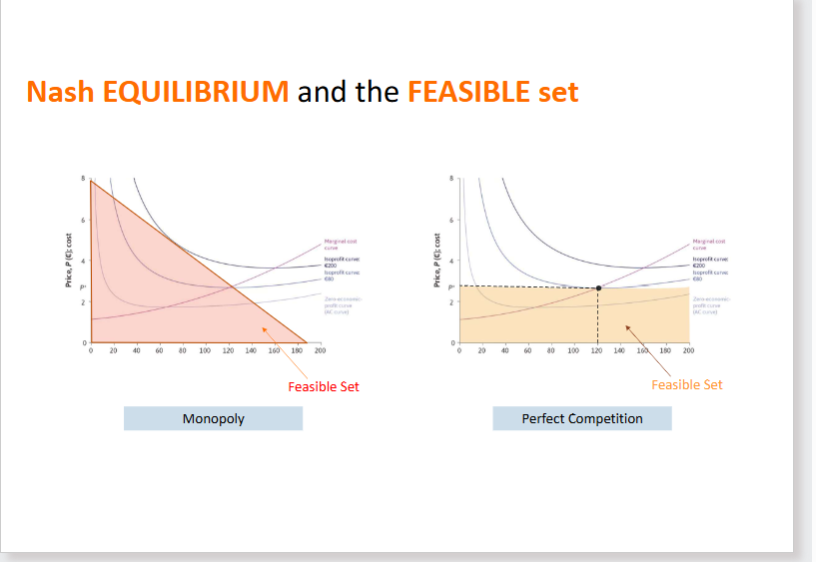
price determination
long-run price determination
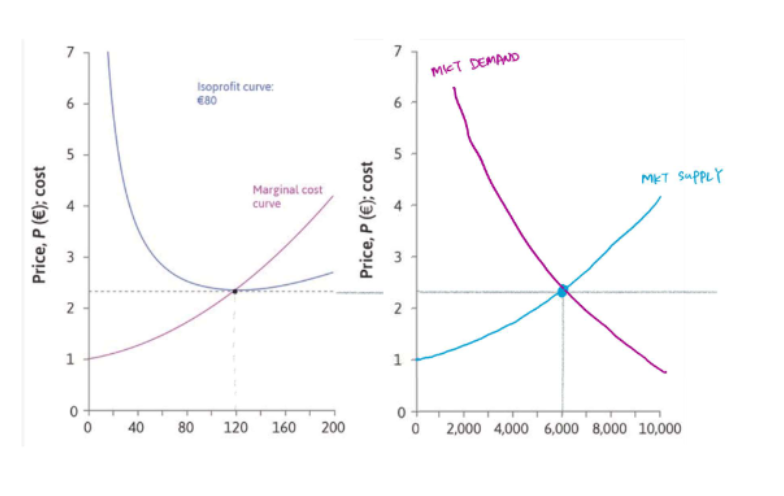
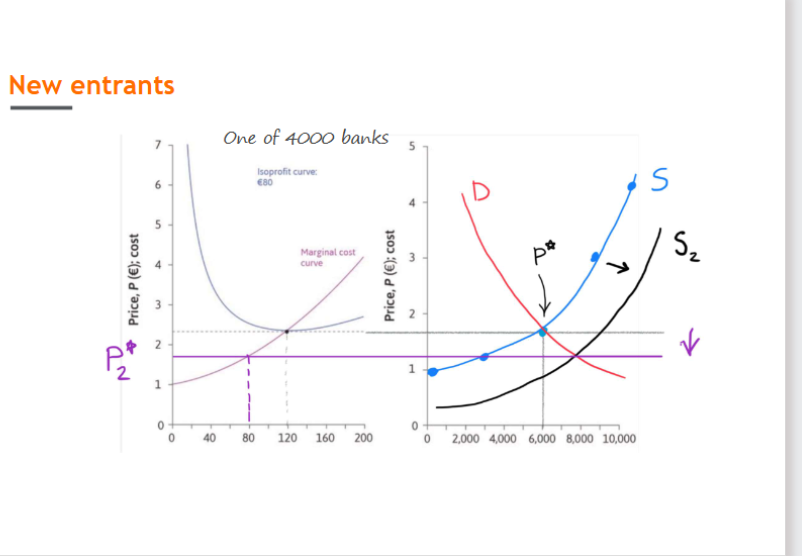
new entrants
When there are new entrants, market supply increases
This pushes the price/cost down
The optimal price falls, as firms face more competition
short vs long run competition
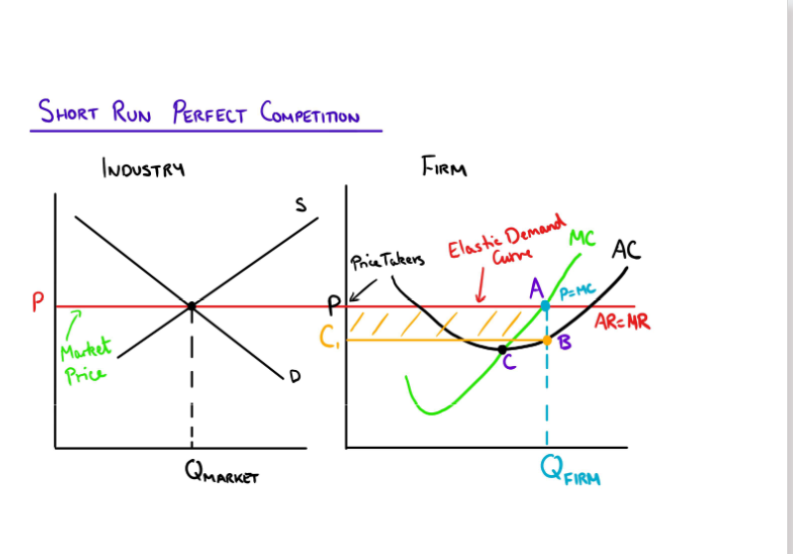
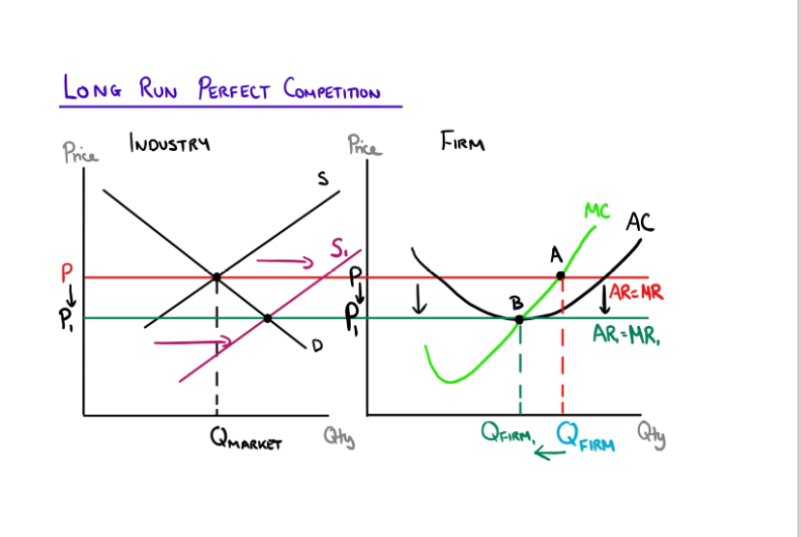
In perfect competition, firms are price takers
P*=MC=AC
in the long-run, if supply increases due to no barriers to entry, costs fall, the price will also fall , and the demand curve therefore shifts downwards
The market supply curve will shift
the optimal amount a firm will produce decreases (as price decreases)
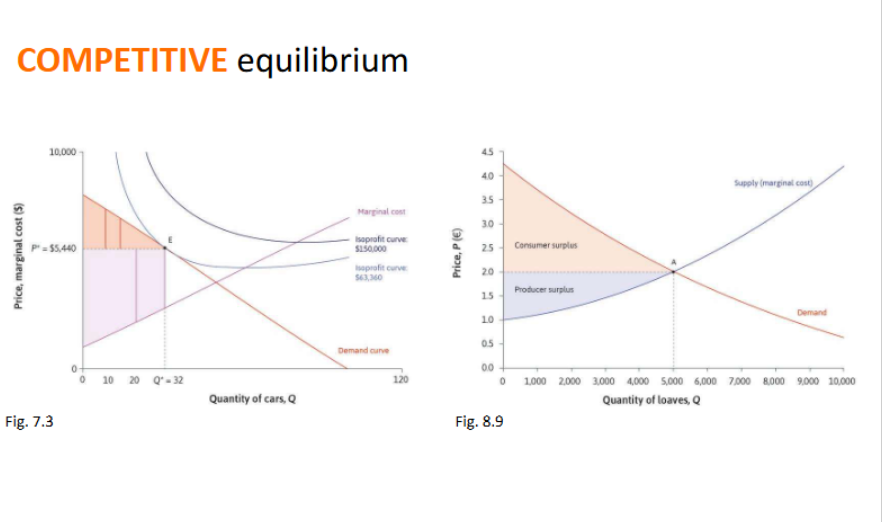
Competitive equilibrium
In competitive equilibrium, all buyers and sellers are price-takers
Supply=demand at market price
In a monopoly, there is a welfare loss
In a perfectly competitive market, there is no DWL
Profit maximisation
Key terms and questions
joint surplus: Sum of producer and consumer surplus
consumer surplus: P-WTA
producer surplus: WTP-P
Reservation price: The lowest price at which someone is willing to sell a good (keeping the good is the potential seller's reservation option)
Competitive Equilibrium: A market outcome in which all buyers and sellers are price-takers, and at the prevailing market price, the quantity supplied is equal to the quantity demanded.
Price takers: Characteristic of producers and consumers who cannot benefit by offering or asking any price other than the market price in the equilibrium of a competitive market. They have no power to influence the market price.
Economies of scale: occur when doubling all of the inputs to a production process more than doubles the output. The shape of a firm's long-run average cost curve depends both on returns to scale in production and the effect of scale on the prices it pays for its inputs.
returns to scale: when doubling all of the inputs to a production process doubles the output. The shape of a firm's long-run average cost curve depends both on returns to scale in production and the effect of scale on the prices it pays for its inputs
Show how the MRS=MRT condition is related to the MR=MC condition.: MR (Marginal Revenue) reflects the value to consumers → like MRS
MC (Marginal Cost) reflects the cost of production → like MRT
Price Elasticity of Demand: It measures how much the quantity demanded of a good changes when its price changes. If a small price decrease leads to a large increase in the amount people want to buy, the demand is considered elastic.
Inelastic Demand: where the quantity demanded of a good changes very little when its price changes. Even if the price goes up or down, people will still buy about the same amount
of the good.Market failure: occurs when markets allocate resources in a Pareto-inefficient way.
why is a competitive market equilibrium a nash equilibrium: given what all other actors are doing (trading at the equilibrium price), no actor can do better than to continue what he or she is doing (also trading at the equilibrium price).