MMW NOTES
Logic and Sets
Propositions
Proposition - a declarative sentence that can be objectively identified as either true or false
If a proposition is true, the truth value is true represented as T or 1
If it is not true, the truth value is false denoted as F or 0
Truth Table - given a proposition, it is a diagram in table form that is used to show all its possible truth values
p |
|---|
1 |
0 |
p | q |
|---|---|
1 | 1 |
1 | 0 |
0 | 1 |
0 | 0 |
p | q | r |
|---|---|---|
1 | 1 | 1 |
1 | 1 | 0 |
1 | 0 | 1 |
1 | 0 | 0 |
0 | 1 | 1 |
0 | 1 | 0 |
0 | 0 | 1 |
0 | 0 | 0 |
Quantified statements - involve terms such as all, each, every, no , none, some, there exists, and at least one
Universal quantifiers - all, each, every, no, none
Existential quantifiers - some, there exists, at least one
Negation
The negation of a proposition p is the proposition which is false when p is true; and true when p is false.
The negation of p is denoted by ¬p
Truth table
p | ¬p |
|---|---|
1 | 0 |
0 | 1 |
For quantified statements
Proposition Contains | Negation |
|---|---|
All do | Some do not/ Not all do |
Some do | None do / All do not |
Same do not | All do |
None do | Some do |
Compound Propositions
Simple proposition - a proposition with only one subject and only one predicate
Cannot be deduced to simpler propositions
Conveys a simple idea
Compound Proposition- a proposition formed by joining two or more simple propositions with a connective
Conveys two or more ideas
Four basic connectives
And (conjunction)
Or (disjunction)
If… then (conditional)
If and only if (biconditional)
Symbols used for the connectives
Connective | Symbol | Name |
|---|---|---|
And | ^ | conjunction |
Or | ∨ | disjunction |
If… then | → | conditional |
If and only if | ↔ | biconditional |
Conjunction
Let p and q be propositions.
The conjunction of p and q is denoted by p^q , is the proposition “p and q”.
The conjunction p^q is true only when both p and q are true, and is false otherwise
The propositions p and q are called conjuncts
Truth table
p | q | p^q |
|---|---|---|
1 | 1 | 1 |
1 | 0 | 0 |
0 | 1 | 0 |
0 | 0 | 0 |
Disjunction
Let p and q be propositions
The disjunction of p and q is denoted by p∨q, is the proposition “p or q”
The disjunction p∨q is false only when both p and q are false, and is true otherwise
The propositions p and q are called dijuncts
p | q | p∨q |
|---|---|---|
1 | 1 | 1 |
1 | 0 | 1 |
0 | 1 | 1 |
0 | 0 | 0 |
Exclusive or
Let p and q be propositions
The exclusive or of p and q is denoted by “p⊻q” or “p⊕q”, is the proposition that is true when exactly one of p and q is true and is false otherwise
p | q | p⊻q |
|---|---|---|
1 | 1 | 0 |
1 | 0 | 1 |
0 | 1 | 1 |
0 | 0 | 0 |
Conditional Statements
Let p and q be propositions
The conditional statement p→q is the proposition “if p, then q” or “p implies q”
The conditional statement p→q is false when p is true and q is false, and true otherwise.
In the conditional statement p→q, p is called the hypothesis (or antecedent or premise) and q is called the conclusion (or consequence)
p | q | p→q |
|---|---|---|
1 | 1 | 1 |
1 | 0 | 0 |
0 | 1 | 1 |
0 | 0 | 1 |
The Converse of p→q is q→p
The Inverse of p→q is ¬p → ¬q
The contrapositive of p→q is ¬q → ¬p
Biconditional Statements
Let p and q be propositions
The biconditional statement p↔q, is the proposition “p if and only if q” (or simply “p iff q”)
The biconditional statement p↔q is true only if p and q have the same truth values, and is false otherwise
Biconditional statements are also called bi-implications
p | q | p↔q |
|---|---|---|
1 | 1 | 1 |
1 | 0 | 0 |
0 | 1 | 0 |
0 | 0 | 1 |
Remarks
If a compound statement is written in english, then a comma is used to indicate which simple statements are grouped together. Statement on the same side of the comma are grouped together
If a compound statement is written in symbols and there are parentheses, we find the truth value of the statement/s in the parentheses first
If a compound statement is written in symbols and there are no parentheses, the hierarchy of connectives would be ¬, ∧ or ∨, →, ↔. However, when a compound statement has both a conjunction and a disjunction, we need to use parentheses in order to determine which to consider first
Tautology and Contradiction
Tautology - a compound proposition that is always true, no matter what the truth values of the propositional variables that occur in it.
Contradiction - a compound proposition that is always false
p | ¬p | p ∨ (¬ p) | p ∧ (¬ p) |
|---|---|---|---|
1 | 0 | 1 | 0 |
0 | 1 | 1 | 0 |
Logically implies, logically equivalent, and contingency
Let p and q be propositions (possibly compound)
We say that p logically implies q, expressed as p =⇒ q, if the conditional statement p → q is a tautology
If p =⇒ q and q=⇒ p, we say that p and q are logically equivalent and we write p ⇐⇒ q.
Contingency - a compound proposition that is neither a tautology nor a contradiction
p | q | p ∨ q | p ∧ q | p → (p ∨ q) | (p ∧ q) → p |
|---|---|---|---|---|---|
1 | 1 | 1 | 1 | 1 | 1 |
1 | 0 | 1 | 0 | 1 | 1 |
0 | 1 | 1 | 0 | 1 | 1 |
0 | 0 | 0 | 0 | 1 | 1 |
* the implication p =⇒ (p ∨ q) is called the law of addition
* the implication (p ∧ q) =⇒ p is the law of simplification
Most common equivalences in logic
Theorem
Let p, q, and r be propositions
p ⇐⇒ q if and only if p↔q is a tautology
p ⇐⇒ p.
p ∨ q ⇐⇒ q ∨ p and p ∧ q ⇐⇒ q ∧ p. (commutative properties)
p ∨ (q ∨ r) ⇐⇒ (p ∨ q) ∨ r and p ∧ (q ∧ r) ⇐⇒ (p ∧ q) ∧ r. (associative properties)
p ∨ (q ∧ r) ⇐⇒ (p ∨ q) ∧ (p ∨ r) and p ∧ (q ∨ r) ⇐⇒ (p ∧ q) ∨ (p ∧ r). (distributive properties)
De Morgan’s Laws
¬(p ∨ q) ⇐⇒ (¬ p) ∧ (¬ q).
¬(p ∧ q) ⇐⇒ (¬ p) ∨ (¬ q)
p → q ⇐⇒ (¬ p) ∨ q.
¬(p → q) ⇐⇒ p ∧ (¬ q).
p → q ⇐⇒ (¬ q) → (¬ p).
p ←→ q ⇐⇒ (p → q) ∧ (q → p).
Arguments
Argument - a compound proposition of the form (p1∧p2∧p3∧· · ·∧pn) → q.
The propositions p1∧p2∧p3∧· · ·∧pn are the premises of the argument and q is the conclusion
Arguments can be written in column or standard form
p1
p2
p3
:
pn
∴ q
An argument is valid if all its premises are true implies that the conclusion is true. Otherwise, the argument is invalid
An argument is valid if the conclusion necessarily follows from the premises, and invalid if it is not valid
If a statement is a tautology, then the argument is valid, otherwise, the argument is invalid
Fallacy - an error in reasoning that leads to an invalid argument
Evaluating arguments with Truth Value
Procedure in determining the validity of an argument:
Write the arguments in symbols
Write the argument as a conditional statement; use a conjunctions (^) between/among the premises and the implication (→) for the conclusion
Set up and construct a truth table for the symbolic form
If all truth values under → are Ts or 1s (that is, the last column is a tautology), then the argument is valid, otherwise, it is invalid
Common forms of valid arguments
Law of detachment (Modus Ponens)
p → q
p
∴ q
Law of contraposition (Modus Tollens)
p → q
¬q
∴ ¬p
Law of Disjunctive Syllogism
p ∨ q
¬p
∴ q
Law of hypothetical syllogism (Law of Transitivity)
p → q
q → r
∴ p → r
Common Forms of Invalid Arguments
Fallacy of the converse
p → q
q
∴ p
Fallacy of the inverse
p → q
¬p
∴ ¬q
Fallacy of the inclusive or
p ∨ q
p
∴ ¬q
Euler Diagrams
Universal Affirmative
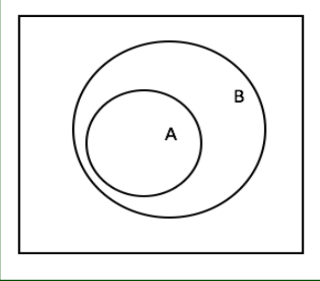
All a is b
Universal Negative
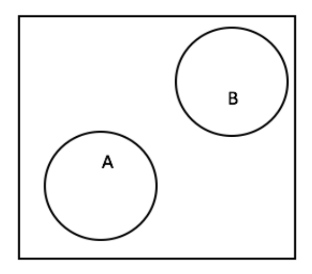
No a is b
Particular Affirmative
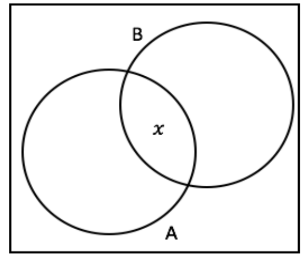
Some a is b
Particular Negative
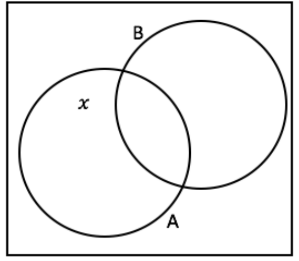
Some a is not b
Evaluating Arguments with Euler Diagrams
To analyze an argument with an Euler diagram:
Draw an euler diagram based on the premises of the argument
The argument is valid if the diagram cannot be drawn to make the conclusion false
The argument is invalid if there is a way to draw the diagram that makes the conclusion false
If the premises are insufficient to determine the location of an element or a set mentioned in the conclusion, then the argument is invalid
Problem Solving
Reasoning - the process of drawing conclusion or inferences through the use of proper justification
Inductive Reasoning
Inductive reasoning - the process of reasoning that arrives at a general conclusion based on the observation of specific examples
specimen - object defined by a premise
Conjecture - the generalization
Counterexample - a specimen that negates the conjecture
Strong inductive argument - if it makes a compelling case for its conclusion
Weak inductive argument - if its conclusion is not well supported by the premisses
* the strength of an argument is not necessarily related with the truth of the conclusion
Deductive reasoning
Deductive reasoning - the process of reasoning that arrives at a conclusion based on previously accepted general statements
Conclusion is based on general statements whose truth value is known or assumed.
Axioms - basic true statements
Theorems - derived true statements from axioms
Valid deductive statement - if its conclusion follows from its premises, regardless of the truth of the premises or conclusion
Sound deductive statements - if it is valid and its premises are all true
Summarization
Inductive reasoning cannot in general prove general statements as this relies on examples only. However, only one counterexample can prove our conjecture is false
We can use deductive reasoning to prove a certain conjecture
George Polya’s guidelines for problem solving
George Polya - mathematician
Devised a model for problem solving and published it in his book How to Solve It
The book contains a collection of mathematical and non-mathematical problems with selected strategies on dealing these
His problem solving model which he called heuristic(or serving to discover) is as follows:
Understand the problem
Ask questions, experiment, or otherwise replace the question with your own words
Determine what is asked
Determine the given facts
Determine what is asked
Determine the given condition
Have initial illustrations to visualize the setting
Separate various parts of the condition
Devise a plan
Find the connection between the data and the unknown
Look for patterns, relate to a previously known formula, or simplify the given information to give you an easier problem
Choose a suitable operation, procedure or formula
Carry out the plan
Check the steps as you go
Observe the accuracy of every step
Beware of possible errors that might arise
Obtain a feasible solution
Look back
Examine the solution obtained
Check the sense of the solution if it is reasonable
Check against the conditions
Along with his guidelines, the following are some of his recommended strategies:
Draw a diagram
Solve a simpler problem
Make a table
Work backwards
Guess and check
Find a pattern
Use a formula or an equation
Use logical reasoning