Accuracy and Precision
Accuracy - experimental values close at true values
Precision - experimental value are close to each other
Uncertainty in Measurements
Impossible - the analytical values are free of errors or uncertainties.
Possible - Minimize these errors and estimate their size with acceptable accuracy. (Get the mean)
Statistical calculations for use to judge the quality of experimental values are many.
Standards of known composition can be analyzed and the results compared with known composition.
Calibrating the equipments enhances quality of the data.
Questions to answer before beginning an analysis:
What is the maximum error that i can tolerate in the result?
No one can afford to waste time generating data that are more reliable than is needed.
Accuracy - population and sample mean
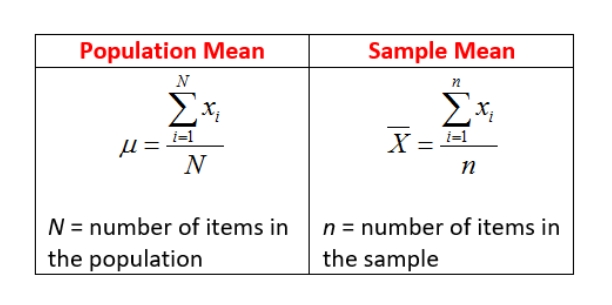
Xi = represents the individuals value of x making up a set of N replicate measures
Mean, arithmetic mean, and average (x) are synonymous
Median - is the middle data when values are arranged in order size.
For an odd number of data points, the median can be evaluated directly
For an even number, the mean of the middle pair is used.
Equal number of results are larger and smaller than the median.
Three terms to describe the precision of a set of replicate data
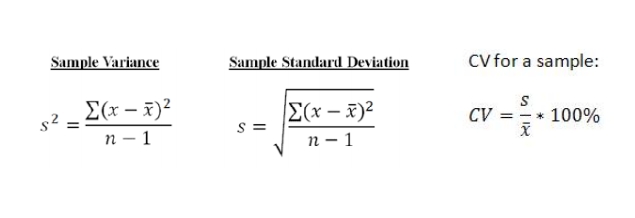
Standard deviation - root of variance, the distance between points.
Variance - square of sd, how much spread out is the data from the mean.
Coefficient of variation - percentage, how much the data is spread out relative to the average.
Experimental Error
Random or indeterminate error - scattered data more or less symmetrically around the mean; affects the precision of the measurement
Systematic or determinate error - causes the mean of a set data to differ from the set value; have the same value and about the same value for replicate measurement; affects the accuracy of the measurement
Gross error - large error that is either high or low; occurs occasionally.
Types of systematic error
Instrument errors - caused by imperfections in measuring device and instabilities in their components.
Method errors - incorrect procedure; from non-ideal chemical and physical behaviour of analytical systems.
Personal errors - result from carelessness, inattention, or personal limitation of the experimenter.
Reporting computed data
Always indicate the best estimate of the data.
Confidence interval of 90% to 95% indicates reliability.
Report standard deviation or coefficient of variation.
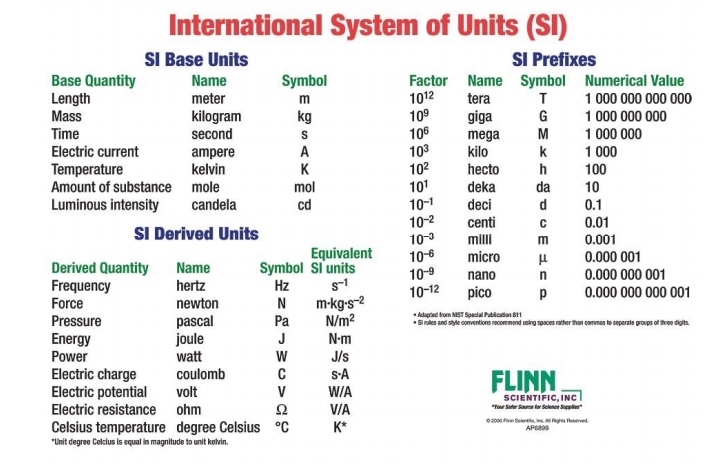
Système International (d'unités)