The Structure of Virginia Government
The Virginia Constitution, much like the US Constitution, established three branches of government: the executive, the legislative, and the judicial. There are many similarities between the makeup of Virginia's government and the federal government, but there are notable differences as well. In this lesson, we'll discuss the basic structure of Virginia's three branches of government.
Executive Branch
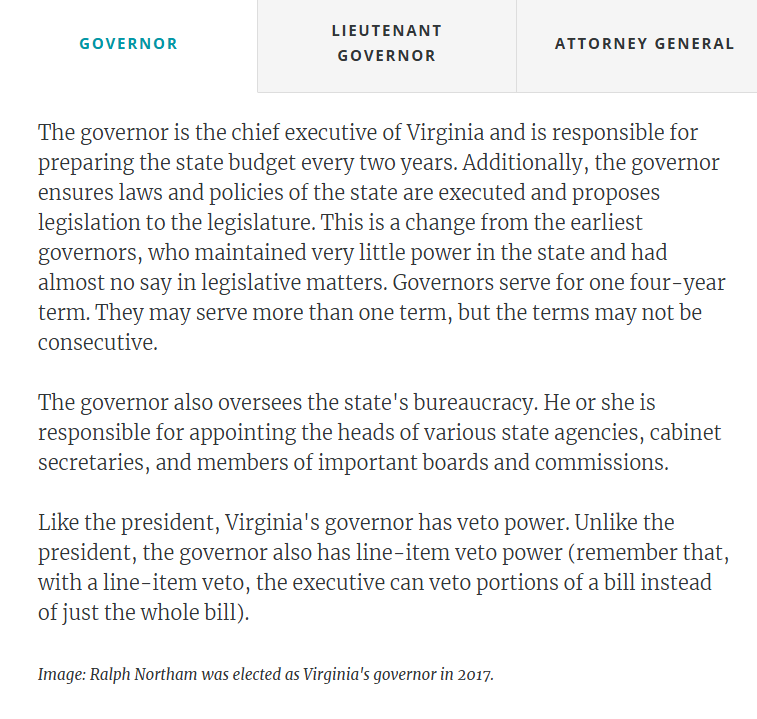
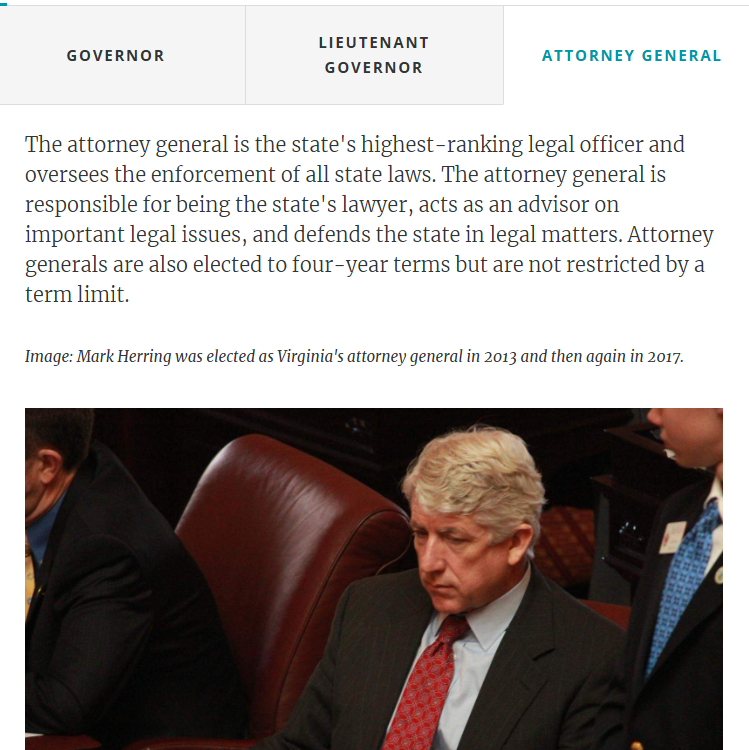
Virginia's executive branch consists of three officials who are elected to office by the citizens of the state: the governor, lieutenant governor, and attorney general.

 Legislative Branch
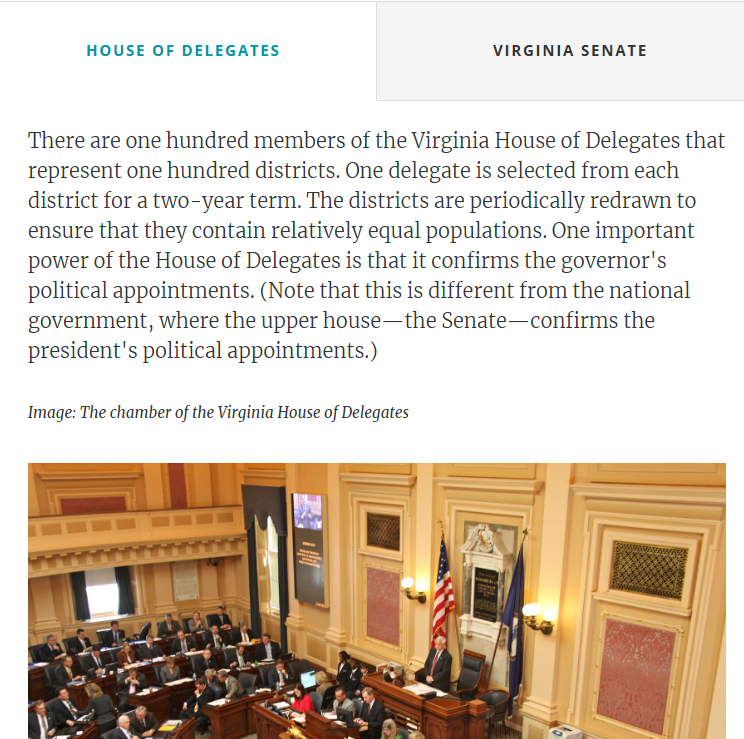
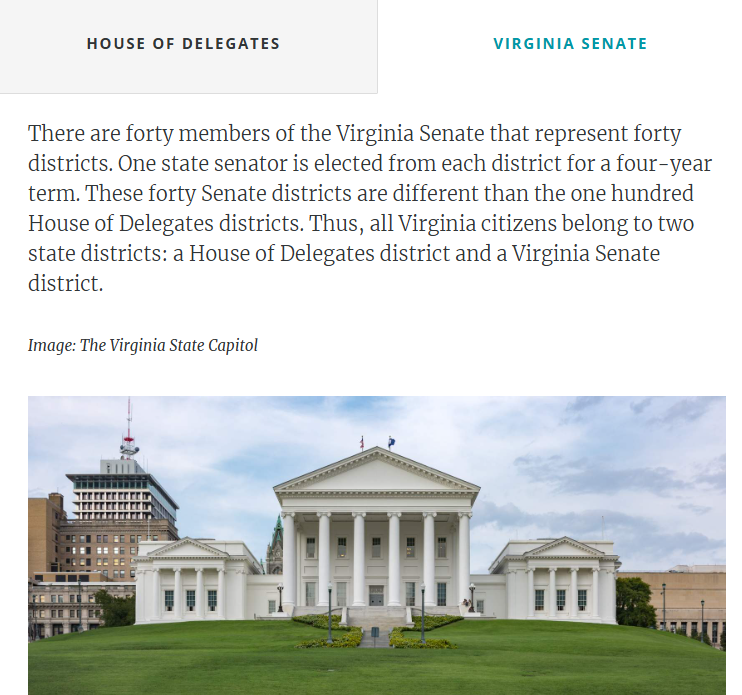
Virginia's legislative branch is called the General Assembly. It traces its origin to the formation of the 1619 House of Burgesses, making it the oldest legislative body in America. Like the United States Congress, the General Assembly is a bicameral legislature. The lower house is the House of Delegates, and the upper house is the Virginia Senate. The General Assembly is tasked with enacting the state's laws, passing the state budget (which is prepared by the governor), and levying taxes to fund that budget.
 Judicial Branch
The judicial system of Virginia is comprised of four levels of courts with judges that are elected by the state legislature: the Supreme Court of Virginia, the Court of Appeals, the circuit courts, and the district courts.
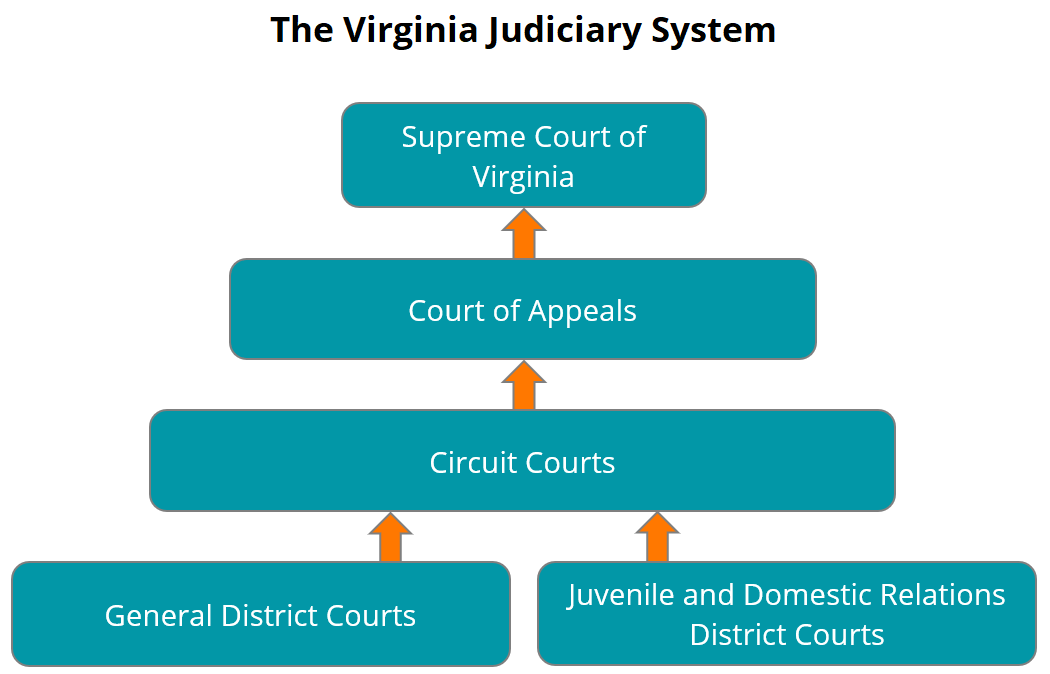
Supreme Court: The Supreme Court of Virginia has both appellate and original jurisdiction, but its primary focus is reviewing lower court decisions. As the highest court in the Commonwealth of Virginia, the Supreme Court serves as a final court of appeals in the state. Currently, there are seven justices on the Supreme Court, including a chief justice. The General Assembly elects the justices, and each serves a twelve-year term.
Court of Appeals: The Court of Appeals of Virginia reviews lower court decisions and state commissions. These include criminal cases (except those that involve the death penalty) as well as traffic court and domestic relations issues.
Circuit Courts: Circuit courts have both appellate and original jurisdiction for various civil and criminal cases. They often review the decisions of district courts. Circuit courts hear criminal cases with a penalty of more than one year in prison. In civil cases, the claim for damages must be more than $4,500 but below $25,000. Examples of other cases tried in circuit courts are property disputes, divorces, and adoptions.
District Courts: There are two types of district courts in Virginia: general district courts and juvenile and domestic relations district courts. General district courts decide misdemeanor cases that involve minor infractions, such as traffic violations. People who get speeding tickets, for example, will likely have to go to a district court.
Juvenile and domestic relations district courts have jurisdiction for cases involving anyone under the age of eighteen as well as cases involving family issues. Such cases can involve juveniles accused of a crime or who need to escape dangerous situations.
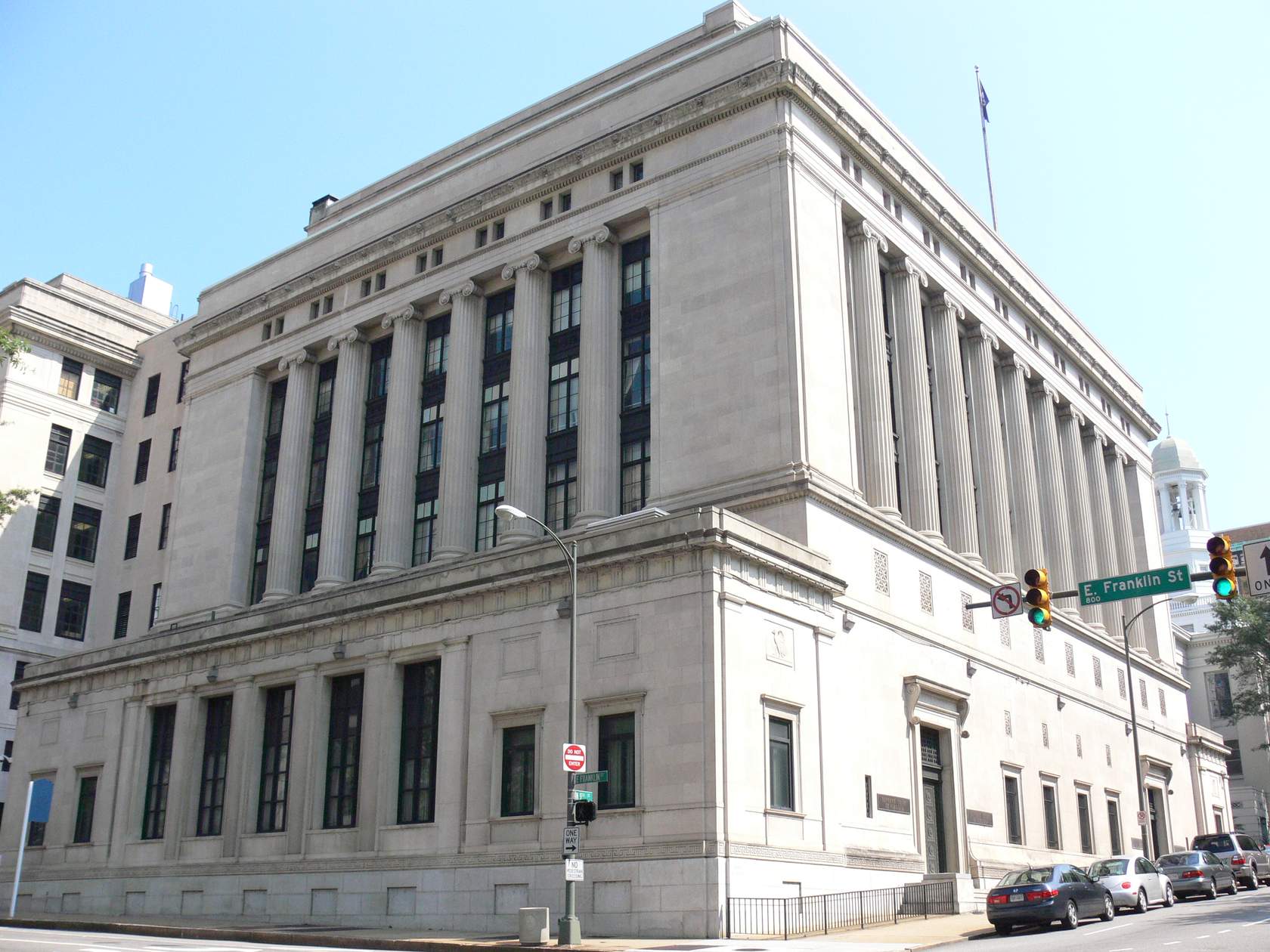
Supreme Court of Virginia Building