The Maya (note)
The Maya
Mayan Civilizations
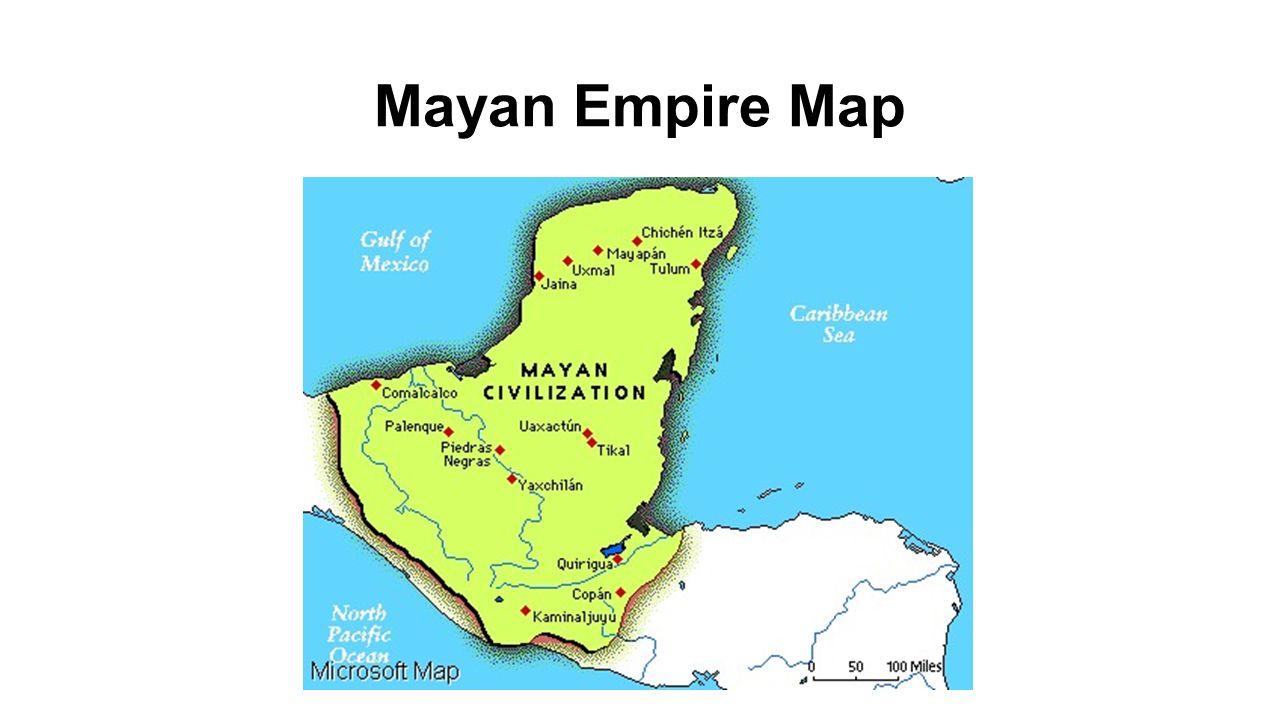
Locations
The Maya were Mesoamericans who lived on the Yucatan Peninsula in Central America. They also lived in the Mexican States of Campeche, Tabasco and Yucatan. They also settled in Belize, Honduras and Guatemala from about 2000 BC. This was one of the civilizations which existed in the Americas before the arrival of Christopher Columbus.
Periods of Mayan Development
There are three periods of Mayan development:
Pre- classic period 2000 BC-300 AD
Classic Period 300 AD -900 AD
Post- Classic Period 900 AD -1521 AD
Economic Organization
Agriculture/ Farming
Most of the Maya were farmers. Corn or maize was the main crop and was an important part of their religion, art and everyday life. Mayan farmers did not own land separately, but worked their fields as one community, each member of a group would be given a portion of corn land (milpas). The Mayan farmers cleared the forest trees by burning and cutting. The ground was broken with digging sticks and grains of corn were planted. The entire family took part in weeding the fields and chasing away birds.
When the corn was harvested, the farmers had to give a portion to the priests and noblemen as a form of tax. The crop was stored in large granaries or underground storerooms called chultunes.
Beans, squash and pumpkins were grown in cornfields and chilli peppers, sweet potatoes and cassava were raised in separate fields. Papayas or pawpaws and avocados were grown around their houses. Many other fruits grew wild and provided the Maya with bark, colouring, gum, wood and fruit for making household things. Cotton was grown in large quantities and was woven into the material.
For all these crops to grow, the farmers required water. Huge reservoirs were built to hold water. Wells or cenotes were used to transport water to the fields.
Crafts
People skilled in many different crafts supplied the Mayan states with clothing, tools and household implements. Many were farmers as well as craftsmen and in each city market there was a lively exchange in food stuffs, cloth, bowls, axes, animals and other goods.
Cotton was a valuable item and was picked from plants sown every year on the farms and from wild cotton trees which grew all over tropical America. Women did the weaving and dyeing of fibres on handlooms. Minerals and vegetable colours were used to make dyes.
The art of making beautiful feather costumes for soldiers and nobility was also highly developed by the Mayan women. The feather weavers made patterns with colourful plumes by twisting feathers into the cotton threads as they worked on their looms. Feathers were attached to weapons and shields. Bright feathered coats and costumes were worn by priests.
Basketry and rope-making were also great arts. Rope was important in building because men wrapped it around their shoulders to pull huge rock masses into position.
Pottery was a well-developed craft and there were many styles. The women prepared the clay, shaped it, painted and fired the ornate containers of the Mayan civilization. They also made charming model figures of people from all walks of life. Pounded stone and minerals were used to decorate the pots. The main colours used for decoration were brown, white, yellow, black and red. These pots held food and water. Incense was burnt in special clay containers.
The art of painting on clay also led to painting on walls of special buildings. The Mayan artists painted large colourful frescoes on wet plaster.
Hunting
For hunting, the Maya bred turkeys, doves and a breed of barkless dog. They hunted deer, tapir and peccary in the forests. They tracked these animals down with slingshots or atlatls which fired darts. Deer and other animals were trapped in deep pits covered with branches. Beautiful feathers were obtained from birds like the bright, green quetzal. The Maya hunters shot them with darts fired from blowpipes.
Mayan Society
The Maya organised themselves into a kin-based settlement or city states headed by a chief known as the Halach Uinic. He was the hereditary ruler who commanded a following through political skill and the ability to communicate with supernatural powers. He appointed all administrative officers but his power was limited by his council (holpop) and special military and foreign advisors. The Halach Uinic and his family made up an elite segment of the society, enjoying the privileges of high social rank.
Each village in the settlement was headed by a batab (batabob) who was responsible to the Halach Uinic. They held judicial, military and administrative authority over their towns. They ensured that tribute was paid to the Halach Uinic and supplied troops in times of war.
The tupiles were constables supervised by the batabs and they were charged with keeping the peace.
There was a war chief or nacom who organised the battles and raised armies. They served for a three-year term.
Priests or Akin were also of the highest class. The high priest was responsible for foretelling events for the ruler and finding dates for festivals.
The free population was divided into farmers, artisans and merchants. The lowest class in society was the slaves.
Housing
Mayans lived in round huts with a central wooden pole which supported a cone shaped roof. The walls were made of woven reeds and there were no windows. Set apart from the houses was a ceremonial area with massive stone structures. Leading Mayan city states had populations of about 8000- 10000 people. The homes of the elite were larger and constructed of stone.
Public buildings in the city centre were built with limestone and cement.
Religion
The Maya were polytheistic and religion influenced their lives. They had 166 gods that could be good or bad and needed constant worship. Some of the gods which the Maya worshipped included Chac (god of rain), Yum Kax (god of corn) and Ah Kinchil (god of earth). Mayan priests were so important that historians first thought they were rulers. It was believed that they communicated between men and the gods. They studied the stars and told farmers when to plant and when to reap. In turn, the farmers had to supply the priests with everything they needed in order to keep favour with the gods. They gave the priests a share of their crops and the handcrafts which their families produced. Priests also organised the festivals and made sacrifices (e.g. crops, animals).
The Maya believed in human sacrifice and their sacred ball game “Pok a Tok” had ritual significance. The losers could be sacrificed.
Maya Achievements
The Maya were very advanced people for the times in which they lived; they were certainly more advanced than the Taino and Kalinago. They developed calendars, a writing and numbering system and built massive buildings (pyramids) over 200 feet high.
Temple pyramids were built with many stone steps leading to the top. Thousands of people worked to produce such buildings. They carried rubble and piled it high. Then stones were cut and dragged to the site. They were hauled into place by simple muscle and cemented together over the rubble. Such work took years to complete.
The Calendar and Writing
They developed a sophisticated system of writing and had three calendars. One calendar kept track of days, months and years. There was a sacred calendar of 260 days and the third calendar recorded the number of days since the beginning of the Mayan era.
The Maya had a method of writing in symbols. Each system was called a glyph. Besides carving the glyphs, they also wrote on paper.
They also developed a system of numbering. The bar (-) had a value of five and the dot (.) a value of one. The symbols were put together until the number 20 was reached. Twenty was represented by a shell with a dot over it. The shell by itself represented zero. By using these symbols, the Maya were able to count everything from years to cocoa beans and write the amount down to remember it. This may seem simple to us, but it was quite an achievement.