ATP and Metabolism
Energy is stored in chemical bonds and can be released + transformed by metabolic pathways
Metabolic Pathways: Coordinated series of biochemical reactions that convert molecules into different molecules
Characteristics of Metabolic Pathways
A series of separate, intermediate reactions
Each reaction is catalyzed by a specific enzyme
Metabolic pathways are similar in all organisms
Many are compartmentalized
Each pathway is controlled by one or a few key enzymes that can be inhibited or activated.
Cellular Energy: ATP
Adenosine Triphosphate (ATP) is the main energy currency in cells
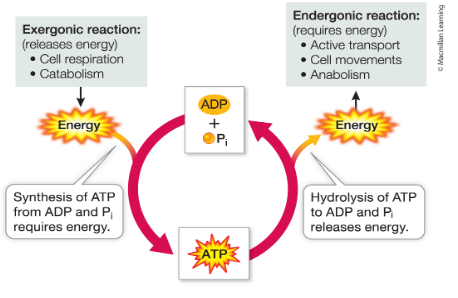
Energy released by exergonic reactions is stored in the bonds of ATP
When ATP is hydrolyzed, free energy is released to drive endergonic reactions
Coupling Exergonic and Endergonic Reactions using ADP and ATP
Exergonic Reaction: releases energy that is used to drive the endrgonic condensation of ADP + Pi to make ATP
Energy released by the hydrolysis of ATP to ADP + Pi can then be used to drive and endergonic reaction
ATP is Recyclable
The ADP portion of the molecule stays the same
Adding a third phosphate group (phosphorylation) adds energy
Removing the phosphate group (hydrolysis) releases energy
ATP can also be recharged and reused
The cell can make and break ATP extremely quickly
Muscle cell makes and uses about 10M molecules of ATP every second
ATP Production from Food Metabolism
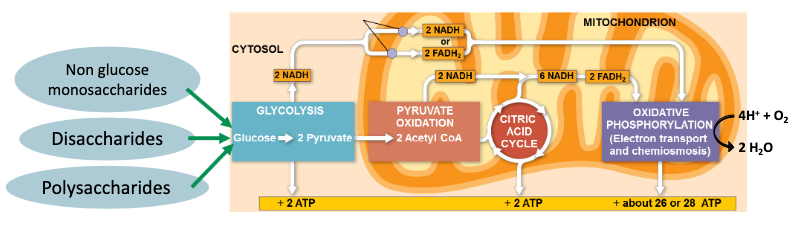
Amino acids, monosaccharides and fatty acids are produced from the metabolism of proteins, carbohydrates and fats, respectively
Pyruvate and/or acetyl-CoA are obtained, which, in turn, are generally metabolized in the Krebs cycle and the oxidative phosphorylation
Pyruvate and Acetyl CoA
Glucose is metabolized via glycolysis, leading to pyruvate which can then either ber reduced to lactate or alanine
Enter the tricarboxylic acid (TCA) cucle via pyruvate dehydrogenation (PDH) as acetyl CoA
Pyruvate is thus an intermediate, common to oxidative phosphorylation and anaerobic glycolysis
ATP Synthesis in Mitochondria
Energy released during respiration is conserved as ATP
Mitochondria have an outer membrane, which allows the passage of most small molecules and ions
The electron-transferring molecules of the respiratory chain and the enzymes responsible for ATP synthesis are located in and on this inner membrane
Space inside (matrix) contains the enzymes of the TCA cycle
ATP Formation during Photosynthesis
6CO2 + 6H2O + light energy → C6H12O6 + 6O2
Electron carrier molecules are arranged in electron transport chains that produce ATP and NADPH (which temporarily store chemical energy)
The light reactions capture energy from sunlight, which they change to chemical energy that is stored in molecules of NADPH and ATP
The light reactions also release oxygen gas as a waste product
Calvin Cycle reactions use chemical energy from NADPH and ATP that were produced in the light reactions
Two ways of ATP to be generated
Substrate Level Phosphorylation
Oxidative Phosphorylation
Three Uses of ATP
Chemical: Ezymes oversee the transfer of energy from ATP hydrolysis to the formation of another chemical bond
Mechanical: Hydrolysis of ATP to ADP causes a conformational change — the protein changes shape — that generates a mechanical force
Transport: ATP in the sodium-potassium pump
ATP is a Nucleotide
ATP not only stores energy, but is also one of the building blocks of RNA (along with UTP, CTP and GTP)
GTP can also be used to hold and transfer energy
RNA polymerases link these building blocks together into long chains to make messenger, transfer, ribosomal and other types of RNA
Electron Carriers in Metabolic Pathways
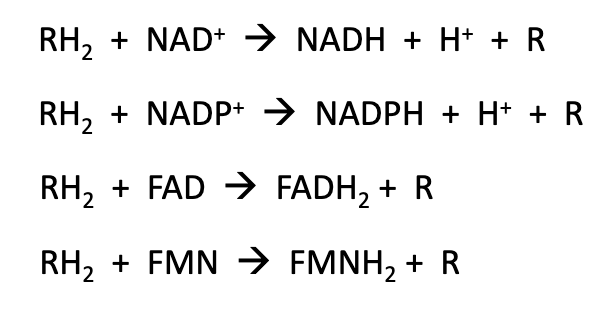
Cells use coenzyme nicotinamide adenine dinucleotide (NAD) as an elextron carrier in redox reactions
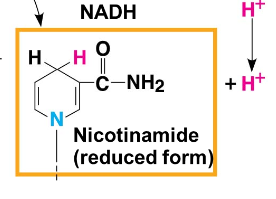
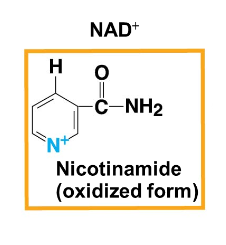
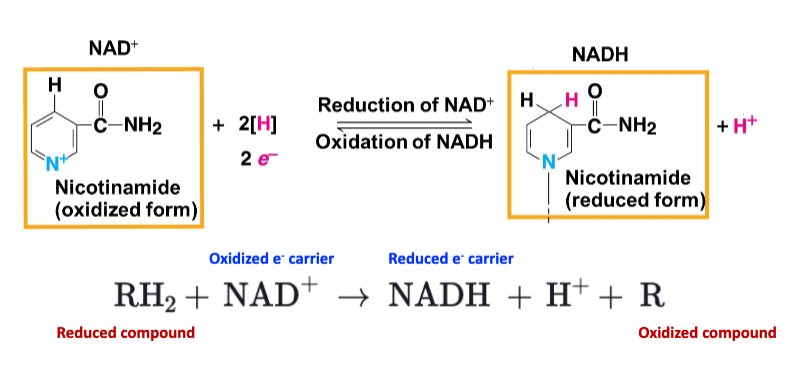
Electron Carriers in Metabolic Pathways have 2 distinct forms; oxidized and reduced
FAD + FMN can accept 2e- and 2H+