Routes of Medication Administration
Certain medication administration processes must be followed regardless of the route of administration.
Verify all medication prescriptions and check for allergies.
Uphold the rights of medication administration before giving the medications.
Perform hand hygiene and, as needed, apply gloves.
Use aseptic technique in the preparation and administration of all parenteral medications.
Identify the client per the facility’s protocols, using two identifiers. Ensure that the client is wearing an identification band for scanning medications.
Validate allergies with the client.
Educate the client about all medications to be administered.
Position the client appropriately for the route by which the medication will be administered.
Prepare all unit dose medications at the bedside. Open unit dose medications after scanning and immediately prior to administration; never prepare medications for future administration. A unit dose medication is a medication that is prepared and packaged by the hospital’s pharmacist or the medication manufacturer in a single unit dose container that is specific to the provider’s prescription for the client. A multi-dose vial is a container that holds more than a single dose of medication and can be used for multiple clients. Multidose medications in syringes, cups, or basins must be labeled when prepared.
Never leave medications at the bedside.
Document pertinent client information before leaving the bedside (e.g., vital signs, assessment findings, communication with health care provider).
Keep medications that require specific assessments (e.g., blood pressure, apical heart rate, or laboratory data) in a separate labeled cup.
Assess the client 30 minutes after medication administration for desired effects or adverse effects.
Notify the health care provider if any concerns or problems arise in administering medications to the client.
unit dose medication
multi-dose vial
A nurse is preparing to administer medications to a client. Which of the following actions should the nurse take to support safe medication administration?
Select all that apply.
a
Check the client's room number to confirm the client's identity before administering medications.
b
Leave the medications at the bedside if the client is not ready to take them at the time of preparation.
c
Assess the client for desired effects or adverse effects 1 hour after medication administration.
d
Perform hand hygiene and apply gloves as needed before preparing and administering medications.
e
Prepare all unit dose medications at the bedside and open them immediately prior to administration.
Routes of Administration
There are three major categories of medication administration: enteral, topical, and parenteral. Some medications are formulated to be administered by several routes. For example, acetaminophen can be administered as a pill or liquid (enteral–oral), as a rectal suppository (rectal–topical), or as an intravenous (IV) medication (IV–parenteral). The health care provider will prescribe the route in relation to the client’s needs and condition. For instance, if the client is experiencing vomiting and diarrhea, the health care provider will prescribe acetaminophen to be administered via the parenteral (by injection) route. In emergency situations where the client needs the immediate effects of the prescribed medication, the intravenous route is preferred. The oral route is the most convenient, costs less, and is typically a safer route of medication administration.
The selection of the medication route is based on several factors.
Medication attributes: Is the medication a solid, liquid, or gas? For example, a medication in gas form is administered via inhalation.
Location of desired action: Is the desired effect of the medication local or generalized? For example, local effects can be achieved with the use of topical creams that provide maximal effect while preventing side effects from affecting other parts of the body. Generalized effects are achieved using oral or injectable medications, such as those used to treat infections inside the body.
Digestive juices and first-pass metabolism: Medications that are predominantly digested when given orally are administered by a different route.
Speed of desired response in a medical emergency or routine care: Emergent medical conditions usually require intravenous injections so that the medication can reach the desired location quickly.
Dosage accuracy: Medications that are administered via the intravenous or inhalation route can be adjusted depending on the client response during the treatment.
Client condition and adherence: Pediatric and geriatric clients may not adhere to medical advice. Unconscious clients are unable to take medications orally.
Common Routes of Medication Administration
Route of Administration | Advantages | Disadvantages | Administration Site |
|---|---|---|---|
Oral (PO) |
|
| By mouth/swallow |
Sublingual (SL) |
|
| Beneath the tongue |
Rectal (PR) |
|
| Anus |
Intravenous (IV) |
|
| Into the vein |
Buccal |
|
| Between the cheek and the gum line |
Inhalation |
| Local irritation can precipitate respiratory secretions or bronchospasms | Inhaled through the mouth into the lungs |
Intramuscular (IM) |
|
| Into the muscle |
Subcutaneous (subcut) | Can be self-administered by the client |
| Beneath the skin |
Transdermal | Effects can last for several days | Medication dosing varies due to client factors | Applied to the skin |
Otic | Can be administered by the client | Blockage of the ear canal will decrease absorption therefore ear irrigation of ear canal must occur before instilling drops; positioning of ear canal is different for children and adults | Outer ear |
Opthalmic | Can be administered by the client | Client's contact lens must be removed prior to instilling medication; bradycardia and hypotension can occur with specific opthalmic medications (i.e. beta blockers) | Eyes (mucous membrane or conjunctival sac) |
Nasal | Can be administered by the client | Permanent swelling of tissue within nose can develop with continued use | Nostrils |
A nurse is educating a client on the reasons for different routes of medication administration. Explain why a health care provider might prescribe a medication to be administered via the IV route rather than orally in an emergency situation.
Type and submit your response to compare it to an expert response.
Enteral Medication Administration
Enteral medication administration is used to describe medications that are administered via the GI tract, including the mouth, stomach, and intestines. Enteral medication administration forms include tablets, capsules, and liquids.
Sometimes a client is unable to take a medication by mouth and requires an enteral tube, which goes directly into the stomach or small intestine. Oral medications can be given via an enteral feeding tube, although consideration must be given to medication formulation and minimization of tube occlusion.
Administering Oral Medications
The form of the oral medication being delivered will dictate the type of measuring device required to administer the client’s medication accurately and safely. For example, when administering oral liquid medications, a syringe, dropper, or metered measuring cup is necessary for preparing the medication for administration:
When using a syringe to measure the medication, carefully pull up on the plunger until the medication reaches the black line on the top of plunger at the desired measurement marking. Turn the syringe up, and tap gently on the side of the syringe to remove the air bubbles. Remove the air from the syringe by gently pushing up on the plunger. This procedure may need to be repeated to reach the correct amount of medication ordered.
If using a dropper, after placing the dropper into the medication bottle, squeeze the rubber top. Remove the dropper from the bottle and read the amount on the dropper. Carefully squeeze the top of the dropper until the amount lines up with the desired dosage displayed on the dropper. Use only the dropper provided with the medication. as the dropper is typically specific to the prescribed medication.
If using a metered measuring cup, place the cup at eye level on a flat surface. Pour the medication until the dose reaches the correct line.
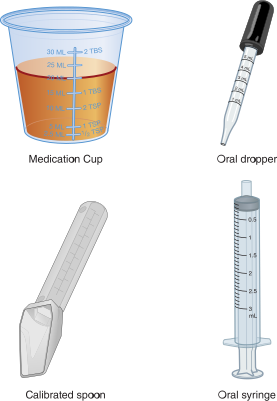
Approved measuring devices for liquid medications
A pill cutter may be necessary to split a medication tablet so that it equals the amount prescribed by the health care provider. Using a pill cutter to split medications ensures that the right dose of medication is administered. For example, the health care provider may have ordered 1 mg of a medication to be administered, but the medication is available only as a 2-mg tablet, requiring the nurse to split the pill in half. The pill must be scored to assure the correct dose will be administered. If the pill is not scored, the nurse should consult with the pharmacist. A nurse should never use the hands or other objects to split pills, as an incorrect dose could be administered. The procedure for splitting a pill is as follows.
Perform hand hygiene and collect the necessary supplies (pill cutter, medication, and gloves).
Clean the pill cutter (per facility policy and procedure) to prevent cross-contamination of other medications.
Put on gloves and place the pill in the pill cutter.
Close the pill cutter, which splits the pill in half.
Dispose of the unused half of the pill per facility policy.
Administer the medication to the client following the rights of medication administration.
Clean the pill cutter (Cleveland Clinic, 2022).
A nurse is preparing to administer medication to a client that is only available as a 2-mg tablet, but the health care provider has prescribed a 1-mg dose. Place the following steps in the correct order to safely split the medication tablet using a pill cutter.
1
2
3
4
5
6
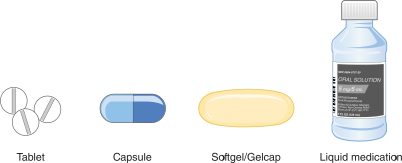
Oral medications come in different forms. Note the line on the tablet. This tablet is scored and can if necessary by split with a pill cutter along the score line.
Forms of oral medications
Oral Medication Administration: Oral, Buccal, Sublingual
It is important for the nurse to determine if the tablet or capsule medication should be administered on an empty stomach or with foods. In addition, the nurse should identify whether specific foods may decrease or enhance absorption. Tablets are manufactured by pressing a mixture of substances, including the medication and other ingredients, into a smaller space. Tablets have various shapes, which aid in swallowing of the tablet, and some are scored to make it easier to cut the tablet if needed. Tablets can be in chewable form or have an enteric coating to prevent them from breaking down before they reach the small intestine. Tablets come in various delivery types, including quick release, delayed release, or extended release.
Capsules are made of a gelatin that surrounds the medication, a structure that means they have a higher bioavailability than tablets. Therefore, capsules can act more quickly within the body and be more effective because the medication enters the circulation faster. Capsules are less likely than tablets or liquid medication to have an unpleasant taste. However, these formulations usually cannot be split in half or crushed (unlike tablets). The most common types of capsules are soft and hard. Soft capsules contain medication formulated as an easily digested gelatin. Hard capsules consist of two parts that fit together and surround the powder or pellet ingredients.
Liquid dosage forms may be easier for some clients who may have difficulty swallowing solid medications. The taste of liquid medications can be unpleasant, however, and may require the addition of a flavoring (cherry or grape) by the pharmacist to make them more palatable for the client.
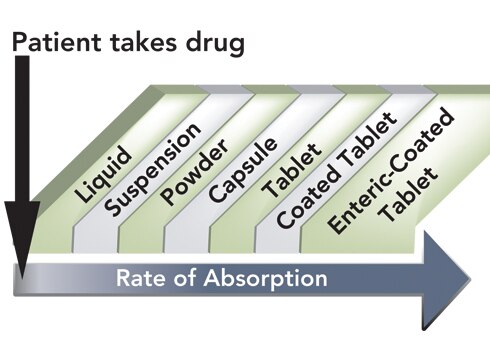
The fastest rate of absorption for the method of administration is first liquid, second suspension, third powder, fourth capsule, fifth tablet, sixth coated tablet, and last enteric-coated tablet.
Routes of Medication Administration
Some basic principles regarding administering an oral medication to a client are listed here.
Assess the client’s level of consciousness and ability to swallow.
Assist the client to a position that will prevent choking and aspiration, such as elevating the head of the bed to semi-Fowler’s or high-Fowler’s position as the client’s prescribed activity level permits.
Offer water or a beverage (per the client’s prescribed diet) of the client’s choice to help the client swallow the medication. Some clients may prefer to take their oral medications mixed in applesauce or pudding.
If using a portion of a multidose container, pour liquids into a metered measuring cup and hold the medication label in the palm of the hand. This may prevent the liquid medication from obscuring the label prescription or instructions—that is, necessary information required during medication administration. Remain with the client until the medications are swallowed. Never leave the medications at the client’s bedside.
Sublingual medications are placed under the tongue. Instruct the client not to chew or swallow the medication. Remain with the client until the medication has dissolved.
Buccal medications are placed between the cheek and the gum line. Instruct the client not to swallow or chew the medication. Remain with the client until the medication has dissolved.
buccal route
Refer to the Skill: Administering Oral Medications.
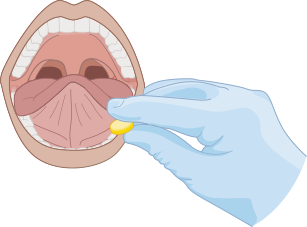
Place sublingual medications under the tongue
Sublingual medication administration
Enteral Feeding Tube Medication Administration: Nasogastric, Gastrostomy, or Jejunostomy Tubes
An enteral feeding tube (EFT) is placed for clients who are unable to absorb nutrition or medications through the GI tract or to deliver nutrition and medications to clients who are unable to take them in through the oral cavity. There are several different types of EFTs, which can be inserted surgically through the abdominal wall, into the stomach (gastrostomy tube [GT]), or into the jejunum (jejunostomy tube [JT]). These are usually placed for long-term use. Other EFTs are inserted through the nose, such as a nasogastric (NG) tube, which is placed into the stomach, or a nasoduodenal (ND) tube, which is placed into the duodenum. These nasally placed tubes are usually used temporarily as a client convalesces or during surgery.
A potential complication that may occur with EFTs is clogging of the tube, which may necessitate replacement of the EFT. Clogging is most often due to administration of medications. Several preventive measures should be taken when giving medications via an EFT. Administer medications in liquid form whenever possible to avoid clogging the tube with crushed pills. Some medications are not available in a liquid formula, however; in such a case, a pill must be crushed and dissolved in a liquid (e.g., warm water). Always consult the health care provider and the pharmacist about whether the medication can be crushed and the type and amount of liquid needed to completely dissolve the crushed medication. If the medication can be crushed, be sure to crush it completely. Enteric-coated, capsules, sustained-release, and immediate-release medications should not be crushed or opened, as adverse effects can result when these medication forms are altered.
enteric-coated
sustained-release
An effective intervention recommended to prevent an EFT from becoming clogged is to flush the tube before giving the medication, in between administration of multiple medications at the same time, and immediately following the administration of medications. It is recommended to flush the tubing with 30 to 60 mL of water prior to and after administration of medications and to flush with 15 to 30 mL in between medications.
If a medication is given via the enteral route through a feeding tube, the nurse must ensure the medication is compatible with this route. Mixing the medication in the feeding may result in delayed medication absorption, drug–formula interactions, or precipitation of the medication.
Adverse events related to tubing misconnections have also been documented. Enteral medications and feedings have been erroneously connected to IV tubing, and IV medications and solutions have been mistakenly connected to EFTs. These medication errors have caused death and severe client injury. Such errors are primarily due to the use of Luer connectors, which permit the nurse to erroneously connect syringes to tubing independent of the type of tubing (IV or enteral). A specially designed enteral connector placed on the end of the EFT and a syringe that will only fit this connector have been developed to prevent the syringe from being connected to any other connector used in the clinical setting. In addition to the engineered connector and syringe, nurses must follow the tubing from the client to the point of origin (feeding pump or IV bag) before connecting or reconnecting any device or infusion (enteral or parenteral). Refer to the Skill: Administering Enteral Medications
Topical Medication Administration
Topical medications include those applied directly to the skin or mucous membranes of the eyes, nose, respiratory tract, vagina, rectum, and urinary tract. Such medications can be used for local effects (i.e., for treatment of a specific body part) or for a systemic effect, in which the whole body is affected once the medication is absorbed through the skin
Transdermal applications allow for the medication to be absorbed slowly, providing prolonged medication release lasting for several days. Transdermal patches are generally applied to the upper torso, chest, upper arms, or back, or behind the ears. The medication released by these patches is absorbed through the skin for systemic distribution for a prescribed amount of time. Examples of types of medication delivered via transdermal patches include opioids, antidepressants, contraceptives, nicotine, and antinausea medications.
transdermal
With transdermal medications, the old patch should be removed before a new patch is applied. Nonsterile gloves should be used during the removal and application of the patch to prevent the nurse from absorbing the medication. The new application should be rotated to different sites to avoid irritation. Do not place patch on nonintact or irritated skin. Refer to the Skill: Administering Transdermal Medications.
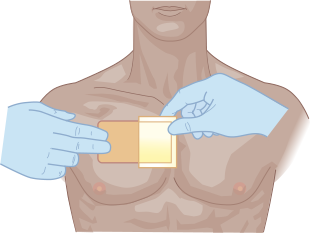
Administration of a transdermal medication
Ophthalmic medications are applied to the mucous membranes of the eyes or conjunctiva. Ophthalmic solutions are instilled into the lower margin of the eyelid (conjunctival sac). Eye drop medications, such as beta-blockers and alpha agonists, can also enter the bloodstream, causing systemic signs and symptoms. Punctal occlusion, also known as nasolacrimal occlusion, is a method used to prevent the medication from entering into the nasolacrimal duct and into the systemic circulation. After the nurse instills the eye drop(s) and the client closes the eye, the nurse places an index finger at the inner corner of the client’s eye, maintaining gentle pressure there for 30 to 60 seconds. Strict aseptic technique must be maintained when administering any medication to the eyes to avoid contamination or infection. Do not instill medication directly on the cornea, as this can cause the client pain, irritate the cornea, and increase the medication’s systemic effects. Refer to the Skill: Administering Ophthalmic Medications.
ophthalmic
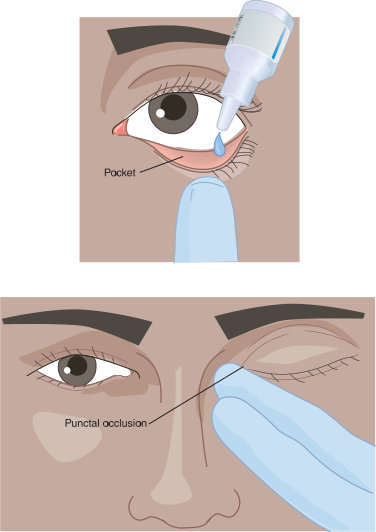
Punctal Occlusion after Ophthalmic Medication Administration
Otic medications are used for the treatment of local infections and inflammation; they are instilled into the outer ear. When administering otic medications, assure that the medication is at room temperature. Never administer cold solutions into the ear canal, as this may cause the client to become dizzy and cause pain. Prior to instilling the eardrops, pull the pinna up and back gently, which helps to straighten the ear canal and facilitates the movement of the medication through the ear canal. Position the client in a side-lying recumbent position with the affected ear facing up, to prevent the medication from exiting the ear canal. Refer to the Skill: Administering Otic Medications.
otic
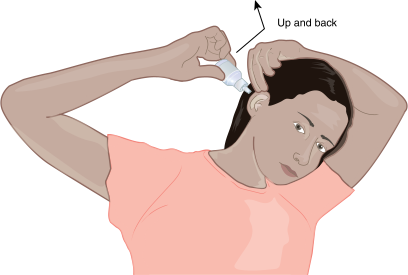
Otic Medication Administration
Nasal medications are drops or sprays instilled within the nostrils, then absorbed through the mucous membranes and into the bloodstream. Medications that can be administered via the nasal route include nicotine (smoking cessation), calcitonin (osteoporosis), sumatriptan (migraines), and corticosteroids (allergies). For these nasal medications to be absorbed, the nostrils must be clean of mucus. Decongestant nasal sprays can be purchased as OTC medications for the treatment for congestion. If the nasal decongestant is used too frequently or for too long, the client can experience rebound congestion. As the client increases the use of the nasal spray, the blood vessels in the nose narrow, causing the inside of the nose to shrink. Once the effects of the nasal spray wear off, the nasal tissue swells. Permanent swelling of the tissue can develop with continued use of the nasal spray. Refer to the Skill: Administering Nasal Medications.
nasal
Intravaginal medications are used to treat infections, administer estrogen during menopause, as hormonal support during in vitro fertilization and for contraception. Forms of medication given by the vaginal route include solution, tablet, cream, gel, suppository, or ring options. With this route of administration, the medication is absorbed through the vaginal wall. The nurse must wear gloves to avoid contact with the client’s secretions. Administration of the medication will be dependent upon the form and purpose. Refer to the Skill: Administering Intravaginal Medications.
vaginal route
Medications given by the rectal route are supplied in the form of suppositories, although creams and ointments may also be prescribed. Rectal medications can be used for clients who have trouble swallowing, an obstructed bowel, or decreased movement in the intestinal tract, or clients who are unconscious. The medication is absorbed through the lining of the rectal vault. The rectum should be empty of stool before administering the medication, as this increases the medication’s effectiveness. Discuss with the client the need to refrain from passing stool for a minimum of 20 minutes once the suppository has been given to provide enough time for the medication to enter the systemic circulation and have an effect. Suppositories should not be administered to clients who have had recent rectal surgery, who have rectal bleeding, or who are at risk for bleeding (low platelet count). Refer to the Skill: Administering Rectal Medications.
rectal route
Inhaled medications take the form of very small droplets that, upon inspiration, pass through the trachea into the lungs. The smaller the droplets, the deeper they will travel into the lungs, which increases the amount of the medication absorbed. Inhaled medications, also known as aerosols, are used to treat respiratory conditions such as asthma, chronic obstructive pulmonary disease, cystic fibrosis, and infectious pulmonary disease. The most common methods of aerosol delivery are metered-dose inhalers (MDIs), dry powder inhalers (DPIs), and nebulizers. These devices expel a preset dose of medication each time they are activated. To effectively use an MDI or DPI, the client must be taught to coordinate inspirations with activation of device and to take a slow deep breath in to achieve distribution of the medication into the lungs and not to the back of their mouth, which may happen if the client inhales too quickly. For clients who are unable to coordinate this activity due to physical, cognitive, or developmental concerns, a spacer should be used to improve medication delivery. A spacer provides a chamber that holds the medication and attaches externally to the inhaler. Refer to the Skill: Administering an MDI.
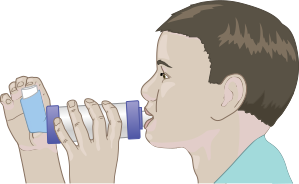
A spacer is used with an MDI to distribute medication more effectively into the lungs.
Variation of Inhaled medication (Spacer)
A nurse is educating a client about different routes of medication administration and their specific considerations. Match the routes of medication administration in the left column with the appropriate considerations for each route in the right column.
Consider using a spacer if needed.
Remove the old patch before applying a new one and rotate application sites.
Avoid instilling medication directly on the cornea.
Instruct the client to refrain from passing stool for at least 20 minutes.
Apply directly to the skin or mucous membranes for local or systemic effects.
Parenteral Medication Administration
Medications given by the parenteral route (intradermal, intramuscular, subcutaneous, and IV) are administered by an injection, which means that they bypass the digestive tract. The medication is administered using a needle and syringe or an intravenous catheter, while maintaining aseptic technique.
parenteral route
General Information
All parenteral medications are given with a syringe and safety needle (IM, intradermal, or subcutaneous injections) or a syringe and needleless system (IV). However, the appropriate type and size of a needle as well as the syringe need to be selected by the nurse as the nurse prepares the medication for administration to the client. Nurses must be aware of the various parts of the syringe and needle that must remain sterile while preparing and administering the medication. The syringe and needle may come packaged as a single unit or separately.
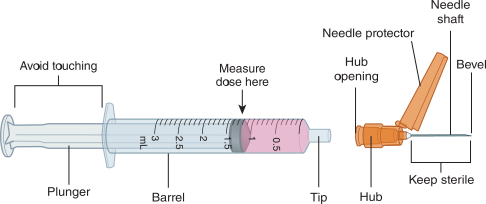
Parts of a syringe and needle
To select the correct syringe and safety needle or needleless system, the nurse must use best judgment based on the type of parenteral injection that will be administered (IM or subcutaneous), the location (deltoid or ventrogluteal site), the size or age of the client (pediatric, obese), and the amount and viscosity of the medication. Syringes with safety needles should only be used to administer intramuscular, subcutaneous, or intradermal medications. Some of these needles have a guard that the nurse engages to glide over the needle; in other models, the needle automatically withdraws into the syringe once the injection has been completed. This design is intended to prevent the nurse from having an inadvertent needlestick immediately after the injection.
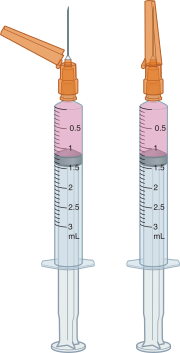
A safety needle can prevent needlestick injuries.
Safety Needle
Syringe Sizes and Types
The size of the syringe selected by the nurse is based on the amount of medication to be drawn into the syringe and the desired pressure flow. The barrel of the syringe is labeled with centimeters (cc) or milliliters (mL): 5 cc is the same volume as 5 mL. If a large amount of medication must be administered, the nurse should use a larger syringe.
Syringes are designed to have either a Luer connection tip or a non-Luer tip. The tip of the syringe is where the hub of the needle is connected. If the syringe has a Luer connection tip, then the needle hub can be turned and tightened (locked) into place. If the syringe has a non-Luer tip, the needle can only be slipped off and on of the syringe.
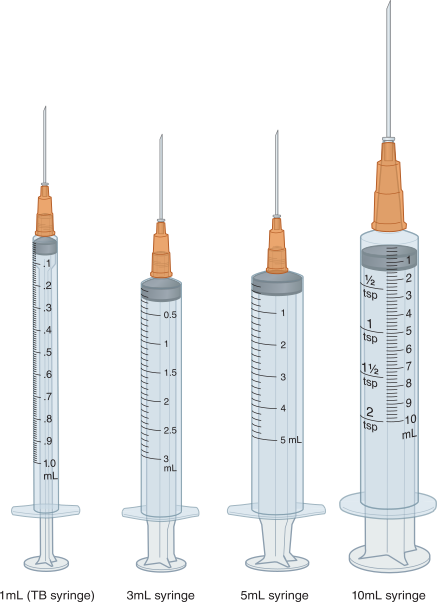
Common syringe sizes used for parenteral medication administration
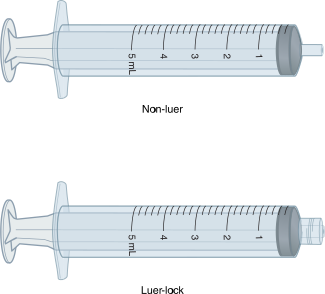
Note the difference in the tips of the syringes: non-Luer (slip) tip versus Luer-Lock connector tip.
Insulin is administered using an insulin syringe, which consists of an attached needle, barrel, and plunger. Sizes of insulin syringes range from 0.25 mL to 1.0 mL. The larger the insulin syringe, the more insulin it can hold. For example, a 0.50-mL syringe can hold 50 units of insulin. When selecting the syringe size to use when drawing up insulin, the nurse should consider the amount (number of units prescribed) of insulin being drawn up.
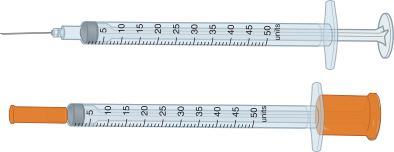
Insulin syringes are used to measure units of insulin. Insulin syringes should only be used to draw up and administer insulin. Note that the label “units” is printed on the syringe barrel. The unit label refers to the number of units the client is prescribed to receive.
Insulin Syringes

Note the unit marked on the barrel of the syringe is mL only. This syringe should be used for medication amounts that are less than 1 mL.
right Tuberculin (TB) syringe
Tuberculin (TB) syringes are specifically made for administration of medication under the skin and to complete a tuberculosis test, also known as a purified protein derivative (PPD) test. The needle on the syringe is a fine needle, usually 26 to 27 gauge (G). Some TB syringes come with the needle permanently attached, while others come with the needle detached, requiring the nurse to place the needle on the syringe. This type of syringe holds a maximum amount of 1 mL and is able to measure amounts to the hundredths (0.01 mL).
It is vital to recognize the difference between insulin and TB syringes, because an insulin syringe is inappropriate as a substitution for a TB syringe. The units of measurement are different on the syringes. and the length of the needle is shorter on the TB syringe. The TB syringe needle is shorter because it is used to administer medications intradermally (between the layers of the skin), whereas the insulin needle is slightly longer to administer the insulin subcutaneously (below the skin). Thus, it is crucial that the nurse uses the appropriate needle for the prescribed medication.
Explain why it is important for a nurse to use the appropriate syringe type when administering medications, specifically distinguishing between insulin and TB syringes.
Type and submit your response to compare it to an expert response.
Needle Sizes and Types
The parts of a needle include the hub, which attaches to the needle to the tip of the syringe, and the shaft, which runs from the hub down to the beveled tip of the needle, where the medication will exit. The beveled end provides a sharper point that allows for easier piercing of the skin. When selecting the right needle for medication administration, the nurse considers the gauge, length, and the purpose for the needle.
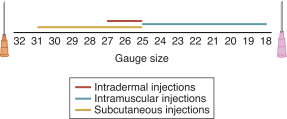
When selecting the gauge of the needle, the nurse considers the medication to be administered and the location the needle must go through. The gauge of the needle is represented by a number, which corresponds to the diameter (thickness) of the needle. A smaller-gauge needle (e.g., 18G) has a wider diameter, and a higher-gauge needle (e.g., 27G) has a thinner diameter. The thinner the needle, the less pain experienced by the client during medication administration. However, with a higher-gauge needle, if the medication is thick or viscous, it may not flow easily through the narrow lumen of the needle. This could cause difficulty in drawing up the medication from the vial as well as injecting the medication.
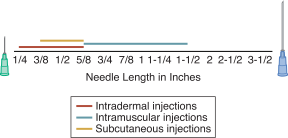
The length of the needle refers to the measurement from hub to the tip of the needle. Needles can be as short as 1/4 inch or as long as 3 1/2 inches. When choosing a needle length, the nurse must consider where the injection will be administered. A longer needle is used to reach deeper locations in the body, such as with intramuscular injections. A needle length of 1 1/2 inches may be used for intramuscular injections, while the most appropriate needle length for subcutaneous injections is 3/8 to 5/8 inches. The length of the needle may also vary based on the client. A child and a small or thin adult may not require as long of a needle to achieve an intramuscular injection as compared to a large or obese adult.
The purpose of the needle relates to the depth of skin (intradermal), tissue (subcutaneous), or muscle (intramuscular) through which the needle must pass to reach the desired target area for delivery of the medication.
The gauge (G) of the needle is represented by a number, which corresponds to the diameter (thickness) of the needle.
Needle Length
The length of the needle refers to the measurement from hub to the tip of the needle.
Gauge Sizes
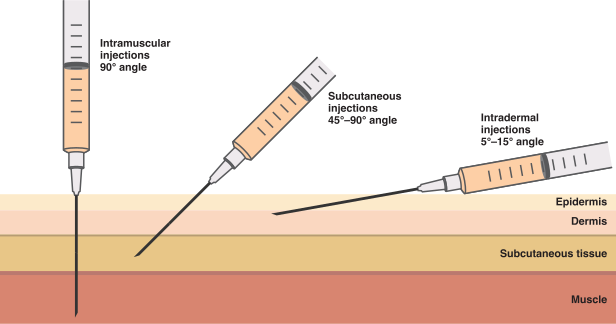
The diagram depicts the location of the bevel of the needle and the recommended angle that is used for the type of injection being given.
Angle and Location of Needle
A nurse is preparing to administer parenteral injections to clients. Which of the following should the nurse consider when selecting the appropriate needle size?
Select all that apply.
a
The type of the injection
b
The viscosity of the medication
c
The amount of medication
d
The indication for the medication
e
The way in which the needle attaches to the syringe
Drawing Up the Medication
Medications for parenteral administration may be provided in a vial, ampule, or prefilled syringe. Unless the medication is a suspension, it should be clear and have no particles present in the fluid. Prior to administering the medication for the parenteral route, the nurse may need to dilute the concentration of the medication according to the medication manufacturer’s directions with the appropriate solvent.
Ampules are glass containers that store liquid medication. The neck of the ampule is scored, which aids the nurse in breaking the ampule before withdrawing the medication. Nurses should not use bare hands to crack open glass ampules, as doing so could cause nurses to cut or injure themselves. The nurse uses a syringe with a filter needle to withdraw medication from an ampule. The filter needle prevents glass particles from the ampule from being pulled into the syringe while withdrawing the medication. The filter needle is not used to actually administer the medication, but rather is replaced with the appropriate-size needle to deliver the medication to the client.
ampule
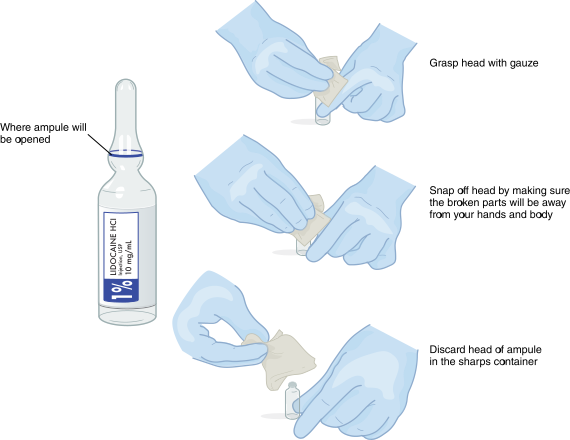
Cleaning Ampules
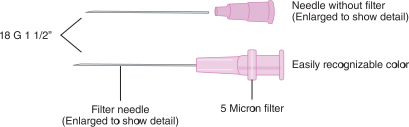
Needle Filters
A vial is a single-dose or multidose container that holds medication or a sterile solution for parenteral injections. The top of the vial is made of rubber, which has either a metal or plastic covering.A vial is a closed sterile system, which drequires the nurse to inject air into the vial before drawing the medication into the syringe. Once a multidose vial is opened and accessed, it is labeled per the facility’s policy and procedures and stored per the medication manufacturer’s instructions. Refer to the Skill: Removing Medication from a Vial and Preparing, Drawing Up, and Mixing Medications.
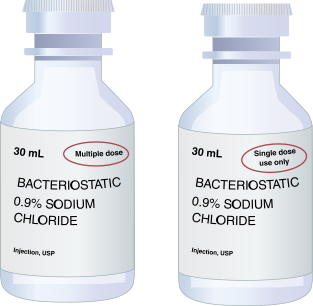
Vial
Preventing Infections and Needlestick Injuries
The nurse should always adhere to the principles of aseptic technique when preparing and administering injections. Nursing actions to prevent infections include the following measures.
Perform hand hygiene immediately prior to preparing and administering medications.
Prevent the needle from contacting the outer edge of the vial, the countertop surface, the hands, or any other contaminated objects.
As the medication is withdrawn, a portion of the plunger will project from the barrel of the syringe. Do not allow the plunger to come in contact with the hands or any other contaminated surface.
Keep the needle covered with the cap when it is not being used.
f the client’s skin appears unclean with dirt, drainage, or stool or urine, wash the skin with soap and water.
Using an antiseptic pad or swab, clean the site in a circular motion, moving from the center of the circle outward. Allow the area to dry completely.
Refer to the organization’s policy for skin preparation.
In 2000, the U.S. Congress passed the Needlestick Safety and Prevention Act to help protect health care personnel from inadvertently being stuck with a needle that has been used in patient care. Needlestick injuries are one means by which bloodborne infections such as hepatitis B and C and human immunodeficiency virus (HIV) are transmitted. Since this act was passed, needles have been required to have an engineered safety protection—hence the development of safety needles and needleless systems. In addition, facility policies and procedures must be developed, and staff educated annually, on needle safety.Due to the continued risk of occupational exposure to blood-borne pathogens, the International Safety Center published a statement to refocus attention on needlestick injuries. The Amercan Nurses Association (ANA) was a collaborator in this statement and continues to protect nurses through legislation improvments.
In regard to the preparation and delivery of parenteral medications, the nurse should adhere to the following guidelines to reduce the risk of needlestick injuries.
Prior to the procedure, determine the client’s ability to cooperate. Ask for assistance if necessary.
Check for the location of the sharps disposal container. If the container is full, remove it per manufacturer and facility policy and obtain a new container.
Maintain visualization of the needle during the procedure.
Engage the safety feature of the needle immediately upon completion of the procedure.
Immediately place the syringe and needle with the safety feature activated in the sharps disposal container. Never overfill the container or insert fingers or hands into the container.
If it is necessary to recap a needle, use a one-handed scoop method. Refer to the Skill: Recapping Needles Using a One-Handed Technique.
Types of Parenteral Injections
Three types of parenteral injections require the nurse to insert a needle into a specific location of the client’s body to deliver a prescribed medication: intradermal injection, subcutaneous injection, and intramuscular injection. Once the medication has been prepared as described earlier, and the rights of medication administration have been checked, the nurse now needs to understand:
How to locate the anatomic site of injection
The angle and depth of the needle insertion
Any medication-specific interventions that should be implemented
The use of relaxation or distraction techniques to help relax the muscle for intramuscular injections and decrease the client’s anxiety
A fourth type of parenteral injection requires the nurse to deliver the medication directly into the bloodstream through a peripheral or central intravenous catheter and IV tubing. In the sections that follow, each of the four types is described, and a corresponding skill provides step-by-step procedures.
Intradermal Route
(Refer to the Skill: Administering Intradermal Medications.)
Intradermal medications are often used for diagnostic purposes, such as testing for allergies or tuberculosis. The dermis layer of the skin does not have a rich blood supply, so medication injected there is absorbed slowly. The maximum amount of medication that should be injected into the dermis should be 0.1 mL.
intradermal
When selecting a site for injection, it is important to avoid areas of the skin that are inflamed, have scars or lesion, or are covered by hair. Typically, the ventral aspect of the client’s forearm is the site used. Never rub the site of injection afterward, as doing so might result in a false-positive response. It is also important to circle the area where the injection occurred to permit accurate reading of the results. If the purpose of the intradermal injection is for diagnosing allergies, the client will need to be closely monitored for a designated period of time for an allergic reaction.
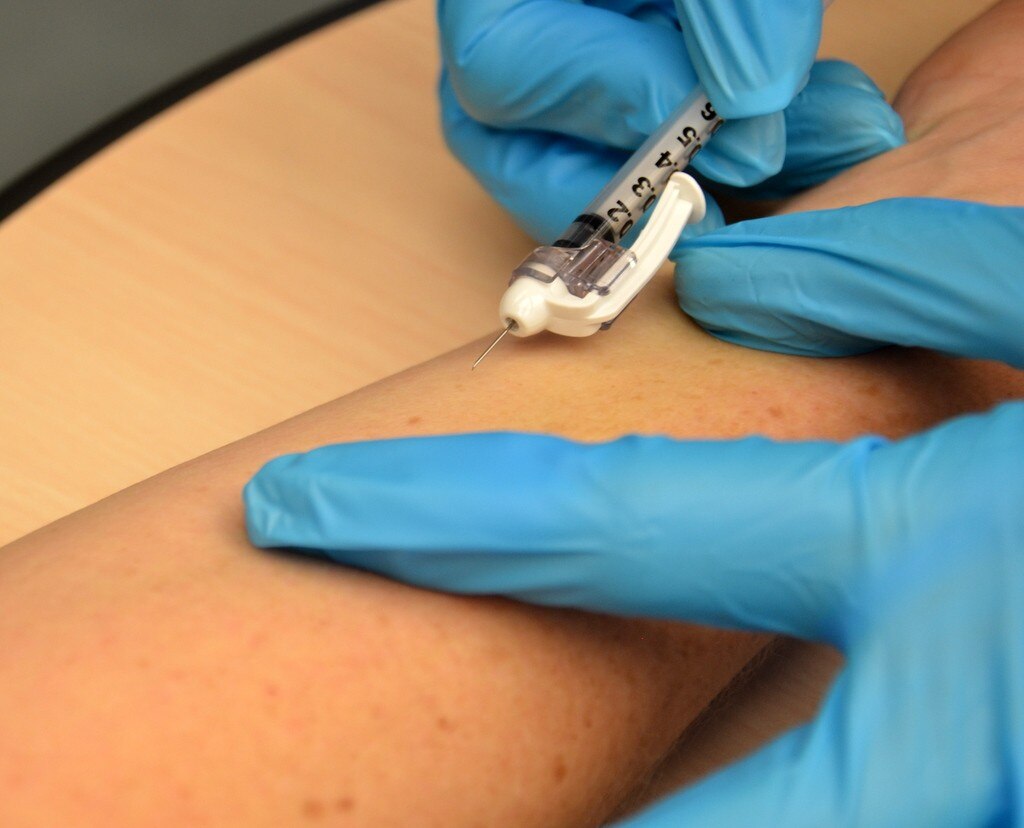
Intradermal Injection
Subcutaneous Route
(Refer to the Skill: Administering Subcutaneous Medications.)
Medications given by the subcutaneous route are delivered into the adipose tissue. Although the adipose tissue has a generous supply of capillaries, it lacks larger blood vessels. In consequence, absorption from this tissue will be slower and more controlled than when a medication is administered via the intramuscular or intravenous route. Common medications administered subcutaneously include insulin and low-molecular-weight heparins.
subcutaneous route
Multiple sites can be used for subcutaneous injections. However, when selecting a site, the nurse should keep the following considerations in mind.
Condition of the skin: Moles, abrasions, bruises, scars, and inflammation.
Presence of lipohypertrophy: The formation of small lumps beneath the skin due to irritated fatty tissue. This occurs in clients who are receiving long-term subcutaneous injections and is very common in clients who inject insulin. To reduce the development of lipohypertrophy, subcutaneous sites should be rotated.
The amount of adipose tissue: This will determine the angle and length of needle used for the injection.
lipohypertrophy
The selected site for injection should be pinched to reduce the risk of administering the medication into the muscle. This pinching is especially necessary for children and adults who have minimal adipose tissue. The angle of the needle can be anywhere between 45° and 90°, depending on the amount of estimated adipose tissue.
Intramuscular Route
(Refer to Skill: Locating Intramuscular Injection Sites and Skill: Administering Intramuscular Medications.)
The intramuscular (IM) route permits medication to be delivered into a large skeletal muscle, where a faster rate of absorption can be achieved and a larger volume of medication can be administered compared to a subcutaneous or intradermal injection. In addition, the large muscles have fewer pain receptors and, therefore, are better sites for administering viscous or irritating medications. Three muscles are commonly used for IM injections: vastus lateral, ventrogluteal, and deltoid. Each of these muscles has advantages and disadvantages.
intramuscular
The nurse should select the site, the syringe size, and needle size for IM injection based on the following factors.
The age and size of the client: Certain muscles should not be used in certain age groups. For example, the deltoid muscle should not be used in infants because this muscle is not large enough to assure safe delivery of an injection. Refrain from using muscles that are thin or wasted, as medication is absorbed poorly from these sites.
The amount of medication to be given: Only certain amounts of medication can be delivered to each of the three muscles commonly used for IM injections. Older adults may only tolerate a maximum of 1 mL in a single IM injection.
The condition of the anticipated site: Pain, mobility impairment, edema, inflamed or bruised areas, abrasions, or rashes of an anticipated site should be avoided.
Once the nurse determines the site and has the medication prepared for delivery using the correct-size syringe and needle, the nurse must use anatomic landmarks to locate the exact site for injection and clean the site per facility policy. It is important to determine the correct location of the injection site to avoid causing injury of an adjacent nerve or other anatomic structures.
The practice of aspirating of—that is, pulling back the plunger of a syringe after the needle has been inserted, to determine if the needle is within a blood vessel—has not been supported in recent research. Therefore, it is important for the nurse to review the facility’s policy and procedures to determine if aspirating is to be performed. If aspirating is required, check for the return of blood in the syringe when the plunger is pulled back. If blood is visible in the syringe, do not administer the medication. Instead, withdraw the needle; dispose of the medication, syringe, and needle; and prepare another dose of the medication. If there is no visible blood, then proceed to complete the procedure.
aspirate
The nurse will need to determine the appropriate needle gauge and length that should be used for adolescents and adults based on the type of injection to be administered. The client’s age and condition, the type and reason for the medication, and the availability of equipment must all be included in this decision-making process, as well as the facility’s policy and procedure.
Parenteral Injection Guidelines for the Adult and Adolescent Clients
Type of Parenteral Injection | Sites for Injection and Maximum Amount of Medication/Dose | Needle Size (Gauge and Length) | Special Considerations |
|---|---|---|---|
Subcutaneous | No more than 1.5 mL | ⅜ to ⅝ inch length 25 to 27G | For insulin, use a 28 to 31G insulin syringe. Pinch the skin and insert at a 45° to 90° angle. Use a 90° angle for clients who are obese. Rotate sites. |
Intramuscular | Ventrogluteal: 3 mL Deltoid: 2 mL Vastus lateralis: 1 to 3 mL | 1½ inch length 18 to 25G | The ventrogluteal site is a relatively safe site because of the lack of major nerves. The deltoid site is used frequently for immunizations in adults due to its easy access. Injections should be given at a 90° angle. The length of the needle may need to be adjusted depending on the client’s weight/size. |
Intradermal | Ventral aspect of forearm: 0.1 mL | ¼ to ⅝ inch length 25 to 27G | Use a 1-mL TB syringe. Insert at a 5° to 15° angle. Insert the needle with the bevel up. A small bleb should appear. |
Match the landmark with the injection site in which the medication is administered.
Ventrogluteal
Vastus lateralis
Deltoid
Dorsogluteal
Injection Site Practice
For each of the following scenarios, select the appropriate injection site.
Administering 1 mL of hepatitis B vaccine IM
a
b
c
Administering 2 mL of cefazolin IM
a
b
c
A client self-administering 0.3 mL of vitamin B
a
b
c
Intravenous Route
Intravenous (IV) therapy delivers fluids, nutrients, blood, and blood products or medications (diluted or undiluted) quickly into a vein. IV medications can be given intermittently via piggyback—that is, diluted in a large volume of IV fluid (50 to 500 mL) and infused over a period of time determined by the medication manufacturer’s directions.
Another method of IV medication administration is to push a small amount of medication slowly, per the medication manufacturer’s recommendations, directly into the client’s IV catheter, closest to the point of insertion. This method of administration, termed IV push, is used to rapidly treat a life-threatening condition, to quickly achieve a therapeutic level of a medication, and to avoid fluid overload in clients who have cardiac or renal disease. Not all medications can be given via IV push, requiring the nurse to check appropriate drug reference guides to ensure the medication is given correctly and safely. The nurse must also determine if the medication needs to be diluted prior to administration and if so, how much and what type of diluent should be used and the time frame (1 to 5 minutes) over which the medication should be delivered (pushed). This information can be found in the facility’s approved medication reference sources or obtained from the facility’s pharmacist. Due to the rapid rate of absorption that occurs with this method of IV medication administration, the nurse must be knowledgeable of the adverse reactions, able to monitor for those reactions, and prepared to respond if they occur. (Refer to the Skill: Administering Intravenous Push Medications.)
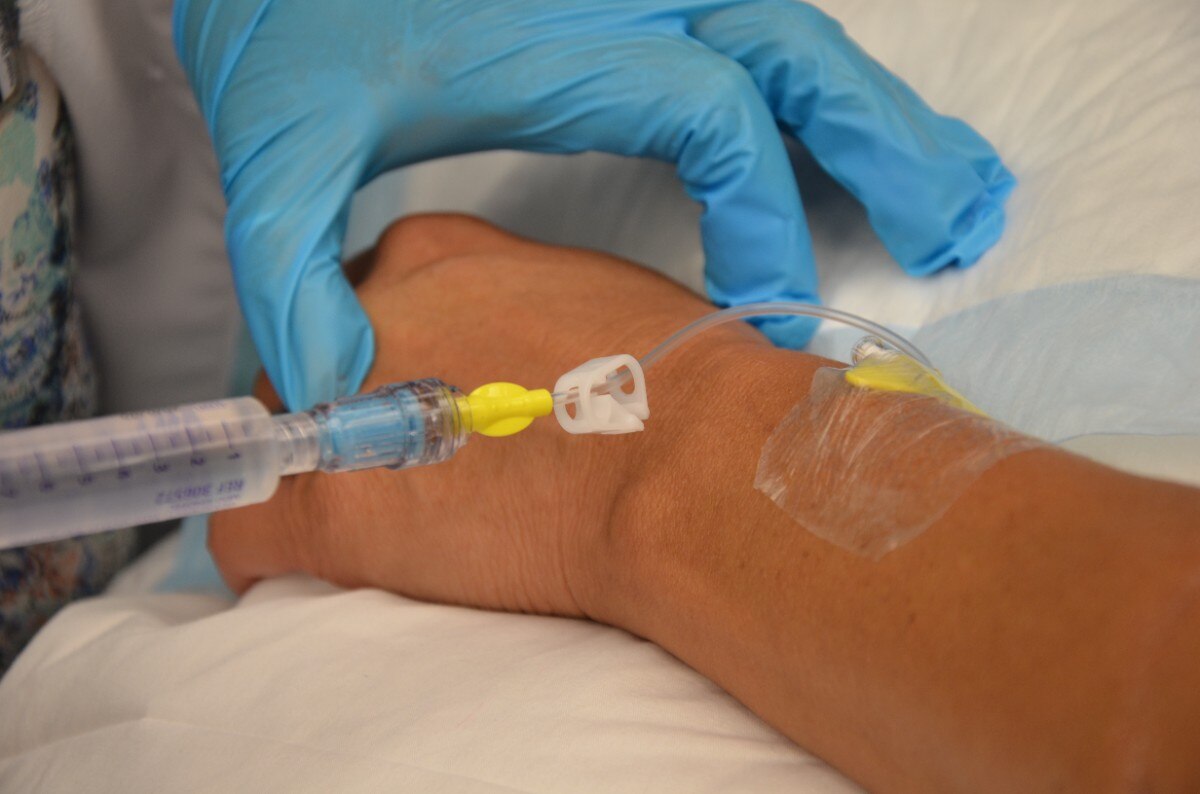
Administering an IV push medication
Intermittent piggyback intravenous infusion is the administration of medication via an IV infusion set. The medication is mixed with an IV fluid (often 0.9% sodium chloride or dextrose –5% in water) volume (50 to 250 mL) and is administered over a specified period of time (30 to 90 minutes). Administration of medications via piggyback allows for slow infusion of medications that otherwise could be harmful to the client if delivered rapidly or undiluted. The piggyback medication infusion is stopped when the desired volume of fluid and medication has been delivered until the next time when the medication is due.
An intermittent piggyback medication can be administered in two ways. First, it can be via a secondary infusion set by connecting the medication infusion set tubing to a primary (continuous) infusion. In such a case, the medication must be compatible with the primary infusion fluid.
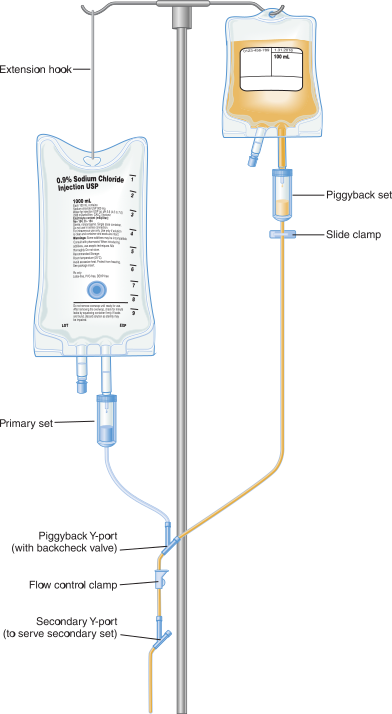
IV piggyback medication infusion setup
Alternatively, If the client does not have a continuous infusion, the piggyback medication can be delivered via an intermittent venous access device. An intermittent venous access device is a peripheral IV catheter inserted via a venipuncture. It avoids the need to perform a venipuncture each time an intermittent medication is given. The piggyback medication infusion set is connected directly to the extension tubing of the intermittent venous access device. An extension set is connected to the hub of the IV cannula, allowing for easy access and reduced disturbance of the catheter hub to avoid dislodgement of the catheter. The intermittent venous device is flushed intermittently per the facility’s policy and procedure to keep the IV catheter patent. In addition, it needs to be flushed before medication administration to determine if the IV catheter is patent. After medication administration, it must be flushed again to ensure that all the medication has cleared the extension tubing and IV catheter and to maintain patency for the next IV piggyback medication. (Refer to the Skill: Administering Piggyback Intermittent Intravenous Medications.)
intermittent venous access device
Central venous access devices (CVADs) are catheters inserted into a large centrally located vein for the purpose of administering blood products, medications, fluids, and other therapies. Medications given through CVADs are delivered directly into the client’s central blood circulation. They are absorbed quickly, so effects may be seen quickly. These devices may be recommended for clients who require frequent and/or long-term IV therapy, such as long-term IV medication therapy.
Types of CVADs include the peripherally inserted central catheter (PICC) and the surgically placed central venous catheter (CVC). The type used depends on the length of IV therapy, the medications to be infused, and the client’s needs.A PICC is inserted using a percutaneous venipuncture into a peripheral vein in an upper extremity and guided through the vein until the tip of the catheter lies in the superior vena cava at the entrance to the right atrium. PICCs are used for clients who require shorter-term (i.e., weeks as opposed to months or years) IV therapy. A CVC is inserted and tunneled through the skin (often in the upper chest area) directly into a large vein; it is threaded through the vein until the tip of the catheter lumen lies in the superior vena cava at the entrance to the right atrium. A transparent sterile dressing is placed over the insertion site to maintain sterility over the site and avoid accidental removal of the catheter.
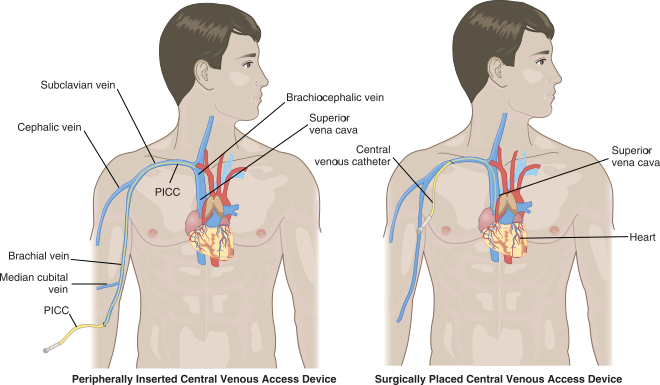
Peripherally and Surgically Inserted Central Venous Access Devices
For all venous access devices, the nurse must assess the insertion site before, during, and after medication administration for signs of complications. Phlebitis is an inflammation of the vein, as evidenced by localized redness, pain, heat, and swelling. Infiltration occurs when an infusing intravenous fluid or medication is inadvertently administered to surrounding tissue, as evidenced by pain, swelling, redness, cool skin temperature around the insertion site, taut skin around the IV site, oozing of IV fluid at the insertion site, and repeated alarming of the IV infusion or medication syringe pump. Infection at the site of insertion is another concern. Its signs and symptoms include redness and purulent drainage at the site; if the infection becomes systemic, the client may experience chills, fever, general malaise, and in the worst-case scenario, septic shock. Occlusion of the catheter may also occur in which the catheter becomes kinked or occluded by a fibrin clot. If the occlusion cannot be resolved, the catheter will need to be removed and a new catheter placed.
phlebitis
infiltration
It is essential for the nurse to be vigilant not only in assessing for these complications, but also in taking steps to prevent them. To prevent infiltration of the medication, the nurse should check for a venous blood return from the venous access device, before administering a medication through the device. If blood return is seen in the catheter, syringe, or tubing, that confirms the catheter is in a vein and the nurse can continue by gently flushing the blood back through the catheter. The medication can then be administered. If no blood return is seen in a peripheral IV, the catheter may still be patent. The nurse can attempt to gently flush the catheter; if resistance is met (catheter occlusion), the medication should not be administered. The nurse would then follow the facility’s procedure and policy on clearing an occluded peripheral IV catheter. If no blood return is seen when accessing a CVC, the nurse should not infuse any fluid or medication and notify the provider. In such a case, the nurse can anticipate the provider will order an x-ray to determine the location of the catheter.
To prevent the development of phlebitis, it is recommended to properly secure the IV catheter to avoid movement of the catheter that could cause mechanical irritation to the vein. Some medications can also be irritants to the vein. These medications need to be properly diluted and consideration should be given to insertion of a CVAD should this type of medication need to be given frequently or on a long-term basis.
Because all IV and central catheter devices permit direct access to the client’s bloodstream, it is critical that the nurse follow best practices when giving medications through these devices to prevent infections. Some key interventions to prevent bloodstream infections are listed here.
Maintain a clear sterile dressing over the site of insertion. If it is not intact or wet, it should be changed.
Thoroughly clean the IV tubing injection ports by rubbing them in a twisting motion with an approved antiseptic agent every time the port is accessed.
Allow the antiseptic agent to air dry before accessing the port.
Perform hand hygiene and don clean gloves when accessing the device.
Prevent blood from dwelling in the venous access device or tubing by using positive pressure when flushing the device. Positive pressure is exerted when the nurse begins to withdraw the needleless syringe from the IV port as the last 0.5 mL of flush is delivered; prior to fully removing the syringe, the nurse clamps the tubing closest to the device.
Change piggyback medication and IV infusion sets per facility policy and procedure.
Refer to the Skill: Central Venous Access Device: Administering Medications.
Knowledge Check
The nurse is preparing to administer medication through a venous access device to a client in the medical-surgical unit.
Nurses' Notes
Provider Prescriptions
Medication Administration Record
0900
Client's peripheral IV catheter placed in the right forearm.
1200
Client reports mild discomfort at IV site. No discoloration, swelling, or warmth noted.
1500
Client's IV site is discolored and edematous. Skin around the site is cool to touch. Client reports increased discomfort.
Complete the following sentence by using the list of options.
The nurse should first
Select...
, then
Select...
.
Age Considerations
Knowledge of pediatric clients’ physiological, psychosocial, and cognitive development is essential when administering medications to these clients. Physiological differences in muscle development are important when administering intramuscular injections. Knowledge of psychosocial development is critical to reduce the trauma the child may experience during medication administration via all routes. It is also important to assess the child’s previous experience with receiving medications and to determine whether the parent or guardian has developed any routines to assist in gaining the child’s cooperation.
Oral Medications
When administering oral liquid medications to an infant, the nurse should use a syringe without a needle, a dropper that is specific for the medication (the medication manufacturer supplies the dropper with the medication), or for very young infants, a bottle nipple. The child should be held in a semi-reclining position to prevent aspiration. When using a syringe or dropper, place the tip along the side of the tongue inside the mouth and slowly administer the liquid in a direction toward the inside of the child’s cheek. This technique can help prevent the child from aspirating medication and permits the child time to swallow. It also helps minimize the risk of the child spitting out the medicine or coughing, gagging, and vomiting. If any of these events occurs, the provider should be notified to discuss whether the dose should be repeated or held until the next scheduled dose. It is not recommended to mix medication in infant formula or expressed breast milk due to the concern the infant may not finish the bottle and will not receive the full dose of medication.
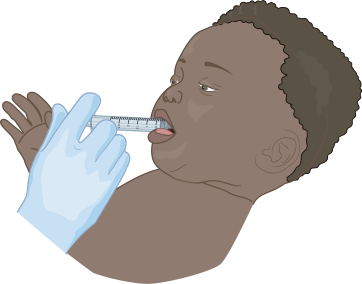
For toddlers, preschoolers, and early school-age children, oral liquid medications are administered with a syringe or medicine cup. Many medications can have flavors added to them to make them more palatable to children. As children grow and doses of medications become larger, they may need to swallow a large amount of liquid (20 to 30 mL) when a medication is given. If the child is not able to manage the large amounts of medications or is unable to swallow pills, tablets, or capsules, it is reasonable to consult the pharmacist and the provider to determine if chewable tablets are available, or if the tablets or capsules of the medication can be crushed and mixed in a small amount of applesauce, ice cream, or any other sweet-tasting substance the child likes. It is helpful to allow children of this age to choose what they would like to drink immediately after receiving their medication. This gives them a feeling of control and helps to gain their cooperation.
During the school-age stage of development, many children begin to be able to swallow pills, tablets, and capsules. However, this ability may depend on the child’s previous exposure to medication. Adolescents are typically able to achieve the ability to take oral medications like an adult.
Parenteral Medications
Injections are traumatic for a child and are avoided as much as possible in the pediatric population. Even so, they may be necessary at times, such as with certain vaccines. The techniques used for intradermal and subcutaneous injections are the same in the infant and child as they are in the adult.
In infants, the sites for an IM injection are very limited. The deltoid and gluteus maximus muscles are not used for the administration of IM injections because these muscles have not fully developed. In addition, the gluteus maximus muscle lies very close to the sciatic nerve and the gluteal artery . Thus, the preferred site for infants is the vastus lateralis muscle. Only small amounts of medication (0.5 to 1 mL) can be injected into this muscle due to its size. Use the smallest-gauge (25 to 30G) needle to reduce the pain. The length of the needle should be only 1 inch for infants from 1 month to 1 year of age and should be inserted into the vastus lateralis at a 90° angle.
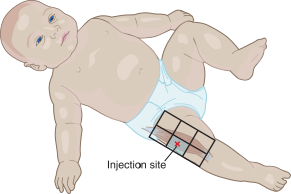
Toddler intramuscular injections can be administered in the vastus lateralis. Beginning at 12 months of age, the deltoid muscle can also be used. However, the maximum amount of medication to be injected in the deltoid remains at 0.5 to 1 mL. Due to the increased size of the vastus lateralis at this age, the amount for each injection is a maximum of 2 mL. In addition to the vastus lateralis and the deltoid, the ventrogluteal site can be used in preschoolers, school-age children, and adolescents. Adolescents often receive the same doses, routes of administration, and forms of medication as adults, depending on the medication and its purpose.
Administration of IV medications differs for pediatric and adult clients in terms of the amount of dilution and solution of the medication being given. Infants and children typically do not receive piggyback infusions of 100 to 250 mL of medication solutions over a 30-minute time period. Such therapy could potentially cause fluid overload and extreme harm to the infant or child. When administering IV medications to an infant or child, it is important for the nurse to consider the amount of the medication, the amount of solution it takes to dilute the medication, and the time frame over which the medication should infuse. All of this information is available in pediatric medication references. IV medications can be administered in pediatric clients via push or by using a medication infusion syringe pump. This pump requires less IV tubing and can infuse the medication that is contained within the syringe. The syringe is set in the pump, and the pump is then programmed to deliver the medication in the recommended time frame.
Transdermal Medication Administration
Infants are at high risk of medication toxicity from topical medications. An infant’s skin is very thin and has a rich blood supply. These two factors allow for increased absorption of topical medications, which could lead to toxicity. For this reason, it important to apply topical medications only in small amounts to small areas as prescribed by the provider.