L10: Plastic yielding and ductile fracture
Yield Criteria
Tresca Criterion
Definition: Material yields when the maximum shear stress reaches the yield strength in shear (k).
Equation: τmax=σ1−σ32=k
Limitation: Conservative but less accurate for most metals.
von Mises Criterion
Definition: Material yields when the effective stress (σe) reaches the yield strength in uniaxial loading.
Equation:
σe=(σ1−σ2)2+(σ2−σ3)2+(σ3−σ1)22=σy
Advantage: Better captures yield behaviour for most metals (e.g., copper, aluminium, steel).
When von Mises ≈ Tresca
Conditions:
Uniaxial tension/compression (σ2=σ3=0).
Pure shear (σ1=−σ3, σ2=0).
Note: In other multiaxial cases, von Mises predicts yielding at higher stresses than Tresca.
Yield Condition
Yield Function (f):
f=0: Material is at the yield point.
f<0: Elastic deformation (no yielding).
f>0: Not physically meaningful (yield surface cannot be exceeded).
2. Ductile Failure & Necking
Necking
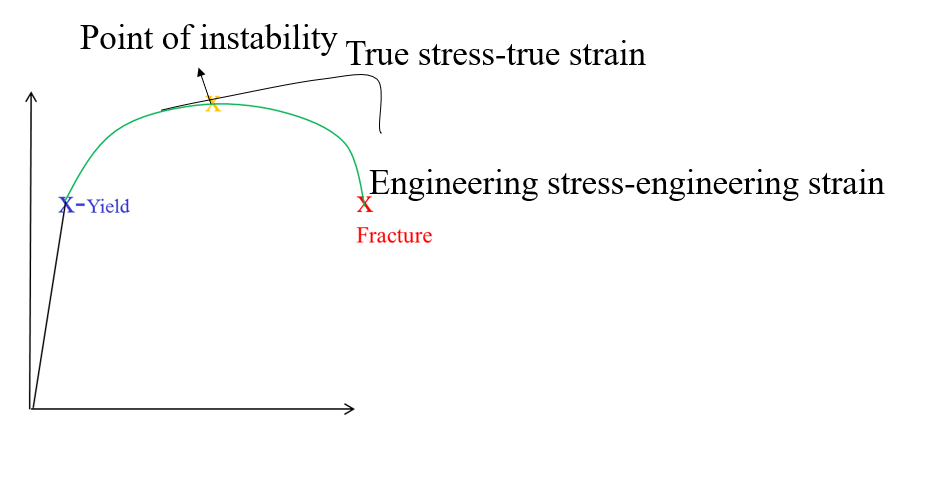
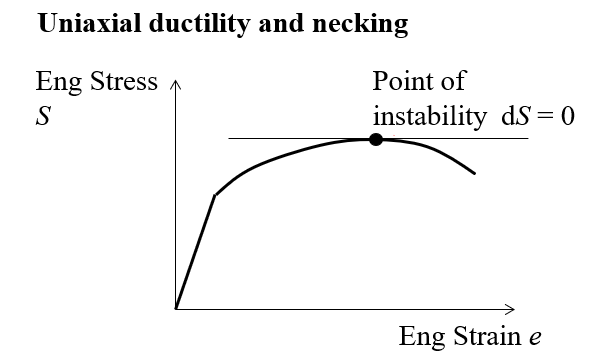
Definition: Localized deformation in ductile materials prior to fracture.
True Stress-Strain: Power law σ=Kϵ^n, where K = strength coefficient, n = strain-hardening exponent.
Instability Criterion
Uniaxial Case: Instability occurs when σ=Kn^n.
Multiaxial Case (von Mises): Effective stress must satisfy σe=σy.
3. Elasto-Plastic Fracture Mechanics (EPFM)
Limitations of LEFM
Not valid for materials with significant plastic deformation.
J-Integral Approach
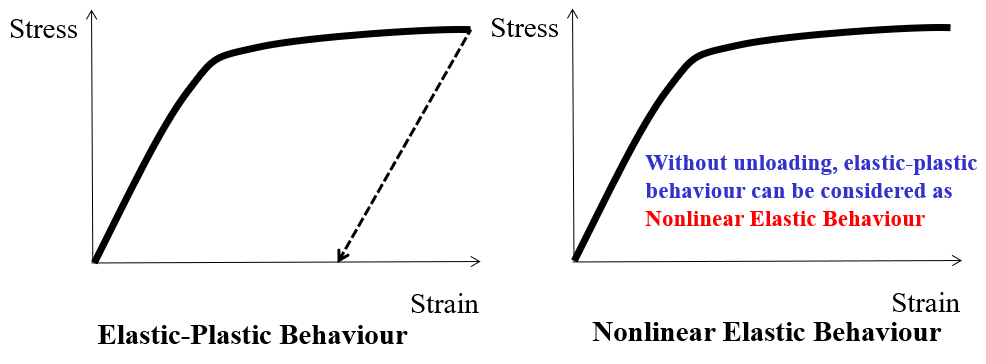
Definition: Energy-based method for nonlinear (elastic-plastic) materials.
Path Independence: J can be calculated far from the crack tip.
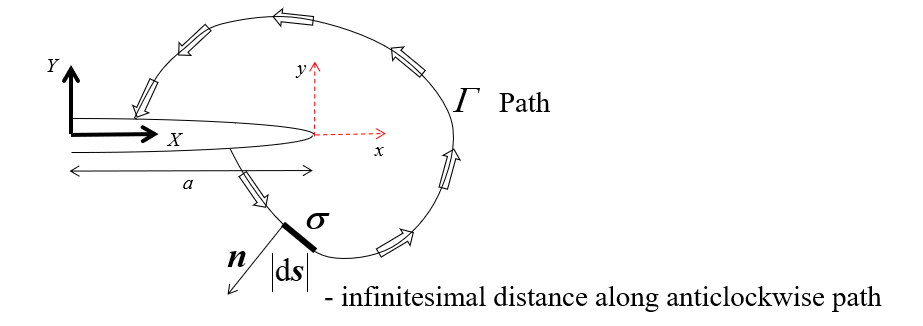
Physical Meaning: Energy release rate for nonlinear elastic materials.
Equation:
J=−dΠda
where Π = potential energy, a = crack length.
Experimental Determination
Measure load-displacement curves for varying crack lengths.
Plot J vs. displacement to find critical Jc at fracture initiation.
4. Crack Tip Opening Displacement (CTOD)
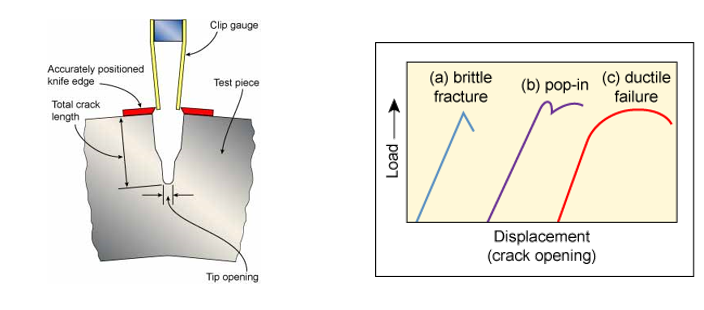
Definition
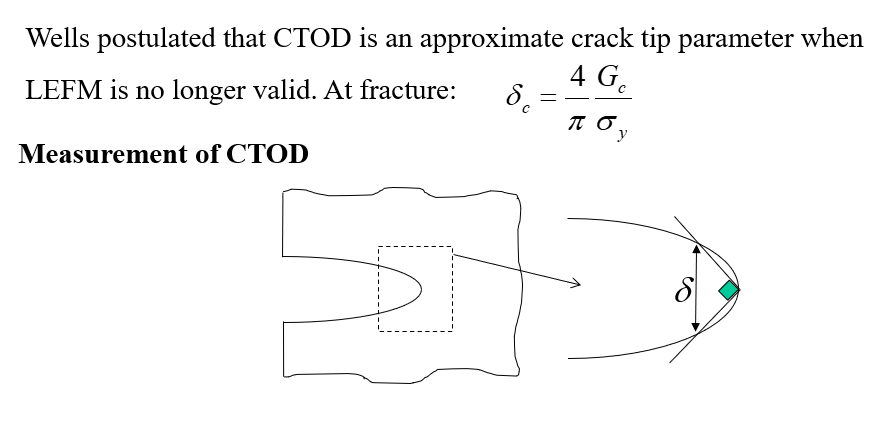
Measures crack blunting due to plasticity.
Relation to Stress Intensity (K)
Plane Stress:
CTOD=K2σyE
where σy = yield strength, E = Young’s modulus.
Wells' Postulate: CTOD is a valid fracture parameter when LEFM is invalid.
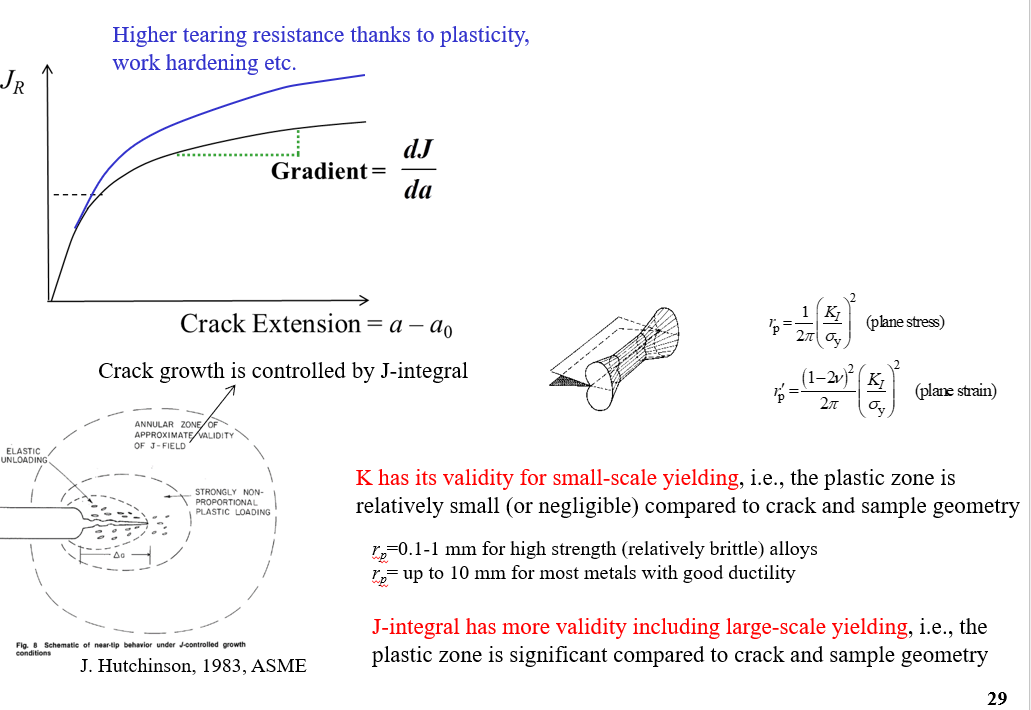
5. Crack Growth Resistance (R-Curve)
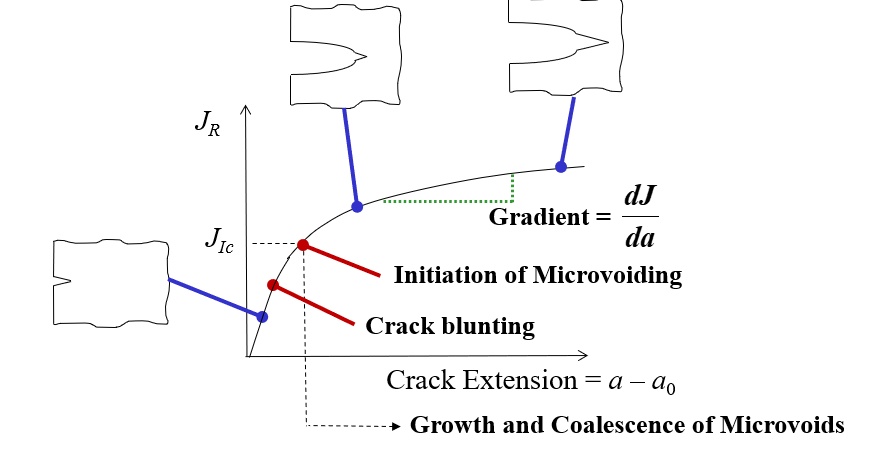
Initiation Toughness (JIc)
Onset of crack extension.
R-Curve Behaviour
Steep Gradient: Stable crack growth (safe).
Shallow Gradient: Unstable growth (dangerous).
Validity of Parameters
K: Small-scale yielding (plastic zone ≪ crack size).
J-Integral: Large-scale yielding (plastic zone ≈ crack size).
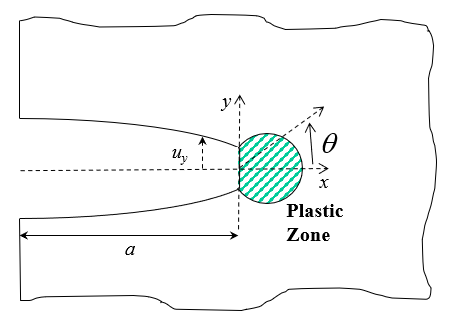
6. Plastic Zone Behaviour Near Crack Tip
Effective Stress in Plastic Zone
Within the plastic zone: σe=σy (equal to yield strength).
Outside the plastic zone: σe<σy (elastic region).
Implications for EPFM
The plastic zone is where stresses redistribute to maintain σe=σy (perfect plasticity assumed).
Takeaways
Yield Criteria: von Mises is generally more accurate except in uniaxial/pure shear cases.
Ductile Failure: Governed by necking and multiaxial instability.
EPFM Tools:
J-Integral (energy-based) for large plasticity.
CTOD (displacement-based) for crack tip blunting.
Plastic Zone: σe=σy within the zone, critical for fracture analysis.
Useful for analysing fracture in ductile materials (e.g., metals) beyond LEFM limits.