Unit 1: Power and Different Types of Government
1.1: Five Sources of Power
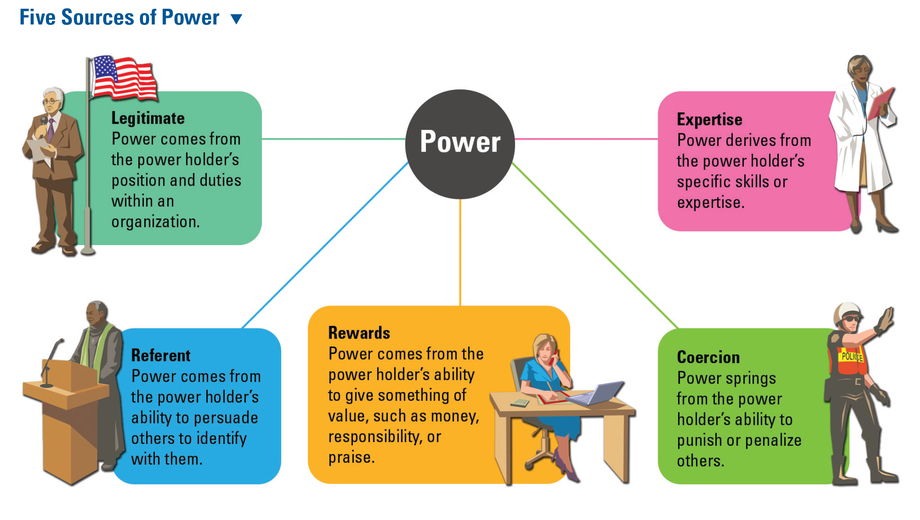
Legitimate
Power comes from the power holder’s position and duties within an organization
Ex. Doing what your mom/teacher says just because of who they are
Referent
Power comes from the power holder’s ability to persuade others to identify with them
Ex. Peer Pressure
Rewards
Power comes from the power holder’s ability to give something of value, such as money, responsibility, or praise
Ex. I’ll give you money/shopping trip if you do this.
Coercion
Power springs from the power holder’s ability to punish or penalize others.
Ex. If you don't do this I will ground you for a week/take away your phone
Expertise
Power derives from the power holder’s specific skills or expertise.
Ex. The mechanic tells you that you need new brakes, you dont know if that is true because you don’t have the expertise, but you obey and pay the money anyway.
1.2: What Gives A Leader Legitimacy
Divinity: Many rulers have claimed a “Mandate from Heaven” and “Divine Right of Kings”
Social-Contract Theory: Developed during the Enlightenment period. Citizens enter an agreement to be ruled if the ruler agrees to protect the people and their rights
8.8.2025
Which forms of government have we had throughout the centuries?
force theory: people were forced together for their own mutual needs (water, help with crops, trade).
Ex. city-state
Athens began the idea of direct democracy in which “citizens” participated directly in every decision.
Roman Republic began the idea of indirect democracy in which “citizens” elect representatives to vote for their interests.
Middle Ages, Kings & Parliaments
Feudalism
Kings ruled as absolute monarchs
Glorious Revolution (17th C) Constitutional monarchy est.
Revolution Change Governments
American Revolution
Create a constitutional democracy
French Revolution
Created an authoritarian government (Napoleon)
20th Century Totalitarianism
Communism
First established in Russia
Economic equality through redistribution
Communal ownership
Opposition held down through violence
Fascism
First established in Italy (Mussolini)
State above the individual
Allows for private ownership
Militaristic
Nazi Germany under Hitler