APES 4.3 Soil Composition and Properties
Soil Texture
- Soil particles are made of three groups
- Sand, the biggest particle
- Silt
- Clay, the smallest particle
- Most soils are a combination of all three
Water Holding Capacity
- Larger particle sizes allow water to pass through easier (soils with high sand percentages)
- Smaller particle sizes don’t allow water to pass through (high clay percentage)
Measuring Soil Composition
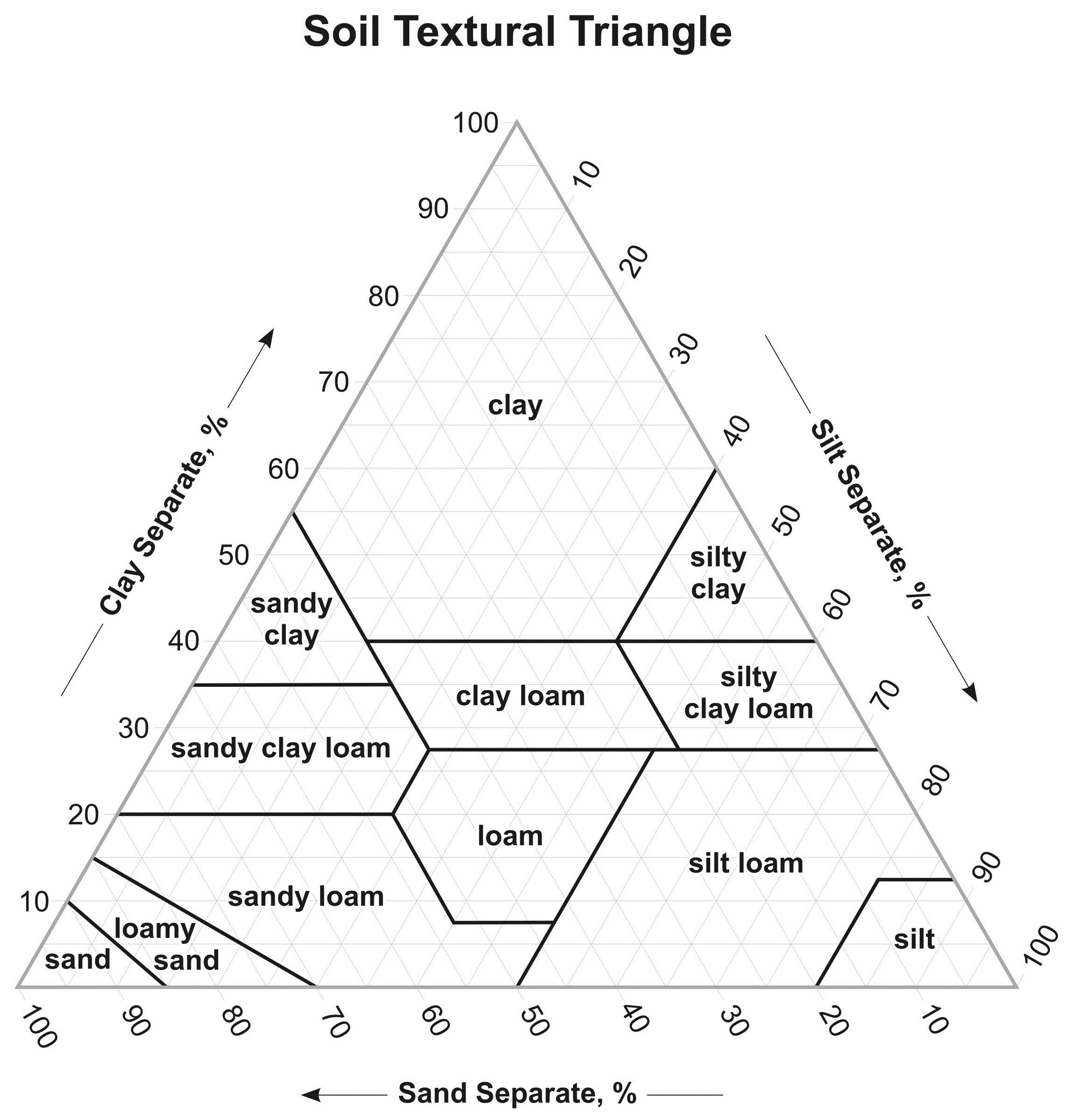
Soil composition can be determined by percentages
Knowing the percentage of sand, silt, and clay, can determine the soil type
The soil triangle is used to determine soil type if you are given the composition
- It’s not necessary to memorize all the soil combinations or types
- It is important to know how to use the soil triangle
Soil Tests
- There’s a variety of soil assessments
- Chemical
- Chemicals allow for plants and animals to thrive in soil
- The addition of fertilizers can increase nutrients: N, P, K
- Some fertilizers and increased rainfall can also increase acidity
- Nitrogen (nitrates)
- Phosphorous (phosphates)
- pH (acidity)
- Physical
- Soil composition
- Determining the amount of sand, silt, and clay will affect percolation and infiltration
- Percolation is the movement of water into the ground
- Infiltration is the movement of ions or chemicals trough percolation
- Water holding capacity
- Biological
- Soil is not inert
- Earthworms and other inhabiting organisms
- Bacteria
- Archaea
- Fungi
- Burrowing animals