ATP
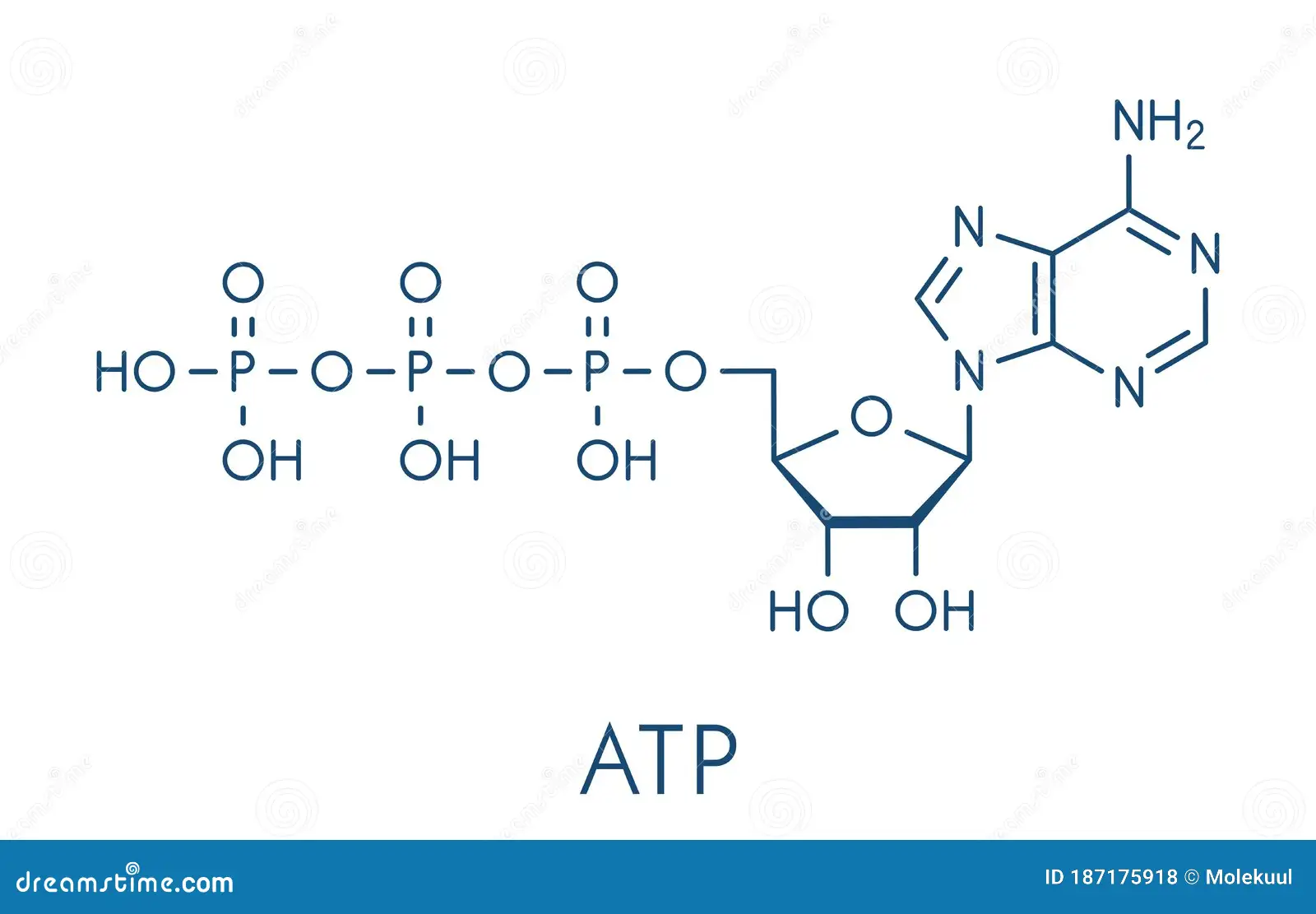
ATP Properties
It has energy rich phosphoanhydride bonds (they are the bond between phosphate groups have a higher potential energy and are more likely to undergo hydrolysis, releasing energy that can be utilized for cellular processes.
It is a energy carrying molecule found in the cells of ALL living things, providing the necessary energy for biochemical reactions essential for life.
Difference between ATP and DNA
ATP: A nucleotide that serves as the primary energy carrier in cells, consisting of adenine, ribose, and three phosphate groups.
DNA: A nucleic acid that carries genetic information, composed of deoxyribose, phosphate groups, and four nitrogenous bases (adenine, thymine, cytosine, and guanine). Unlike ATP, DNA is not involved in energy transfer, but rather in the storage and transmission of genetic information.
ATP has 3 phosphate groups, while DNA only has 1
ATP is made of ribose sugar, which is essential for its role in energy metabolism and is different from the deoxyribose sugar found in DNA.
ATP Synthesis
ADP + Pi → ATP + H2O, facilitated by the enzyme ATP synthase during cellular respiration and photosynthesis. This process occurs in the mitochondria of eukaryotic cells and in the chloroplasts of plants, highlighting its crucial role in converting energy from nutrients and sunlight into a readily usable form.
ATP as a Suitable Source of Energy
ATP molecules release manageable amounts of energy in a single step reaction. This characteristic makes ATP an ideal energy carrier for cellular processes such as muscle contraction, intracellular transport, and chemical synthesis.
ATP’s Use in Many Biological Processes
Hydrolysis of ATP → ADP + Pi + energy
Resynthesized easily
Pi + another molecule makes the molecule less stable; easier to react with other substrates, facilitating essential biochemical reactions such as phosphorylation and metabolic pathways.