W2 L5: The Adrenal Gland
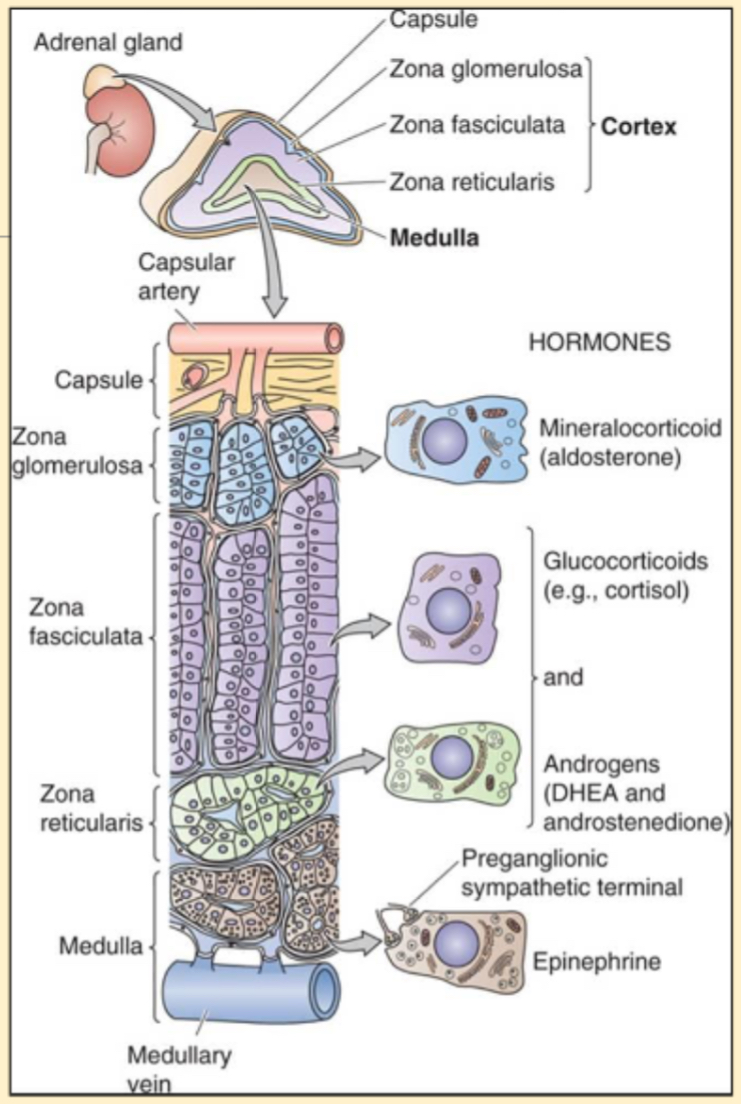
- Located immediately above kidneys - enclosed in fibrous capsule surrounded by fat (5-10g)
- 2 major functional regions:
- adrenal cortex
- adrenal medulla
- Cortex & medulla posses diff. cell types w/ distinct morphology & endocrine function
- Rich blood supply
- Arterial blood enters cortex & passes through cord of cells
- Blood exits via venules of medulla
- Permits interaction b/w cortex & medulla
The Adrenal Cortex
- Approx. 75% of adrenals
- Characterised by intracellular lipid droplets → steroid hormone synthesis
- 3 sub regions - all secrete diff. steroid hormones
- Zona glomerulosa (10%)→ mineralocorticoids
- Zona fasciculata (75%) → glucocorticoids
- Zona reticularis (15%) → sex steroids
- mineralocorticoids & glucocorticoids essential for life
General properties of steroid hormones
- synthesised from cholesterol
- Little storage in endocrine cells
- 𝘥𝘦 𝘯𝘰𝘷𝘰 synthesis follows cell stimulus
- stores of cholesterol present in cells can be rapidly metabolised
- Mostly transported bound to plasma proteins
- Steroids are lipophilic - diffuse across cell membrane into blood
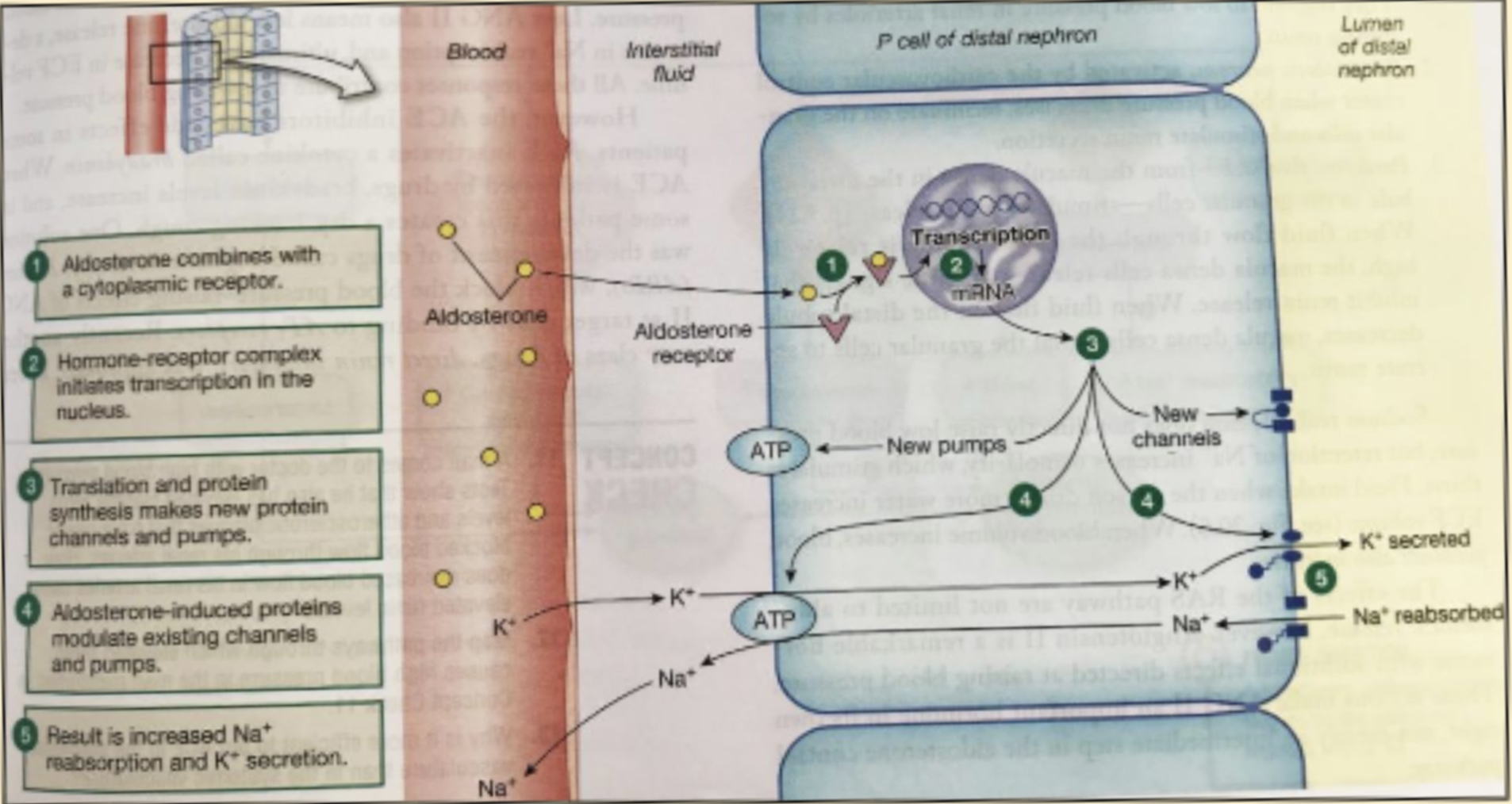
- Bind to intracellular receptors
- Slow, long-term actions
- regulation of transcription
Steroid hormone synthesis in synthesis in adrenal cortex
- Sequential processing
- Defects in 1 enzyme - cause accumulation of a precursor → shift in hormone synthesis
Mineralocorticoids
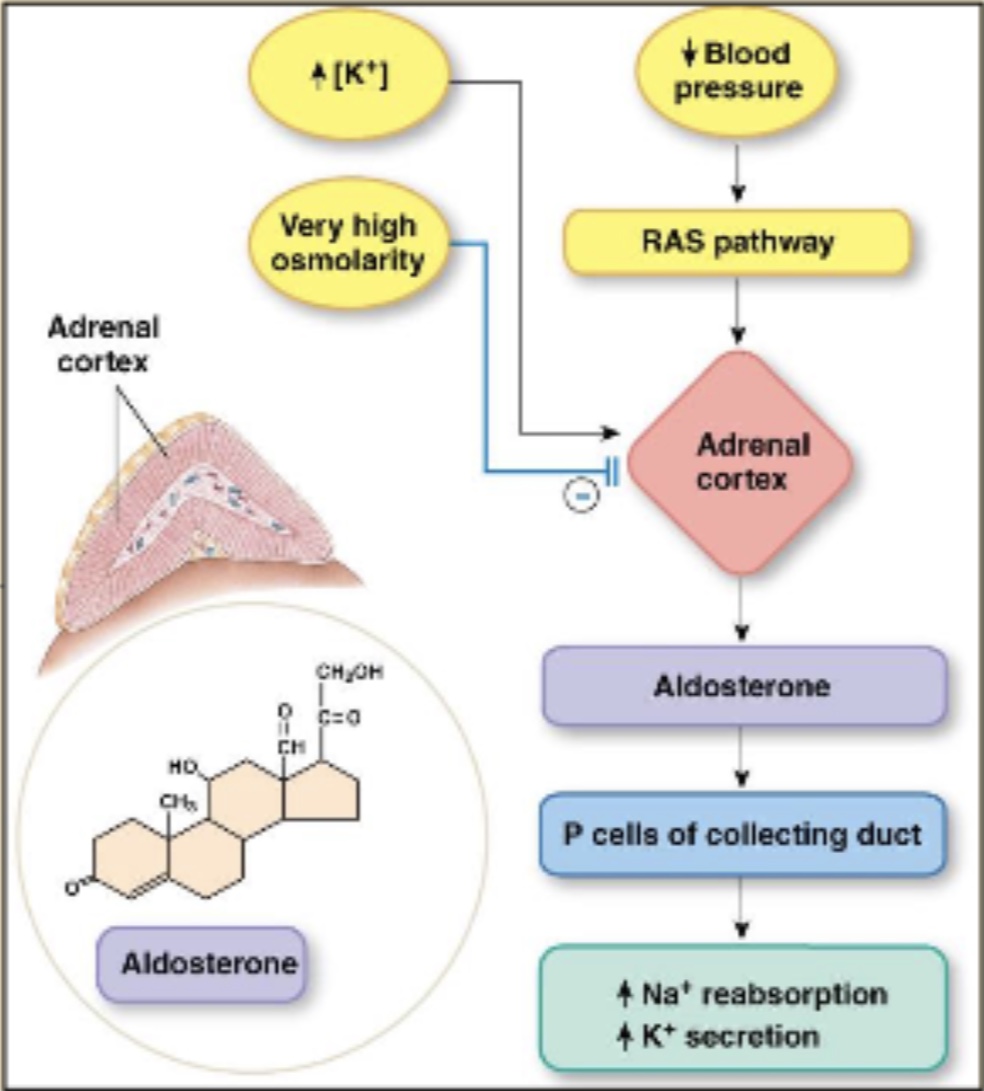
- Regulate homeostatic control of minerals (Na+, K+/H+)
- Cation exchange
- 1º Mineralocorticoid → aldosterone
- Diff. to ‘classical’ neuroendocrine regulation
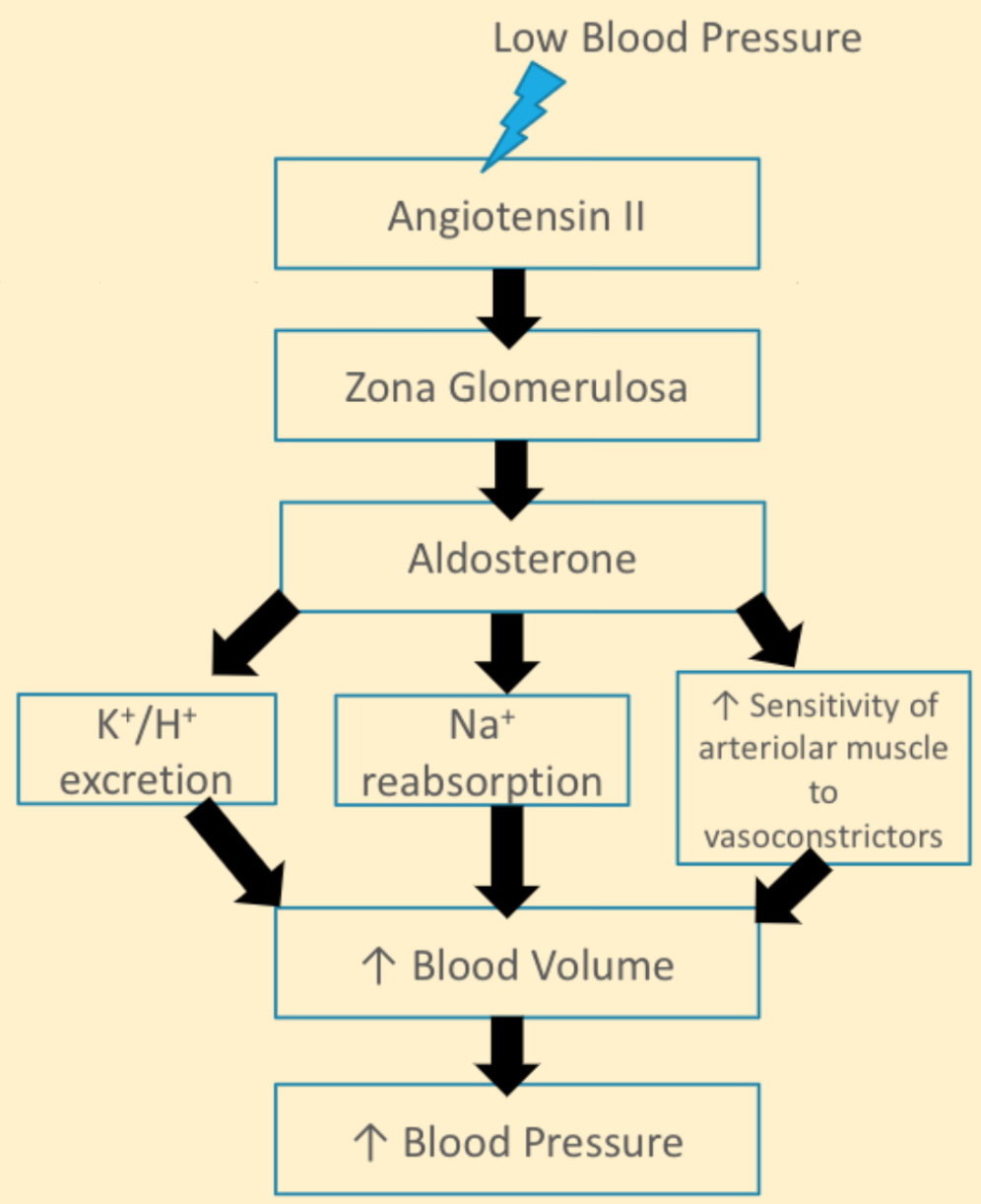
- Part of renin-angiotensin-aldosterone system (RAAS)
- Stimulated by ↑ angiotensin II
- Essential for Na+ maintenance
- In plasma - mostly bound to albumin
Disorders of Aldosterone secretion
- Overproduction may result from:
- Zona glomerulosa cell hyperactivity (Conn’s syndrome)
- Excessive renin secretion
- Symptoms include
- Na+ retention, K+/H+ loss
- Hypertension (2º to Na+'/H2O retention)
- Alkalosis (due to H+ loss)
Glucocorticoids
- 1º glucocorticoid in humans → cortisol
- Others → Corticosterone, cortisone
- In plasma,
- 75% bound to transcortin (liver glycoprotein)
- 15% to albumin
- 10% free/unbound
- Multiple physiological roles:
- metabolism
- ↑ appetite
- stress response (not just psychological, but also due to trauma, infection)
- Immunosuppression
- reduce inflammation & allergy response
- weak mineralocorticoid activity (higher blood conc - has physiological importance)
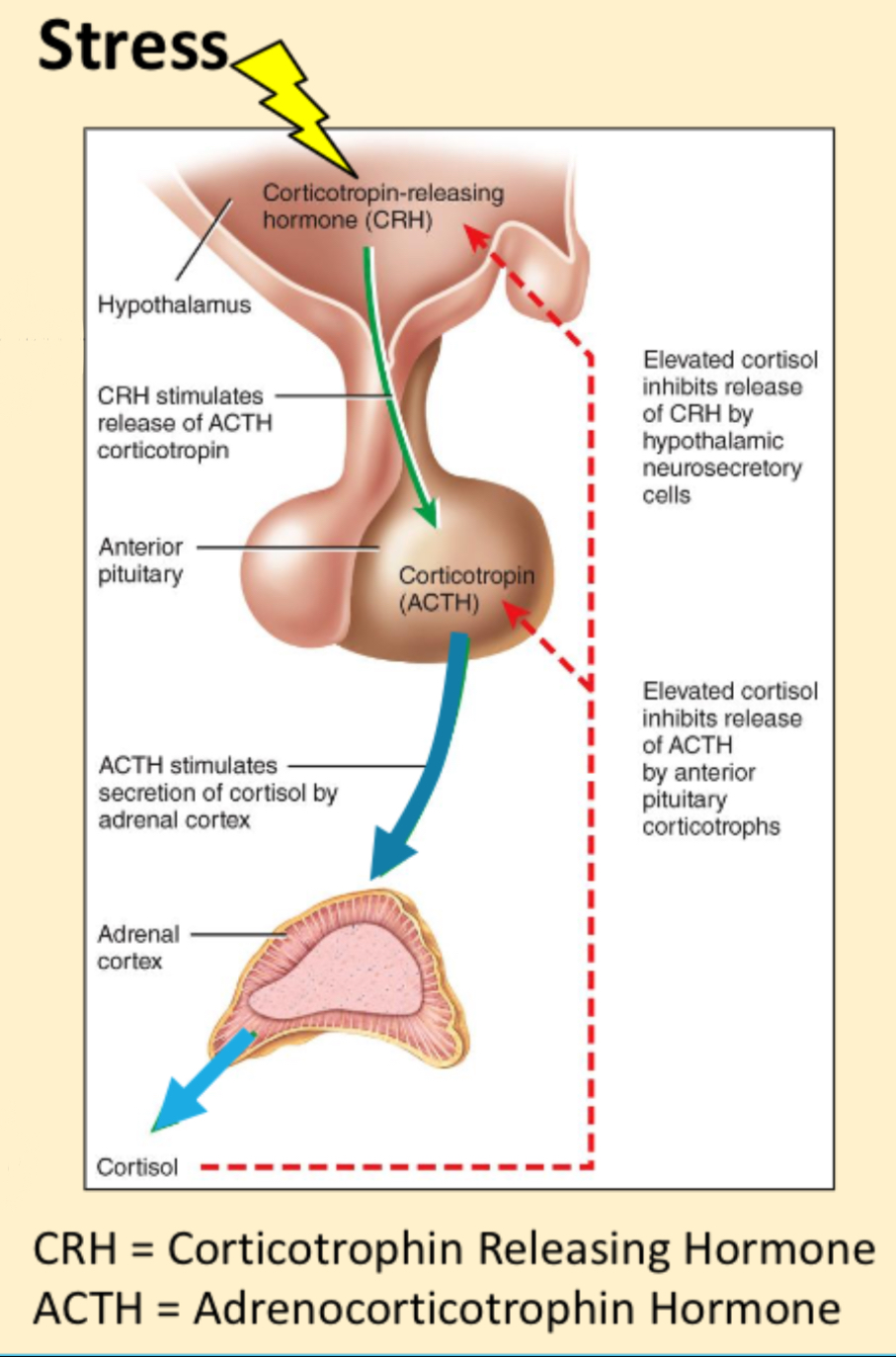
Regulation of metabolism
- Net effect = ↑ plasma glucose
\n 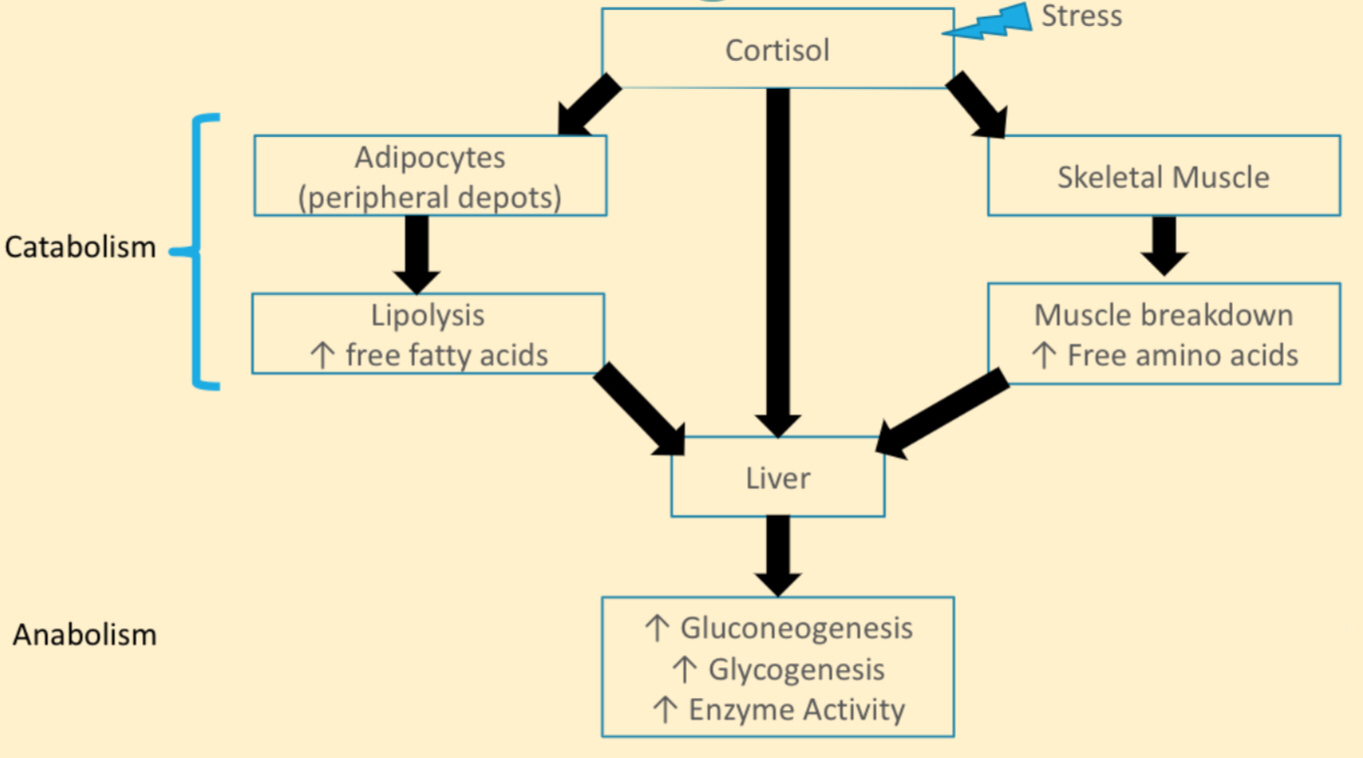
Disorders of Cortisol secretion
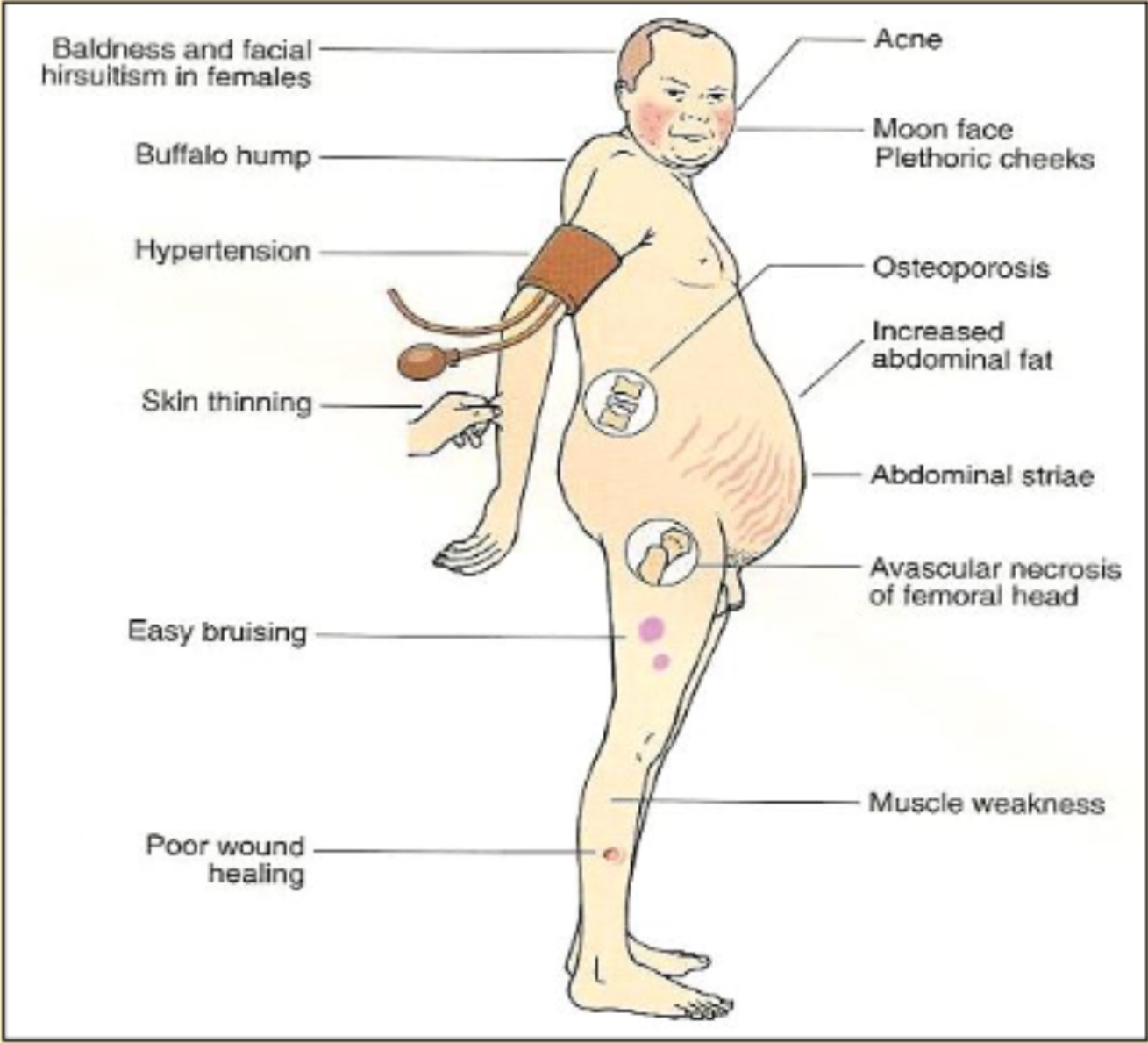
Cushing’s Syndrome
- ↑ plasma cortisol caused by e.g. adrenal tumour
- adrenal tumour
- ↑ ACTH secretion (e.g. pituitary tumour, ↓ cortisol feedback sensitivity)
- medication
- Symptoms include
- diabetes mellitus (↑ gluconeogenesis)
- ↑ susceptibility to infection
- muscle wasting, thin skin (↑ protein catabolism)
- facial & trunk obesity (fat redistribution & ↑ appetite)
- “mellon on toothpicks”
Addison’s Disease
- ↓ function of adrenal cortex caused by e.g.
- damage to adrenal or pituitary gland
- autoimmune disease
- Symptoms include
- hypoglycaemia
- lethargy, lassitude
- loss of weight
Adrenocortical sex steroids
- Stim. of Zona reticularis by ACTH
- low levels of steroid secretion when compared to gonads
- Primarily produces “pre-androgens” - converted to testosterone in target tissues
- In women, source of approx. 1/2 androgens
- negligible relevance in men
- Functional significance poorly understood
- female 2º sexual characteristics (especially body hair)?
- mid-childhood growth spurt (pre-puberty)?
- actions become more apparent in disease (esp ↑ secretion)
Disorders of adrenal androgen secretion
- Excessive production
- ↑ ACTH secretion
- alternatives inc. adrenal tumour
- Symtoms inc:
- acne
- baldness
- hirsuitism
- altered gonadal physiology
- precocious puberty
The adrenal medulla
- 1º primary cell type → chromaffin cells
- considered specialised sympathetic postganglionic neurones
- Contains sympathomimetic catecholamines
- Adrenaline (80%), noradrenaline (20%)
- derived from tyrosine, via dopamine
- stored in vesicles
- released by exocytosis
- Catecholamine secretion mediated by splanchic nerves
- stim. by stress, pain cold, anxiety
- Functional importance in sympathetic “fight or flight” response due to acute stress
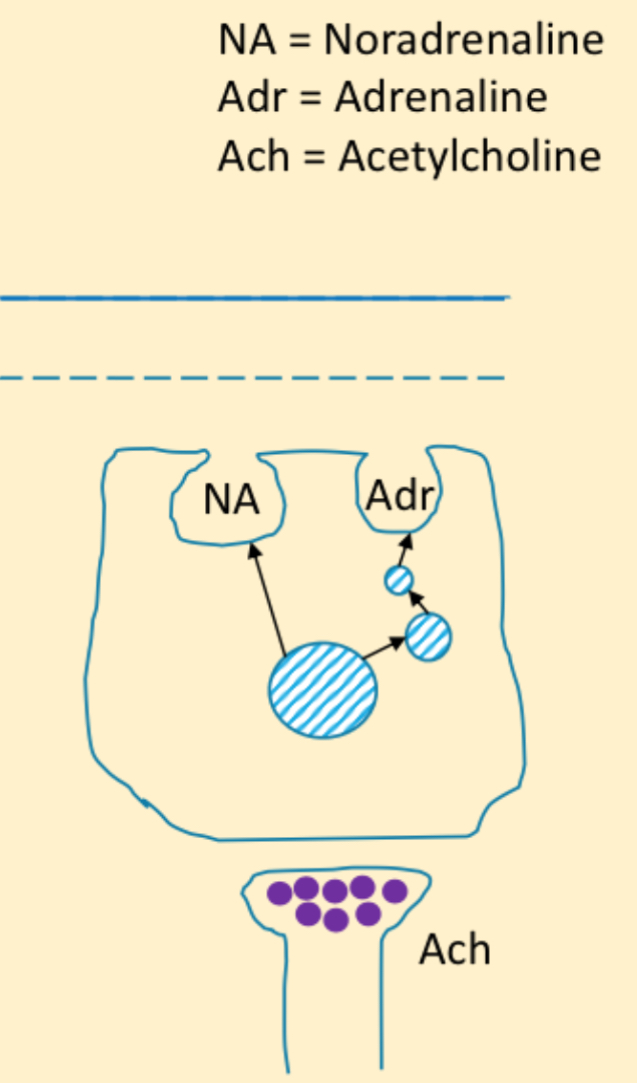
Action of Adrenal medulla catecholamines
- Rapid, transient effect (compared to steroids)
- short half life (t1/2) → few mins
- Act via plasma membrane adrenoceptors
- Multiple receptor subtypes allow tissue specificity of effect
- Effect of adrenaline inc.
- ↑ HR & Cardiac contractility
- breakdown of glycogen & fat
- ↑ O2 consumption
- ↑ skeletal muscle blood flow
Disorders of adrenal medulla function
- Pheochromocytoma→ tumour of chromaffin cells (→ ↑ catecholamine output)
- severe hypertension
- hyperglycaemia
- ↑ metabolic rate
- arrhythmias
- anxiety
Under activity of adrenal medulla is not a clinical problem - not essential for life
Summary:
- Adrenal have diff. functional regions: cortex (x3) & medulla:
- Aldosterone → main mineralocorticoid - regulates ion absorption
- Cortisol → main glucocorticoid - regulates stress response, metabolism, immune function, inflammation
- Adrenal sex steroids - subtle effects compared to gonadal steroids
- Catecholamines → Adrenaline & noradrenaline regulate sympathetic response to stress