Wounds

Pressure = disrupts the blood supply to the wound area
Desiccation = dehydrated cells die, causing crust to form over the wound site and delay healing
Maceration = overhydration of cells from urinary and fecal incontinence causes impaired skin integrity. this is caused by excess moisture, changes in the pH of the skin, overgrowth of bacteria and infection of the skin, and erosion of skin from friction on moist skin
Trauma = repeated trauma to wound area delays healing or inhibiting healing
Edema = interferes with the blood supply to the wound area, causing inadequate supply of oxygen and nutrients to the tissue.
Infection = bacteria in the wound increases stress on the body, requiring increased energy to deal with the invaders; toxins produced by bacteria death interfere with wound healing and cause cell death
Necrosis = dead tissue appears as slough, moist, yellow, stringy tissue, and eschar appears as dry, black, leathery tissue. healing is inhibited until necrotic tissue is removed
yellow = presence of exudate or slough oozing or drainage, cleanse wound with wound cleaner and irrigate
black = eschar (necrotic) and can also be brown/grey/tan. debridement needed before healing will occur.


Types of Lesions
Macular lesions = ecchymosis, pressure point, and tinea versicolor
Papular lesions = ache, warts, nevi, insert bites, and early varicella
Pustular lesions = ache, furuncles, and carbuncles
Vesicular lesions = herpes simplex, varicella, and impetigo
Plaque lesions = psoriasis, lichen simplex

Hair assessment:
scalp
color
texture
amount
distribution
lesions
flaking
parasites
aging females: thinner hair, coarser, decrease in body hair, terminal hair growth on chin
Nail assessment
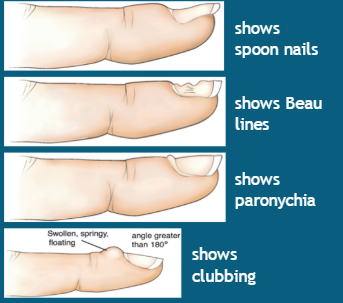
paronychia = local infection of the nail
clubbing = a nail base that feels spongy with angle of the nail base 180 degrees or greater