week 2
Feminist Theory Reader - intersec and diff
in the 1980’s there was an increase of women of colour and transnational scholars that helped changes the direction of feminist theory as they focused on the different parts that make up a women like race class and more.
they challenged the traditional idea of feminist theories
chela sandoval calls this oppositional consciousness
the definition of politics of location means where you located in the world matters cause the history and culture of that are affects who you are.
we can look at ourselves and see multiple diff entities not just as a women
radical femnisim is when they ask for a complete restructuring of society to eliminate patriarchy but when rich saw the word we they realised they were talking about white western women and talking about we as if women all had the same experiences
white women althought they are women are still priviliged as they have more power and freedom then a black women for example and because of this priviledge it can make it harder to see and understand experiences diff from your own
because of this women can marginalize each other
anzaldua focuses on what happens when someone exist in multiple cultures/ identities, and communities.
mestiza is someone caught between diff ways of life and culture
this can create an inner struggle for these women
border crossing dosent have o be physical it can also be mean as they move through their diff cultural spaces and social groups diff parts of their entity can be more important
but living between cultures means you can receive mix messaging from all these diff cultures
anzaldua says this is only a negative
we should be able to understand and allow people to have multiple perspectives at one time
originally people used the additive model of opression i am a women + black but we realised that this dosent work because systemic issues are intertwined with women and someones experienced is shaped by not just one but both so they are a black women not black + women
dill and zambrana use intersectionality to study enequality as they are connected to american society
they say intersectionally make three interventions
focuses on marginalised people experiences
moves being simple categories
intersectionality looks different in diff forms of power
Structural power — larger social and institutional systems
Disciplinary power — rules and practices that control or regulate people
Hegemonic power — dominant ideas about what is normal or acceptable
Interpersonal power — power between individuals
intersectionality is also suppost to empower ans it transforms the way we understand knowledge and transform society
jenifer nash says
it shows that race and gender are completly seperate caytegories
allows scholars to explain why putting people into groups cant define someone life experiences
recognises who experiences multiple forms of oppresion
but
no defined way to use intersectionality
black women are treated as the main object or face of intersection
does intersectionality actually reflect peoples lives
so nash belives scholars should criticly examine and improuve the definition so we can work through paradoxes
Patil says that replacing the patriarchy with intersectionality helped advances feminist knowledge but she also knows that it has the same weaknesses the patriarchy has
but she also says it can focus too much on individual or domestic and national situations so we dont really pay attention across the boarders
to fully understand gender we need to look at other places and cultures
patriarchy can be developed through diff histories and interaction globally and locally so we can understasnd patriarchy through an intersectional lens
intersectionality can overlap and reinforce each other and this shapes peoples experiences througout life
hartmann looks at relationships between gender and class as during the 70s women debated if gender inequality and class ineuality were acc connected.
comes from social feminisim where women oppresion and capitilisim are connected
she developed what we call the duel systhem theory where capitalsism and the patriarchy are two seperate systhems but they work together to creat oppression
she defines patriarchy as a systhem of social relationships between men that allow them to dominate women. (material foundation)
she talks about karl marx and and his idea of historical materialism and how we need to understand society and look at how people produce the things (historical materialsim) we need to survive. and the way people live and work help shape the society they live in
proletariat - these people want to sell labor to make money and they depends on others to survive
bourgeoisie - control wealth and resources
she also talks about gayle rubins perseption of sex/gender systhem and says that society takes biological diff and make them social rules and expectations.
adrea smith says that their are three main pillars of race/class/gender adn they all connect back to white supremacy
slavery/capitalisism - systhem treats our bodies as commodities
genocide/capitalisim - disapearence of indigenous peoiple
orientalisim/ war - potrays culture as threats
this makes things harder becvause some people might feel one oppression while benefiting from another
heteropatriarchy (men have greater power then women, hetero is the norm …) is part of how the us empire is organized)
european expension also means forcing other communities to move (diaspora). because they have so much space and so much people living on this land they make imagined community meaning because people cant have relationships with every single person we have christmas,flags.. to connect all these people. this can also create a sense of us vs them and also erases the difference in the contry.
neoglobalisation makes boarders between cultures less clear since contries became more connected and so because of this they have a hard time creating a stable sense of sovereignty.
mohanty in her article in 84 examines the third world women and how westerm women reapeted colonial discourse
Connell says society usually values certain type of men more then others (hegemonic Masculinity = the idea that theres and ideal white man)
monique wittig argues that being a women isisnt just about biology and women are oppresed through their relationships with men and she also argues that lesbians challenge the systhem because they reject heterosexual relationships
this bridge called my back is about the experiences of women of colour and their experience with sexisim and racisim. and how they are expected to help others (bridge them to success).
june jordan People have multiple identities, and these identities affect how they experience the world and connect with others.
minnie Bruce Pratt says to build a strong feminist movement, white women need to recognise their priviledge and lisen to women of colour
Audre lord says feminisim must include everyone including people who experience multiple forms of discrimination
The PISSAR group syas intersectionality means considering how different needs and i dentities overlap and they made bathrooms more accessible for everyone
leila ahmed - says that the veil depends on the historical and cultural context. we shouldnt assume every women wear the veil for the same reason
obioma Nnaemeka talks about nego feminsim and how their is not just one way to approche feminisim and diff cultures will develope their approches and feminisim should make room for that
and finally its important to recognise that colonialisim stil affects people today and feminisim need to acknowledge this.
Feminist Theory Reader - re-thinking intersec
Radical feminsism is believing that womens personal struggles are connected to lager social problems. if women are un happy or struggling its not becaus eof their own fault but because society treats them unfairly
shulamith firestone believed that the main division in society was between men and women and that society is shaped by a struggle where men have power over women (dialectic sex)
the author agrees that radical feminisim helps us understnad the struggles of women today but she thinks they focus too much on psychology and not on the history
it helps us explain it today but dosent fully explain how gender roles have developed throughout history
the author says patriarchy isint just about having power over women but also how men support one another in maintaining that power even if they have diff levels of power
she also says that patriarchy is maintained through labor meaning housework,childcare and other basicly controlling womens access to money, jobs an other ressources can help maintain mens power
the author also argues that monogamous heterosexual marriage is way men can control women’s labor like the women is the one who cooks and clean and takes on thoise traditional roles but this can also be seen in the work place since girls are expected to make the coffee and things like that.
this is important because raising children like this helps reinforce the patriarchy
Gayle rubin introduces the sex gender systhem and how society takes a biological diff between the male and female and turn them into social expectations. not every sex/gender sys has to be patriarchal but right now it
society is shaped by two systhmes
economic production - producing service goods and money (capitalsisim)
production and reproduction of people - this is about raising people and maintaining society (sex/gender sys)
and these two sys influence each other
the authors says theres no such thing as completely separate capitalsisim or patriarchy so eliminating or change the economic systhem dosent automaticly eliminate the patriarchy.
she argues that society dosent just organize through gender but also racial hierarchies where certain racial groups are given more power oppertunity and status. racial heiarchy can influence who get into each job position to reinforce steryotypes.
patriarchy exist everywhere but in different way based on diff cultures and stuff and because of this not all women experience it the same way
women that face oppresion can also have certain power or more power then other oppresed women.
some women might only feel that they are oppressed by there own husband and take it as a personal issue and not a social or systemic issue. hartmann wants us to benefit from womens work and how like for example her employer benifits from paid labour and family benifit from unpaid labour
many values that are atteibuted to men are also alos connected to capitalsistic workplaces. and these ideologies devalue women as it makes traditionally masculine charecteristics seem valuable.
hartmann says advertising can be used as an example of how womens work can be relied upon and mocked / Society expects women to manage household problems, but then devalues the work they do.
hartmann also argues that marxisim helps create and explain capitalsisim but cant fully explain patiarchy
she also says that women should not rely on men to acheive gender euality as men may benifit from patriarchy so they may not always have an interest in ending it so women should not put all trust in men to fight for them
in class
stand point statement - 1000 - 1500 drawing on at leat two feminist therory disscused in class. how we encounter feminist thought
consider different perspectives / positionally and its relation to power
familail situation growing so what you see/ dont see / critical self reflection
connection amounf positionaloity knowledge and power
standpoint theory
recognise the insight and limitation of your personal perspective
when thinking of standpoints what are your perspective if you where in diff “classes” within topics like money…
epistemology is the theory of knowledge
how can we think of feminist epistimology (if it was a tree or and umbrella term)
what voices werent heard to create this knowledge. at the trunk of the tree we are all women.
its the theory of knowledge of identity in feminisim andf in the roots we have embodied knowledge and the trunk as lived experiences
feminist theory is opposing dominant power structures.
within feminisim we can find new concept like situated knowledge, specific consnshence, standpoint, care, community,
feminist thought is never singular linear or neat because we pick up roots and they weave in and out of other thoughts and systhems
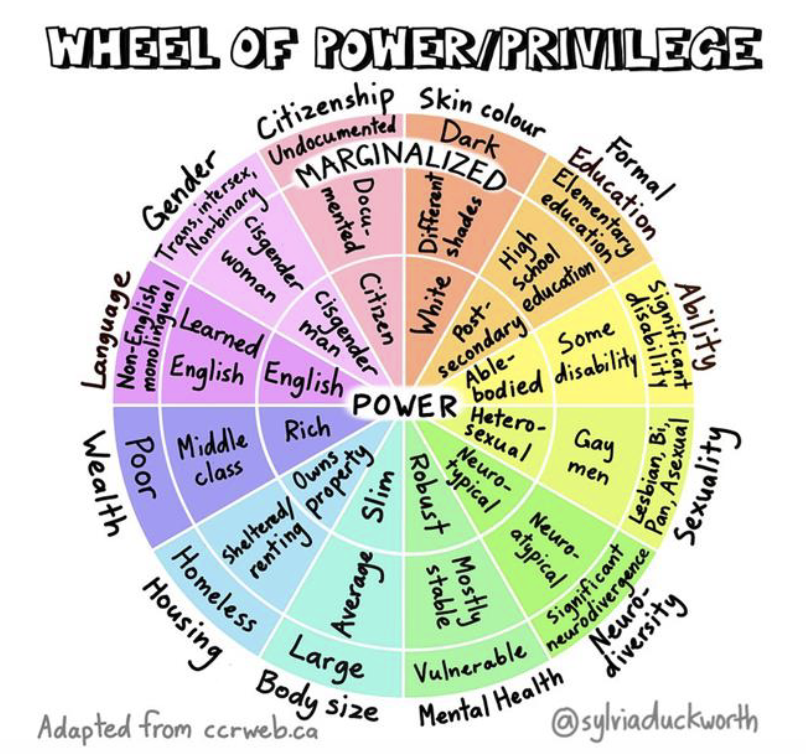
its messy its not 1+1+1+1 things overlap and evolve and sometimes like that wheel some people only focus on one thing but its a prisim its multiple things interlock and work together so it important to know the strands of feminist thought that eventually became internationality
river collective - coined the term identity politics and they saw the importance of the interlocking identities and how it affects their opression
identity politics - specific perspective as black women and their opression adn how economic and other effect them
not just socialisim is going to save us
lorde - wrote on the master tools
think beyond the fact that all women suffer the same oppression. patriarchy and theire approches are monolific so how could feminisim be.
anzaldua - feminist theory talk about ideas of space (using politics of location and ideas of boarder land)
displacement of indigenous people
put a boarder there to keep people in their lane cause they dont agree with them and their culture or whatever
if you cross the boarder your the bad person not me
boarders can be arbitrary when the issue is big enough people can come together like for canada at the end of the day we are all canadian.
strategic deployment of identity - here we see outsleves as a monolift even if we dont always see eye to eye
boarders - like personal bounderies to keep yourself safe in a way a contry might do thaty to keep them safe and create a space for themself.
but safe for whom? and what is their version of safety?
who is allowed to be within these boarders
just because you cross a boarder dosent mean your leaving your culture and life behind
being able to distinguish yourself as diff from a group that uou think less of them because of a boarder
boarder between us and nyc
for fist nations it was one land and the boarder interupted their way of being
chicana - live within multiple worlds
we need to become accountable for out own action in the sense of when do we puch our canadian systhem away and how do we use it to our advantage
mestiza consciousness - how do they straddle the diff of their culture and identities.
developing a tolerence for those that dont fit into a specific box / it stops so many people from stop to learning more cause they dont have the tolerence for it
when people dont fit into the boarders it challenges our ideas of whaty we know to be true
all people perceive the world in a way that the culture communicates and things that are outside this way of thinking we get culture shock
standpoint theory is knowledge created by diff marginalized standpoints
how do diff advantage point create knowledge on sys of power
intersectionality - your identity is a bunch of cross roads all at once and at certain crossrouad you have certain problems / way to interogate other section of identity
intersectionality explores strands of thoughts and interlocking systhems of oppresion (river collective)
invites scolars to come to terms with the legacies of the marganalised subjects in feminisim and the fact that its been absent in this conversation for so long also tell them how they intersect not added.
what we see in intersec approche we look at intereaction between multiple types of identities but we are missing the interactions of social sys.
jen nash - intersectionality is leading feminisim so it critical to engage with the mssing parts of it. we need to make sure we understand what does it mean and what does it do cause are we losing the meaning of the word
we should challenge and question the disscusion behind intersec so we can continue to work towards the goal of feminisim.
intersec has a lack of methodology / no regguris methode of studying a thing that has multiple point its hard to define because how many points are there who is intersection and more
if the goal is we use intersec to undestand inclusivity we need to reconsider the goals of it being use as a blanket statement
intersectionality uses black women as monolific face of intersec but we are also forgetting other problems in intersec as well that black women will have diff experiences within eachother.
talks about how race and gender erase power in different aspects
women of colour could be discriminated aginst but also could have power in the sense of they dont suffer poverty
intersectionality is just a point of stanpoint
nash dosent talk about abelsisim so she also has flaws in this theory
disbility is a cultural fabrication of how we think about the body, disiplining of the body
the self materialises because of its engagement with the enviroment / socially
transformative idea when integrating it into feminism cause it changes our way of thinking about feminisism
the body is disabled when it cannot perfom or do what is expected
sitpoint theory - what perspective arise from encountering the world from such a different perspective