L3 - The Digestive System
Gastrointestinal Tract (GI)
- Same thing as Digestive Tract
- Digestive SYSTEM includes GI tract + other organs
- Mouth
- Stomach
- Small Intestine (SI)
- Large Intestine (LI)
- Rectum
- Anus
Need to Know Terminology for CHO
- Solubility - Is the CHO soluble in aq enviro?
- Digestibility - Host has the right enzymes to digest CHO?
- Fermentability - Do gut bacteria have the enzymes to break the CHO?
{{SIMPLE SYSTEM W/O CAECUM{{
- applies to humans, cats, dogs
Key Features
- Monogastric (single) stomach
- Non functional caecum
- Hindgut fermenter
- good for nutrient dense, low fibre diet
- Oral Cavity
- Food is chewed + mixed with saliva
- Salivary glands also initiate some digestion
- a-amylase (CHO) + lingual lipase (Fat)
- No protein digestion yet
- Stomach (Cardia, Fungus, Body, Antrum)
- Can expand as you consume more food
- pH is v acidic - HCL ~2
- Food becomes chyme
- Gastric glands secrete gastric juice + enzymes
- Partial protein digestion
- Muscle contractions to churn + move food along
- Small Intestine (duodenum, jejunum, ileum)
- main site for nutrient absorption
- Very large surface area
- chyme is neutralized with bicarbonate
- muscle contractions push food along
- digestive enzymes released from pancreas + bile from gall bladder
- Large intestine (colon)
- Most nutrients are already absorbed
- contains billions of gut bacteria
- Fermentation occurs here
- bacteria breaks down CHO into SCFA (short chain fatty acids) or VFA (volatile fatty acids)
- Water is highly absorbed
Anatomy of the SI
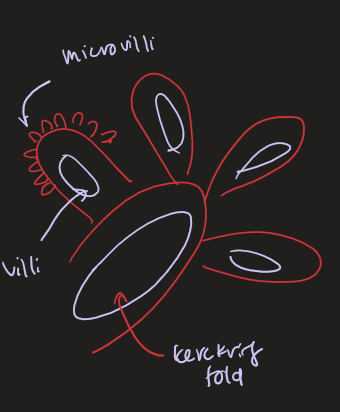
Kerckring Folds - large folds within the tissues
Villi (and Crypts) - Further folds in the big ones
Microvilli - Tinier folds on top of the villi
- Contain the brush border system for maximum nutrient absorption
Nutrient Transport Mechanisms
Simple Diffusion (Passive)
- Conc dependent, high to low
- Small non polar molecules
Facilitated Diffusion (Passive)
- Channels are used cause molecules are bigger (need help)
- Ions
Active Transport (ATP)
- Conc move opposite the gradient
- Low to high
- uses ATP
Gut Bacteria
- Contains 10^2-10^12 - LOTS of bacteria
- Not evenly distributed + as you go down
- 1000:1 Anaerobic to Aerobic bc Large intestine is anaerobic
- balanced pH
- O2 level all influence # of bacteria
- Diff ppl have diff species but the functions are the same
- Some animals eat their poop to evenly distribute gut bacteria
- Imp for fermentation of non digestible CHO
{{SIMPLE SYSTEM W/ FUNCTIONAL CAECUM{{
- applicable to horses, rabbits and hamsters
Key Features
- Psuedo-ruminant
- Hindgut Fermenter (fermentation in large intestine)
- Functional Caecum
- All other regions function similar to monogastric system
- Diet with large amounts of fodder and foraging (high fibre)
Functional Caecum?
- Enormous hindgut filled with bacteria
- SCFA provide 70% of total energy host needs
- Site for vitamin production
- Adult horses eat their poop to consumer vitamins
- Young horses eat their poop to colonize gut with bacteria
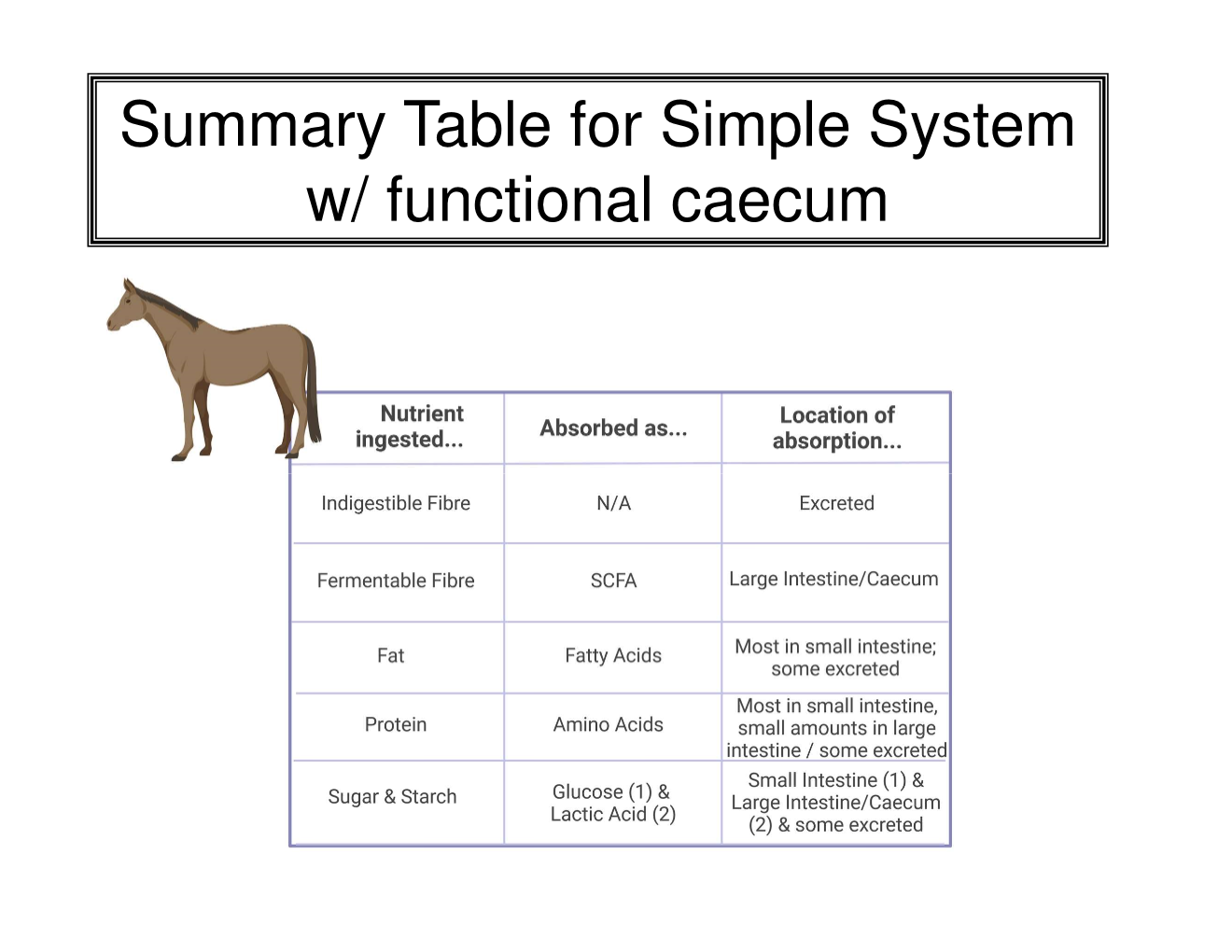
Where Nutrients are absorbed
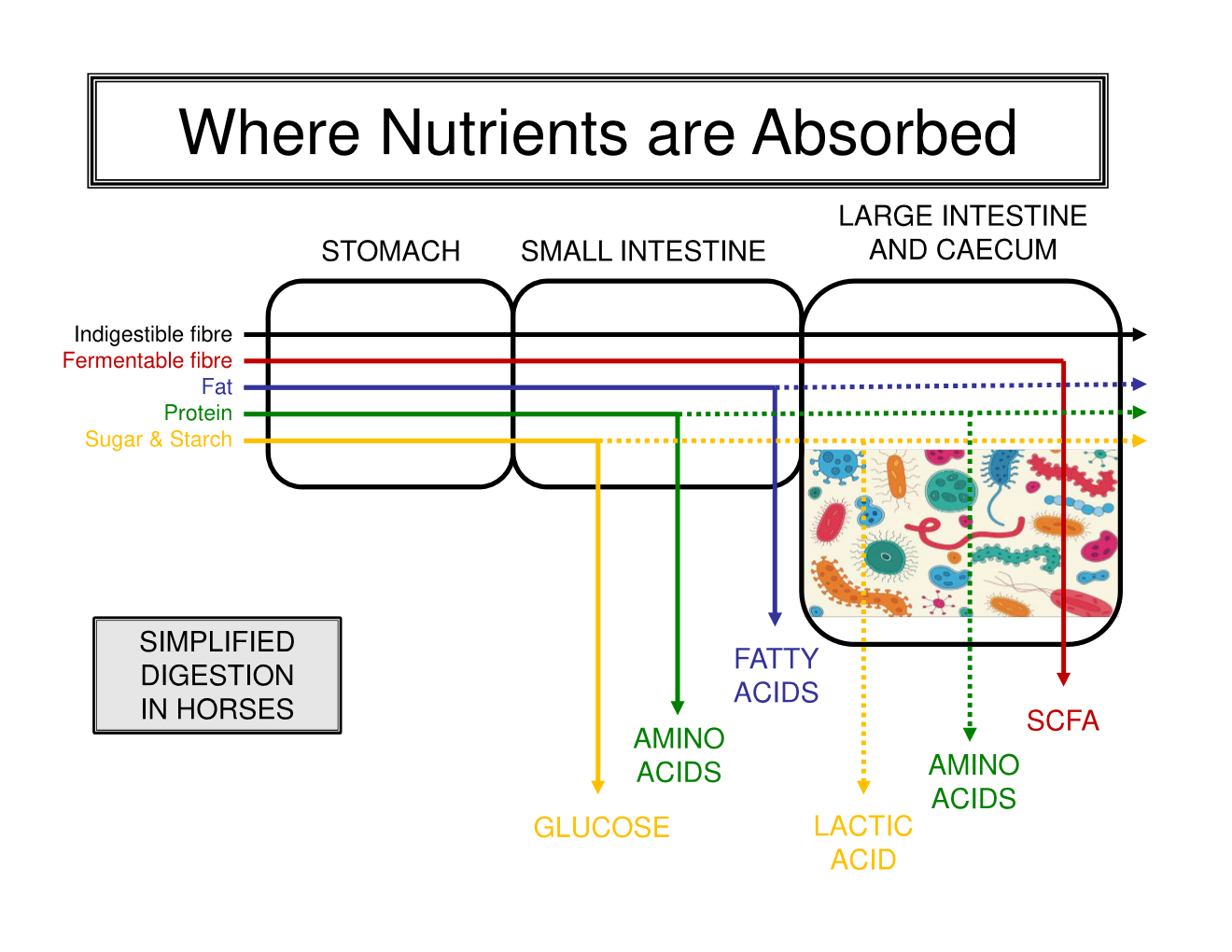
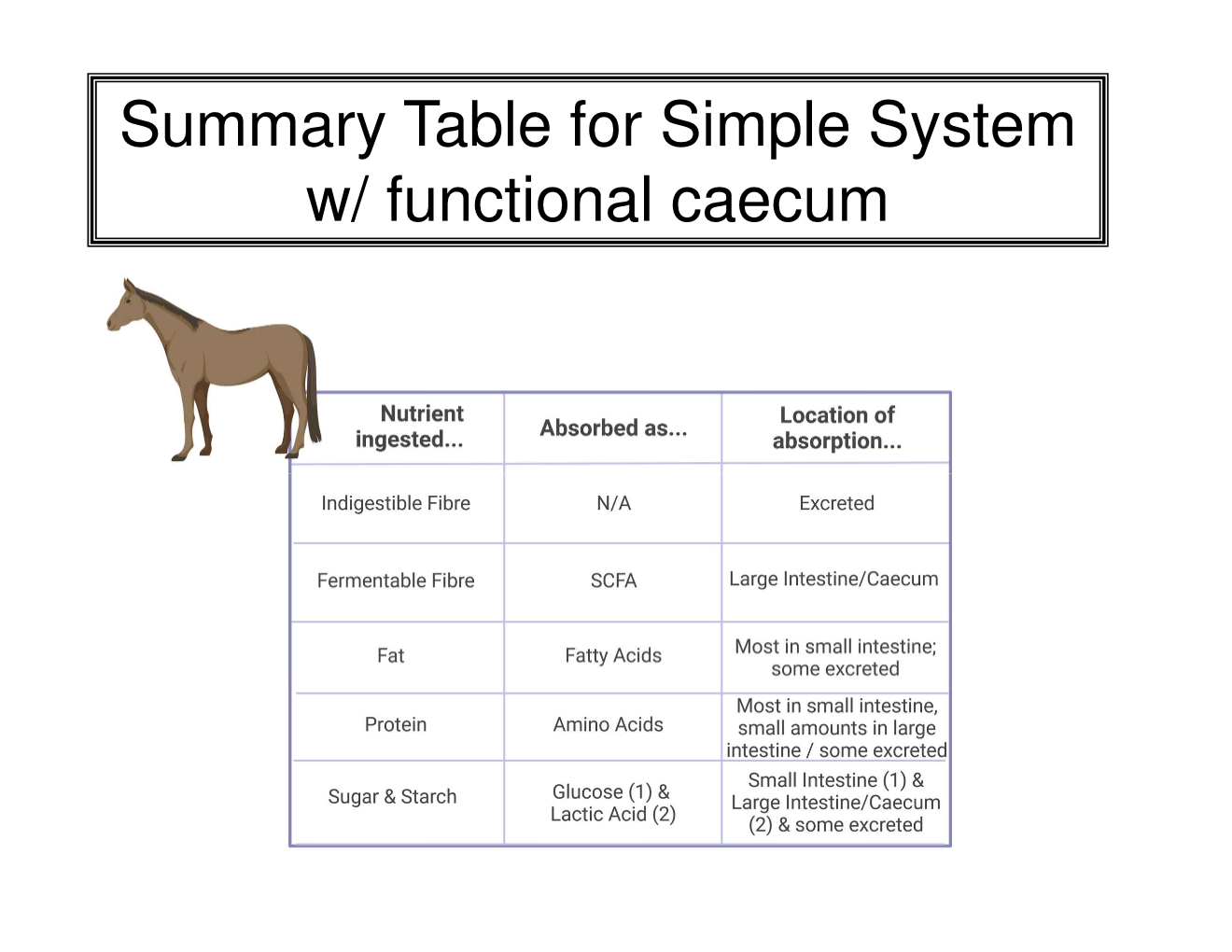
- SI - Glucose, Fats, Protein
- LI - Produce lactic acid if on high CHO diet (bad for horses), Some protein digestion, SCFA
- Indigestible fibre goes completely through
Memorize
MULTIPLE SYSTEM: RUMINANT
- Applicable to cattle, sheep, goats
Key Features
Large stomach divided into 4 regions
- Reticulum
- Rumen
- Omasum
- Abomasum
Highly suited for animals that eat a high quantity of fodder and forage plant materials
Foregut Fermentation
Ruminant Digestion
- Sometimes referred to as reticulorumen (grouped)
- Reticulum
- Can capture nutrients and trap foreign materials (wire, metal)
- can cause hardware disease (too much need magnet to take it out)
- Rich in bacteria fermentation
- Rumen
- The largest section of the stomach
- Rich in bacteria
- Rumen papillae (+ SA) for absorption
- A lot of nrg is created here SCFA
- Omasum
- Reabsorption of water
- Filters large particles
- Abomasum “True Stomach'“
- Digestive enzymes and juices secreted (like normal stomach)
Ruminant Digestion
- Fermentation takes place before entering the intestine (SI)
- Nutrients produced by bacteria then become available for digestion and absorption by the host + bacteria
- Rumination - Swallowing, regurgitating, and repeat (helps with digestion)
- Eructation (belching) - Huge loss of energy, fermentation, methane gas
Pros and Cons of Ruminant System?
Pros
- Produces vitamin b4 absorption = good
- Can feed on low quality (with not a lot of N)
- bc bacteria later can make all the AA b4 absorption
Cons
- Methane gas loss (energy)
- Fermentation creates heat - uncomfy for cow
AVIAN SYSTEM
- Applicable to chicken, turkey, birds
Key Features:
- Beaks and claws are imp for breaking up food for birds to swallow
- no teeth!
- Rapid Digestion
- Birds can starve if deprived of food for even a short time (hours)
- Crop
- Enlarged area of the esophagus
- temp storage spot for food
- may regurgitate for offspring or swallow for self
- food is also softened
- Two Chambered Stomach
- Proventriculus - Glandular Portion
- HCl + Digestive Enzymes
- Gizzard - Muscular Portion
- has stones that grind + digest tough food
- Small Intestine
- Same as other systems
- nutrient absorption
- Ceca
- Minor site of bacterial fermentation
- Large Intestine
- Very small
- Mainly connects small intestine to a component called Cloaca
- Bit of storage for undigested material
- Water absorption
- Cloaca
- Where the digestive, urinary and reproductive systems meet