Spirometers and measuring lung function
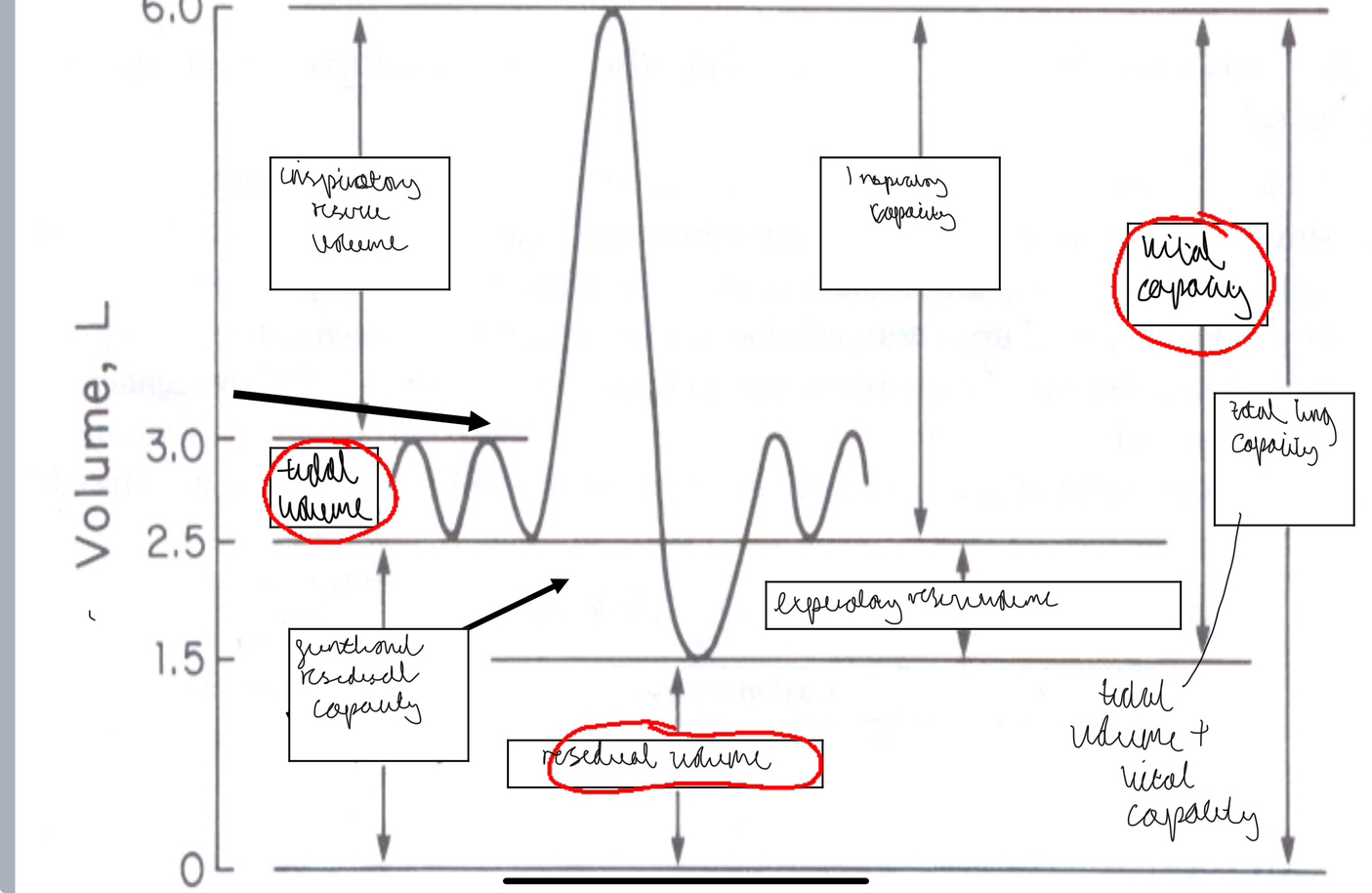
Tidal volume- the volume of air moving in or out of the lungs in each breath (about 0.4dm³)
Vital capacity- the maximum volume of air that can be breathed in or out (strongest possible exhale, deepest possible inhale)
Breathing rate- how many breaths are taken per unit of time (usually per minute)
Oxygen uptake- the rate at which a person takes and uses oxygen (dm³/min)
Pulmonary ventilation is a measure of lung function- the volume of air taken into the lungs in one minute
Pulmonary ventilation rate (dm³/min) = total volume (dm³) x breathing rate (breaths per minute)
VR = TV x BR
Could also use cm³ instead of dm³
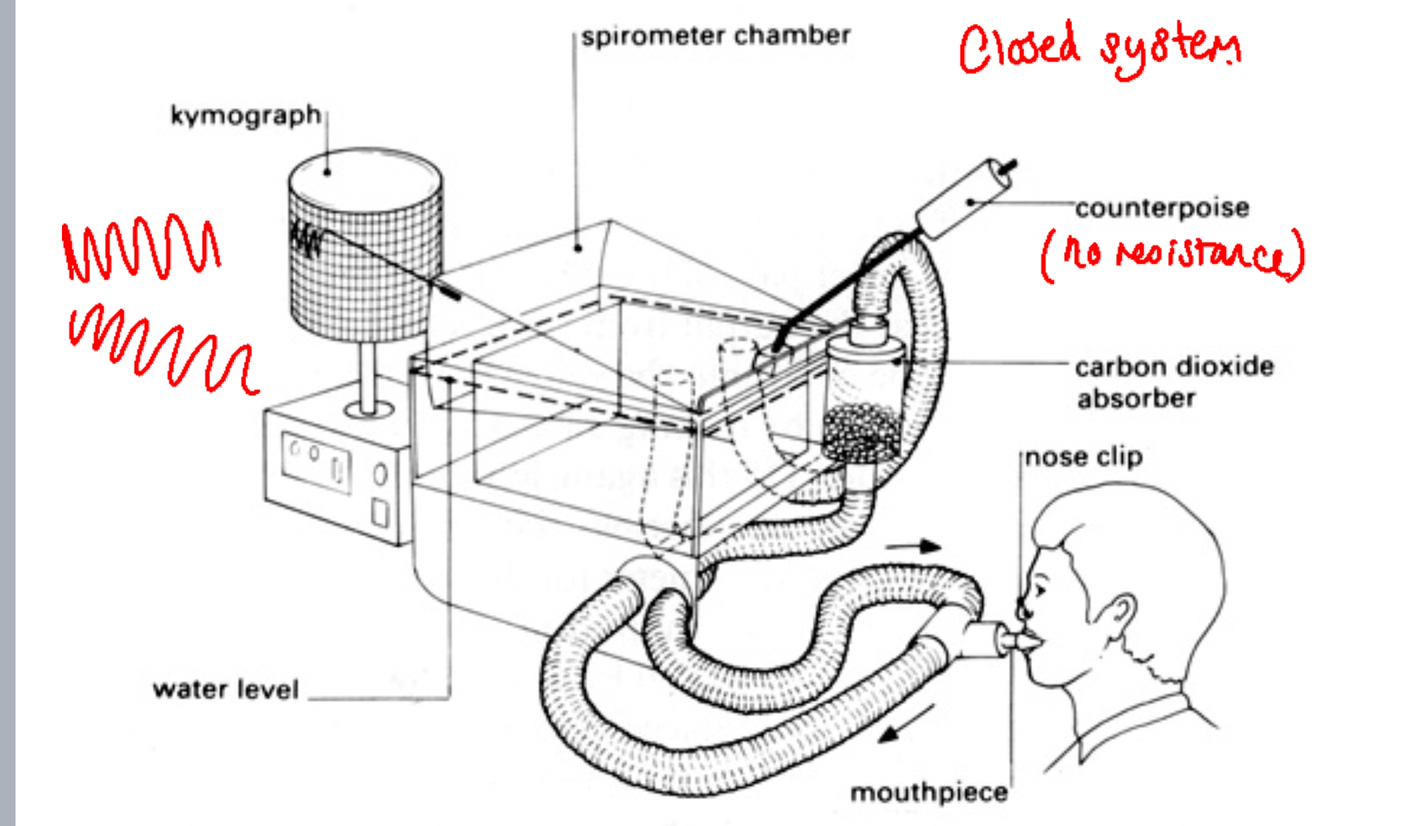
The spirometer trace slants down with successive cycles as oxygen is removed from the spirometer by the lungs, and carbon dioxide that is breathed out is absorbed by the soda lime so the chamber does not rise as high.
On a graph of the spirometer trace, make sure to check if the y axis is the volume of air inside the chamber or inside the lungs.
How do you calculate the difference in oxygen uptake?
Find the change in oxygen by subtracting the highest peak from the lowest peak then divide by the time