pH and pH Indicators
Overview of pH
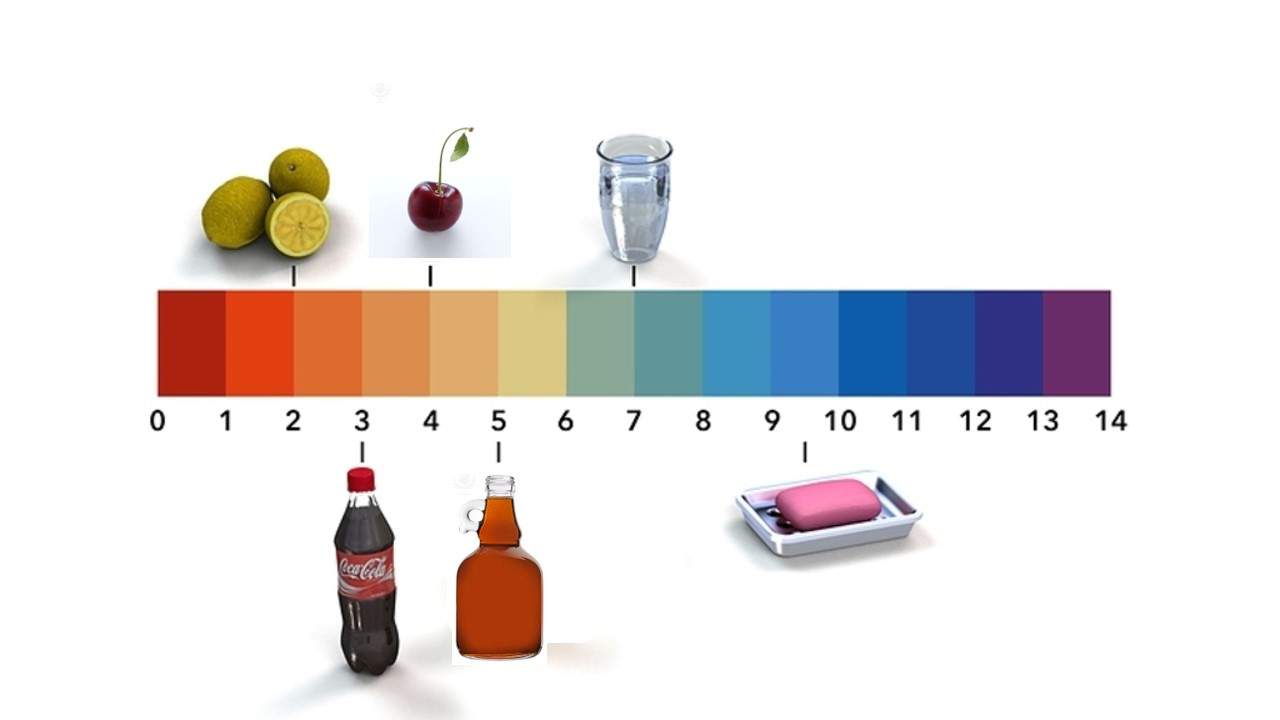
pH measures the H+ (or H3O+) in an aqueous solution, such as blood and fluid inside or outside a cell (intracellular/extracellular fluids). It is a numerical value given for a specific aqueous solution to determine if it is acidic, basic (alkali), or neutral. A pH scale, as seen above, is used to measure how acidic or basic a solution is when given a pH value. The scale runs from 0 (most acidic) to 14 (most basic). Remember from prior lessons that a pH of 7 is considered to be neutral, such as pure water.
Click on the image to zoom in.
Here, we see lemons with a pH of 2, soda with a pH of 3, cherries with a pH of 4, and maple syrup with a pH of 5. All of these are considered to be acidic, with lemons and soda being strong acids and cherries and maple syrup being weak acids. Water remains neutral at 7, while a bar of soap is considered more basic, with a pH of 9.5.
pH Indicators Overview
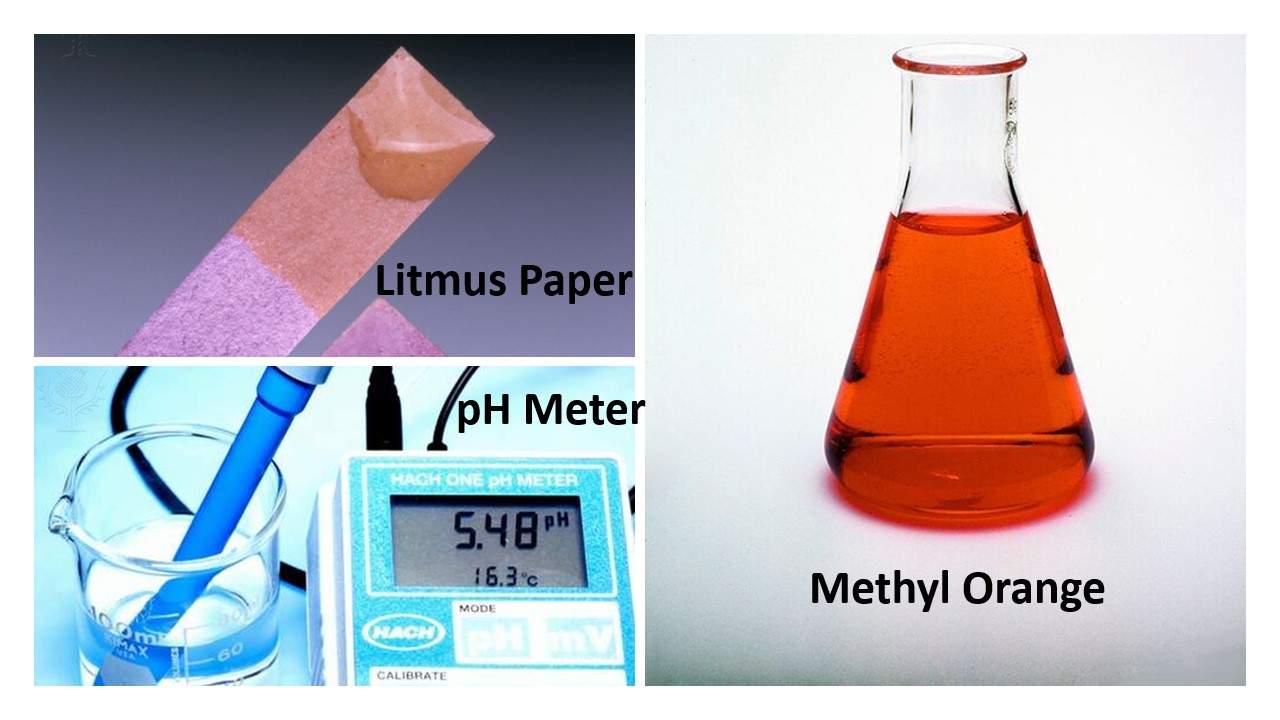
To determine the pH of a solution, pH indicators are used, where a color change is observed when a solution is within a specific pH range. There are various ways to determine pH, using indicators such as litmus paper, pH meters, and chemical indicators (methyl orange, phenolphthalein, etc.). While many of these indicators give only a pH range, the most accurate method to test pH is by using a pH meter.pH Indicators: Chemical Solutions - Methyl Orange
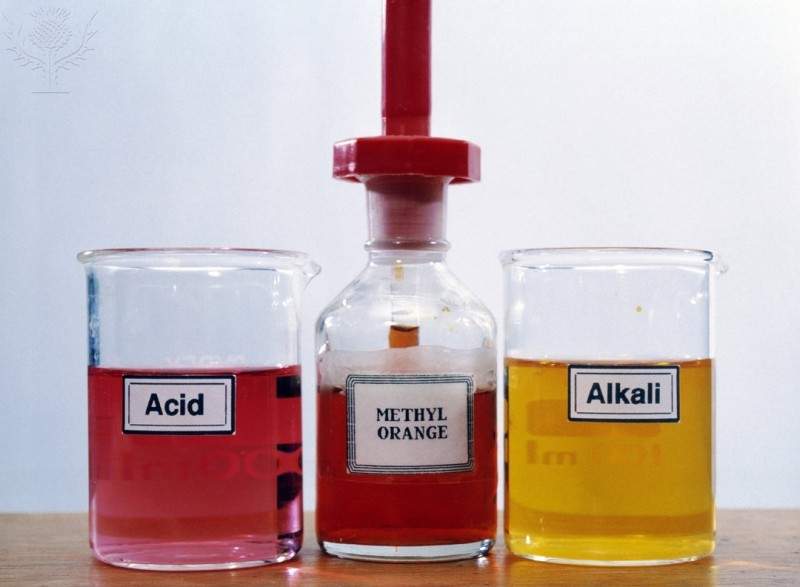
When using chemical solutions to determine the pH of a sample, it is important to note the initial color, the pH range tested, and the color change. Here, we see a common pH indicator called methyl orange. In its natural state, the color is red. When added to an acidic solution, it turns from red to orange-red to bright orange (depending on the solution's acidity). As the solution becomes less acidic, methyl orange turns yellow and remains yellow in basic (or alkali) solutions. The color begins to change from its natural red to orange around pH 3.6.
pH Indicators: Chemical Solutions - Phenolphthalein
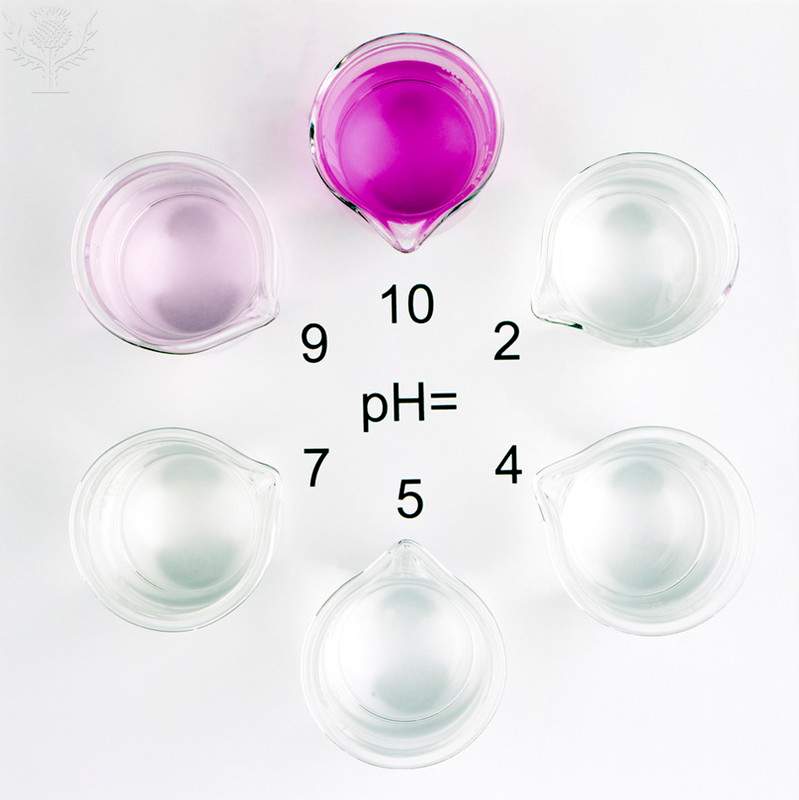
Another common pH indicator is phenolphthalein (pronounced FEE-NALL-THAY-LEEN). In its natural state, it is colorless. When added to an acidic solution it remains colorless, up to a pH of 8.2. In a basic (or alkali) solution it turns light pink (around pH 8.3), and stronger bases turn a deep fuchsia (around pH 9.1). The color begins to change from its natural colorless appearance around a pH of 8.3.
As seen above, we observe the various levels of pH and where the phenolphthalein changes from clear, to a faint pink, to a fuchsia (deep pink).
pH Indicators: Litmus Test
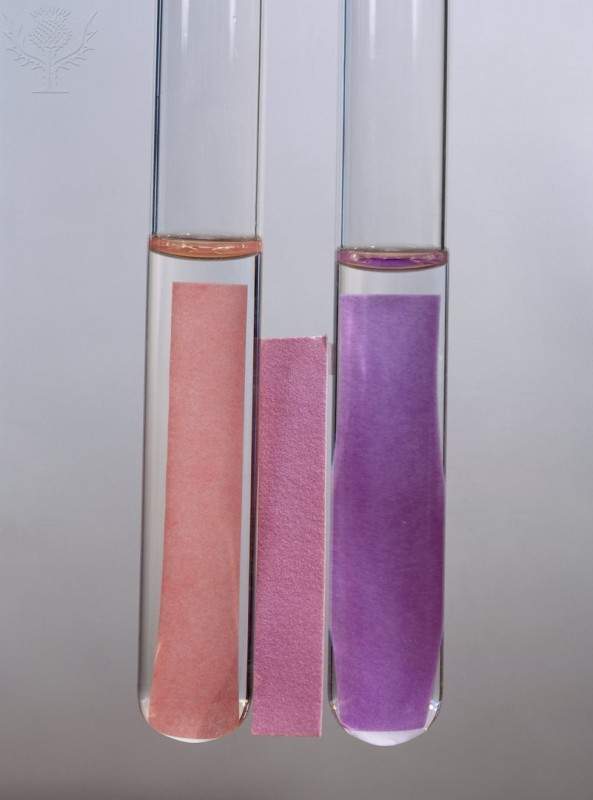
Another way to test a solution and determine if it is acidic or basic is using litmus paper. This paper is treated with a combination of various dyes, known as litmus, and is placed in solutions to determine if it is acidic or basic. While there are many types of litmus paper, we will focus on two: red and blue litmus paper. In this example, the litmus paper is naturally a light pink-red color, as seen in-between the two test tubes. In the presence of acids, the red litmus paper remains pink-red, as seen in the left test tube. In the presence of alkalis (or bases), the red litmus paper turns purple-blue, as seen in the right test tube.
Blue litmus paper can be used as well, where the paper starts as a blue-purple color. The paper turns red-pink in acidic solutions and remains blue-purple in basic solutions. pH Indicators: pH Meter
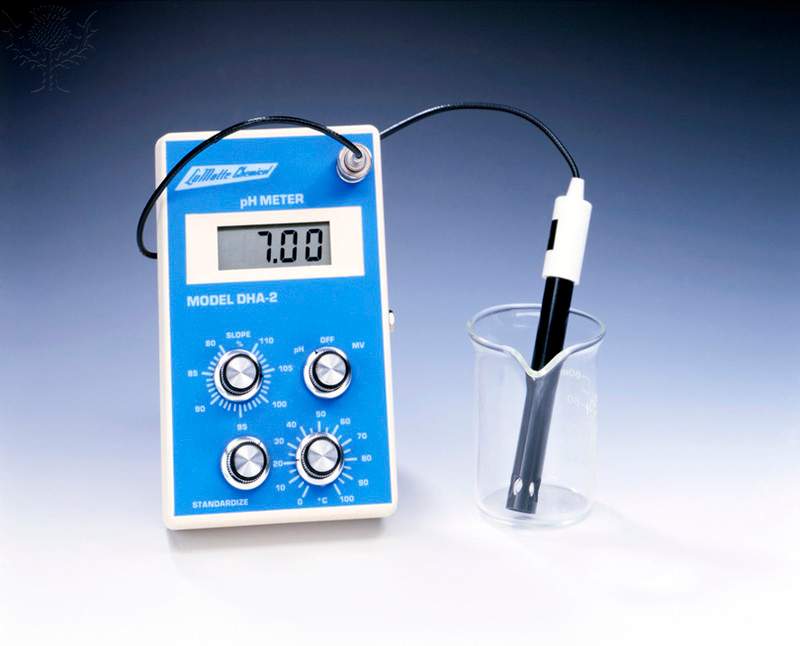
A pH meter, seen above, is considered to be the most accurate way to determine the pH of a solution. The meter consists of an electronic base (meter) and a metal probe. It must be calibrated before every use to read the pH of a solution properly. In other words, the probe would be placed in a solution where the pH is already known (such as water; pH 7.0). Only after this step is the probe then placed into the unknown solution. This way, the pH meter can compare the unknown sample/solution to the known sample (water).