Chapter 8: Reporting and Interpreting Property, Plant, Equipment, Intangibles, and Natural Resources
Learning Objectives
Define, classify, and explain long-lived productive assets: Understanding the types of assets and their classifications.
Apply the cost principle: Measuring acquisition and maintenance costs for property, plant, and equipment.
Cost allocation methods: How costs are allocated as assets are used over time.
Asset impairment: Effects on financial statements.
Analyze disposals: The disposal process for property, plant, and equipment.
Measurement and reporting for intangibles: Understanding how to report intangible assets and natural resources.
Cash flow impact: How long-lived asset transactions impact cash flows.
Long-Lived Productive Assets
Definitions & Classifications:
Tangible Assets: Have physical substance. Examples include:
Land
Buildings
Fixtures and equipment
Natural resources
Intangible Assets: No physical substance. Examples include:
Patents
Copyrights
Trademarks
Licenses
Goodwill
Fixed Asset Turnover Ratio:
Formula: Fixed Asset Turnover = Net Sales or (operating revenues) / Average Net Fixed Assets
Indicates sales generated per dollar of fixed assets.
Acquisition Costs
Components of Acquisition Costs:
Purchase price
Sales taxes
Legal fees
Transportation and preparation costs
Interest charges are expensed as incurred.
Installation and preparation costs
Note- we say that the expenditures are capitalized when they are recorded as an asset.
Example:
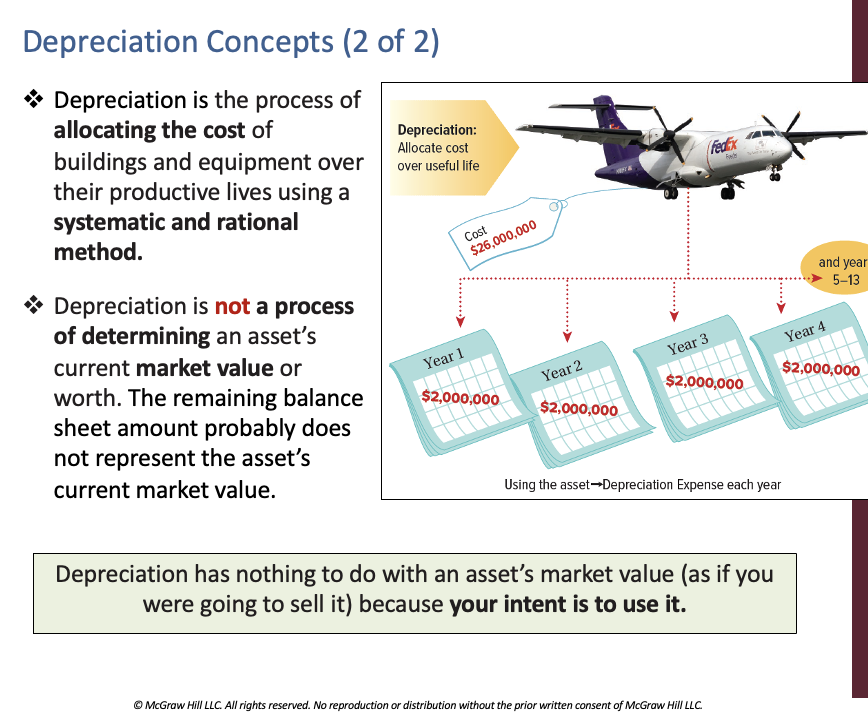
Acquisition of an aircraft for $26 million includes all relevant costs in the asset’s value.
Cost Allocation Methods
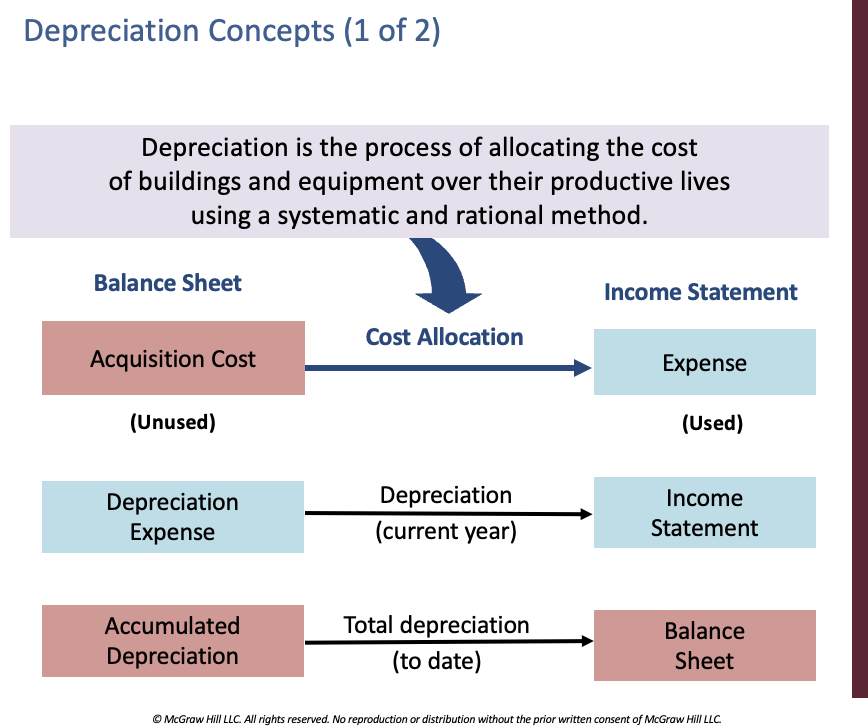
Depreciation: Allocation of cost over asset's useful life.
Not a measure of market value.
Depreciation Methods:
Straight-Line: Constant expense each year.
Units-of-Production: Cost allocated based on usage.
Declining-Balance: Accelerated method; higher expense in early years.
Depreciation Calculations: Requires:
Estimated useful life
Estimated residual value
Chosen depreciation method
Impact of Different Methods:
Different methods can significantly impact reported net incomes. For example, accelerated methods can report lower net income initially.
Repairs, Maintenance, and Improvements
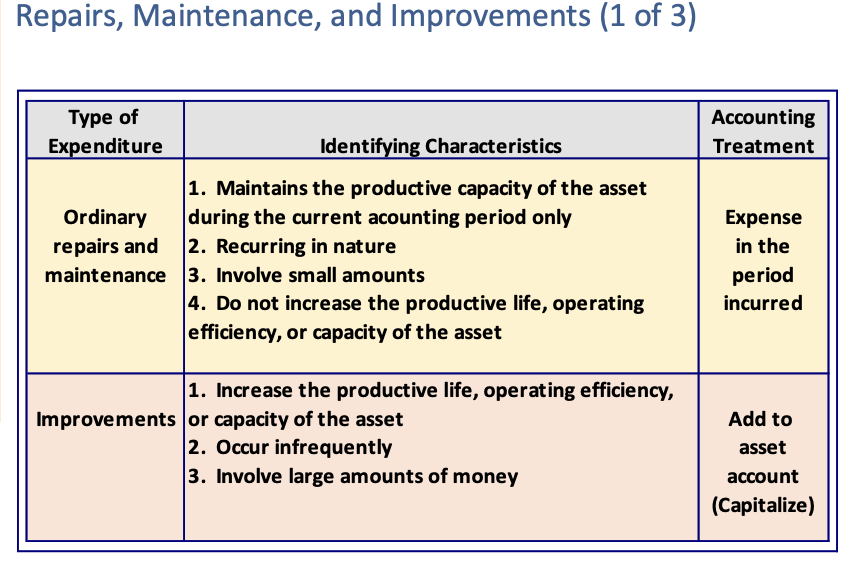
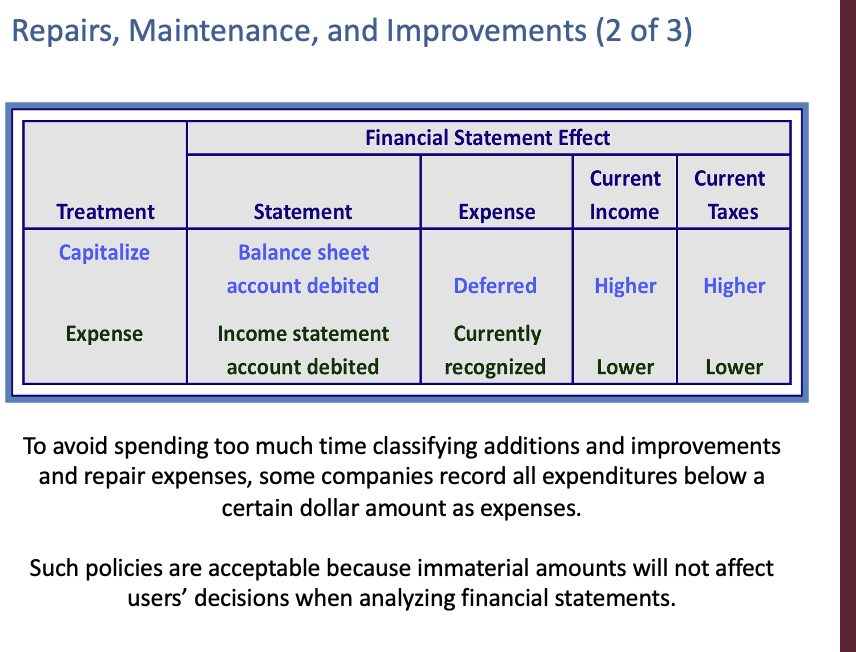
Expenditures can be categorized as:
Capital Expenditures: Increases value or extends life of the asset.
Revenue Expenditures: Routine maintenance costs.
Asset Disposal
Disposal Process:
Record cash received/payable.
Write off asset cost and accumulated depreciation.
Record gain or loss on sale.
Example of Disposal Calculation:
Aircraft sold for $11 million, initially cost $30 million, using straight-line depreciation over 25 years.
Net Book Value (17 years later): $30 million - Accumulated Depreciation
Gain/loss on sale calculated as difference between cash received and book value.
Intangible Assets
Common Types:
Goodwill: Recorded only upon acquisition of a company.
Trademarks & Copyrights: Rights to brand names and creations.
Patents: Exclusive rights for 20 years.
Amortization of Intangibles:
Definite Life: Amortized over useful life, typically using straight-line method.
Indefinite Life: Reviewed annually for impairment, not amortized.
Natural Resources
Depletion: Allocation process for costs associated with extracting natural resources.
Often calculated using units-of-production method.
Costs recorded as inventory until sold, when they are then classified as cost of goods sold.
Internal Controls for Long-Lived Assets
Essential Controls Include:
Asset registration
Physical tagging of assets
Regular asset audits
Policies on capitalization and disposal of assets.
Segregation of Duties: Critical for managing cash and asset sales to reduce risk of loss.
Depreciation Concept
Summary
Understanding these concepts is crucial for proper financial reporting and decision-making in relation to property, plant, equipment, intangibles, and natural resources. Proper tracking, recording, and reporting of these assets impacts a company's financial health and operational efficiency.