Lesson 2
Lesson 2: Non-selective Adrenergic Agonists & Beta-2 Selective Agonists
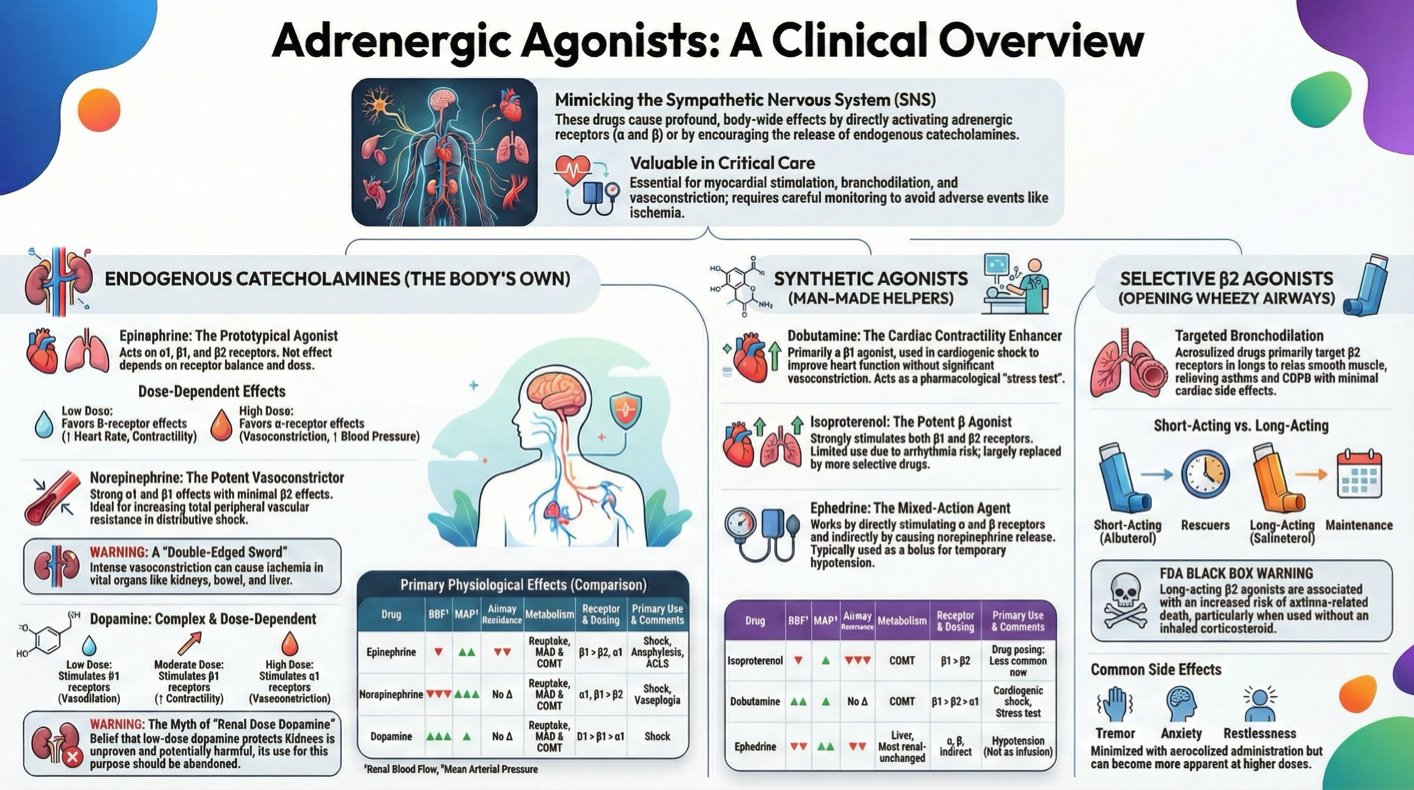
Endogenous catecholamines: Epinephrine, norepinephrine, dopamine, and synthetic catecholamines (dobutamine, isoproterenol) used in cardiovascular conditions, but can cause hypertension and arrhythmias.
Metabolism: Epinephrine and norepinephrine metabolized by catechol-O-methyl transferase (COMT) and monoamine oxidase (MAO) to produce vanillylmandelic acid (VMA), used in diagnosing pheochromocytoma.
Ephedrine: A noncatecholamine sympathomimetic with both direct and indirect receptor activity, commonly used in anesthesia.
Effects of Adrenergic Agonists
Mimic sympathetic nervous system effects through receptor activation or endogenous catecholamine release.
Used for myocardial stimulation, bronchodilation, and vasoconstriction.
Specific Variants of Agonists
Epinephrine:
Potent agonist (α1, β1, β2), IV dose: .
Effects depend on receptor distribution; enhances cardiac contractility and reduces vascular tone.
Norepinephrine:
Primarily acts on α1 and β1 receptors; IV dose: .
Increases total peripheral vascular resistance; higher doses lead to significant vasoconstriction.
Dopamine:
Dose-dependent effects varying from renal vasodilation at low doses () to pure α1 agonist effects at high doses ().
Isoproterenol:
Synthetic β-agonist; used mainly for heart block; IV dose: .
Dobutamine:
Enhances myocardial contractility; less used in surgeries due to adverse effects; IV dose: .
Ephedrine:
Noncatecholamine; direct and indirect effects; not commonly used as continuous infusion; doses are or .
Selective β2 Agonists
Short-acting: Albuterol, terbutaline; Long-acting: Salmeterol, formoterol.
Used for asthma, COPD, and minimize cardiac side effects, but caution for tachyphylaxis and potential asthma-related deaths with chronic use.
Mechanism: Increased intracellular cAMP leading to Ca+2 level reduction in uterine muscles for relaxation.