BIOL 3200 LEC 10
1) What is phylogeography?
The study of the relationship between evolutionary relationships and geographic distribution of populations.
2) Who introduced phylogeography and when?
John Avise in 1987.
3) What three fields does phylogeography combine?
Biogeography, population genetics, and phylogeny.
combines three major fields:
Biogeography – where species are found
Population genetics – genetic variation within populations
Phylogeny – evolutionary relationships among organisms
4) What does polymorphic mean?
A population containing multiple alleles for a gene. Genetic diversity.
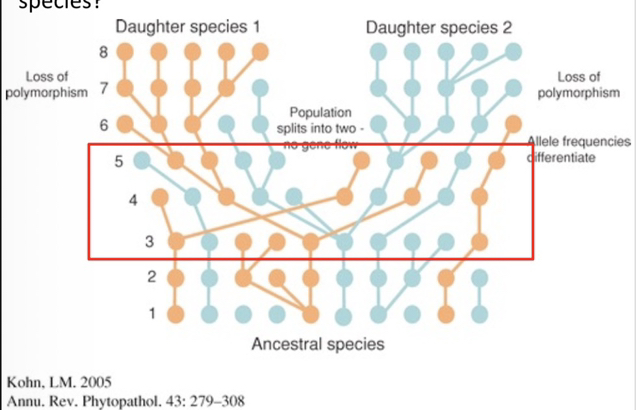
5) What happens to allele frequencies when populations become isolated?
They diverge due to mutation, drift, and selection.
Populations start as genetically diverse (polymorphic) groups.
Over time:
A population becomes geographically separated
Gene flow stops
Allele frequencies diverge
Eventually new species form
This process is known as speciation.
6) What evolutionary outcome can occur after long-term population isolation?
Speciation.
7) What does branch length often represent in phylogenetic trees?
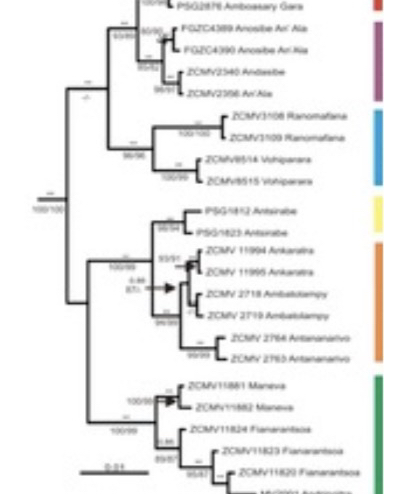
Evolutionary time or number of mutations.
Branches = evolutionary lineages
Branch length = amount of genetic change or time
8) When are phylogenetic trees most useful?
For deep evolutionary relationships among species.
9 )What is a haplotype?
A specific genetic variant or allele sequence.
For recent evolution, scientists often use haplotype networks instead of trees.
A haplotype is a specific genetic variant (allele sequence).
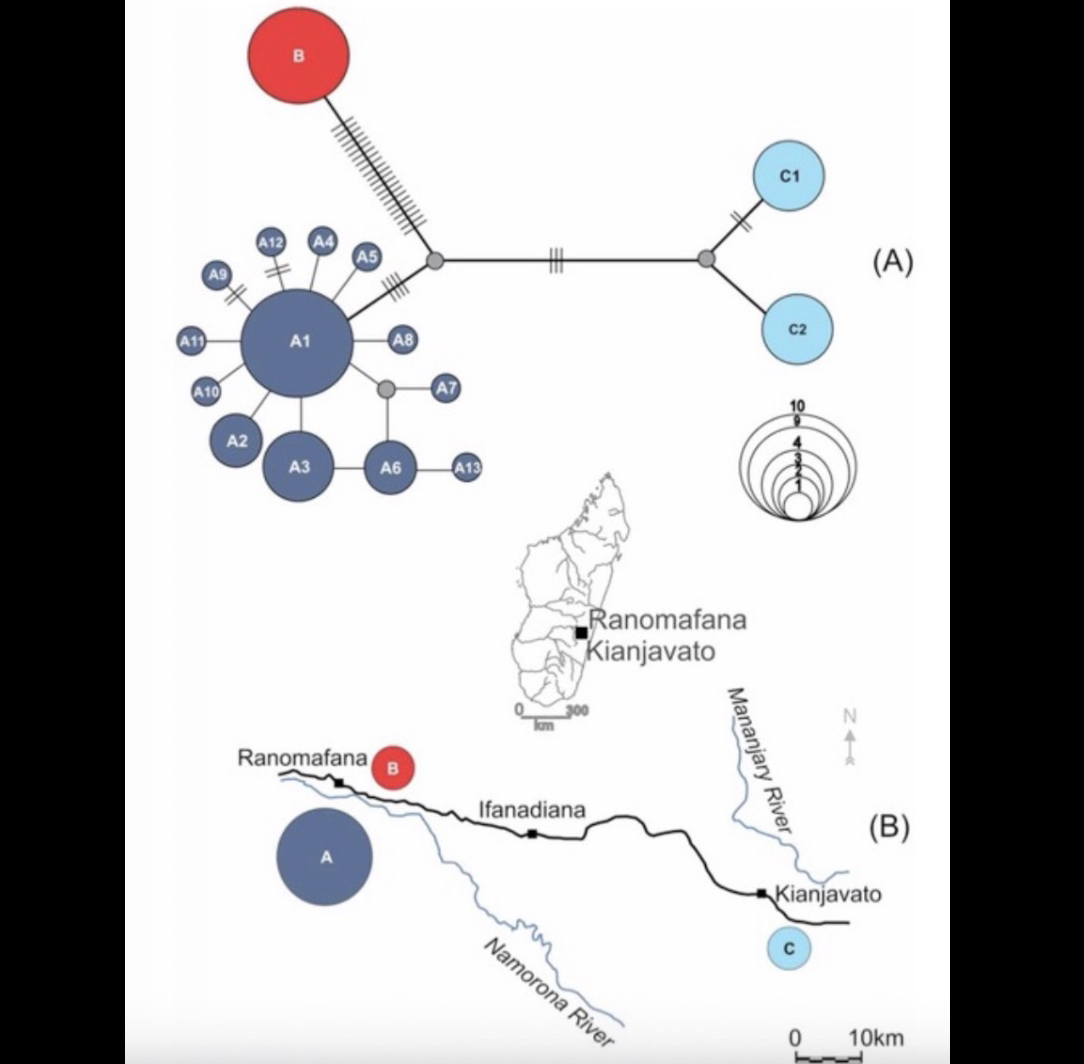
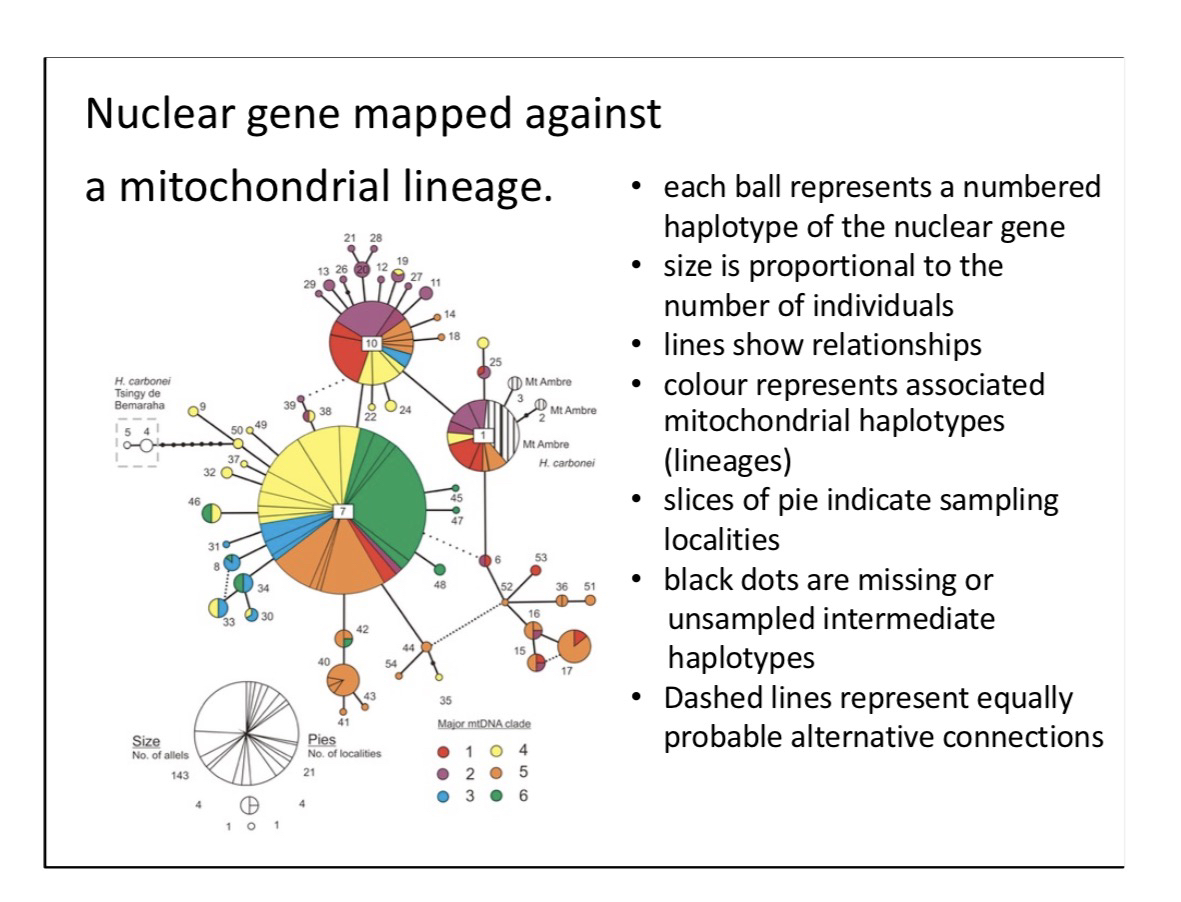
10) In a haplotype network, what does each circle represent?
A haplotype.
Each ball is a distinct allele
11) What does the size of the circle represent in a haplotype network?
Frequency of that haplotype in the population.
12) What do lines connecting haplotypes represent?
Mutational steps.
13) What do small intermediate nodes represent?
Unsampled or extinct haplotypes.
14) In haplotype networks, where is the ancestral haplotype usually located?
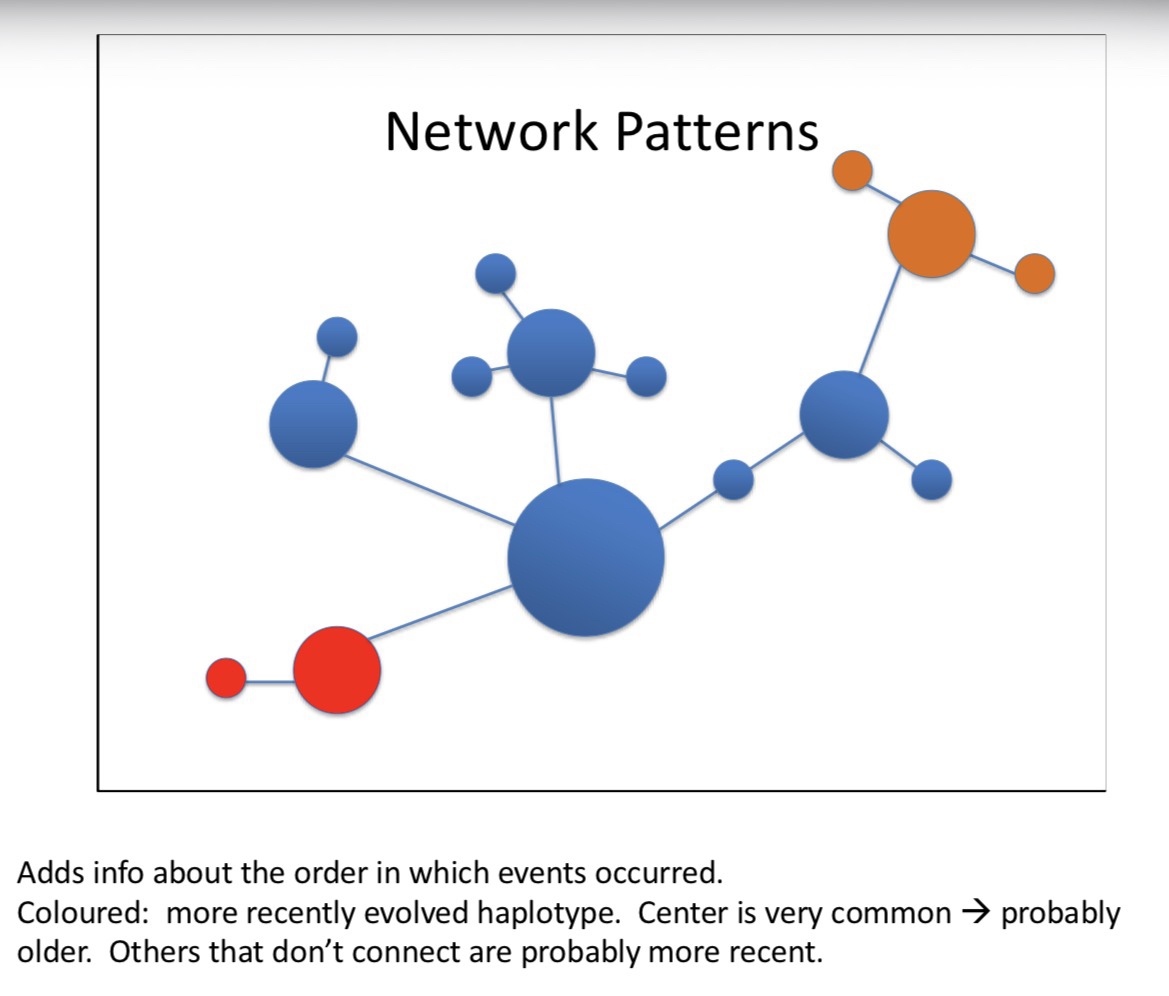
At the center of the network.
16) What pattern indicates rapid population expansion?
A star-shaped haplotype network.
17) Why are geological events important in phylogeography?
They create barriers that isolate populations and cause speciation.
Several historical events explain modern species distributions.
Important examples:
Isthmus of Panama formation
Great American Interchange
Andes mountain formation
Wallace’s Line
Continental drift
These events created geographic barriers that drove evolution.
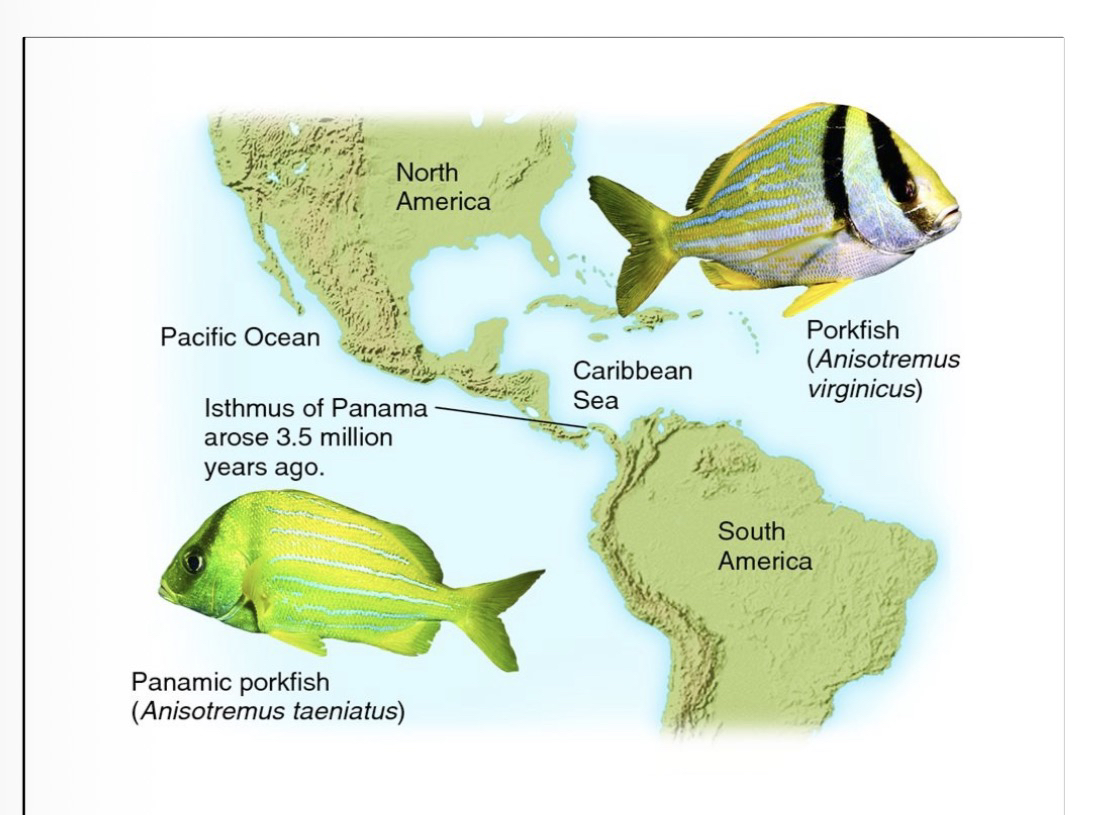
18) When did the Isthmus of Panama form?
Around 3–3.5 million years ago.
Around 3–3.5 million years ago, a land bridge formed between North and South America.
This caused two major evolutionary effects.
Marine effect:
The land bridge separated the Pacific and Atlantic Oceans.
Marine populations were split into two isolated groups.
These populations evolved into sister species.
Example used in studies: snapping shrimp.
19) How did the Isthmus of Panama affect marine organisms?
It separated Atlantic and Pacific populations, causing speciation.
20) Why is the Isthmus of Panama important for molecular clock studies? Because the timing of the geographic split is known.
21) What is the Great American Interchange? And give examples.
The migration of animals between North and South America after the formation of the Isthmus of Panama.
After the Isthmus formed, animals migrated between continents.
This event is called the Great American Interchange.
Animals moved:
North → South America
South → North America
However, North American species were generally more successful, leading to many extinctions in South America.
Examples:
South → North
opossums
porcupines
North → South
tapirs
22) Which continent's species were ultimately more successful during the interchange?
North American species.
23) How can Andes mountain formation cause speciation? Give an example.
By isolating populations and preventing gene flow.
The Andes Mountains began forming about 45 million years ago.
The mountains separated populations on different sides.
This geographic barrier caused allopatric speciation.
Example used in the lecture:
Sturnira fruit bats
Populations on opposite sides evolved into different species.
24) What type of speciation occurs when geographic barriers isolate populations?
Allopatric speciation.
25) What is Wallace’s Line?
A biogeographic boundary separating Asian and Australian species.
Even though islands are close together, species distributions change sharply across this boundary.
Reasons include:
deep ocean channels
historical continental separation
ecological differences
26) Who discovered Wallace’s Line?
Alfred Russel Wallace.
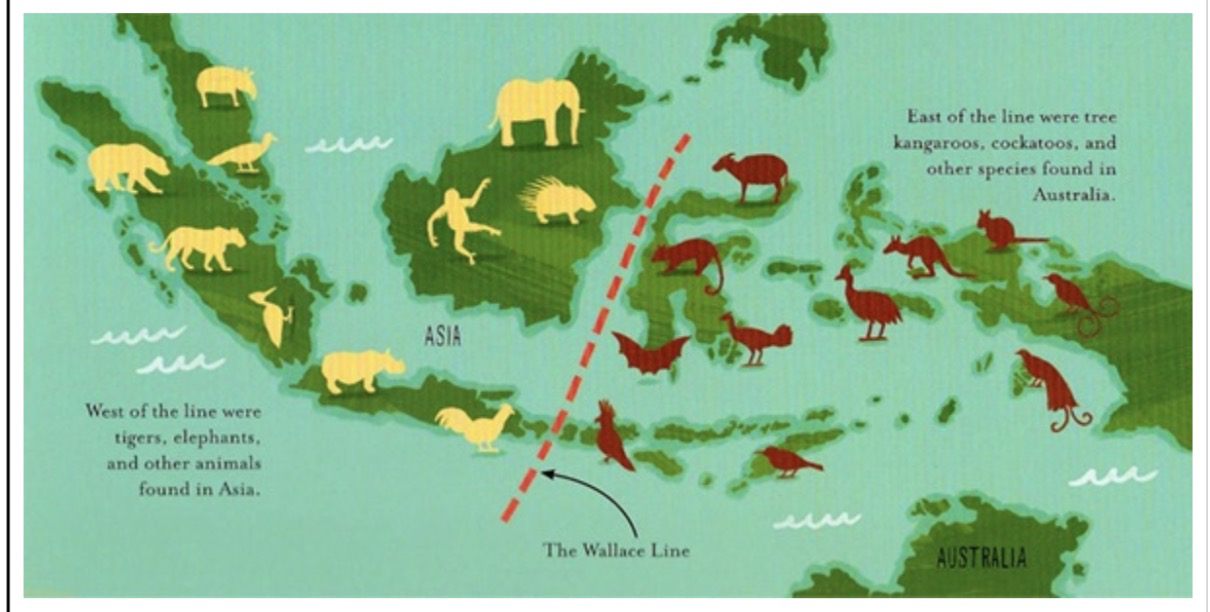
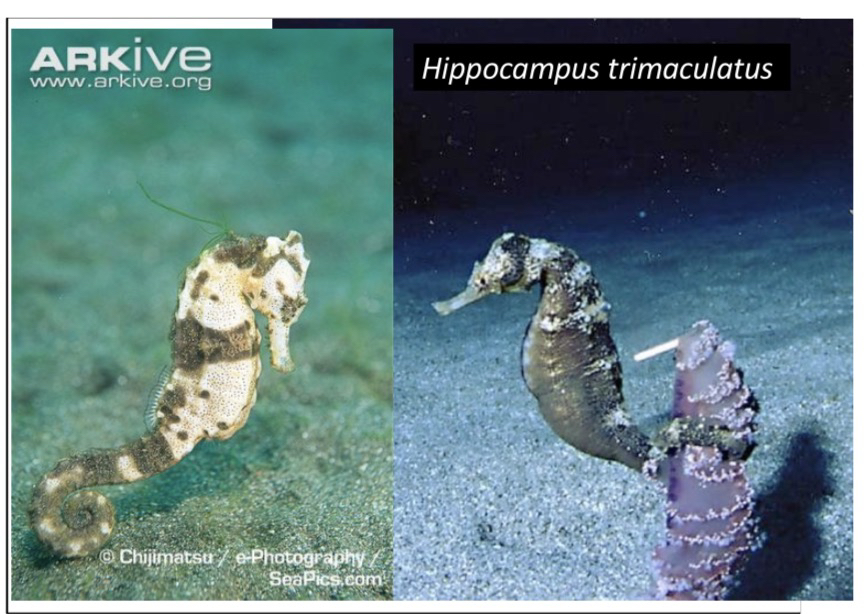
27) What did the seahorse study demonstrate about Wallace’s Line?
Populations on either side evolved into distinct genetic lineages.
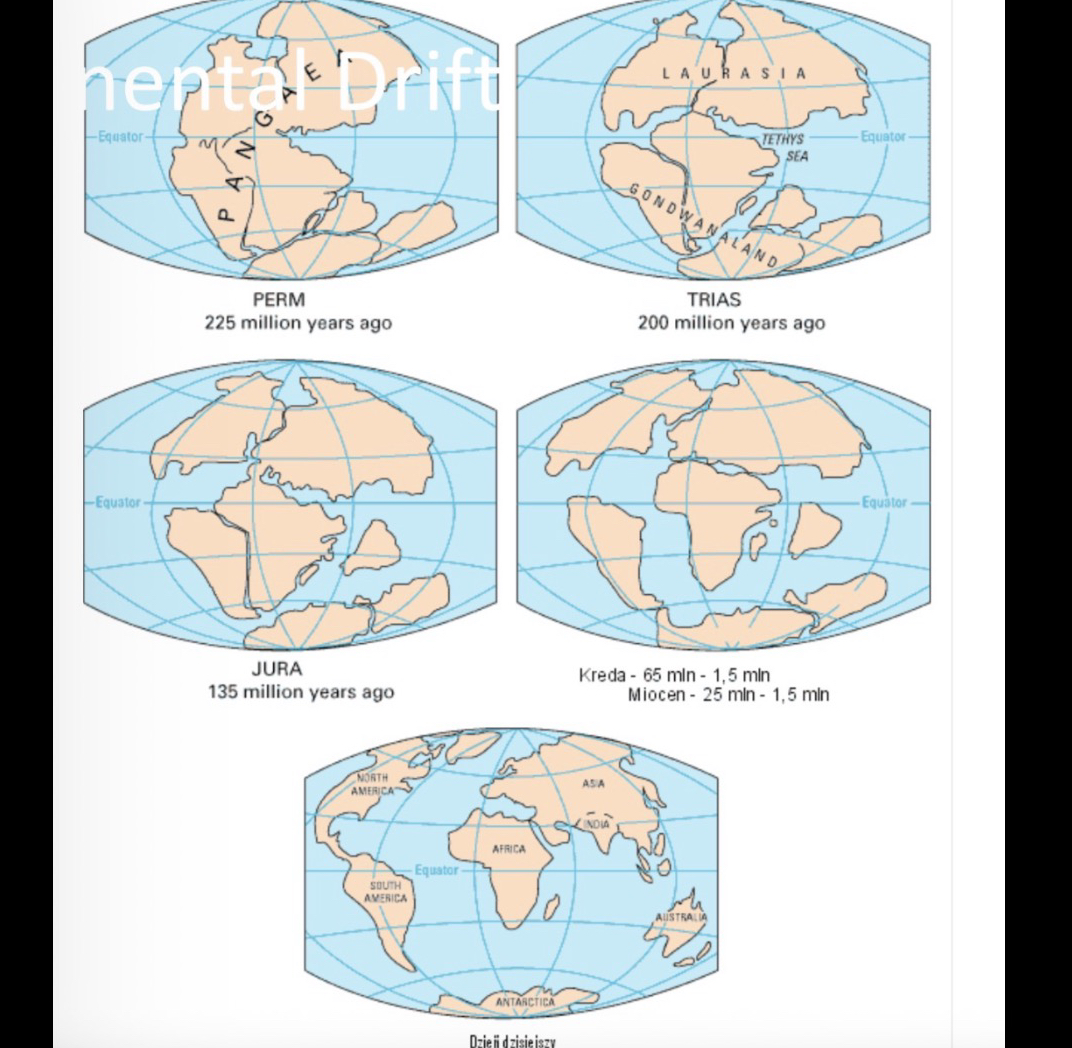
28) How does continental drift influence speciation?
It separates populations and allows them to evolve independently
When continents split apart, species become geographically separated.
Over millions of years, this leads to independent evolution.
Example discussed: frog lineages on different continents.
29) How can phylogenies help track disease spread?
By comparing genetic relationships of pathogen strains and host populations.
Phylogenetic analysis can help track how diseases spread between populations.
Example from lecture:
Feline Immunodeficiency Virus (FIV) in lions
By comparing:
lion genetics
virus strains
Scientists found that different lion populations carry different viral lineages, showing limited mixing.
This information helps conservation and disease management.
30) Which virus was studied in lions?
Feline Immunodeficiency Virus (FIV).
31) What is a gene?
A DNA sequence that influences phenotype ( trait) and can be inherited.
32) What is a locus?
The physical position of a gene on a chromosome.
33) What technique is used to identify gene locations on chromosomes?
Fluorescence in situ hybridization (FISH).
Technique used to locate genes on chromosomes using fluorescent probes.
34) What is an allele?
A variant form/ alternative form of a gene.
35) What is a heterozygote? Homozygote?
An individual with two different alleles at a locus, is a hetrozygote.
Homozygous → same alleles (AA)
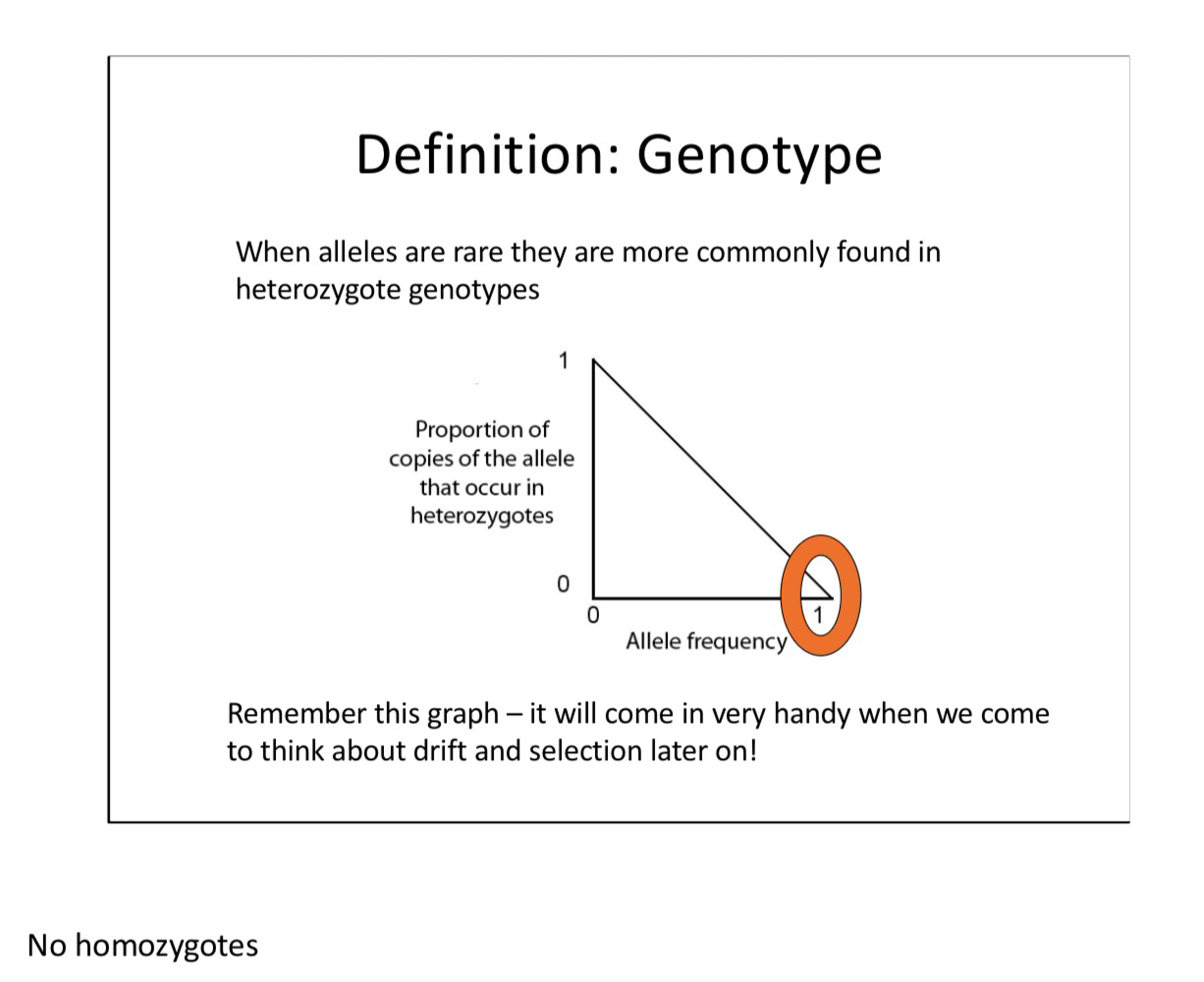
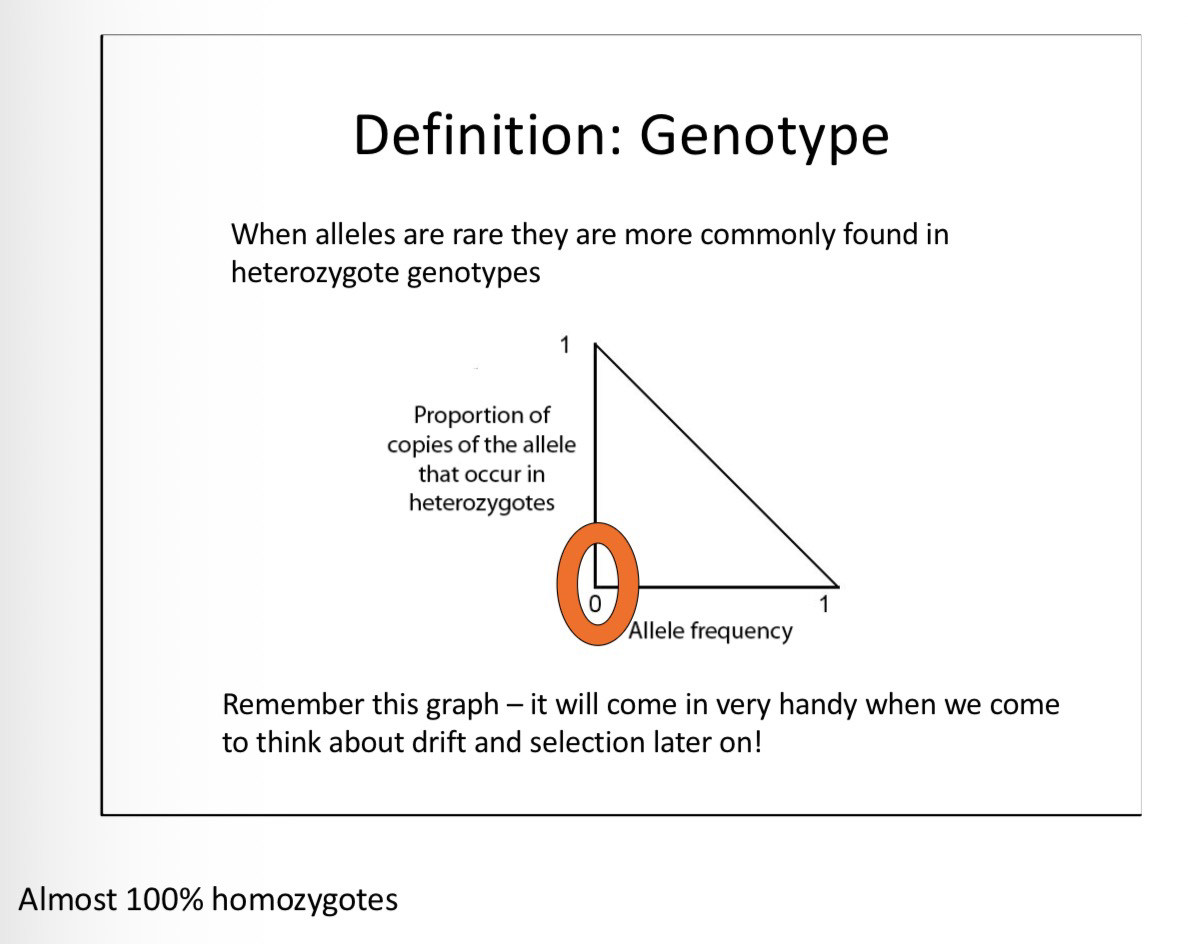
Heterozygous → different alleles (Aa)
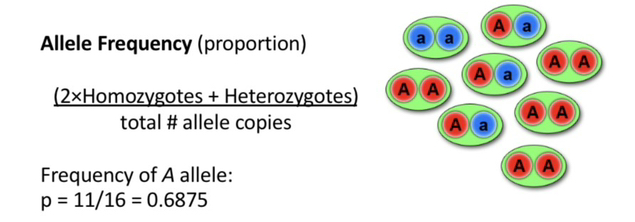
36)How is Allele Frequency (proportion) calculated?
(2×Homozygotes + Heterozygotes)/ total # allele copies
37)What is genotype?
The combination of alleles possessed by an individual.
38) What is phenotype?
The observable traits of an organism.
39) What is an extended phenotype?
A trait expressed outside the body but controlled by genes.
40)What is a gamete?
A haploid reproductive cell.
41) What is a zygote?
A diploid cell formed after fertilization.
42) What is a dominant allele?
An allele expressed in heterozygotes.
43) Does dominant mean most common?
No.
44) Do dominance relationships apply to genes or alleles?
Alleles.