H Biology Unit 10: Evolution
Natural Selection and the Theory of Evolution
Charles Drawin proposed the idea that living things change slowly over time because of competition for resources and pass those changes onto their offspring. AKA Theory of Evolution
We now know that natural selection is caused by mutations, errors in DNA replication from DNA Polymerase lll.
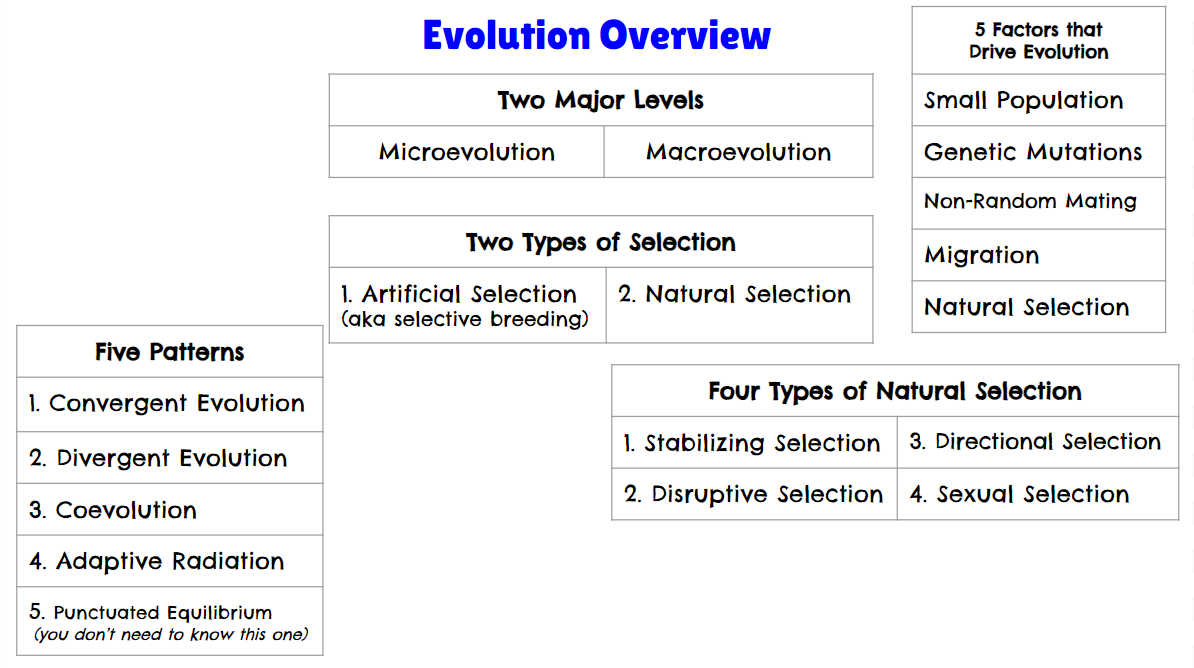
Three types of Natural Selection
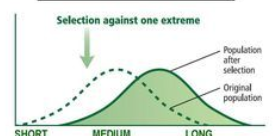
Directional: Favors a population with a certain trait, against opposite trait.
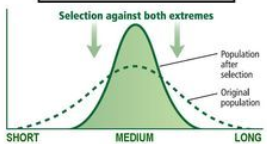
Stabilizing: Favors MIDDLE GROUND, against extreme traits
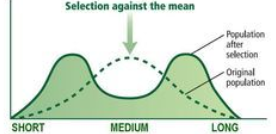
Disruptive: Favors extreme traits, but not middle ground
Speciation
The idea that as populations evolve, species will become reproductively isolated from each other. This can happen for multiple reasons:
Behavioral Isolation: Differences in mating behaviors
Geographical Isolation: When populations are separated due to barriers
Temporal Isolation: When populations breed at different times of the year
Example: Speciation of Galapagos Finches
Speciation occurred by founding of a new population, geographic isolation, changes in, new population's gene pool, reproductive isolation, ecological competition
Evidence for Evolution 😄
Fossils! → Law of Superposition, transitional species, holes, etc
Anatomical → Analogous, homologous, vestigial structures
Embryological → Differences in development (eg. all vertebrate embryos have something that represent pharnygeal gills)
Chemical → DNA analysis (comparing proteins)
Biogeography → Distribution of species around the world
HOX genes → wtf is this…similar genes between unrelated organisms?? or maybe distantly related
Resistance → human interference think antibiotics
Mechanisms and Patterns of Evolution
Artificial vs Natural Selection
Allele frequencies: the number of times an allele occurs in a gene pool compared to the total number of alleles in that pool for the same gene. This can be used to determine if a population is evolving
Equilibrium
types of genes stay constant in a population from one generation to the next, which is IMPOSSIBLE
To reach equilibrium, you must have Large Population, No Mutations, No Migration, Random Mating, No Natural Selection
WIth any of these changes, evolution occurs
Things that cause evolution: Mutations, gene flow, genetic drift, NON RANDOM MATING, natural selection
Misc
Three main types of adaptations: Anatomical, physiological, and behavioral
Definition of species: A group of organisms capable of interbreeding
Patterns of Evolution
Convergent evolution: aLSO OBVIOUS
Divergent evolution: oBVIOUS
Coevolution: evolve tg
Adaptive radiation: common ancestor, branch out
Antibodies, antigens, agglutination
Active immunity involves the production of antibodies by the body itself and the subsequent development of memory cells
Passive immunity results from the acquisition of antibodies from another source and hence memory cells are not developed
Endosymbiosis
Vocab
Macroevolution: When enough time and accumulated change creates an entirely new species through natural selection.
Microevolution: When species change in small ways, such as a population’s change in color or size over the course of generations.
Biological Fitness: An organism's ability to live and reproduce in a certain environment
Transitional species: OBvious
Comparative embryology: the study of embryos to identify similarities and differences between species during development.
Population: A group of individuals of the same species that mate and produce offspring
Sexual selection: Females select males
Since stuff is all over the place…evolution summarized: