Chapter 11 and Chapter 12 Overview
Chapter 11:
Mendelian Genetics: Studied traits of pea plants from generation to generation. A good study because it is readily available, controlled, matting, and visible)
Alleles: Version of a gene and it’s found on homologous chromosomes
ex: 🟥🟧🟨
Recessive VS Dominant Alleles
a: ‘‘Covered up’’ A: ‘‘Are expressed’’
Heterozygotes VS Homozygotes
two different alleles Aa two same alleles AA or aa
Phenotype VS Genotype
physical appearances; 🟥 genetic make-up Ex; AA or Aa
Mendel’s Law of Genetics:
Law of segregation: during gamete formation, two alleles separate into different gametes.
Law of independent assortments: alleles on different chromosomes segregate independently of each other.
Non-Mendelian Genetic: Multiple alleles or Many versions of a trait (proteins)
ex: Blood Typing: Proteins on outside of blood cells.
Incomplete (CO) dominance:
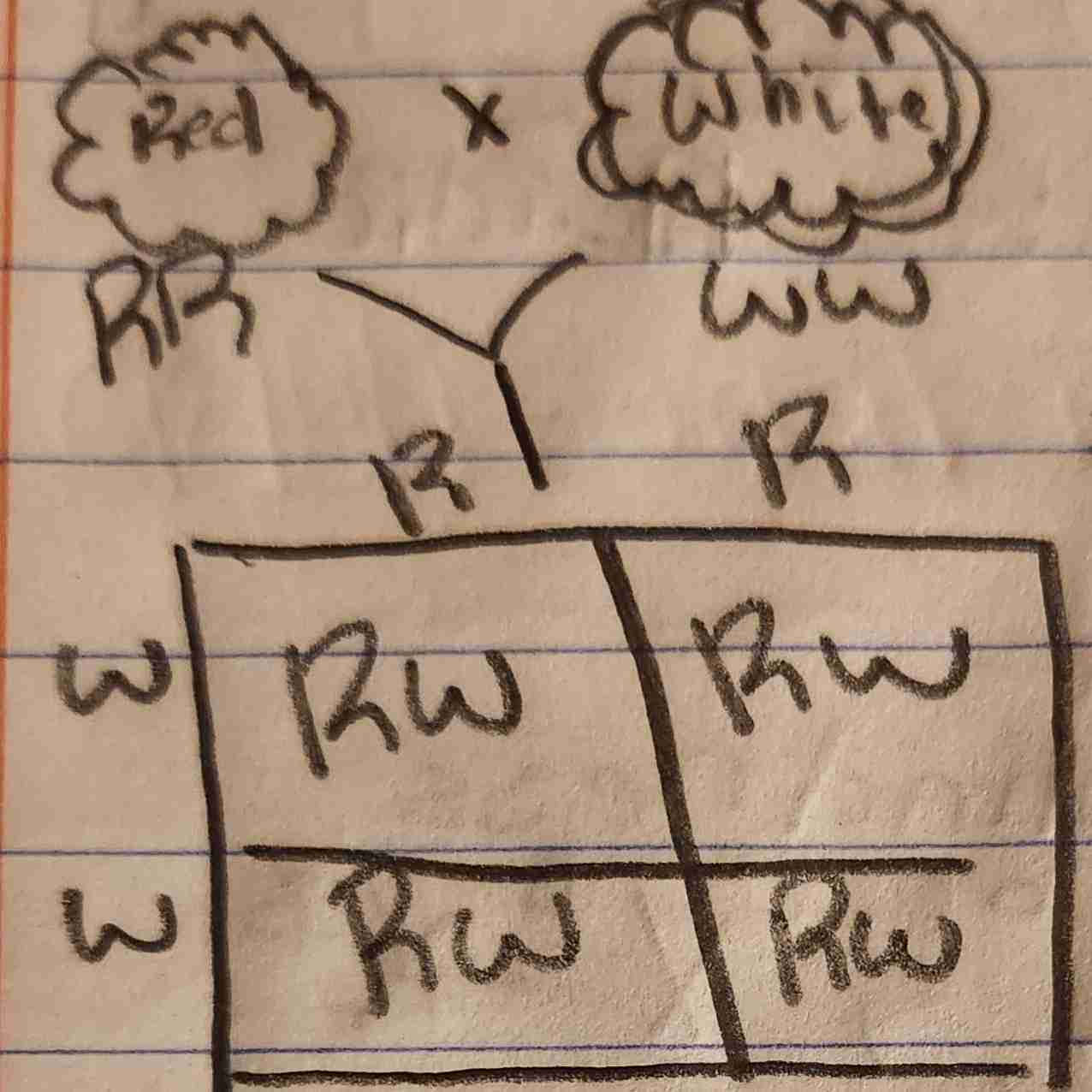
Incomplete: Heterozygote is in the middle
Co-dominances: two separate distinguishable traits.
Epistasis: a gene in one location controls the expression of the gene
Polygenic Inheritance: Physical appearance controlled by two or more alleles(additive effect)
ex: human skin color
Environmental factor: Various environmental factors such as chemicals, toxins, temperate, light pH, ect
ex: hydrangea color changes with soil pH
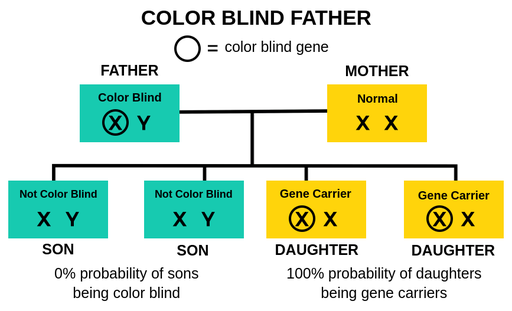
Sex-Link Traits:
Traits present on the sex chromosomes (X or Y).
Females: Need 2 copies of a recessive allele to express the trait.
Males: Need only 1 copy of a recessive allele (X-linked traits mostly show in males) (e.g., colorblindness).
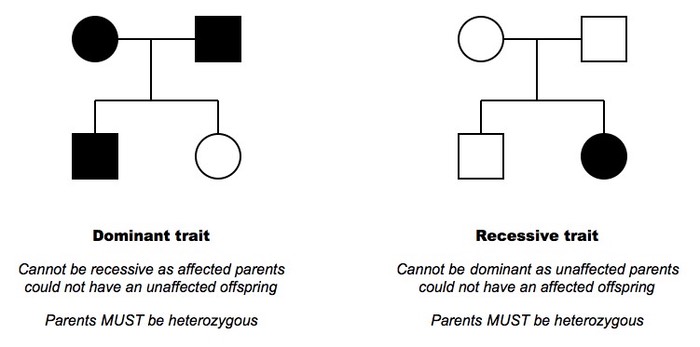
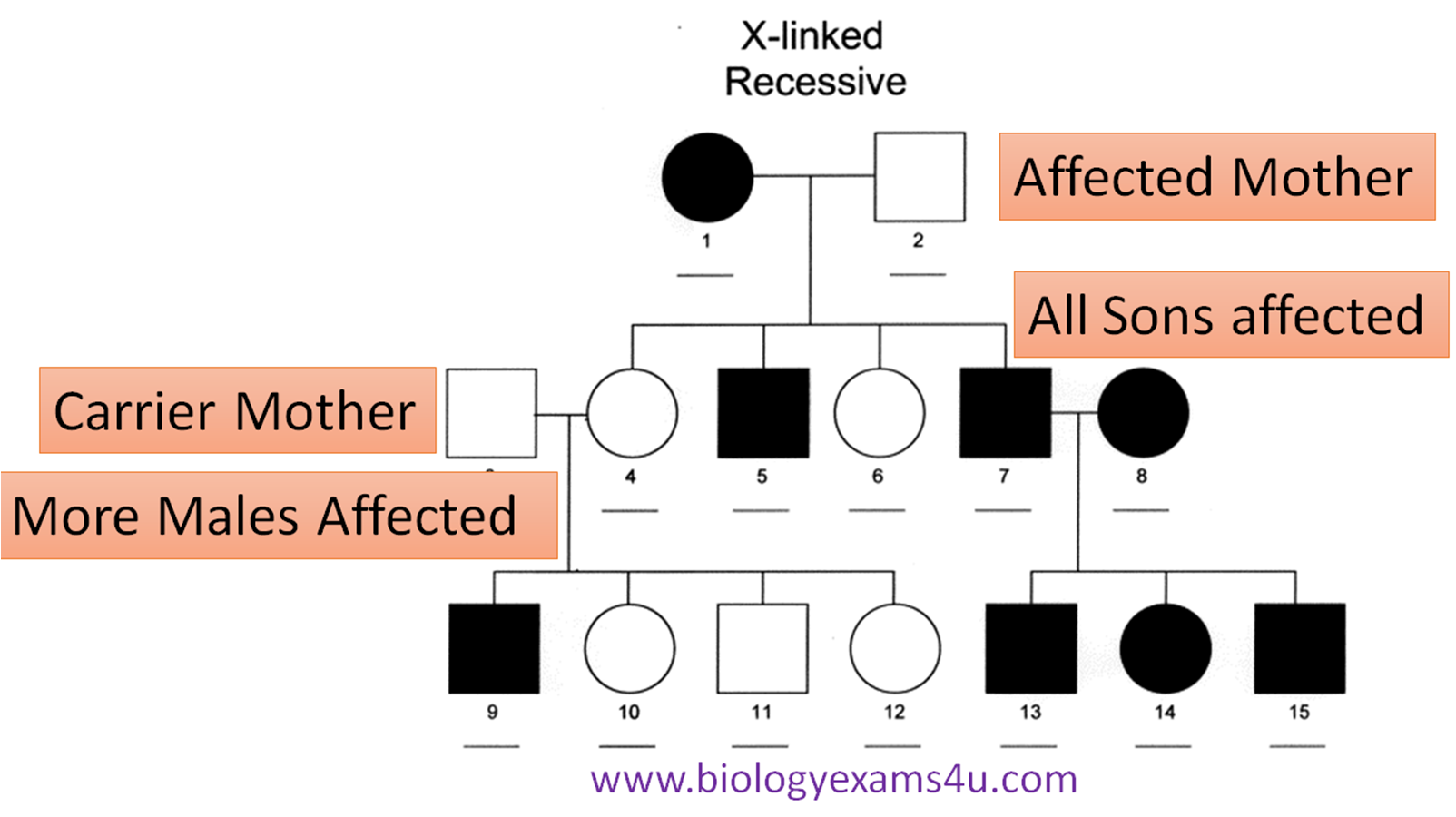
Pedigrees: A family tree that traces traits over many generations.
Males: ▢
Females: ◯
Shaded means has the trait: ⬤ 🔳
Half-shaded means it is a carrier: ◨ ◑
Line means mating ◯— ▢
Chapter 12: Transcription and Translation (protein production)
Transcription: The production of RNA from DNA templates
Initiation: Small proteins bind to the promoter and recruit RNA polymerase to the gene.
Elongation: RNA polymerase matches RNA nucleotides to DNA in the same order.
Termination: RNA polymerase reaches a stop signal on the DNA.
mRNA Processing: Only in eukaryotes, mRNA is processed before it leaves the nucleus.
Processing of Introns and Exons (Splicing):
Introns: Areas of RNA that are removed.
Exons: Areas of mRNA that get expressed.
Translation: The synthesis of proteins using RNA instructions; the production of a polypeptide from an RNA template
Initiation: The small subunit of the ribosome recognizes and binds to the mRNA.
Elongation: The amino acid chain grows as tRNA recognizes codons on mRNA to deliver the correct amino acid.
Termination: A tRNA reads the “stop” codon, and translation ends.
Codons:
A 3-letter “word” on mRNA.
tRNA has a matching anti-codon.
1 codon = 1 specific amino acid.
64 possible codons for 20 amino acids mean multiple codons for the same amino acid.
Types of RNA:
mRNA (Messenger RNA):
Carries genetic information from DNA to the ribosome.
Contains codons that specify the amino acid sequence of the protein.
tRNA (Transfer RNA):
Brings amino acids to the ribosome during translation.
Contains an anti-codon that matches the codon on the mRNA.
rRNA (Ribosomal RNA):
Forms the core of the ribosome and catalyzes protein synthesis.
Helps ensure the proper alignment of mRNA and tRNA
Additional Information:
Genetic Code:
Universal: The genetic code is nearly universal, shared by almost all organisms.
Redundant: Multiple codons can code for the same amino acid.
Unambiguous: Each codon specifies only one amino acid.
Ribosome Structure:
Large Subunit: Contains the peptidyl transferase center, which forms peptide bonds.
Small Subunit: Binds to the mRNA and ensures correct base-pairing between the codon and anti-codon.
Post-Translational Modifications:
Phosphorylation: Addition of phosphate groups to proteins.
Glycosylation: Addition of sugar molecules to proteins.
Proteolysis: Cleavage of proteins into smaller fragments.