AICE marine science all units
objective 1: water properties
kinetic particle theory: how water changes between solid, liquid, and gas.
sea water is a mix of different elements and compounds
- ex: NaCl, MgSO4
the structure of an atom: protons and neutrons located at the nucleus, shells and electrons surround it.
covalent bonding: the sharing of electrons
- ex: H2O, CO2, and O2
ionic bonding: the transfer of electrons between atoms. losing or gaining electrons.
- ex: NaCl, CaCO3
how does hydrogen bonding in water affect the properties of water?
- solvent action, density, and specific heat capacity.
solvent: the substance doing the dissolving action to the solute.
solute: the substance being dissolved.
solution: the mixture of solute dissolved in the solvent
solubility: ability of a solute to dissolve in a solvent
- salts dissolve in water by the dissolution of ions.
- warmer temperature will increase the solubility of salts in water.
salinity: the concentration of dissolved salts in sea water.
- the average salinity of ocean water is 35%
- run-off and precipitation DECREASE salinity because of the addition of fresh water.
- evaporation INCREASES salinity because of the salts left behind.
pH scale: a measure of the H+ concentration in water (acidic, neutral, and alkaline)
- average ocean pH is 8.2, alkaline
- measured with litmus indicator or pH probes.
O2 has a low solubility in water because o2 molecules are nonpolar and water molecules are polar, so they attract to each other and not mix well.
explain how water temperature, water pressure and salinity affect the density of sea water
- reducing temperature and increasing salinity both increase sea water density.
- as temp of water increases, density decreases.
describe the effect of water pressure/depth on the solubility of gases in water
- there is greater solubility of gases with deeper waters.
describe the effect of water temperature on the solubility of gases in water
- there is less solubility with higher temperatures.
describe the effect of salinity on the solubility of gases in water
- there is decreased solubility with the more salinity there is in the water.
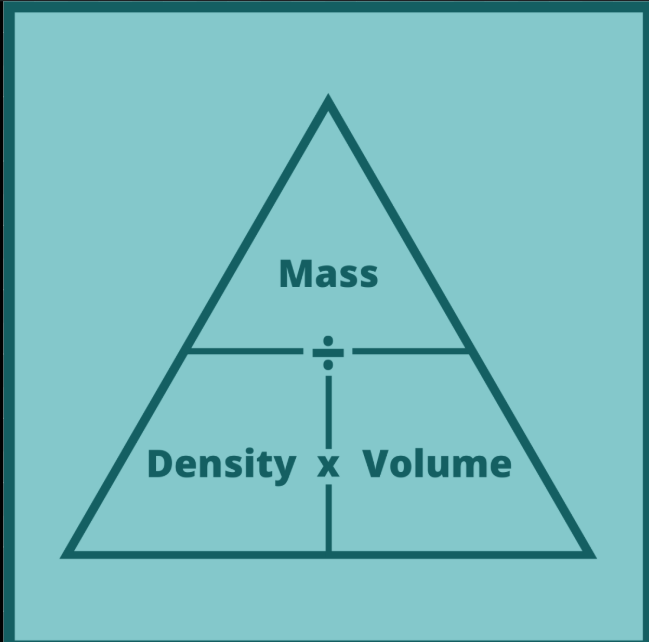
DENSITY, MASS, VOLUME TRIANGLE!
-
importance of ice floating on water:
- less dense and acts as a thermal insulator and habitat.
thermocline: where the temp decreases drastically with depth.
halocline: increase in salinity as depth increases.
pycnocline: increase in density as water gets deeper.
objective 2: earth structure
theory of plate tectonics: 12 large plates float on underlying asthenosphere.
- evidence: distribution of fossils, jigsaw fit, paleomagnetic stripes at sea floor spreading centers.
- distribution of fossils: Edward Suess compared the fossils on both sides of the Atlantic to see if there was a correlation.
- jigsaw fit: the way continents fit together like puzzle pieces. relates to Pangea, a theory developed by Alfred Wegener. Pangea was all the continents conjoined together 300 million years ago.
- paleomagnetic stripes at sea floor spreading centers: as magma rises at mid-ocean ridges, cools and solidifies at the top, it forms these stripes. these strips capture the magnetic field direction of the earth. this shows that earths lithosphere is divided into moving plates.
the layers of earth: crust, mantle, core
- crust: oceanic and continental parts
oceanic: made of basalt and denser than the continental crust
continental: made of granite.
- mantle: solid rock that can melt into magma. made up mainly of silicon, oxygen, iron, and magnesium.
- core: the core is 90% iron and 10% nickel. the outer core is a hot liquid and the inner core is solid.
convergent boundaries: come together
- can create earthquakes and volcanoes.
divergent boundaries: move away from each other
- causes hydrothermal vents, earthquakes, and new seafloor.
transform boundaries: slide past each other
- can cause earthquakes.
hydrothermal vents:
- formation: cold water seeps into cracks, heated by underlying magma, hot water dissolves the minerals, water gets pushed back up to sea floor due to high pressure, salts solidify in cold water and pile up to form vent. the pile is called a “chimney.”
- extremely high pressure
- hot and rich in dissolved minerals.
subduction zones: occur when a collision between oceanic and continental crust happen. oceanic crust is pushed beneath the continental and forms a trench.
weathering is the breakdown of rock
- ex: physical, chemical, and biological factors
- physical: breakdown of rock into smaller pieces, freezing and thawing
- chemical: exposure to water or oxygen, precipitation.
- biological: living organisms
erosion is the removal and transport of rock to a new location.
- ex: ice, water, wind, and gravity factors.
- ice shapes landforms through glacial movement
- water moves sediments through flow and turbulence
- wind moves soil particles by lifting them into the air
- gravity moves materials down slope.
sedimentation is the deposition of suspended particles
- runoff deposits in water ways.
how does the speed of water flow and particle size affect the removal, transport and deposition of particles?
- the faster the water is moving, the larger particles it can carry
littoral zones: intertidal regions on shoreline (basically where the shore meets the sea.) underwater during high tides and exposed to air during low tides. rocky shores, sandy shores, muddy shores, estuaries, and deltas are all littoral zones.
rocky shores: characterized by rocky substrate
- stable with lots of organisms.
sandy shores: made up with loose deposits of sand.
- unstable, burrowing organisms.
muddy shores: little to no water movement
- least exposed to weathering/erosion, no slope
estuaries: areas where fresh and salt water meet
- partially enclosed areas, known as brackish water
deltas: form at the mouth of a river where it meets the sea.
- picks up sediment by erosion.
each littoral zone landforms depend on the balance of weathering (breaking down), erosion (moving), and sedimentation (depositing materials) over time.
tides: the rise and fall of the ocean by the gravitational pull of the sun and moon.
- semi diurnal: 2 high and 2 low tides per day
- diurnal: 1 high and 1 low tide per day
- tidal range: differences in height between low and high tide water marks.
- spring tide: earth, sun and moon in a straight line.
largest tidal range
- neap tide: earth, sun and moon in a 90 degree angle
smallest tidal range
Coriolis effect: the rotation of earth causes deflection of water to move to the right in the northern hemisphere and move to the left in the southern hemisphere
the global ocean conveyer belt: constantly moving deep ocean water driven by the thermohaline.
- thermohaline circulation: moves water from northern oceans to southern oceans, and back again. driven by differences in temp and salinity
downwelling: movement of salty, cold dense water.
upwelling: movement of cold, nutrient rich water from deep to the surface of the ocean.
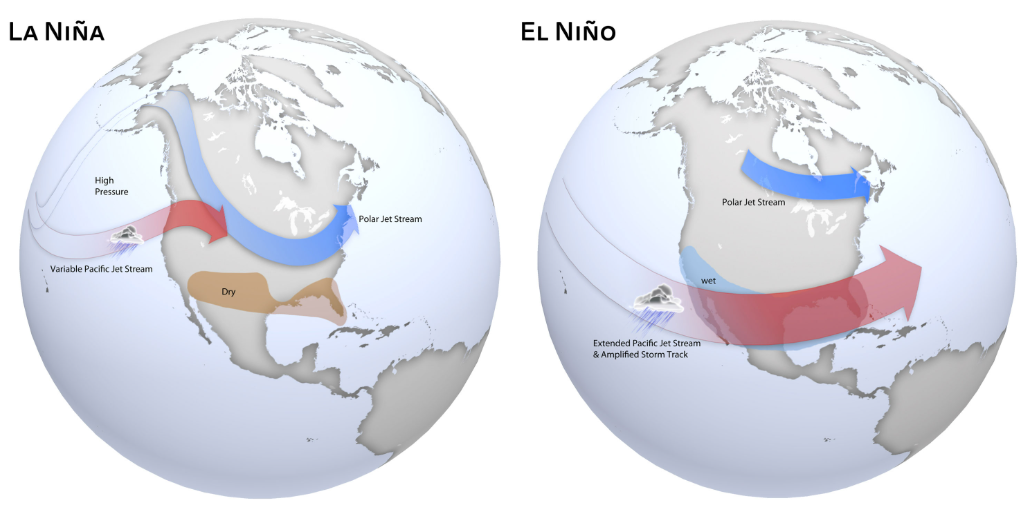
El Nino: occurs when trade winds weaken which result in warmer oceans in the eastern pacific ocean.
- causes high productivity in phytoplankton which lead to support in ANCHOVIES (and fish in general) and sea birds.
La Nina: occurs when strong trade winds push warm water westward, allowing for colder water in the eastern pacific ocean.
- colder water rises to surface, greater productivity in Atlantic hurricanes.
objective 3: nutrients
nutrients: substance needed for growth, repair, energy or normal metabolism.
- ex: CO2 (photosynthesis), phosphate (biological processes), and carbohydrates, lipids, proteins (essential for energy, structure, and function.)
nutrient reservoirs: some nutrients, such as ions, nitrate, and phosphate, dissolve in seawater, forming a reservoir available to producers and consumers.
how does upwelling replenish nutrient reservoirs?
- deep, nutrient rich water rises to the surface.
how does run-off replenish nutrient reservoirs?
- nutrients from land enter the ocean by rivers. example is nitrate.
how does tectonic activity replenish nutrient reservoirs?
- hydrothermal vents release minerals into the ocean.
excretion of waste and decomposition of dead organisms is another way nutrients are replenished at the surface.
how can nutrients be removed from the surface?
- dead organisms sink to the bottom, coral uptake, and harvesting/fishing of humans.
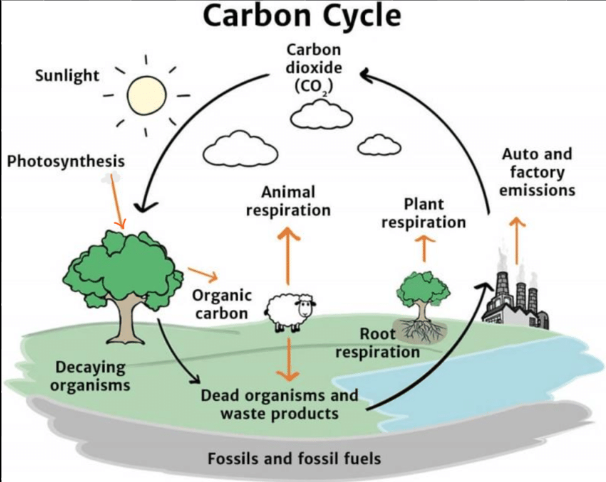
the carbon cycle: the continuous movement and recycling of carbon atoms between the Earth's atmosphere, land, water, and living organisms
objective 3: ecosystems
parasitism: where one organism benefits, and the other is harmed.
- ex: fish lice and fish.
mutualism: both organisms are benefitted.
- boxer crabs and sea anemones.
commensalism: one organism is benefitted and the other is not harmed
- ex: manta ray and remora.
- phoresies: one organism attaches itself to another to travel. example is the one above again.
consumers: an organism that eats other organisms for energy.
- primary: at the bottom of the food chain
- secondary
- tertiary
- quaternary: at the top of the food chain.
producers: an organism that makes its own food using photosynthesis (sunlight) or chemosynthesis (chemicals.)
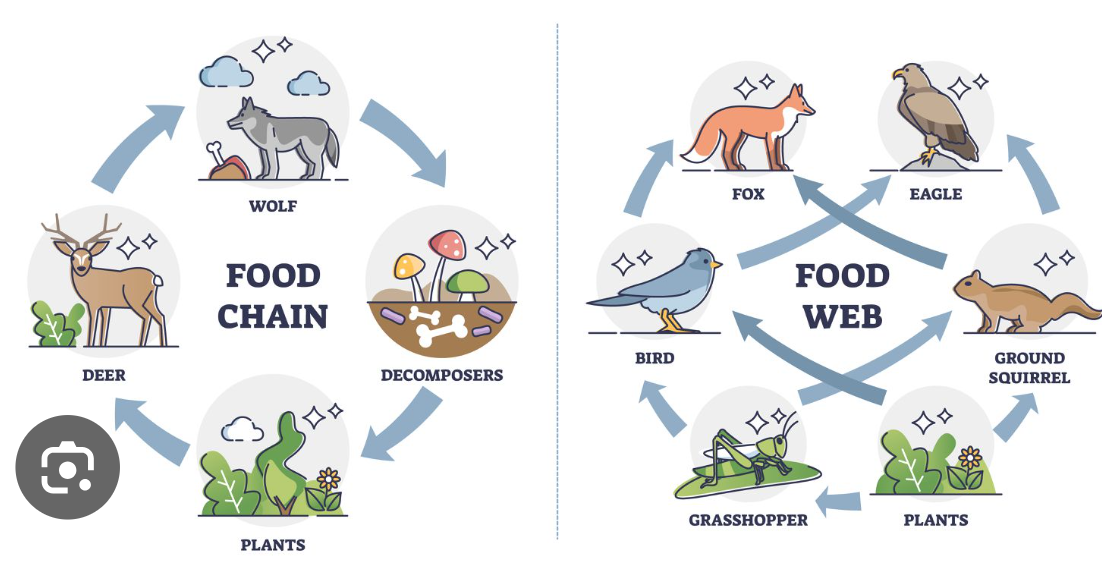
arrows of a food chain/web shows transfer of energy and biomass.
photosynthesis equation: 6CO2 + 6H2O ------> C6H12O6 + 6O2
Carbon dioxide + Water → (light, chlorophyll) → Glucose + Oxygenchemosynthesis equation: hydrogen sulfide is used, but there is many equations due to the different chemicals.
cellular respiration: glucose+O2—>CO2+H2O
productivity: the rate of accumulation of biomass per unit area/volume.
high primary productivity leads to more energy for food chains. results in larger populations and biodiversity.
calculate energy loss in food chains/webs:
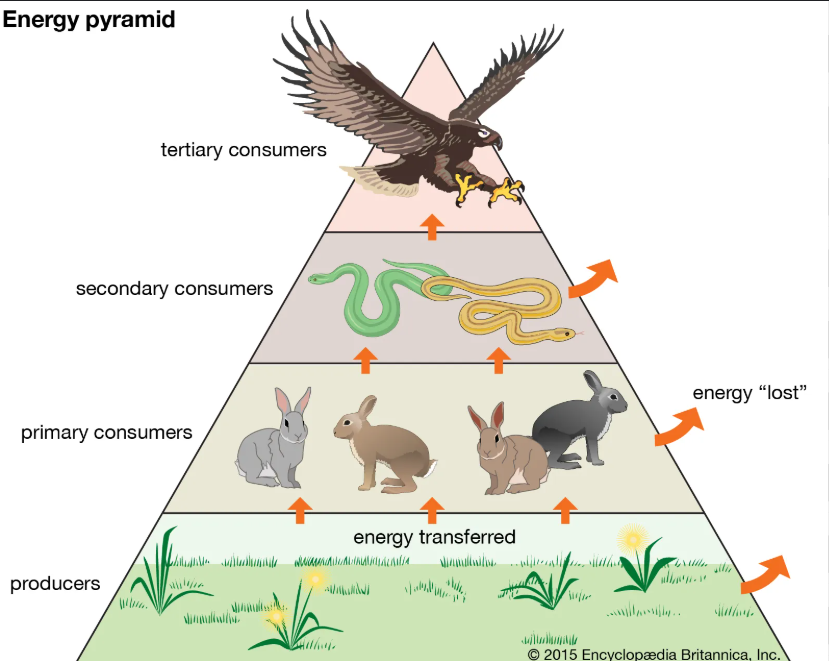
- only 10% is passed to the next trophic level.
- energy is lost as waste excretion, movement, and heat (respiration.)
pyramid of energy: shows energy at each trophic level, always decreasing.
-
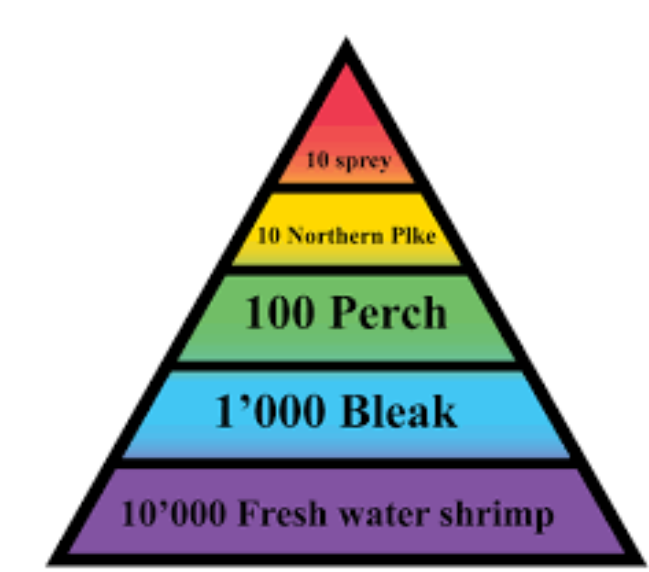
pyramid of numbers: representation of each individual in each ecosystem of a trophic level.
-
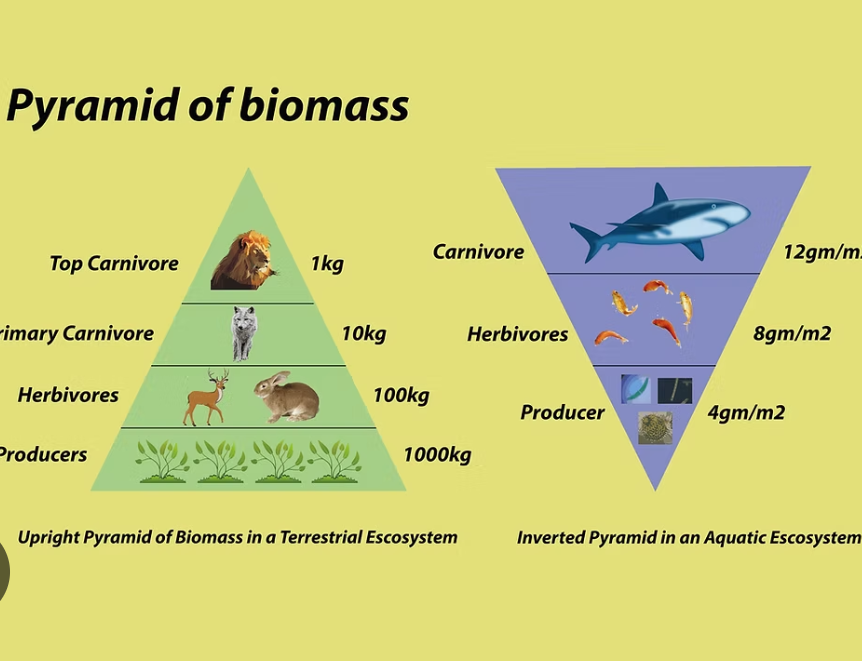
pyramid of biomass: illustrates the total mass of all the organisms in a trophic level.
-
objective 4: classifying marine groups
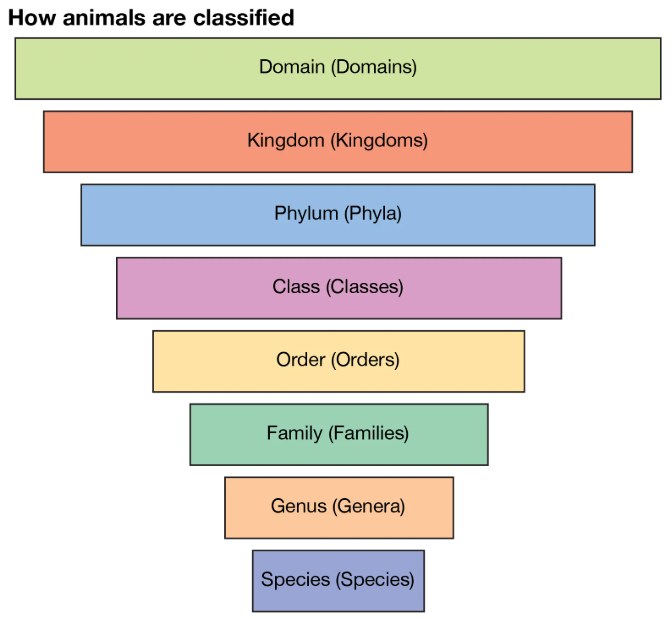
taxonomic hierarchy:
- domain, kingdom, phylum, class, order, family, genus, species
- domain: bacteria, archaea, and eukarya
binominal nomenclature: the naming of organisms by just the genus and species
- how to write: the genus is capitalized, species is not. underline the whole scientific name when writing. italicize when you can.
- ex: Homo sapiens
dichotomous key: an identification tool based off of yes or no questions to identify organisms on physical traits.
plankton: diverse collection of microscopic organisms that drift.
- phytoplankton: obtain nutrients through photosynthesis (diatoms, dinoflagellates)
- zooplankton: consumers that eat phytoplankton or smaller organisms (copepods, jellyfish)
echinoderms:
- characteristics:
pentaradial symmetry (body parts arranged in five sections)
tube feet
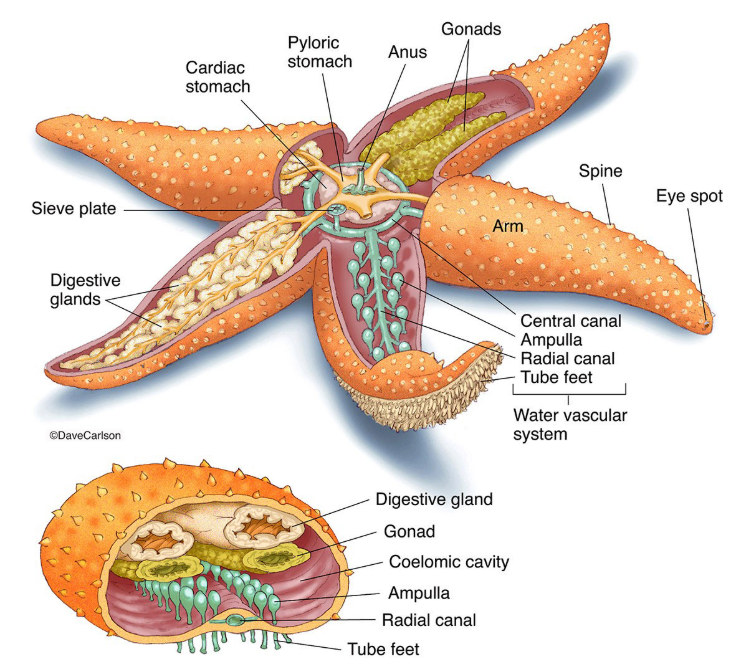
- ecological importance: help recycle nutrients in marine ecosystems. an example is the crown of thorns starfish, they help maintain coral diversity by feeding on fast growing species.
- economic importance: sea urchins as a food source.
- examples: starfish, sea urchins, sea cucumbers, sand dollars.
cnidaria:
- characteristics:
polyp
radial symmetry (body parts arranged in a central axis)
medusa
cnidocytes
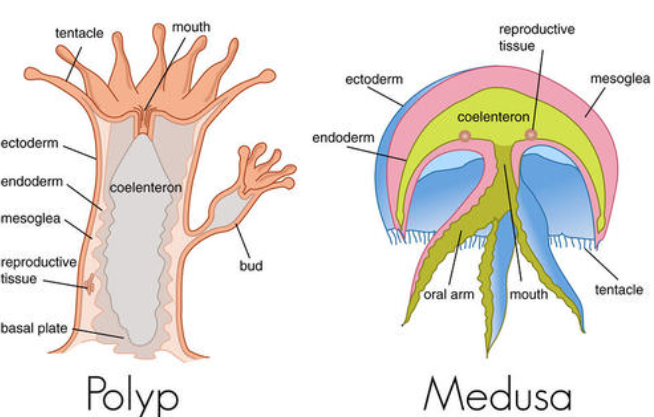
- hard coral: stony coral that uses zooxanthellae to build reefs
- soft coral: can not build reefs and uses proteins to support themself
- ex: jellyfish, coral, sea anemones
crustaceans (arthropodas):
- characteristics:
carapace (a hard protective shell, protecting their head and body)
segmented abdomen
jointed legs
2 pairs of antennae
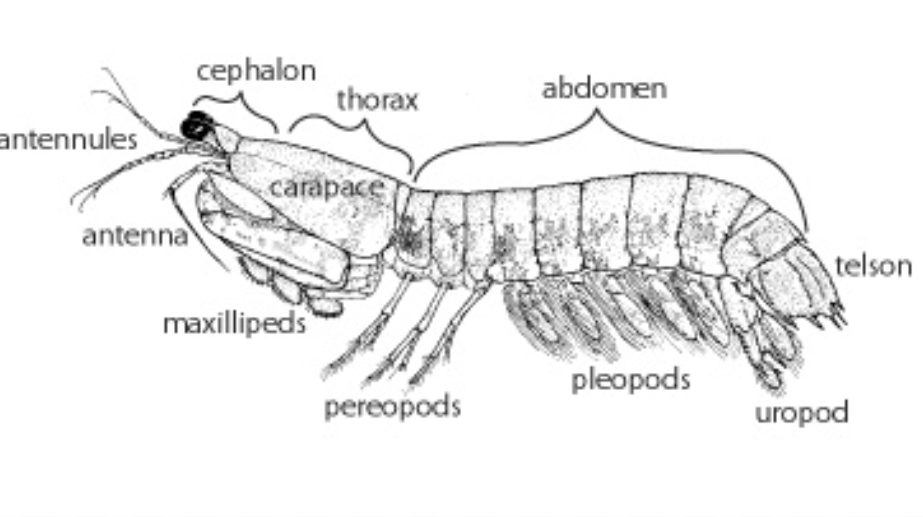
- ecological importance: major food source for consumers such as: krill (crustacean) and whales in the Artic.
- economic importance: shrimp, lobster, and crabs are harvested for a human food source
- ex: krill, shrimp, lobster, crabs
bony fish (osteichthyes):
- characteristics:
operculum, flap covering gills
gills, extracting oxygen from water
swim bladder, helps with buoyancy
scales, protection
visible lateral line, detects vibrations
fins (pectoral, anal, caudal, anal, pelvic, and dorsal)
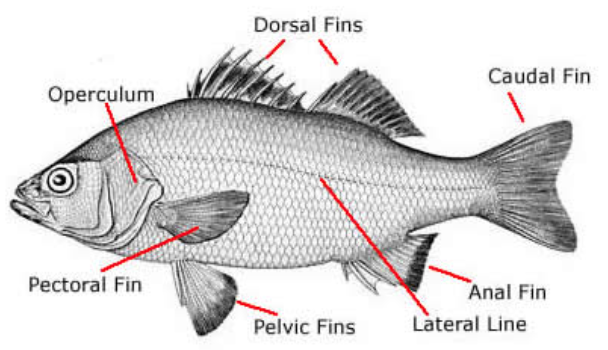
- ecological importance: bony fish like the peruvian anchoveta are a key part of marine food chains.
- economic importance: the peruvian anchoveta is used as bait and human food source.
cartilaginous fish (chondrichthyes):
- characteristics:
gill slits, OPEN slits for breathing
gills, extract oxygen from water
denticles, tooth-like scales that reduce drag
lateral line, detect vibrations
fins (same as bony fish)
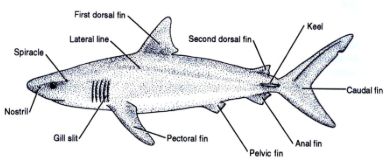
- ecological importance: blue sharks are top predators that maintain healthy fish populations and take out sick/weak fish.
- economic importance: shark finning and meat
- ex: rays, sharks
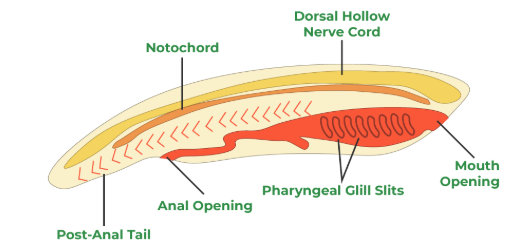
phylum chordata (bony and cartilaginous fish are in this phylum!)
- characteristics:
notochord, a flexible supportive rod
dorsal neural tube, nerve cord that develops into spinal cord
pharyngeal slits, openings in the throat
post anal tail, a tail exceeding the anus
kelp (Kingdom Protista):
- characteristics;
holdfast
stipe
gas bladders
blades
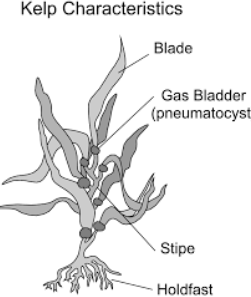
- ecological importance: kelp forests provide habitats for many marine organisms
- economic importance: food source, thickening agent, medicinal uses, used in makeup products
seagrass (Kingdom Plantae):
- characteristics:
rhizome
roots
flowers
leaves
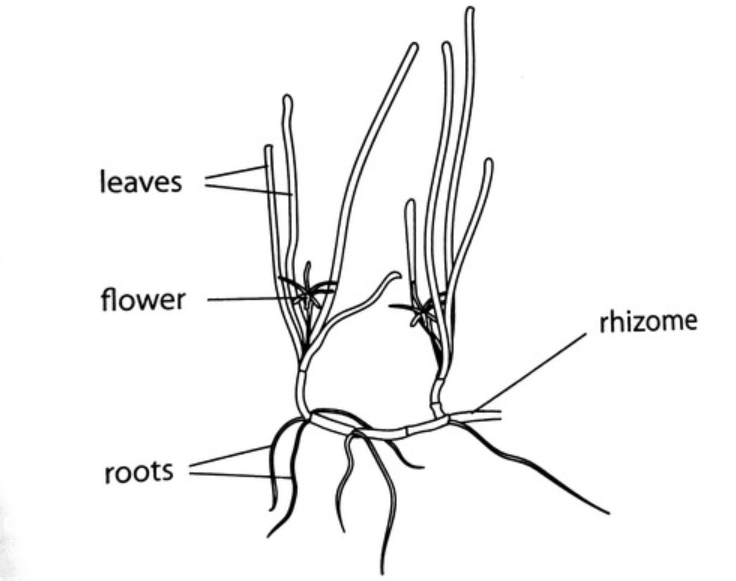
- ecological importance: nurseries for fish and invertebrates
- economic importance: support fisheries by providing habitats for economically valuable species.
objective 4: biodiversity
genetic diversity: variation of genes in a species
- ex: different clown fish color patterns
species diversity: number of species and their relative abundance
- ex: a coral reef with many different species of fish, coral, and invertebrates
ecological diversity: variation of ecosystems on a global and local level
- ex: the Great Barrier Reef has diverse ecosystems, from shallow lagoons to deep-sea environments.
importance of marine biodiversity:
- maintaining stable ecosystems, coral reefs have complex food webs/chains
- protection of physical environment, coral reefs act as natural barriers by slowing down waves
- climate control, phytoplankton absorbs CO2
- food source, fish and crustaceans are major in fisheries
- source of medicine, KLH which is an anti-cancer drug
species: a group of organisms that can interbreed and produce offspring
- ex: green sea turtles
population: a group of organisms of the same species living in a specific area
- ex: clown fish in a colony of sea anemones
community: a bunch of organisms of different species living together
- ex: a rocky shore consisting of barnacles, mussels, seaweed, and starfish.
ecosystem: a system formed by living organisms in their environment.
- ex: a coral reef system including fish, coral, seaweed, sunlight, and chemical compounds.
habitat: a natural environment where an organism lives.
- ex: mangroves provide a natural habitat for shrimp
niche: a role/function of an organism in an ecosystem
- ex: butterfly fix ONLY eating coral (specialized) and tuna eating a variety of food (generalized)
biotic factors: living factors that affect organisms
- intra specific competition: competition with the SAME species
- inter specific competition: competition with DIFFERENT species
- symbioses
- predation
- disease
abiotic factors: non living factors that affect organisms
- temperature
- salinity
- pH
- light availability
mark-release-capture method: a method used to determine the population size.
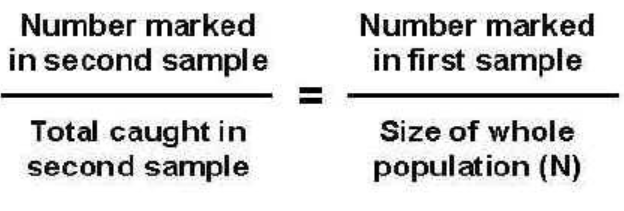
Lincoln index:
- N= estimated population size
n1 = first sample captured and marked
n2 = second sample captured
m2 = number of marked individuals recaptured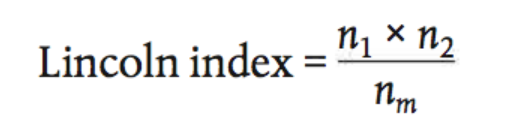
- limitations:
assumes no births or deaths
sample must be large enough for accuracy
objective 5: open ocean
The worlds 5 oceans are the Atlantic, Pacific, Indian, Artic, and Southern.
epipelagic zone: 0-200m deep, supports photosynthesis
mesopelagic zone: 200-1000m deep, little sunlight with NO photosynthesis
bathypelagic zone: 1000-4000m deep, no sunlight
abyssopelagic zone: 4000-6000m deep, no light
benthic zone: the ocean floor including hydrothermal vents and trenches.
importance of the ocean:
- acts as a carbon sink
- source of oxygen, 50-80% of Earth’s oxygen is from photosynthetic organisms
- temperature buffering, the ocean absorbs and stores heat
- climate control, ocean current distributing heat around the planet (El Nino and La Nina.)
polar oceans:
- near the poles (southern and artic ocean)
- very cold temperature
- rich in nutrients
temperate oceans:
- between polar and tropical regions
- moderate temp
- seasonal changes
tropical oceans:
- near the equator
- warm temperature
- high biodiversity
conditions needed for coral reef growth
- suitable temp of 16-35 degrees Celsius
- clear water, no sediment
- suitable depth (top 20m)
- suitable relationship with zooxanthellae
fringing reef:
- close to shore, connected to land, most common
barrier reef:
- parallel to coast, further from shore, separated by shore by a large lagoon
atoll reef:
- circular, submerged in what was once a volcano, enclosing a lagoon
patch reef:
- within a lagoon, isolated, scattered within fringing and barrier reefs.
corals in Phylum cnidaria:
- form colonies of polyps
- symbiotic relationship with zooxanthellae
- two types:
hard coral: communicates with zooxanthellae to create reefs. staghorn and brain coral.
soft coral: proteins to support the coral, no symbiotic relationship. sea whip and sea fan coral.
structure of coral:
- tentacle: captures food
- nematocyst: stings/defense
- mouth
- stomach
- calyx: the corals skeleton
- theca: wall surrounding the polyp
- basal plate: where the polyp is attached
how coral gets its nutrients:
- the zooxanthellae/algae inside the coral uses sunlight to produce oxygen and sugars (mutualism)
- predation
- diffusion of organic material
importance of reefs:
- tourism
- food source
- medicine
- coastal protection
- biodiversity
causes of reef erosion (death):
- pH change (reduced calcification)
- temp change (coral bleaching)
- physical damage (storms and human)
objective 5: marine habitats
zones of rocky shore (littoral zone)
- splash zone: above the high tide mark, only reached by waves/spray. organism that live here is barnacle.
- upper shore: covered by water only by high tide. limpets live here.
- middle shore: submerged and exposed with each tidal cycle. hermit crabs live here.
- lower shore: always submerged except at extremely low tides.
how do biotic factors interact to affect organisms on the rocky shore?
- predation
- competition
- grazing
how do abiotic factors interact to affect organisms on the rocky shore?
- salinity
- temp
- wave action
a splash zone adaptation is periwinkles having thick shells and mucus to prevent drying out.
an upper shore adaptation are barnacles having hard shells being able to cling to rocks
middle shore adaptation: limpets have a muscular foot to grip to rocks
lower shore adaptation: seaweed is flexible to reduce wave damage
the sandy shore:
- unstable, shifting, porous.
- biotic factors that affect sandy shores: predation, competition
- abiotic factors: substrate instability, wave action
- ghost crabs have to burrow into sand to avoid heat and hide from predators
the mangrove forests:
- tidal ecosystem with salt tolerant trees found in tropical areas.
- very biodiverse
- prop roots for stability.
- red mangroves are adapted to live because of these prop roots, viviparous reproduction (seeds fall from mangrove and transport to new areas via sea), and salt exclusion by roots.
- ecological importance: filters out sediment, nursery for juveniles
- economic importance: food source, tourism
- threats to mangroves: temp change, storm damage