10/27/26
care of the surgical client
classifying surgical procedures
elective: patient is healthy and we can elect to do a certain surgery
urgent: example, a torn ACL, you will not die but there are still severe consequences
emergent: life threatening if not operated on ASAP
degree of risk:
minor
major
example: low platelets, chronic disease, comorbidities (diabetes, heart disease, lung issues,
purpose:
diagnostic (to make or confirm diagnoses)
ablative (removing something)
palliative (reduce the intensity of a disease)
reconstructive (replace organ/structure)
constructive (to restore function in congenital anomalies)
transplantation (to replace organ/structure)
common surgical risks
surgical site infection
clotting issues vs excessive blood loss/hemorrhage
hypercoaguability > increased risk of PE or CVA
pneumonia
usually because they were lying in sedation for a long time > atelectasis
why we should use the incentive spirometer and chest physiology
if abdominal incision > can use a pillow for splinting off that pressure
hypoglycemia
malignant hyperthermia
increase in body temp as a consequence of anesthesia
procedure specific risks
outcomes for surgical clients
receive respectful, culturally, and age appropriate care
be free from injury and adverse effects
be free from infection and DVT
maintain fluid and electrolyte balance; skin integrity; normal temperature
report acceptable pain management
participate in the rehab process
perioperative phases: preoperative
begins when the patient and surgeon mutually decide that surgery is necessary and will take place; ends when patient is transferred to the OR or procedural bed
client education:
pneumonia prevention
pain management: splinting
early ambulation/recovery plan
getting up and walking early
therapeutic communication
confirm expectations
assess client’s understanding, willingness, coping
NPO status
to reduce risk of aspiration; pneumonia
“it’s super important you do not have anything in your stomach because…”
assessment (subjective and objective)
medication reconcillation
diagnostics
IV placement
marking the site
informed consent (surgery, anesthesia, blood)
as a nurse, you will sign the client’s consent form as a witness
it is NOT your responsibility to explain procudure specific questions > if they ask, CALL PROVIDER to answer the question
it is our job to console, and comfort and listen to our patients, but not our job to explain the technical details of surgery
advanced directives, living will, medical power of attorney (MPOA), DNR orders
anesthesia
type:
general
propofol
moderate (conscious) sedation
not putting patient to sleep
benzodiazepines/fentanyl
make them sleepy, but want to still be able to talk
pain control and anxiety control
regional (nerve block)
peripheral nerve block (decreases sensation/movement)
spinal (subarachnoid)
epidural
topical/local (drops, patch, gel, liquid, spray)
the differences between spinal and epidural anesthesia are found in the location of the injection, the needles used, time of onset, and duration of effects
spinal anesthesia is injected in the subarachnoid space of the spine (directly into the cerebral spinal fluid, uses a smaller needle, had a rapid onset, but does not last long
epidural anesthesia is injected into the epidural space, uses a larger needle, has a longer onset of action and lasts a longer time
nursing considerations
safety, urinary, respiratory
informed consent
perioperative phases: intraoperative
begins when the patient is transferred into the OR bed; ends with tranfer to the post anesthesia care unit (PACU)
role and responsbilities
advocate for the client
position the client (safety, skin/nerve injury)
monitor the sterile field
conduct the timeout
perform the surgical count
record fluid volume (blood loss and IV fluids)
never events: wrong surgery, wrong site, retained surgical instruments
circulating nurse: manager and coordinator
can leave the room in and out and ensure everything is running smoothly
scrub nurse: alongside the surgeon
assist with materials, patient positioning, etc
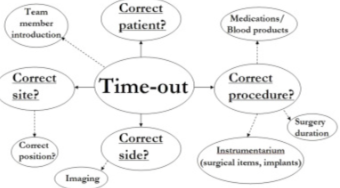
perioperative phases: postoperative
begins with admission to the PACU or other recovery area: ends with complete recovery from surgery and the last follow up health care provider visit
type of anesthesia and the client’s condition will determine which PACU (phase I or phase II)
pain/nausea management
restraints: bed rails, padded restraints, straps
diet order advancement
hand off report (SBAR)
client medical and surgical history
procedure scheduled vs performed
anesthesiea: names and doses; respiratory status
wounds, drains, and lines
assessment:
vital signs (including pain assessment)
CV, respiratory, neurovascular
return of consciousness, reflexes
surgical site (site, closure materials, dressing)
wounds, drains, lines
ongoing hospital care
vital signs every 4 hours
pain management
patient controlled analgesia (PCA) pump
IV > PO in preparation for discharge
side effects of opioid use
STRICT intake and output
IV fluids and IV antibiotics
drain output
amount of urine
if Foley was utilized in surgery, the client must void within _ hours
hemorrhage risk, pneumonia prevention, DVT prophylaxis, early mobility, deit order advancement
discharge teaching
client education starts in the pre-operative phase and continues in every phase thereafter
identify a responsible party (client and adult caregiver or family member)
written instruction:
signs and symptoms to report (infection, pneumonia, surgery specific complications)
equipment review (crutches, slings, drains)
wound care materials review (ex. how to change a dressing)
how to contact emergency assistance
how would some of these client care tasks differ in the day surgery setting

comfort, pain management, and complementary therapies
pain: an unpleasant sensory and emotional experience associated with, or resembling that associated with, actual or potential tissue damage
pain is always a personal experience that is influenced to varying degrees by biological, psychological, and social factors
through their life experiences, individuals learn the concept of pain
a person’s pain report of an experience as pain should be respected
pain may have adverse effeects on function and social and psychological wellbeing
the inability to communicate does not negate the possibility that an individual experiences pain
factors affecting the pain experience
biological: developmental considerations, genetic components
social: cultural and ethnicity variables (social norms, age, gender, sex), relationships, situational factors (environment)
psychological: personality, coping skills, mental health, past experiences
classifying pain
duration: acute, chronic (longer than 3 months, periods of remission and exacerbation)
location: cutaneous (superficial), somatic (orginates in tendons, ligaments, bones, blood vessels, and nerves), visceral (originates in body organs in the thorax, cranium, and abdomen), and referred (origin point and perceived points differ)
etiology: nociceptive (damage to nonneural tissues); neuropathic (damage to peripheral or CNS)

responses to pain
physiological (involuntary):
increased blood pressure, increased pulse and respiratory rates, muscle tension and rigidity, pallor, nausea/vomiting, fainting/LOC
behavioral (voluntary): moving away from painful stimuli, grimacing, moaning, and crying, restlessness, protecting the painful area and refusing to move (guarding)
affective: exaggerated weeping and restlessness/withdrawal/stoicism, anxiety/depression, fear/anger, anorexia
using the nursing process
assessing:
routine pain assessment (vital siggns)
OLDCARTS
onset
location
duration
characteristics (quality)
alleviating/aggravating factors
radiation
timing
setting/situation (how pain affects the client’s daily life)
pain severity: appropriate scale per client

identify source of pain
consider client behaviors (verbal and nonverbal)
vital signs may not always be affected
setting a realistic pain goal
diagnosing (nursing)
nursing problems
acute pain
chronic pain
difficulty coping with pain
planning
SMART acute pain goals
describe a gradual reduction of pain using a scale ranging from 0 (no pain) to 10 (pain as bad as it can be), clearly identifying numeric pain goals
demonstrate competent execution of successful pain management program
SMART chronic pain goals
outcomes should be specific to the underlying causes and any functonal changes associated with the pain
implementing
pharmacologic:
opioid analgesics
nonopioid analgesics
adjuvant analgesics (muscle relaxants, antidepressants)
agent of choice will vary based on client’s pain rating
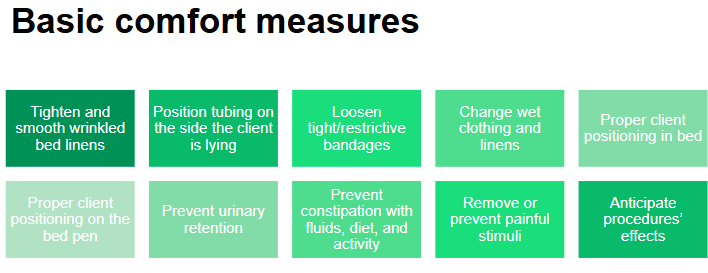
non pharmacologic

evaluating
evaluate if the pain specific goals were met
evaluate the evolving nature of the client’s pain and how the various interventions addresses the pain in different moments
pharmacological interventions
opioids: tolerance, dependence, addiction
rest and sleep
rest: a condition in which the body is in a decreased state of activity, with the consequent feeling of being refreshed
sleep: a state of rest accompanies by altered consciousness and relative inactivity
sleep-wake cycle: rhythmic state and repeated cycles of representing different phases of body and brain function
a period of inactivity and restoration of mental and physical function
sleep health: a multidimensional pattern of multiple sleep characteristics, including sleep duration, continuity, timing, alterness, and satisfaction, that promotes physical and mental wellbeing
stages of sleep
non-rapid eye movement (NREM)
75-80% of total sleep time
stage I: slight sleep (5%)
stage II: light sleep (50-55%)
stage III: deep sleep (10%)
parasympathetic nervous system incudes decreased blood pressure, heart rate, respiratory rate, metabolic rate, and temperature
rapid eye movement (REM)
20-25% of total sleep time
dreaming
parasympathetic nervous system induced increased blood pressure, heart rate, respiratory rate, metabolic rate, and temperature
skeletal muscle tone and reflexes are depressed
essential for mental and emotional equilibrium
the sleep cycle

most people go four or five cycles of sleep each night
one average, each cycle lasts about 90-110 minutes and cycles become longer as morning approaches
more deep sleep occurs in the delta stage (NREM stages III and IV) in the first half of the night, espeically if one is tired or has lost sleep
seven hours of sleep are recommended for adults
factors affecting sleep and rest
rest and development
motivation
culture
lifestyle and habits
physical activity and exercise
dietary habits
smoking
environmental factors
psychological stress
illness
medications
common sleep disorders
insomnia
sleep related breathing disorders (OSA)
hypersomnolence (narcolepsy)’
sleep wake disorders (shift work disorder)
parasomnias (sombambulism)
sleep related movement disorders (restless leg syndrome)
sleep deprivation