War Photographer
War Photographer, the focus of the poem is “Photographer” and how having this type of job affects photographer.
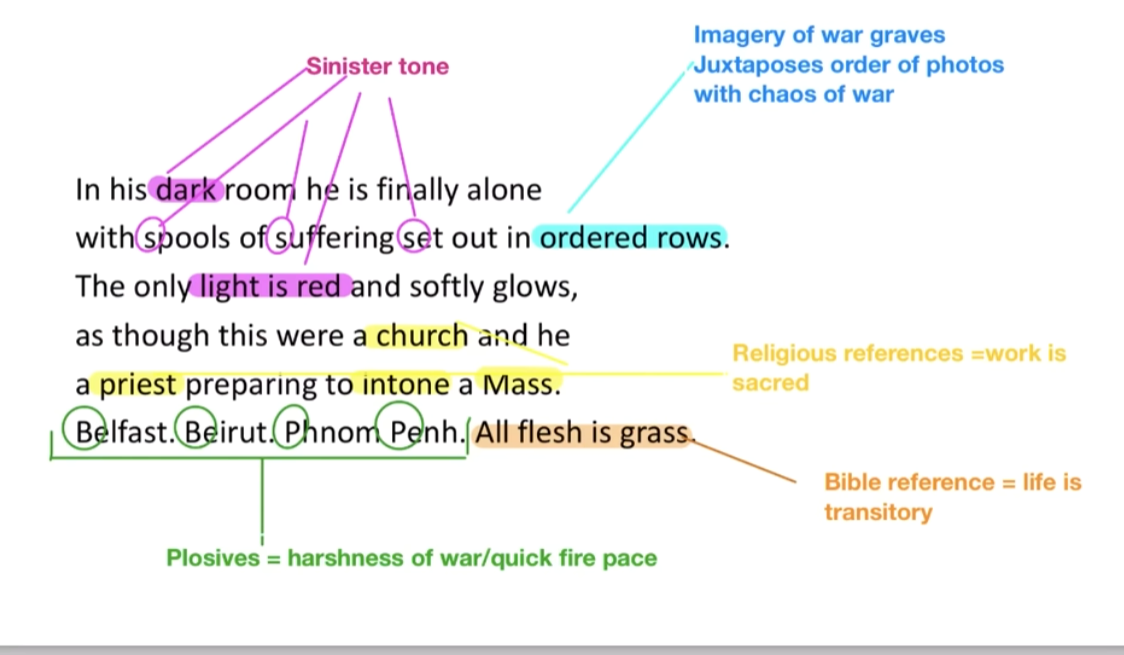
There is a sinister tone created through diction “dark” “light is red”, this creates connotations of evil which creates a sinister tone. The sibilance of “spools of suffering set” creates a sinister tone due to the harshness. He places these photos in “order rows”, imagery of war graves juxtaposes with what the photographer has been exposed to, creates an ironic tone as War is not orderly rather its very chaotic, it could be frustrating for the photography. There are religious references in the stanza which compare his role of a photographer to a priest preparing for mass. He thinks its very important to bring these images back to the western world. The religious references highlight how important it is for these images to reach the wester world, they show that his work is sacred. The use of plosives in the line “Belfast, Beirut, Phnom, Penh”, represents the harshness of war and also could mimic the sound of gunshots and their quick pace. When preparing the photos, he is reliving his experience. The Bible reference “All flesh is grass”, highlight how quickly life can end especially in places of war.
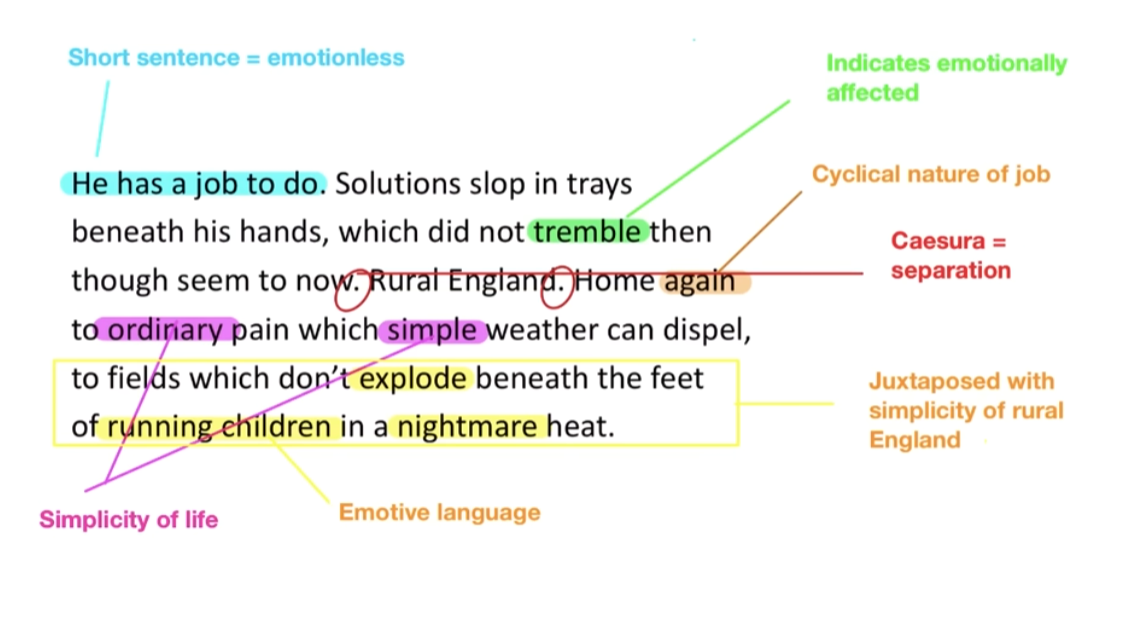
The short sentence “He has a job to do”, conveys an emotionless tone, something that is needed to do the job he does. The word “tremble” indicates he is emotionally affected his job makes him tremble which contrasts to the emotionless short sentence at the start of the play. The caesura represents the separation he feels now that he is back in England, the battlefield he was once in is now very far away, You could also argue that it symbolises how the people of England are so separated from the suffering that is happening in the world. The word “again”, highlight the cyclical nature of his job. The words “Ordinary” and “simple” highlight the simplicity of rural England and the “peace”. This juxtaposes to the experience of others in war, this is shown in the use of emotive language, “explode beneath the feet of running children in a nightmare heat. This pulls of the heartstrings of the reader and shows the horrors he may of experienced.
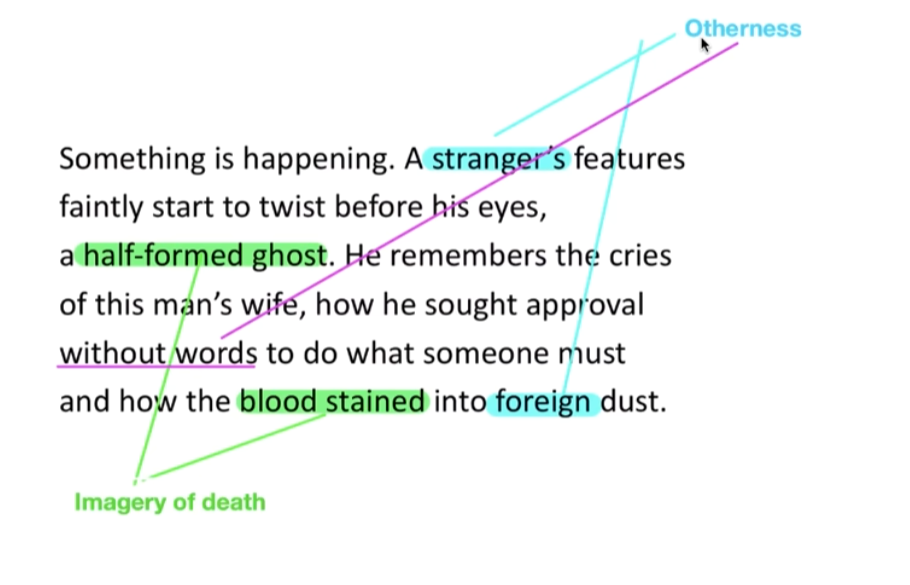
The feeling of “otherness” is shown in the words “strangers features”, it reminds us of how separate this feels, this feeling is further shown in the phrase “foreign dust”, which highlight how separate the war photographer feels. The use of death imagery is shown in the phrases “half formed ghost” and “blood stained”, symbolises the war photographer watching the photos in front of him develop. The element
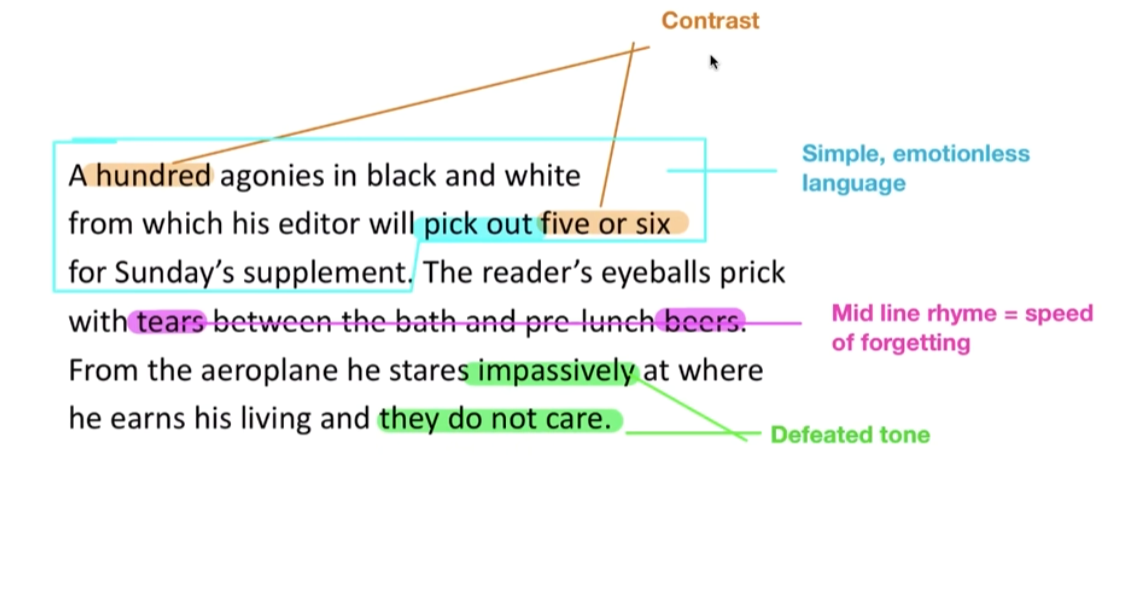
"There is a major contrast from the “hundreds” of photos he has to the “5 or 6” that the editor will pick out, this highlights how emotionless this process is, this is shown in the phrase “pick out”, it highlights the emotionless and unguilty nature of this process, the photos of death and agony are taken just to fill a space in a piece of paper. This further affect the war photographer as he has experienced all the suffering behind the photos, only for 5 or 6 to be picked. The use of mid line rhyme in the line “tears between the bath and pre lunch beers”, this emphasises how the western reader will be sad about this but not for a very long time, the mid line rhyme highlights the speed of forgetting that the western reader experiences. By the time they eat lunch they are over this. This relates to many readers, which would frustrate the war photographer. The defeated tone of the word “impassively” along with the ending phrase of “they do not care”, his efforts are futile, the whole point of his job is to bring to light the horrors that are going on around the world and the wester world doesn’t care enough to do something. The photographer is frustrated.
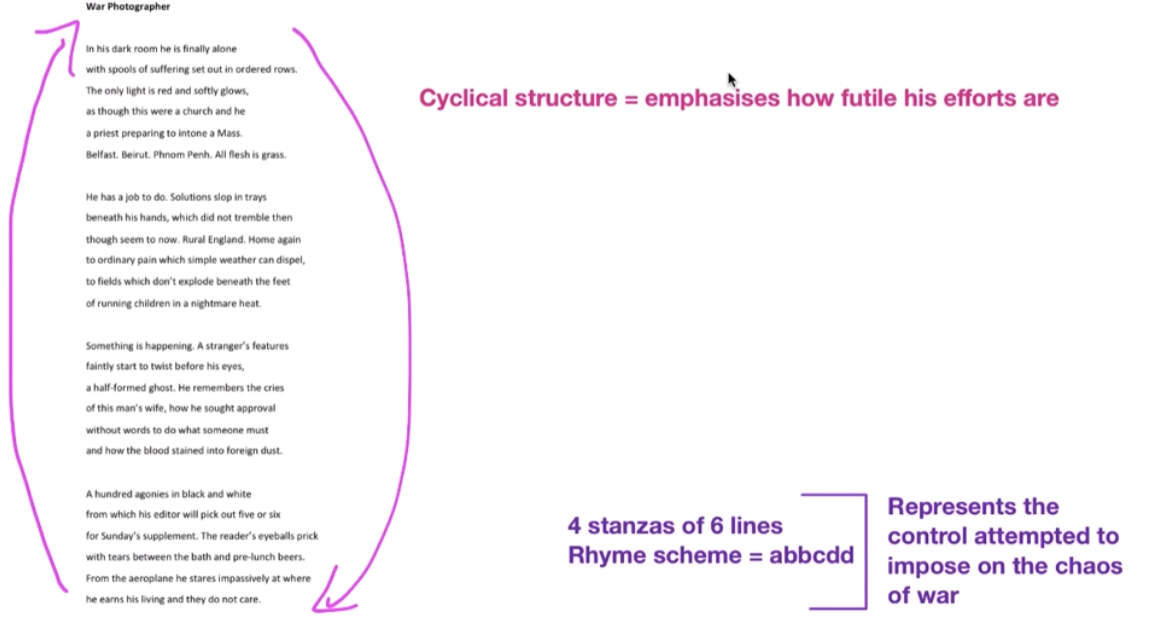
This is a very well structured and organised poem which contains a “abbcdd” rhyme scheme. This is a very tightly controlled structure, you could argue that this represents the control that the war photographer tries to have on the situation, this links to the “ordered rows” of photographs, and how the government creates the graves for soldier whilst in reality war is not ordered at all. Its also a cyclical structure which links to the second stanza in which he says “home again”. At the start of the stanza he is in a dark room and by the end he is off on another trip. We know that he’ll come back from that same trip and end up in that same dark room again. The cyclical nature of the poem emphasises how futile his efforts are as he is always going around in circles whilst nothing is changing, this creates a sense of hopefulness.