Human Activities and Effects on the Environment (Unit 5)
note: in this case, “organic” usually means “carbon-containing”
Mining
Three steps: mining (exploration, extraction); processing (includes transportation, processing, purification, smelting, and manufacturing)
Types of Mining
Surface
Contour mining: Used for hilly areas where overburden (excess, unnecessary dirt) is removed from a seam based on contours along a ridge or hillside.
Dredging: Used to mine below the water table, often for gold. Small dredges suction/scoop up mined material from underwater.
In situ: Small holes are drilled into the earth and toxic chemical solvents are used.
Open pit: Used when ore/rocks are found near the surface.
Strip mining: Expose coal by removing soil above each coal seam.
Underground
Blast: Explosives are used to break up the seam so that mined materials can be loaded onto a conveyor for further processing.
Longwall: A rotating drum with teeth is used to “grate” a coal seam so that coal can be broken off and transported to the surface.
Room and pillar: While mining is going on underground, some coal is left as “pillars” to prevent collapse; it is then removed when mining is done.
Problems caused
Exploration for mining in remote areas (such as tundras or deserts) can displace native species and damage the environment.
Acid mine drainage: acidic, metal-rich water is released when sulfur-rich materials (ex. pyrite) come into contact are exposed to water and air.
Land subsidence (sinking of land) can be caused due to soil erosion and loss of stability caused by mining.
Lots of pollution (soil, air, and water). Transportation and burning of coal produced from mining contribute to global warming, while chemicals from in situ mining can leach into the soil and affect grounderwater supply.
Nutrient cycles can be altered because soil microorganisms are affected.
How can we fix those problems?
Replenish soil by adding new topsoil and soil nutrients.
Construct wetlands for bioremediation.
Counter acidity by adding lime and limestone to soil. Also use sulfate-reducing bacteria (acidophiles) in the catchment basin (reduces acidity in water).
Replant areas with native vegetation and restore the land’s natural contours (particularly for mountaintop removal and contour mining).
(Over)fishing
Fishing is currently plagued by increasing demand and decreasing supply. Fish require a very specific environment because they often feed on algae and phytoplankton (which grow in warm, sunny areas that take up only 10% of the oceans).
Uses of fishing: Fish supply much of the world’s protein supply and are also used to make products like fish oil, fish meal, and animal feed.
There are many ways to manage marine fishing.
You can eliminate government subsidies for commercial fishing so that fishermen/fishing companies aren’t given any special financial benefits (reduces the incentive to fish).
Create more marine sanctuaries to protect vulnerable areas (estuaries, wetlands, etc).
Require companies to label whether their products are sustainably sourced.
Regulate fishermen more closely by using licenses and limiting what types of fish and how many they can catch annually. If the rules are broken, trade sanctions can be used to prevent people from importing from certain countries or companies.
To restore freshwater ecosystems, you can control erosion, invasive species, and pollution as well as plant native vegetation.
Aquaculture
Also known as mariculture or fish farming
Definition: When marine organisms (kelp, seaweed, mollusks/shellfish, fish) are raised and protected from predators to eventually be harvested.
Can be more sustainable than farming on land because cold-blooded organisms naturally convert more food to protein and do not need to eat as much as a result.
Usually successful when the species is marketable, cheap, efficient at growing on minimal food, and disease-resistant.
Unfortunately, aquaculture can create monocultures that lower biodiversity and can lead to excessive nutrient release, therefore degrading natural habitats.
On the flip side, it offers a potentially sustainable method for growing protein-rich food.
Deforestation - Clear Cutting, Slash and Burn, etc.
Deforestation can happen naturally through desertification, volcanic eruptions, forest fires, tsunamis, and glaciation. On the other hand, humans clear a forest to create usable land for farming or urbanization.
Deforestation causes habitat fragmentation and loss; specialists are particularly vulnerable. It also eliminates carbon sinks and releases carbon from the trunks of cut trees. Plus, without the canopy there to block sunlight, soil can lose its natural moisture.
Clear cutting leads to the “edge effect” in which a gap develops between trees until new saplings populate in the cleared area.
The slash and burn method used to clear land for agriculture releases large amounts of pollution; ash from the process may temporarily provide nutrients to crops, but it becomes depleted soon. There are also high amounts of soil erosion and dust storms.
Sustainable Forestry
Ways to reduce the effects of deforestation:
Use uneven-aged forest management (basically, you maintain a forest with trees of all ages instead of clear cutting). You can do this by selecting either groups (strip cutting) or individual trees (selective cutting).
Educate farmers on sustainable forest practices.
Growing timber on longer rotations (cut less frequently).
Try not to build roads and fragment remaining large forests.
Enforce restrictions on timber harvesting.
Agricultural + Green Revolutions
1st Agricultural Revolution (2000+ BCE) - shift from nomadic hunter-gathering to settled agricultural communities
2nd Agricultural Revolution (1700 CE and onward) - Industrialization led to tools that could make farming more efficient, such as the seed drill and plow. New banking helped farmers afford new tools, railroads improved crop distribution, and new foods from the Americas allowed for large-scale urban growth.
1st Green Revolution (1940s-1980s) - Use of inorganic fertilizers that promoted eutrophication, synthetic pesticides, efficient irrigation, and the creation of more hardy strains of crops
2nd Green Revolution (1980s - now) - New engineering techniques, laissez-faire policies (that can encourage imports and thus hurt small farmers), GMOS like Golden Rice (use of daffodil genes to promote Vitamin A) and Bt corn (produces insect toxins to reduce need for pesticides)
Significant people: includes Norman Borlaug, who saved over one billion people from starvation in India, Mexico, and Pakistan; he was controversial because he encouraged environmentally-damaging monoculture and a shift away from localized subsistence farming
Impacts of Agriculture
Agricultural productivity: higher profit/yield for lower input. Decreased costs come at a price: sustainability issues include fertilizer runoff and deforestation to attain farmland.
Desertification: when rangeland (savannas, forests, shrublands) or cropland transitions into a desert. Steps:
1) Overgrazing: when livestock graze, the roots are not given enough time to recover. Root dieback temporarily adds organic matter to the soil, leading to higher soil porosity, infiltration rate, and moisture-holding capacity. However, in the long term, compaction from livestock’s hooves leads to lower soil porosity, the emergence of invasive or weedy species, lower moisture-holding capacity, and higher silting in riparian areas.
2) Rain washes away trampled soil because there aren’t as many roots to hold the soil in place and prevent erosion. Water sources dry up.
3) Wind and dry heat blow topsoil away.
More on rangelands: We can manage them by fencing off sensitive (riparian) areas, relocating or building water holes/tanks and salt blocks in other places, and replanting native vegetation in barren areas. Land regulated by the Bureau of Land Management (BLM) is sadly full of endangered species that are preyed upon by livestock and invasive species, so we should control those as well.
New Agricultural Methods
Fertilizers
Inorganic: They usually contain only three nutrients (N, P, K) out of the 13 the plants need, but they distribute them fairly well. They are cheaper and more widely used by farmers, but they contain salts and other chemicals that contribute to nutrient pollution (eutrophication); they may also harm soil creatures such as earthworms.
Organic: They cost more but are better for the soil and improving moisture retention. They also don’t contain the fast-acting salts that makes inorganic fertilizers contribute to salinization. They can also be bulky and harder to transport, which decreases their appeal. Usually made of organic sources such as bone meal, compost, fish extracts, manure, or seaweed. Unfortunately, these can be toxic too - incomplete composting may result in pathogens infiltrating the food and water supply.
GMOs
While genetically altered crops are more resistant and take up less resources, there are concerns that GMOs are not good for the body in the long run and that they can lead to allergies flaring up. Still, they can help the environment! (ex. reducing pesticide usage)
Soil Erosion and Degradation
Causes: improper plowing, monoculture, overgrazing, removing crop wastes
Usually characterized by reduced water retention and nutrient profile of soil; this can lead to droughts in places with little rainfall.
Salinization: Water that isn’t absorbed into the soil evaporates, leaving behind dissolved salts in the topsoil that are bad for plants. We can fix it by using freshwater to pull out the salts, not planting water-intensive crops in areas prone to salinization, adding humus, and using drip irrigation and organic fertilizer.
Waterlogging: Soil is saturated with water, which fills up pores that normally hold air. This creates anaerobic environments that kill plants and soil microorganisms. To reduce this condition, we can plant crops that are less water-intensive, give the land a chance to recover, and install pumps with drainage pipes that lead to catchment-evaporation basins.
Tillage: The surface is plowed and broken up to expose soil that is then smoothed and planted. It is often used to activate pesticides, mix in manure and fertilizer, prepare soil for seed planting, and to suppress weed growth.
Problems: It increases surface runoff and thus soil erosion; it increases sediment content and thus water pollution; it increases fertilizer runoff and thus eutrophication; it increases hardpan (a hardened layer impervious to water) and thus decreases topsoil.
Irrigation: often inefficient; five main types below
Ditch: Ditches are dug and seedlings are planted in rows; they are watered by canals and burrows in between rows. The water is transported from the main ditch to canals via siphon tubes.
Drip: Roots of a plant receive water from a small tube; more efficient and gaining in popularity, especially in India and China. However, it is still less common than flood and burrow. It is more expensive to install.
Flood: Crops are flooded with water. Cheap and relatively less sophisticated, so often used in developing countries.
Furrow (channel): Parallel channels are dug along a slope so that water will flow down the field because of gravity (may require re-sloping). More water may enter the soil at the beginning than the end, which may create uneven irrigation.
Spray: Water is sprayed via sprinklers or sprays overhead. While it leads to a better crop yield and it saves water, it is used by only 4% of farmers (largely due to its high costs).
Pest Control Methods
IPM - ecologically based approach for pest control
Reduces the reliance on pesticides and thus effects such as the pesticide treadmill and toxicity entering environments.
Three general categories:
1) Biological: You can use natural pest predators, sterilized insects, pyrethoids (synthetic), natural microorganisms, and pheromones or hormone interruptors
2) Mechanical: Build traps, tillage, insect barriers, or agricultural vacuums with lights.
3) Better farming techniques: planting pest-resistant crops (GMO or otherwise), rotating crops to disrupt insect cycles, mulch to control weeds, polyculture and intercropping (essentially the opposites of monoculture)
Types of Pesticides
Biological: Include living organisms (bacteria, ladybugs, wasps, viruses, etc). Sterile males may also be released to compete with fertile males and reduce the population.
Carbamates (for example, urethanes): These alter pest nerves and lead to tissue swelling. They are much more potent than chlorinated hydrocarbons (for instance, DDT) and proportionately more toxic; they are also water soluble, which allows them to pollute water. An example of their toxicity is the Bhopal gas leak.
Fumigants: sterilize soil and prevent pests from accessing stored grain
Inorganic: They are very toxic and include arsenic, copper, lead, and mercury. They accumulate in the environment.
Organic/natural: Derived from natural poisons such as tobacco and chrysanthemum.
Organophosphates: Very toxic, but they don’t stay in the environment for long (examples: malathion and parathion used for mosquitoes and the West Nile virus).
Persistent Organic Pollutants (POPS): They are not great for the environment and may be privy to biomagnification (when a toxin increases in concentration and severity as it goes up the food chain). An example is DDT.
Benefits and Drawbacks
While they can increase crop output in the short-term, pesticides actually increase insect resistance via natural selection (just like how antibiotics promote antibiotic-resistant bacteria) - this is a phenomenon known as the pesticide treadmill. People are working to make them more biodegradable.
A law to know: The Delaney Clause of the Food and Drug Act prevents the FDA from approving carcinogenic food additives; most are “generally recognized as safe” (GRAS), but they can be reclassified if necessary.
Concentrated Animal Feeding Operations (CAFOs)
CAFOs are when animals are stored in feeding pens for over 45 days a year. They lead to increased animal waste and thus lower water quality.
Pollutants from CAFOs include: antibiotics; N and P (which contribute to nutrient pollution of both surface and groundwater); odorous/destructive compounds (ammonia, CO2, hydrogen sulfide, methane); organic matter; animal manure and other waste; pesticides; salts; pathogens; and trace elements such as arsenic
They are also associated with increased gas emissions that are bad for health and usually generated through decomposition of animal manure.
They also emit antibiotic resistant bacteria.
Sustainable Agriculture
Much of it is a recap on previous methods, including using organic fertilizers, drip irrigation, IPM, polyculture, etc.
Other things to remember:
Use cover crops (a.k.a. green manure) - act as helpers that prevent erosion and improve soil structure by blocking out the sun
Also use animal manure to boost soil fertility
Diversify farms to reduce economic risks (growing one product can be very profitable if it is valuable and very risky if it is not).
What boosts sustainable agriculture?
Educating the masses on sustainability and promoting policies that make farmers more likely to use sustainable methods (for example, financial incentives).
What hinders sustainable agriculture?
Agricultural subsidies that encourage mass-scale cultivation of only one crop (monoculture is very bad for the soil)
Environmental policies that do not hold farms or companies accountable for unsustainable actions that affect everyone else (an example would be pesticide runoff).
Urbanization (very high in Asia and North America)
The higher the urbanization rate, the faster the economic growth.
Benefits: Usually associated with mass transit that isn’t based on fossil fuels (for example, the New York subway), better education, and large groups of people with lower tax revenue. They also conserve space and thus reduce the amount of environment that is converted.
Drawbacks: Cities can be overcrowded, dirty due to inadequate sanitation, polluted, and crime-infested due to higher population density.
Urban Sprawl
Urban sprawl basically describes the tendency for people in the city to spread outward into more suburban areas. Characterized by:
Job sprawl: Most people who live in concentrated urban areas find more jobs further away, in the suburbs.
Land use conversion: Cities expand into surrounding farmlands or wilderness.
Leap frog development: Developers “skip over” closer areas of land to build further away, leading to undeveloped greenbelts and a lower population density.
Low-density housing: Instead of urban apartments, suburban homes give more space to a smaller number of people.
Single-use development: Areas are separated based on function (commercial, residential, institutional, industrial); therefore, transportation is heavily based on cars.
Cons of urban sprawl include the heat island effect (metal reflects and traps heat) and higher water pollution due to runoff that contains pollutants such as gasoline. Cities and suburbs are also more prone to flooding because paved surfaces reduce water capacity. Also habitat loss (concrete jungle replaces the real one!)
Smart Growth
A development plan designed to slow urban sprawl. It is centered around building walkable “urban villages” that reduce reliance on cars and promote biking. There would also be neighborhood schools and mixed-use development with a range of housing choices.
Key characteristics
A more compact neighborhood allows for lower reliance on cars as well as freedom to walk and bike.
Neighborhood schools
Mixed-use development with many housing options and job opportunities
Promotion of public health
Strategies
Don’t completely separate areas based on function (keep commercial, residential, cultural, industrial, and institutional areas relatively close together).
Develop greenbelts (wild areas) to prevent complete habitat loss
Provide property tax incentives to live in urban areas and prevent further suburban expansion.
Provide subsidies for mass transit systems and riders
Reduce urban blight by replacing abandoned buildings with green spaces.
Urban/Planned Development
City planning with the goal of making the end product functional, sustainable, and pretty.
Buildings (both residential and commercial) require large amounts of energy and electricity. They also produce a lot of sulfur dioxide, nitrous oxide, and carbon dioxide.
Strategies for urban development:
Conserve energy through government and private industry rebates (essentially receiving a return on money given) and tax incentives for using sustainable energy sources.
Conserve water via xeriscaping (landscaping and gardening that reduces the need for irrigation).
Improve indoor air quality.
Make public transport more accessible by ensuring that it is near major hubs. Improve the system’s efficiency, speed, and reach.
Make cities cohesive.
Promote recycling and use systems that reduce waste production.
Use only as much resources as necessary.
Urban Runoff
Because the paved surfaces in cities are impervious to water, they lead to less water infiltration. This results in a lower water table and limited groundwater recharge.
Runoff also leads to:
eutrophication and algal blooms due to high nutrient content
contamination of water with toxic waste and pathogens
microclimates due to the high heat capacity of asphalt
damage to the aquatic systems where it usually ends up
Long-term results include increased erosion, which causes sediment to enter the water and thus lowers water quality. The water also increases in temperature, which can damage wildlife.
Options for remediation:
Build artificial wetlands to treat water before it’s released.
Build water retention-infiltration basins (artificial ponds that trap storm water and let it replenish groundwater via permeable soil, thus promoting groundwater recharge).
Clean the streets to prevent pollutants from entering runoff.
Build green areas within cities to promote natural infiltration.
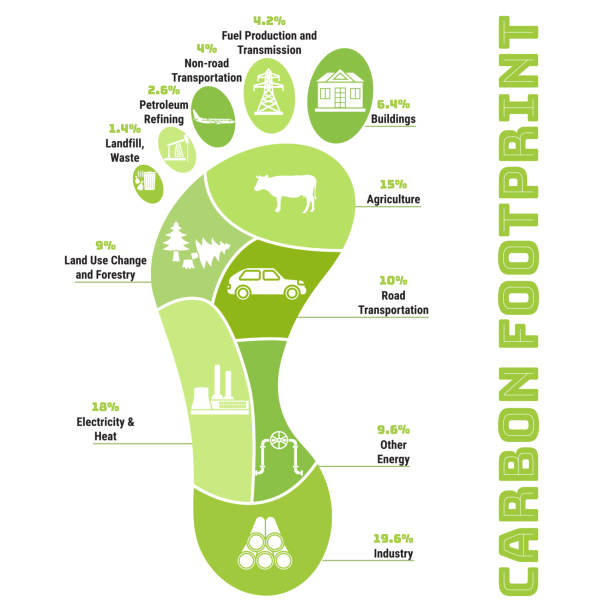
Ecological Footprints
The size and number inside each ecological footprint is a visual representation of how much land and natural capital (Earth’s resources) are taken up by a specific set of people.
Sustainability
IPAT formula: Evaluates human impact on finite natural resources (ex. fossil fuels).
I = P x A x T
I = impact
P = human population
A = affluence (level of consumption)
T = technology
Basically, if P, A, or T increase, then the impact gets worse.
Key takeaways: mankind uses more land per person than is available on the planet! Our global impact will only rise in the coming years.
Some thresholds for humanity to be aware of:
Biodiversity loss and climate change are already well past the healthy boundary.
Freshwater and land usage as well as stratospheric ozone depletion are thankfully not past the boundary yet.
To alleviate these problems, humanity must shift to clean energy, sustainable agriculture, universal fishing quotas, and collaborative water management.