prvi chapter bizza
1.1 The Nature of Business Activity
Purpose of Business Activity
Businesses use resources to meet customer needs by providing demanded products or services.
Stages of production involve adding value, making raw materials desirable to consumers.
Business activity is crucial for improving living standards beyond self-sufficiency.
Key Actions of Businesses:
Identify customer needs.
Purchase resources for production.
Produce goods/services to satisfy needs and aim for profit.
Factors of Production
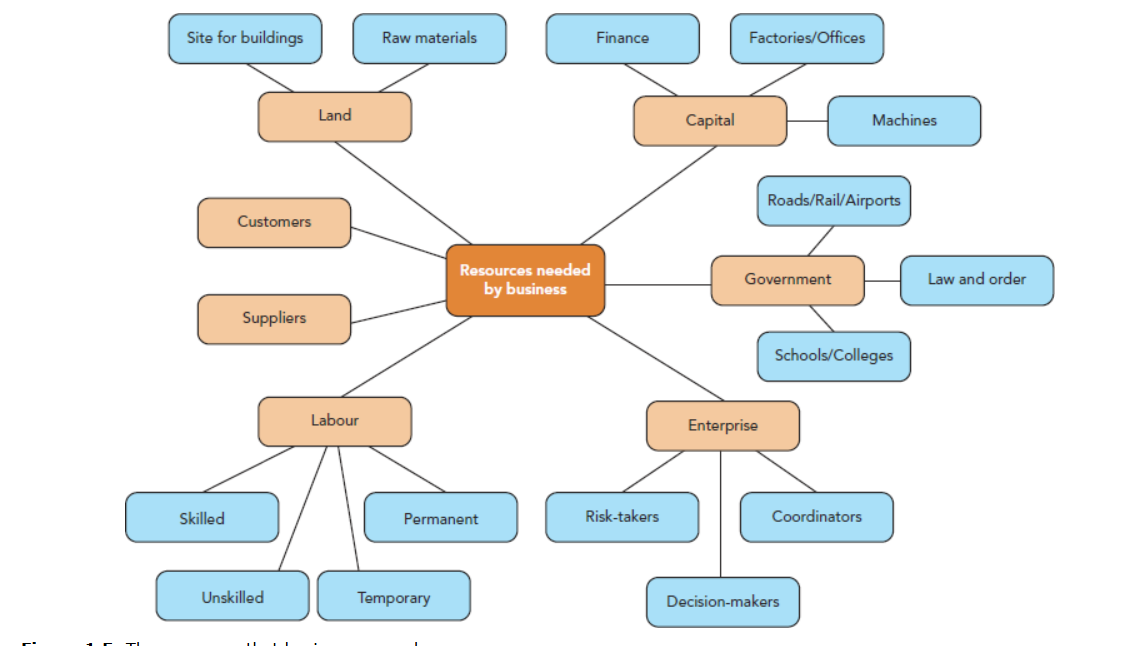
All businesses need resources termed factors of production:
Land: Includes land and natural resources like coal and timber.
Labour: Comprises manual and skilled workforce.
Capital: Refers to financial resources and manufactured resources (e.g., machines and vehicles).
Enterprise: Involves the initiative of entrepreneurs in coordinating other production factors.
1.2 The Concept of Adding Value
Businesses create value by selling goods/services for a price higher than the cost of materials.
Added Value is the difference between selling price and cost of materials.
Successful value addition exemplified in industries (e.g., jewellery shop with attractive displays vs. sweet manufacturer with branding).
Economic Activity and the Problem of Choice
Society faces wealth alongside scarcity; not all needs and wants can be satisfied.
Economic Problem: Limited goods and resources lead to necessary choices.
Opportunity Cost: Choosing one product over another results in lost value from the next preferred choice.
1.3 The Dynamic Business Environment
Business Risks: Changes like new competitors, legal changes, economic shifts, and technological advancements.
Success Factors:
Understanding customer needs, efficient operations, flexible decision-making, and sufficient finance.
Reasons for Business Failures
Poor record-keeping: Failing to maintain accurate records can lead to inefficiencies.
Lack of cash: Insufficient cash flow for day-to-day operations leads to failure.
Poor management skills: Lack of essential management skills can hinder business success.
Location constraints: Choosing an inappropriate location affects market access.
1.4 Local, National, and International Businesses
Local Businesses: Operate in defined regions, e.g., small shops.
National Businesses: Have operations across the country but no international presence.
International Businesses: Operate in multiple countries, often in different markets.
1.5 The Role of Entrepreneurs and Intrapreneurs
Entrepreneurs are essential for business start-ups and innovation. Their roles include:
Idea development, business planning, investment, management, and risk acceptance.
Qualities of Successful Entrepreneurs: Innovation, commitment, multi-skilled, leadership, self-confidence, and risk-taking.
1.6 Barriers to Entrepreneurship
Identifying Opportunities: Spotting viable business ideas is essential.
Capital Acquisition: Financial constraints are often the biggest barrier.
Location Costs: Expensive locations can hinder business operations.
Establishing Customer Base: New businesses must rapidly build a clientele.
Business Planning
Importance of Business Plans: Essential for clarity, finance application, and guiding actions.
Limitations of Business Plans: Relying solely on them could lead to missed opportunities due to external changes.
Purpose and Elements of Business Plans
Key Elements:
Executive summary, business opportunity description, marketing strategy, management team, operations, and financial forecasts.
Benefits: Evidence for investors, clear action plans, and helps in recognizing strengths and weaknesses.