gravitation
Newton's Law of Universal Gravitation:
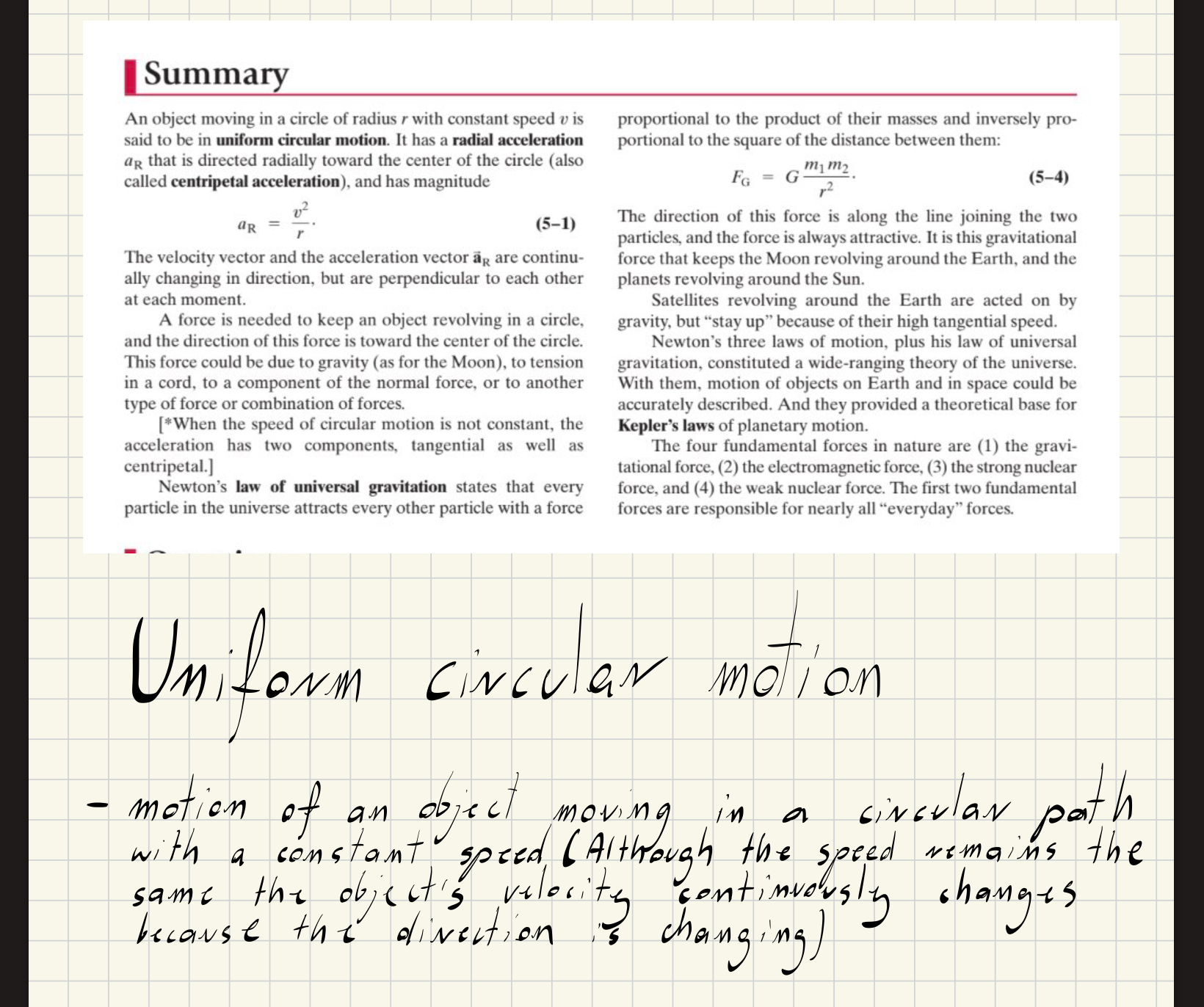
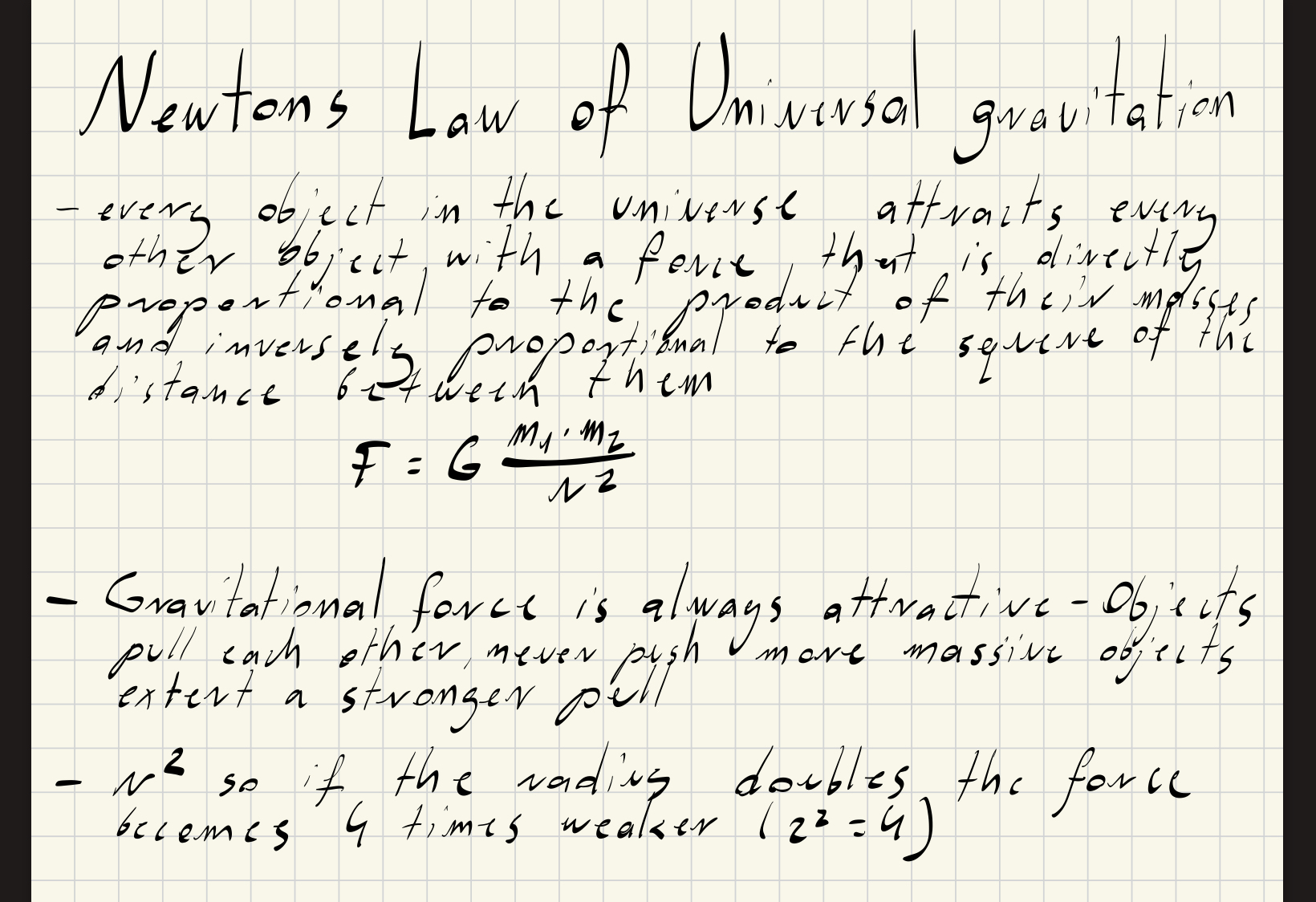
Proposed by Sir Isaac Newton in 1687, it states that every point mass attracts every other point mass in the universe with a force that is directly proportional to the product of their masses and inversely proportional to the square of the distance between their centers.
The formula is:[ F = G \frac{m_1 m_2}{r^2} ]where:
( F ) is the gravitational force between two masses,
( G ) is the gravitational constant (approximately ( 6.674 \times 10^{-11} \ m^3 kg^{-1} s^{-2} )),
( m_1 ) and ( m_2 ) are the masses,
( r ) is the distance between the centers of the two masses.
This law explains not only the attraction between objects on Earth but also planetary motions and orbits of celestial bodies.