Organizations and Organization Theory
Definition of an Organization
Organizations are formed when agents collaborate in a shared environment. This collaboration reflects the structure of interactions among agents engaged in tasks stemming from common goals, as noted by Singh (2005). They are defined as:
Social entities: Involves human interaction and relationships rather than merely the physical assets.
Goal-directed: Organizations are oriented towards achieving specific purposes, which guide their strategies and operations.
Deliberately structured and coordinated systems: Reflects intentional structuring to facilitate tasks and goals.
Linked to an external environment: Continually interacts with external factors that can influence operation and strategy (Robbins, 1989).
The concept underscores the importance of long-term commitment to cooperation (So & Durfee, 1993), emphasizing the need for coordination among agents to meet goals efficiently (Barber, 2001).
Major Stakeholders in Organizations
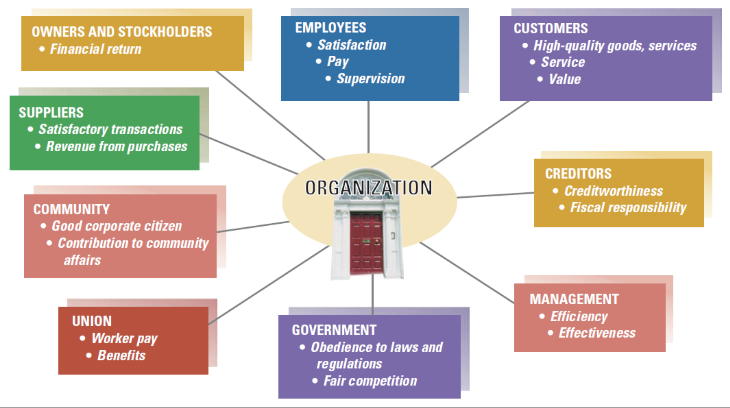
Understanding stakeholders is crucial for effective organizational management:
Owners and Stockholders: They seek financial returns and influence major business decisions, focusing on profitability and stability.
Employees: They desire job satisfaction, fair treatment, and a positive working environment, leading to improved productivity and morale.
Customers: Their needs for high-quality goods and services drive innovation and operational excellence.
Suppliers: Expect satisfactory transactions and mutual respect to ensure ongoingbusiness relationships.
Creditors: Look for adherence to financial commitments and stability for assurance of repayments.
Management and Unions: Management is focused on the efficiency and efficacy of operations, while unions advocate for worker rights and welfare.
Government: Expects compliance with laws and regulations to maintain order and protect public interests.
Community: Holds organizations accountable for corporate social responsibility, expecting contributions to local welfare and sustainability.
Organization as an Open System
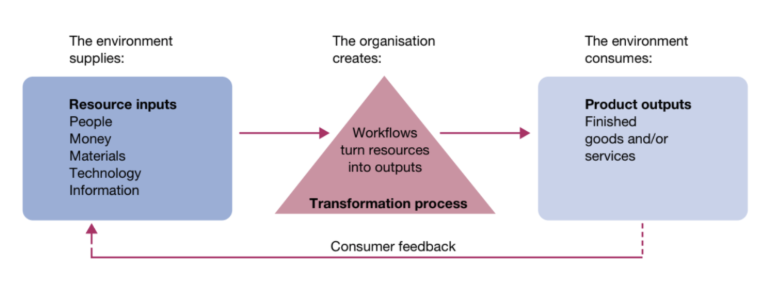
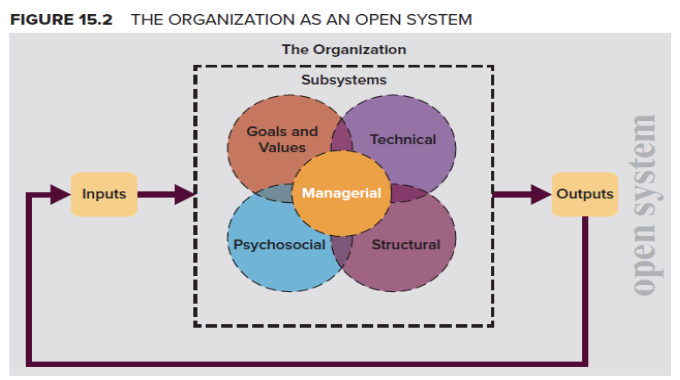
Organizations continuously interact with their surrounding environment, converting resource inputs into product outputs while being influenced by external factors.
External Environment
1. General Environment:
Includes broad/non-specific dimensions that can impact organizational strategy and decisions such as
Economic
Technological
Socio-cultural
Political-legal
International influences
2. Task Environment:
Consists of specific dimension that are likely to influence an organization, including
Competitors
Customers
Suppliers
Regulators
Labor
Owners
Strategic allies
Internal Environment
Board of Directors: Responsible for overseeing the management and ensuring it acts in the shareholders' best interests while providing strategic guidance.
Employees: Their shared values with management significantly enhance organizational efficiency, leading to a positive workplace culture.
Culture: Defines the organizational values and norms, which significantly influence employee behavior, productivity, and overall effectiveness.
Organizational Design
The first step for Understanding Organizations is to look at dimensions that describe apecific organizational design traits.
Organizational design refers to the characteristics that define how an organization operates and its efficacy in meeting goals.
Structural Dimensions of Organizations
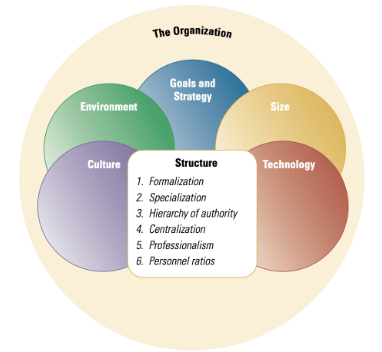
Focus on the internal characteristics of an organization. Structural Dimensions include:
Formalization: The extent of documented procedures and policies governing employee behavior and decision-making.
Specialization: The degree to which tasks are divided among staff, affecting efficiency and expertise.
Hierarchy of Authority: Defines the reporting structure within the organization.
Centralization: Refers to the concentration of decision-making authority at the upper levels of management or its distribution across all layers.
Professionalism: Level of training and education among employees, impacting performance and service quality.
Personnel Ratios: Deployment of labor across various functions to optimize productivity and efficiency.
Contextual Dimensions of Organizations
Focus on the whole organization. Contextual Dimensions include:
Size: Measured as a whole or specific components, such as plant or division.
Organizational Technology: Refers to the tools, techniques, and actions used to transform inputs into outputs.
Environment: Includes all elements outside the boundary of the organization.
Organization’s Goals and Strategy: Define the purpose and competitive techniques that set it apart from the organizations.
Organization’s Culture: Refers to the shared values, beliefs, and norms that influence the behavior of individuals within the organization.
Organizational Structure
Organizational Structure refers to the arrangement of positions in an organization and the authority and responsibility relationships among them.
Traditional vs Non-traditional
Traditional Structure
Keywords: formally, clearly defined, mechanistic, bureaucrastic.
Examples:
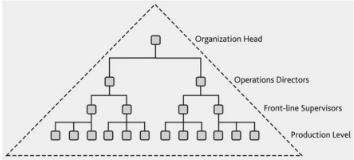
Bureaucratic: Features a defined authority hierarchy and strict work procedures
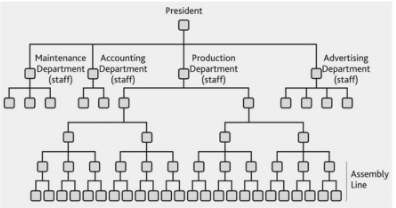
The Line-Staff Organizational Structure: composed a group of employees who achieve the goals of the organization (the line) and another group of employees who support the line (staff)
Non-Traditional Structures:
Keywords: less formalized, flexible, adaptable, collaborative, emphasize team-based approaches, group decision-making.
Example:
Project Task Forces: Temporary teams assembled to achieve specific objectives, allowing adaptability in addressing diverse projects.
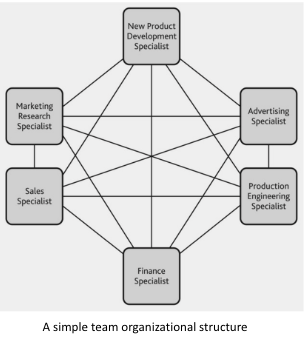
Team Organization: Focuses on collaborative efforts for achieving particular goals, facilitating employee engagement and innovation.
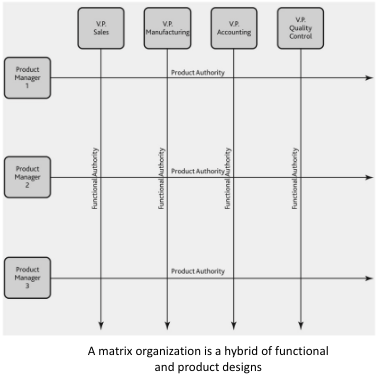
Matrix Organization: Combines functional and project-based structures to ensure flexibility and responsiveness to changing demands.
Contingency Models
Recognizes that structural needs may vary based on context and output requirements, advocating for different approaches based on specific organizational challenges.
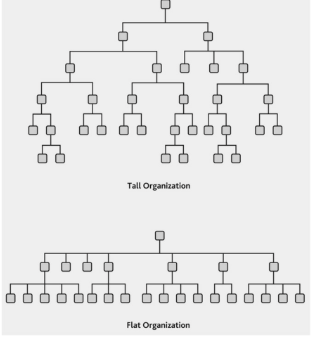
Chain of Command and Span Control:
Represented in the organizational chart. Indicate authority lines (The chain of command) and reporting relationships between management and employees (The span of control).
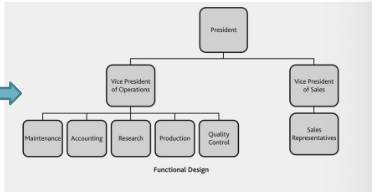
Functional vs Divisional Structures:
Functional Structure: group people according to the business functions they performed
Divisional Structure: group people according to the products or services, customers or clients, or geographical locations they serve.
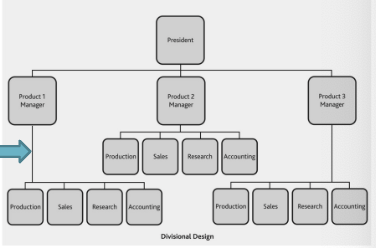
Differentiates between grouping by business functions vs. products/services.
Centralized vs Decentralized Structures:
Centralization: the degree to which decision-making authority is concentrated at higher levels of management, leading to uniformity in decision-making across the organization.
Decentralization: the distribution of decision-making authority to lower levels of management, allowing for more localized and flexible responses to issues and opportunities within the organization.
Discusses the concentration of decision-making authority versus its spread across various management levels.
References
Daft, R. L. (2010). Organization theory and design.
Riggio, R. E. (2015). Introduction to industrial and organizational psychology.
Kreitner, R., Kinicki, A., & Buelens, M. (2001). Organizational behavior.