Structure of Cells
Atoms → Molecules → organells → cells
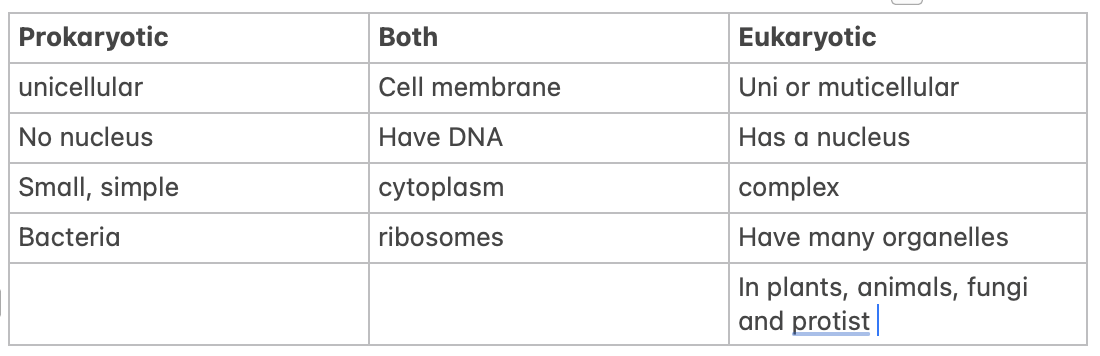
Two Types of Cells → Prokayotes and Eukaryotes
Prokaryotes
bacteria
unicellular
oldest living thing
do not contain nuclei
small simple cells
Eukaryotes
plants, animals, fungi and protists
uni or multicellular
contain nuclei
larger
many orangells with own membranes
highly specilized for their function
All Cells have
Boundaries
Cell membrane
outermost layer in plants, fungi and prokayotes
supports and protects the cell
Cell membrane
controls materials entering and leaving the cell
supports cells
Cytoplasm
gel like substance that fills the cell
cyto → cell
site of many chemical reactions
Ribosomes
proteins are assembled
proteins are necessary for all of the chemical reactions in cells (enzymes)
DNA
induces the instructions on how to make the proteins necessary for life processes