Week 7 Pre-Work Applications of Newton's Laws
Applications of Newton's Laws
Friction
Friction is always present when two solid surfaces slide along each other.
Kinetic Friction
Sliding friction is called kinetic friction.
Approximation of the frictional force:
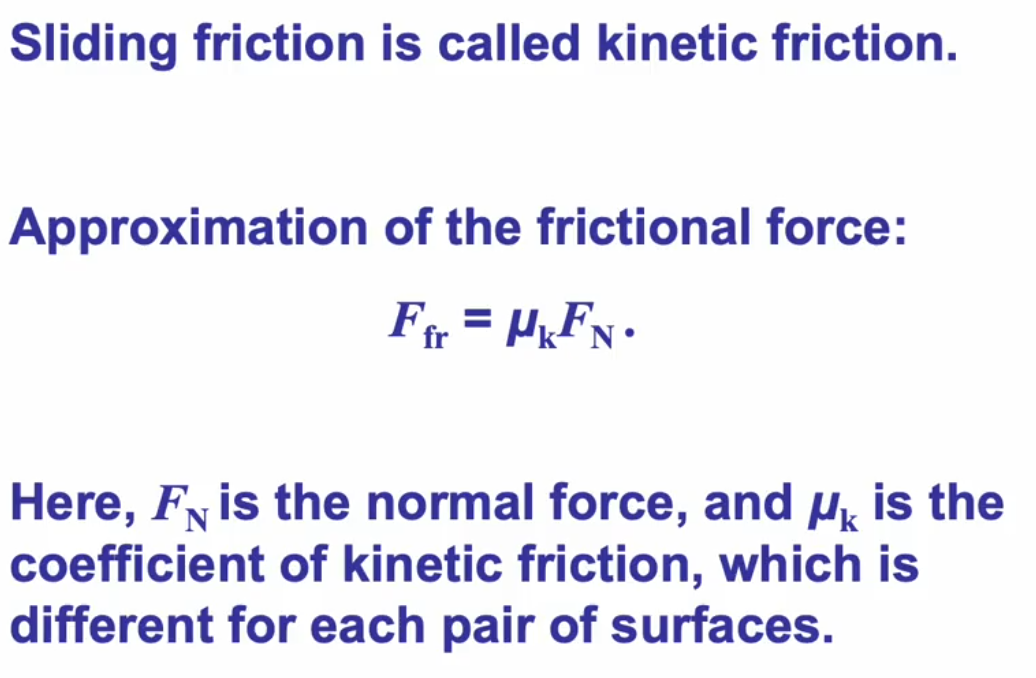
is the normal force.
is the coefficient of kinetic friction, which is different for each pair of surfaces.
acts in opposite direction to what it is travelling in
Static Friction
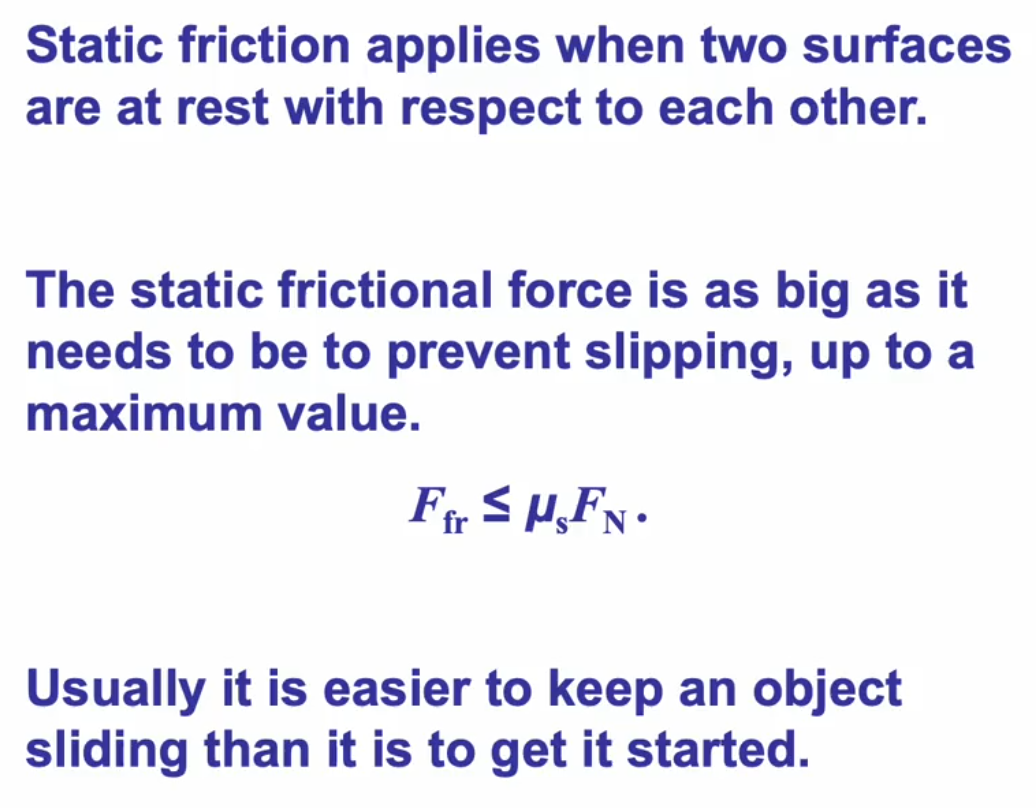
Static friction applies when two surfaces are at rest with respect to each other.
The static frictional force is as big as it needs to be to prevent slipping, up to a maximum value:
Usually, it is easier to keep an object sliding than it is to get it started.
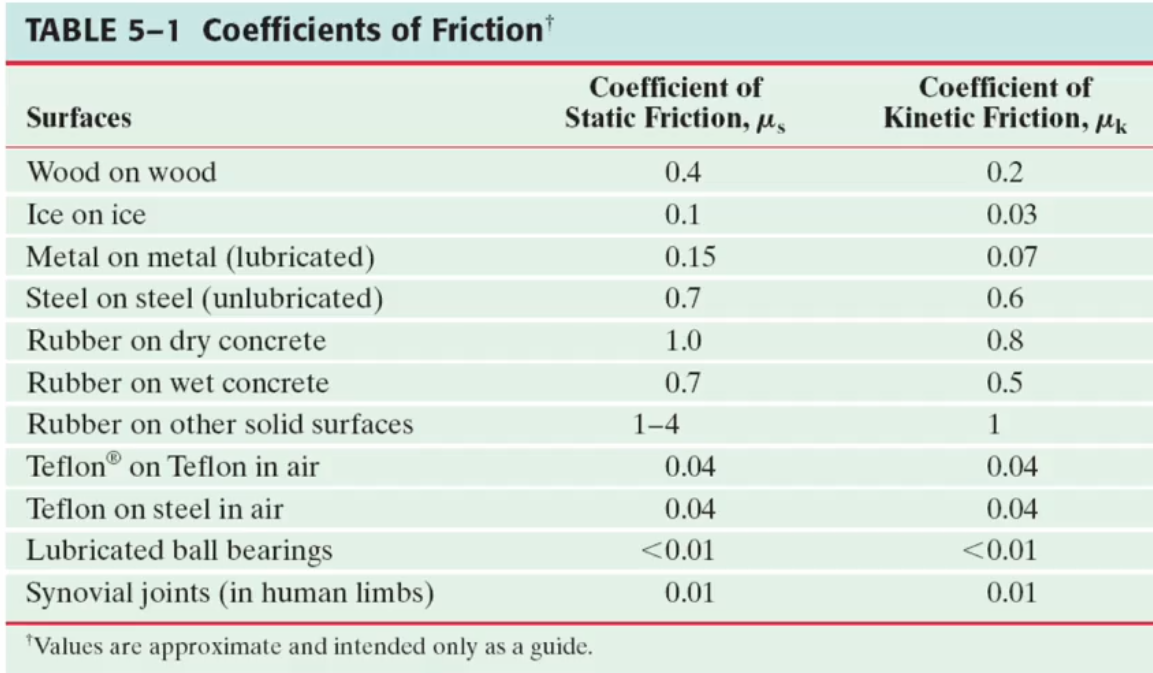
Coefficients of Friction
Uniform Circular Motion
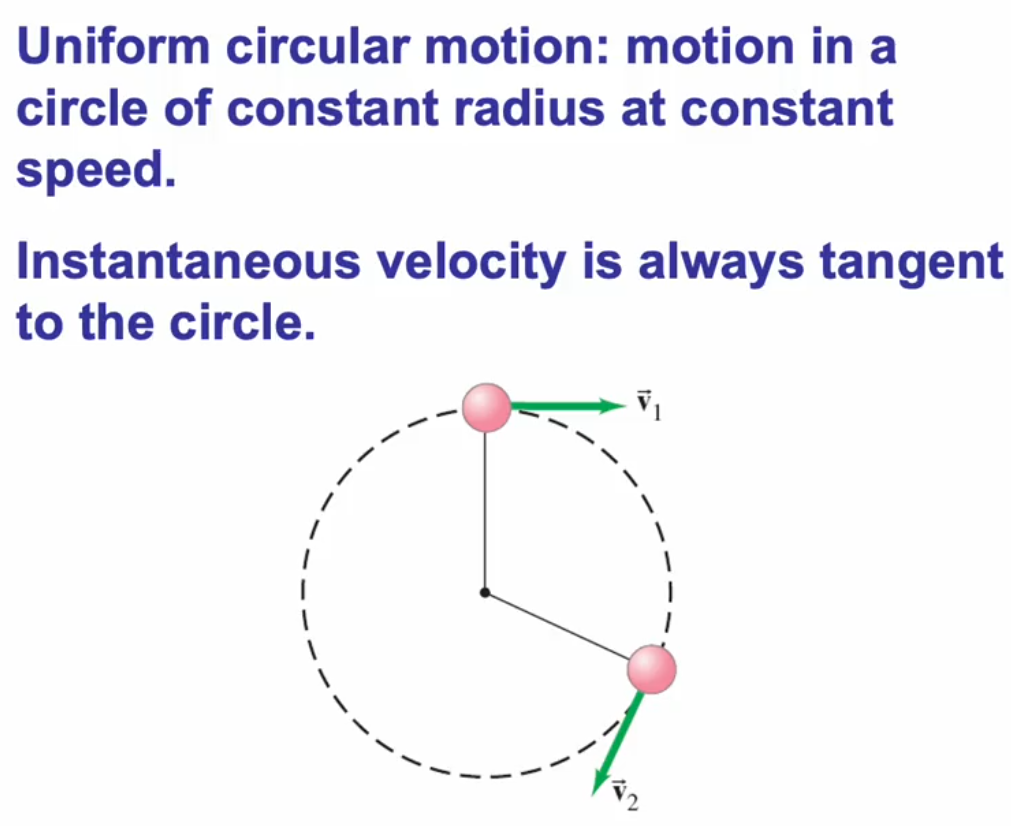
Uniform circular motion: motion in a circle of constant radius at constant speed.
Instantaneous velocity is always tangent to the circle.
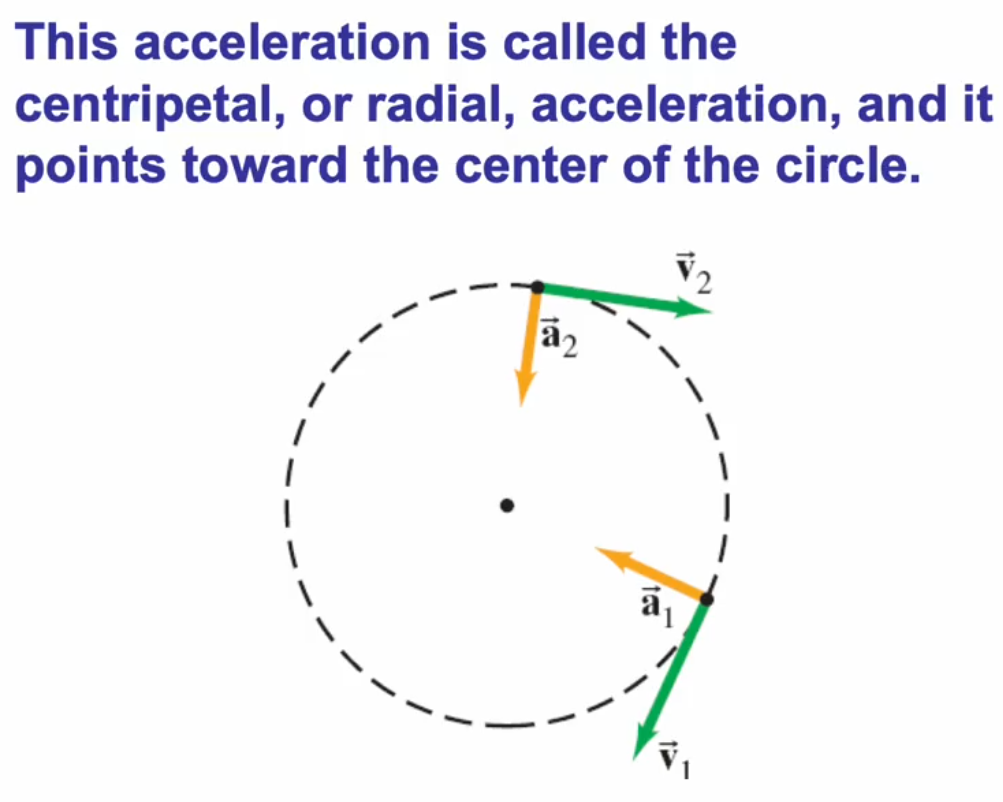
Centripetal (radial) acceleration points toward the center of the circle.
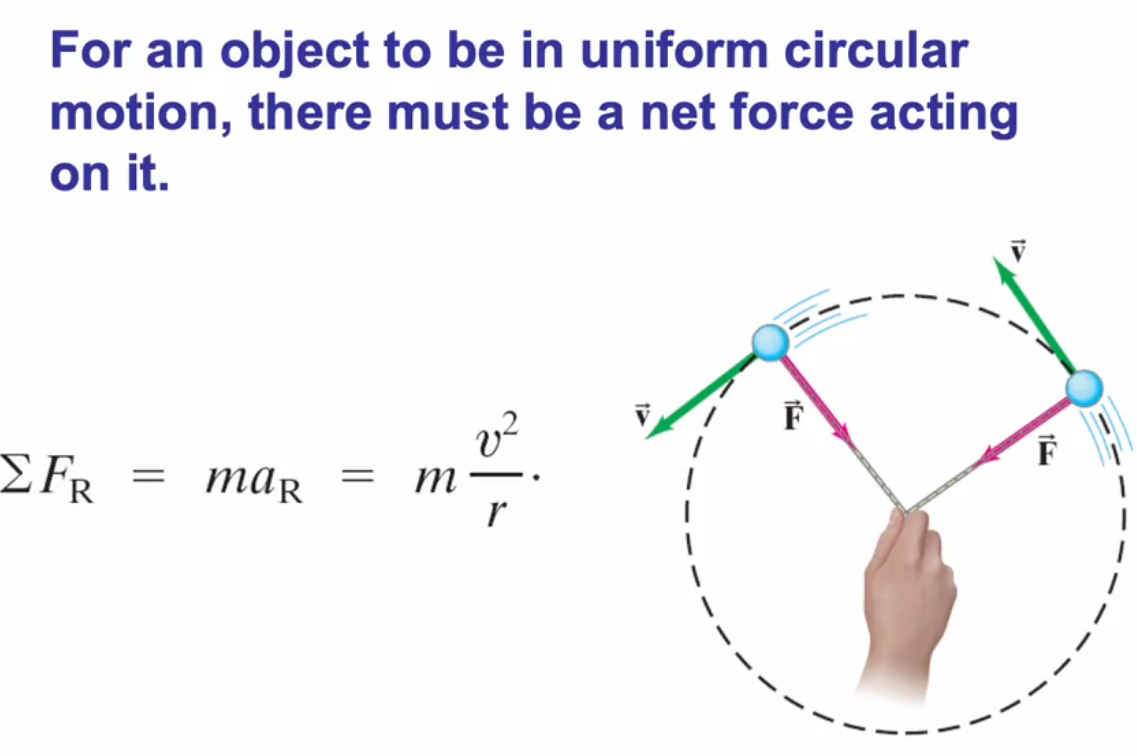
For an object to be in uniform circular motion, there must be a net force acting on it.
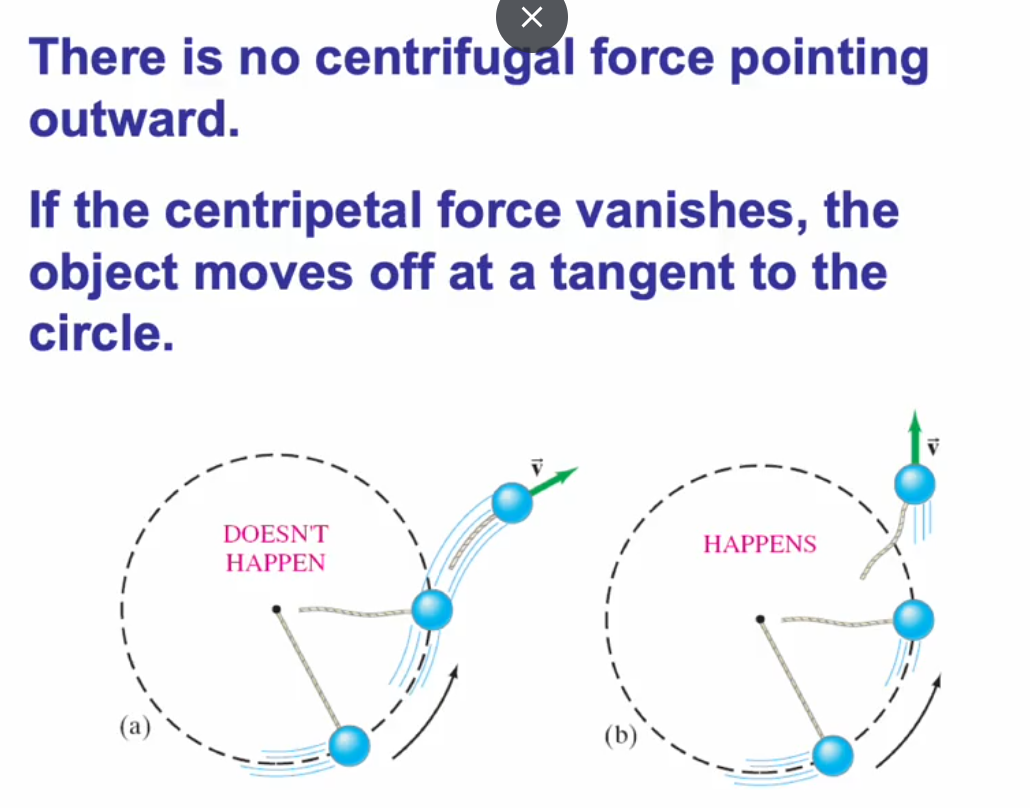
There is no centrifugal force pointing outward.
If the centripetal force vanishes, the object moves off at a tangent to the circle.
Highway Curves
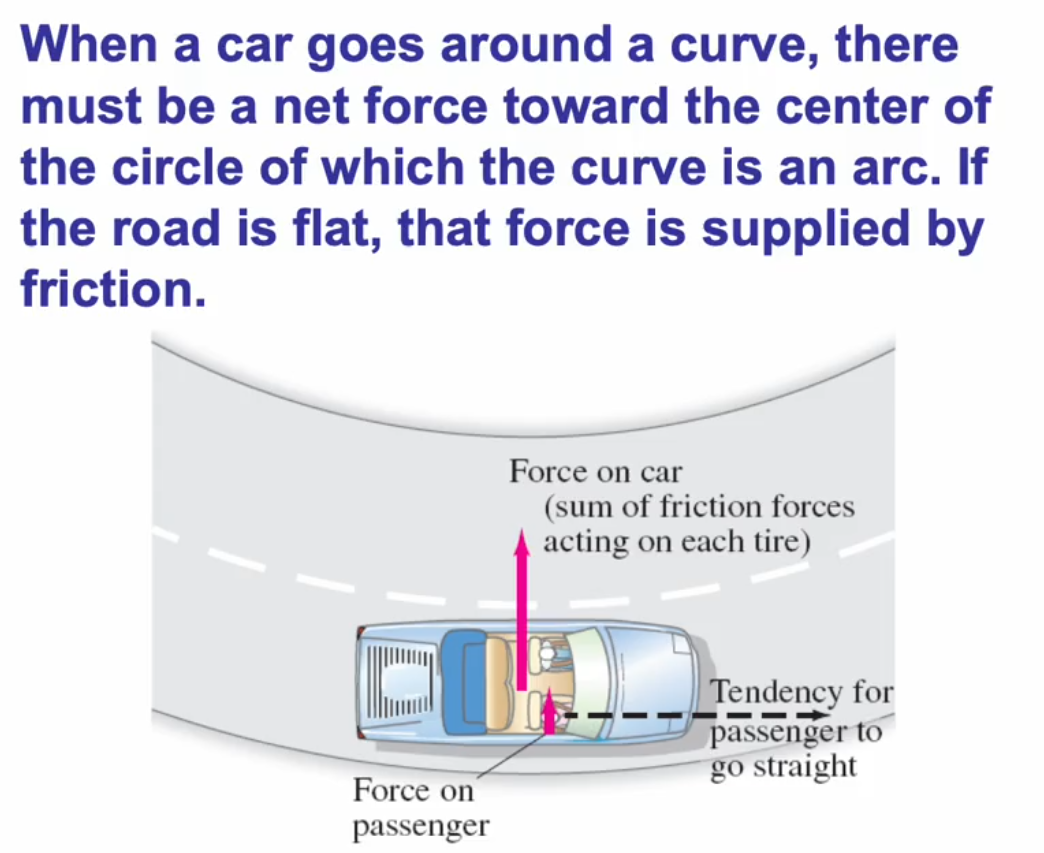
When a car goes around a curve, there must be a net force toward the center of the circle.
If the road is flat, that force is supplied by friction.
If the frictional force is insufficient, the car will tend to move more nearly in a straight line (skidding).
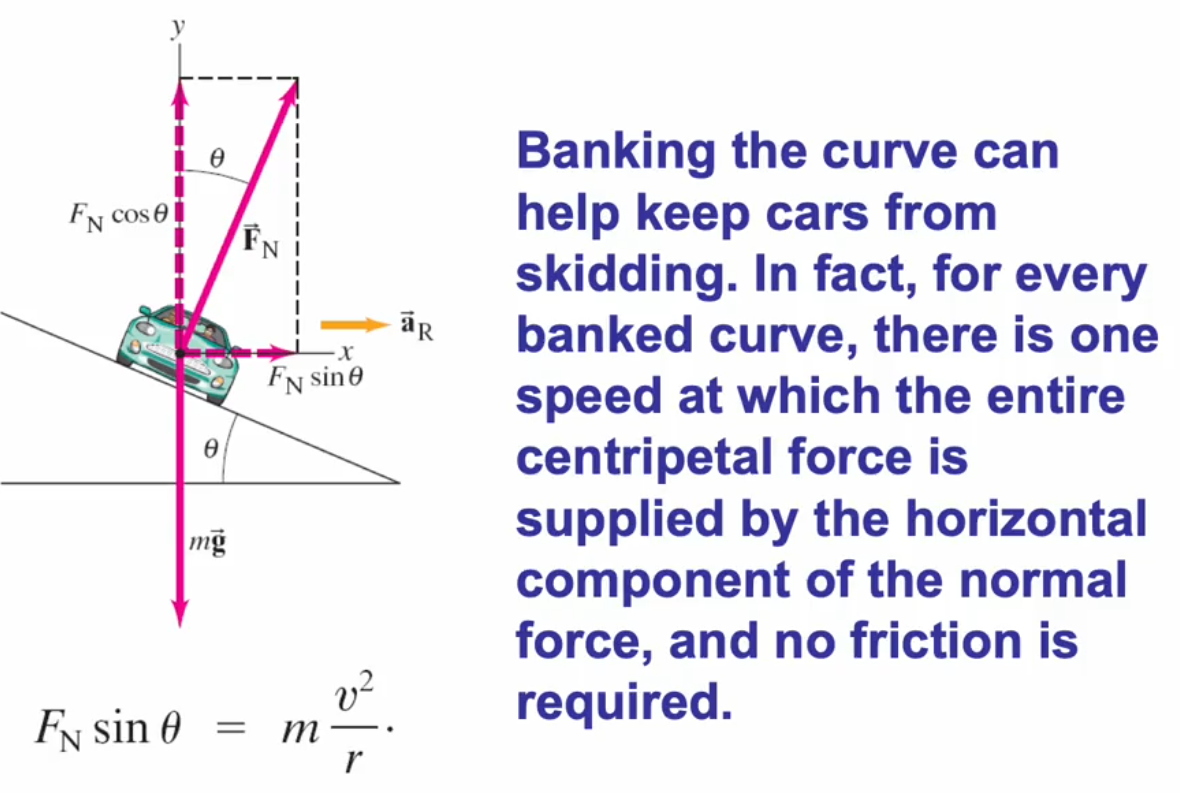
Banking the curve can help keep cars from skidding.
For every banked curve, there is one speed at which the entire centripetal force is supplied by the horizontal component of the normal force, and no friction is required.
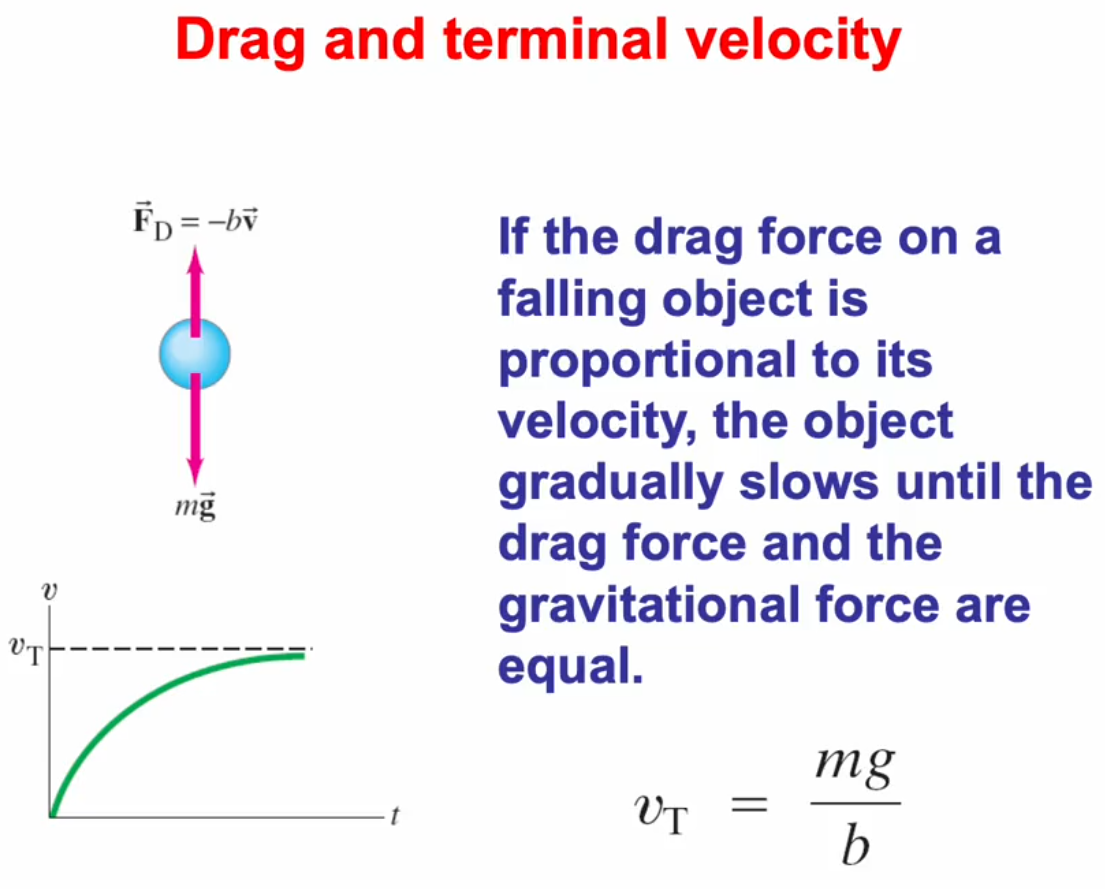
Drag and Terminal Velocity
When an object moves through a fluid, it experiences a drag force that depends on the velocity of the object.
For small velocities, the force is approximately proportional to the velocity; for higher speeds, the force is approximately proportional to the square of the velocity.
If the drag force on a falling object is proportional to its velocity, the object gradually slows until the drag force and the gravitational force are equal.