Memory: Brain Structures, Processes, and Types in Psychology
Major Brain Structures Involved in Memory
Key Brain Structures
The hippocampus is crucial for memory formation and storage, playing a significant role in converting short-term memories into long-term ones.
Other brain regions involved include the amygdala, which processes emotional memories, and the prefrontal cortex, which is important for working memory.
Memory Definition and Nature
Memory is defined as learning that persists over time, but it is not a perfect recording of events; rather, it is a reconstruction that can be influenced by various factors.
The malleability of memory means that it can change over time, influenced by new experiences or information.
Key Terms/Concepts
Memory: The ability to store and retrieve information over time.
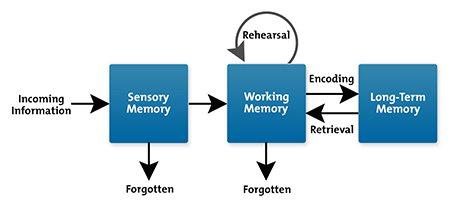
Encoding: The process of transforming what we perceive, think, or feel into an enduring memory.
Storage: The process of maintaining information in memory over time.
Retrieval: The process of bringing to mind information that has been previously encoded and stored.
Sensory Memory: A type of storage that holds sensory information for a few seconds or less.
Key Brain Structures
Hippocampus: Heavily involved in memory formation and storage.
Key Memory Processes
Encoding: Transforming sensory input into a form that can be stored.
Storage: Maintaining encoded information over time.
Retrieval: Accessing stored information when needed.
Key Memory Stores
Key Memory Failures & Disorders
Amnesia: Memory loss due to damage or trauma.
Anterograde Amnesia: Inability to form new memories.
Retrograde Amnesia: Inability to retrieve old memories.
Alzheimer’s Disease: A progressive disease that destroys memory and other important mental functions.
Facts to Memorize
Hippocampus is crucial for memory storage.
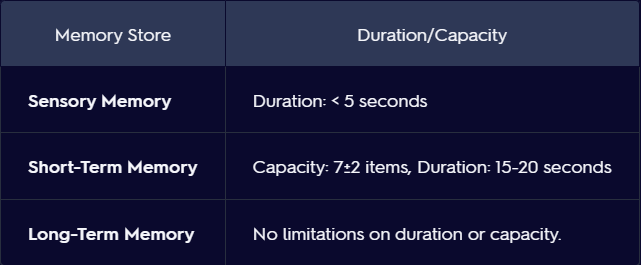
Sensory memory lasts less than 5 seconds.
Short-term memory capacity is 7±2 items and lasts 15-20 seconds.
Long-term memory has no limitations on duration or capacity.
Types of long-term memory: Explicit (semantic and episodic) and Implicit (procedural).
The Serial Position Effect: Primacy and Recency effects in memory retrieval.
Reference Information
Iconic Memory: visual information lasting about 1/4 second.
Echoic Memory: auditory information lasting 2-3 seconds.
Consolidation: process by which memories become stable in the brain.
Reconsolidation: process that makes memories vulnerable to disruption upon recall.
Problem-Solving Steps
Steps to Improve Memory Retention:
Encoding: Use semantic, visual imagery, or organizational encoding to relate new information to existing knowledge.
Storage: Utilize rehearsal techniques to maintain information in short-term memory.
Rehearsal: Mentally repeating information.
Chunking: Grouping information into larger, manageable units.
Retrieval: Use retrieval cues and context to enhance recall of stored memories.