Evolution
The grand unifying theory.
Heliocentric theory: Earth and the other planets orbit the Sun.
→ Why? Law of Universal Gravitation.
Plato → Each species has a fixed eidos, and each individual is an approximation of that essence.
Aristotle → Scala Natura, there is a superior specie.
Linnaeus developed the Systema Naturae, a classification system to track species, grouping them according to their godly value.
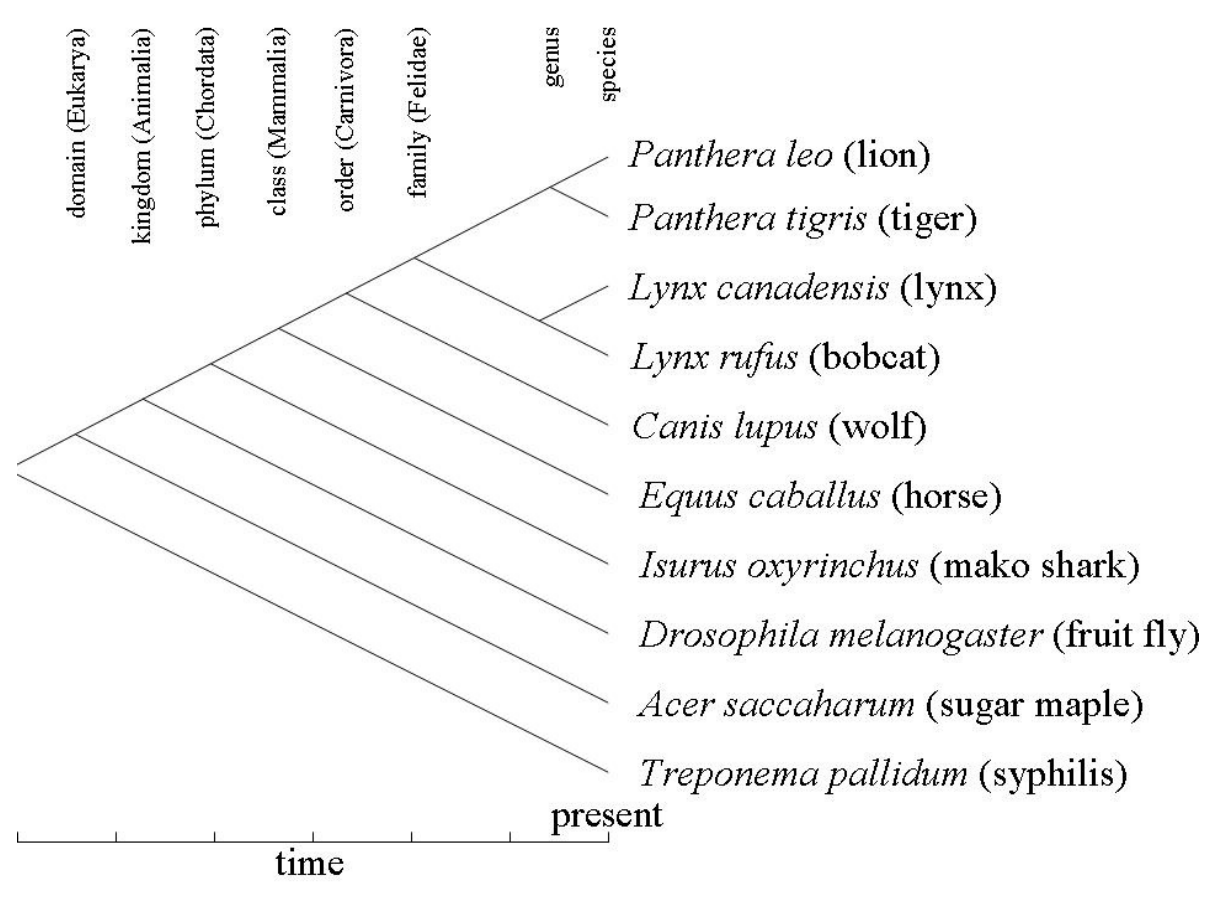
Linnaean classification system
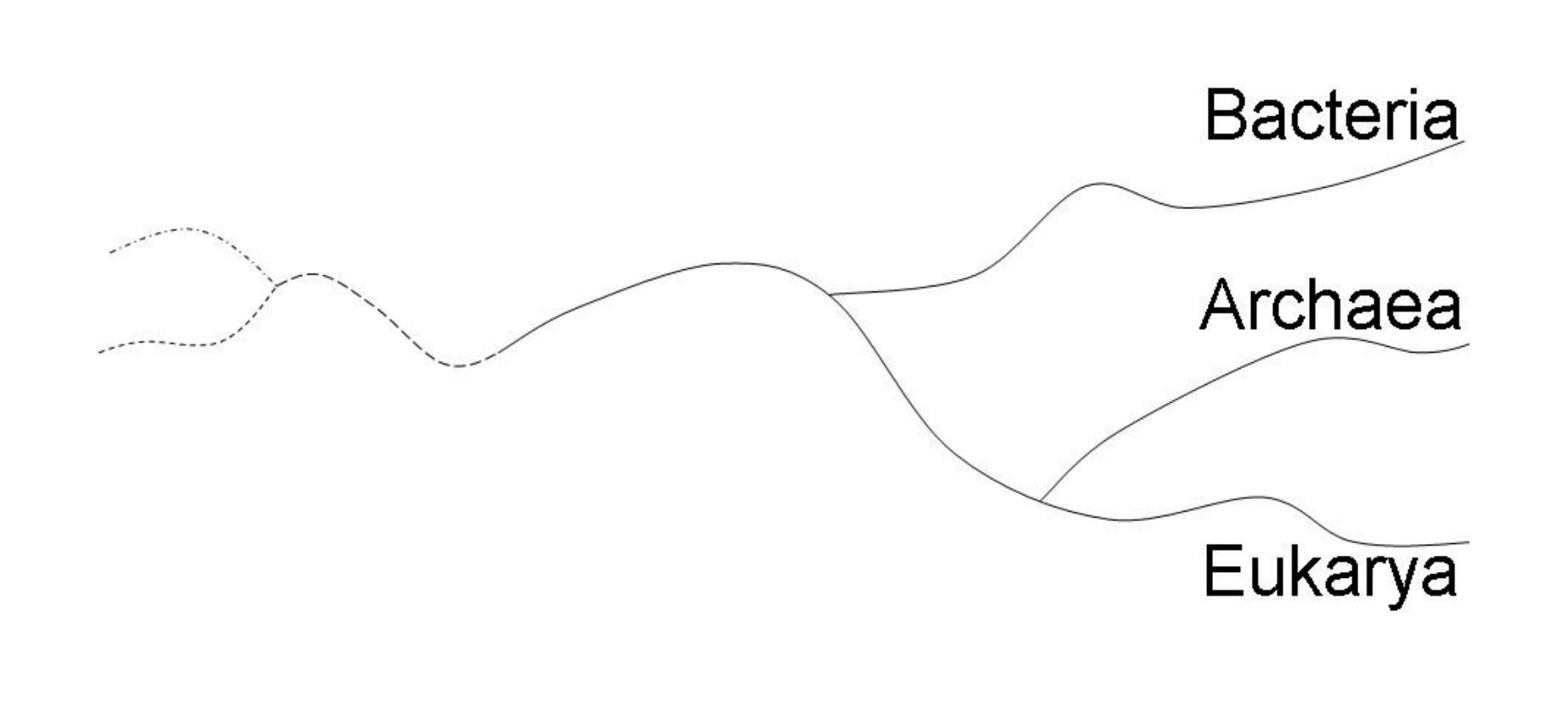
Domain: Eukarya, Archaea, Bacteria
Kingdom: Kingdoms fall within domains. Within Eukarya, there are Animalia, Plantae, Fungi, etc.
Phylum: Subgroups from a kingdom. Eg. Chordata, Echinodermata, etc.
Class: Mammalia, Aves, Crocodilia, Amphibia, Dipnoi, etc
Order: Primates, Rodentia, Cetacea, etc
Family: Homnidae, Hylobatidae, etc
Genus: Homo, Pan, Gorilla, Pongo
Species: Homo sapiens, H. erectus, H. habailis
Lamarck questioned Plato’s theory of fixed eidos:
- New species arise by spontaneous generation.
- Each species evolves up the Scala Naturae.
- Species may evolve adaptations due to the inheritance of acquired characteristics.
Chambers publishes the Vestiges of the Natural History of Creation, where he:
- Rejected Lamarck’s ideas.
- Transmutation:
- No mechanism or pattern proposed.
Darwin and Mendel established the groundwork for genetics and evolution.
Evolution: An inheritable change from one generation to the next in the characteristics of individuals in a population.
Evolution is observed in organisms that have changed genetically. Different physical traits do not necessarily indicate evolution, there can be no genetic difference.
The History of Life on Earth: Living things have evolved by descent with modification from common ancestors.
Earliest forms of life appeared around 3 billion years ago.
We share ancestors in common with other living things.
Natural Selection: A functional association between individual traits and average reproductive success.
Darwin’s Observations:
→ Organisms differ from each other.
→ Some of the differences among organisms are inherited.
→ More organisms are produced than survive to reproduce in their turn
Some of the variations among organisms will affect their ability to survive and reproduce.
Natural Selection is when organisms with certain characteristics tend to produce more offspring than other organisms in the same population. If natural selection acts on a characteristic that is inherited, then evolution may result.
If natural selection acts on a characteristic that is inherited, then evolution may result.
The Evidence for Evolution
The Fossil Record
Fossils are mineralized remains of organisms.
Evolution does not predict that there will be fossilization (a geological process).
Evolution predicts a pattern: any fossils found will be consistent with descent with modification from common ancestors.
Each of the billions of fossils found is a test of evolution.
→ Earth formed about 4.5 billion years ago.
→ Oceans formed 4 billion years ago.
→ Earliest form of life (prokaryotes) 3.5 billion years ago
→ Oxygen accumulates in the ear by 2.5 billion years ago.
→ Evidence of early eukaryotes forming 2 billion years ago.
→ Multicellular organisms 1.5 billion years ago.
→ Around 700 million years ago animals started to form.
- Fossil chordates 600 million years ago
→ Later on some fungi starts to appear.
- Jawless fish like organism 500 million years ago
→ After, some fossils of plants.
- Fossil jawed fish 400 million years ago
- amphibians 350 million years ago
- fossil reptiles 300 million years ago
- fossil mammals 250 million years ago
- Within the last 50 million years, fossil primates, fossil apes (30), fossil hominids (5), fossil homo (3), fossil homo sapiens 150 thousand years ago.
Bottom line - the observed pattern of fossil evolution is what we would expect.
Fossil transitions. A transitional fossil is found in between species.
Comparative Anatomy
Homologous structures: demonstrate common descent.
→ Structures in different species that are similar because of common ancestry.
Vestigial structures: demonstrate descent with modification.
→ A feature of an organism that is a historic remnant of a structure that
served a function in the organism’s ancestors.
Superfluous embryonic structures: Demonstrate descent with modification.
Agrees with fossil record and biochemical evidence.
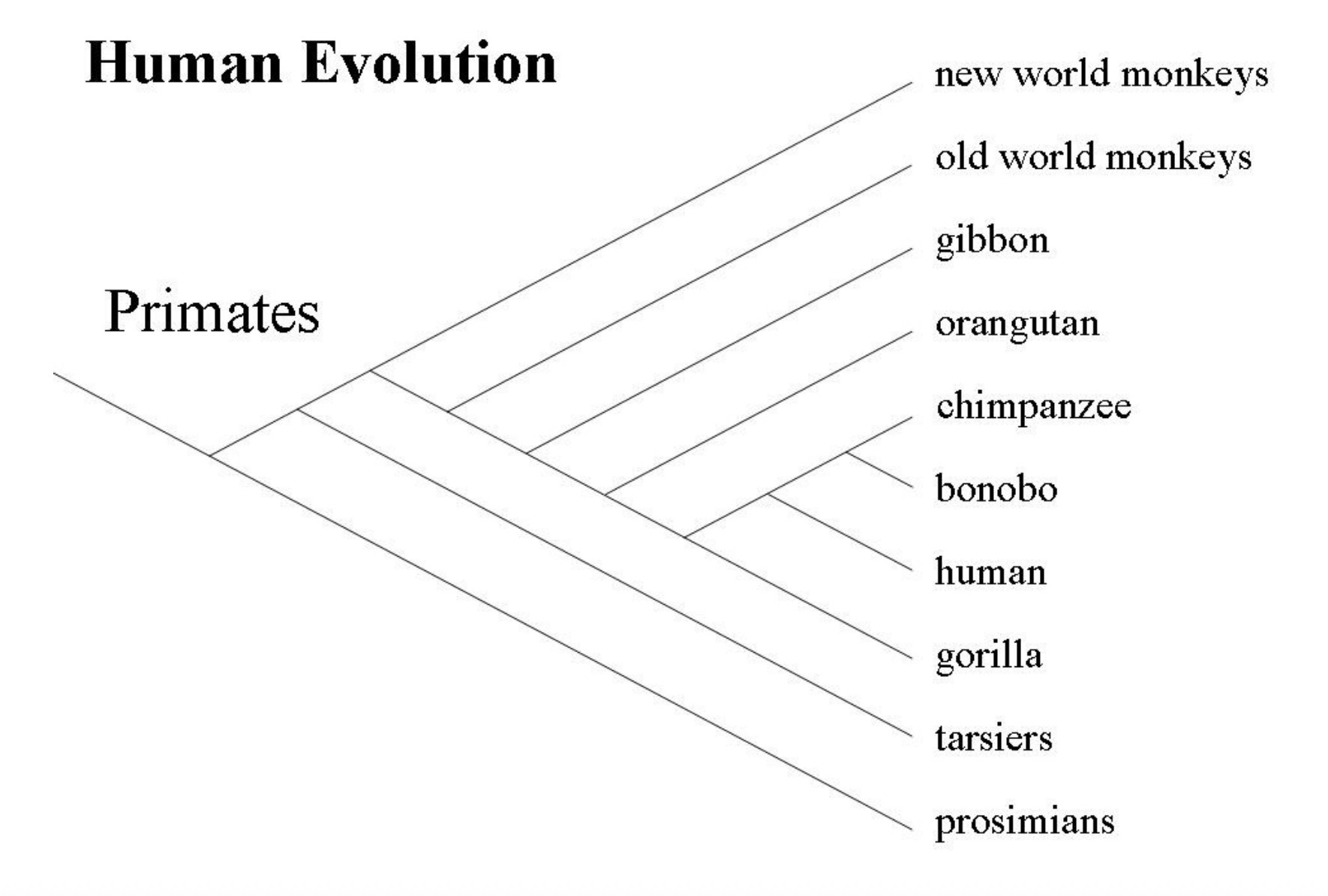
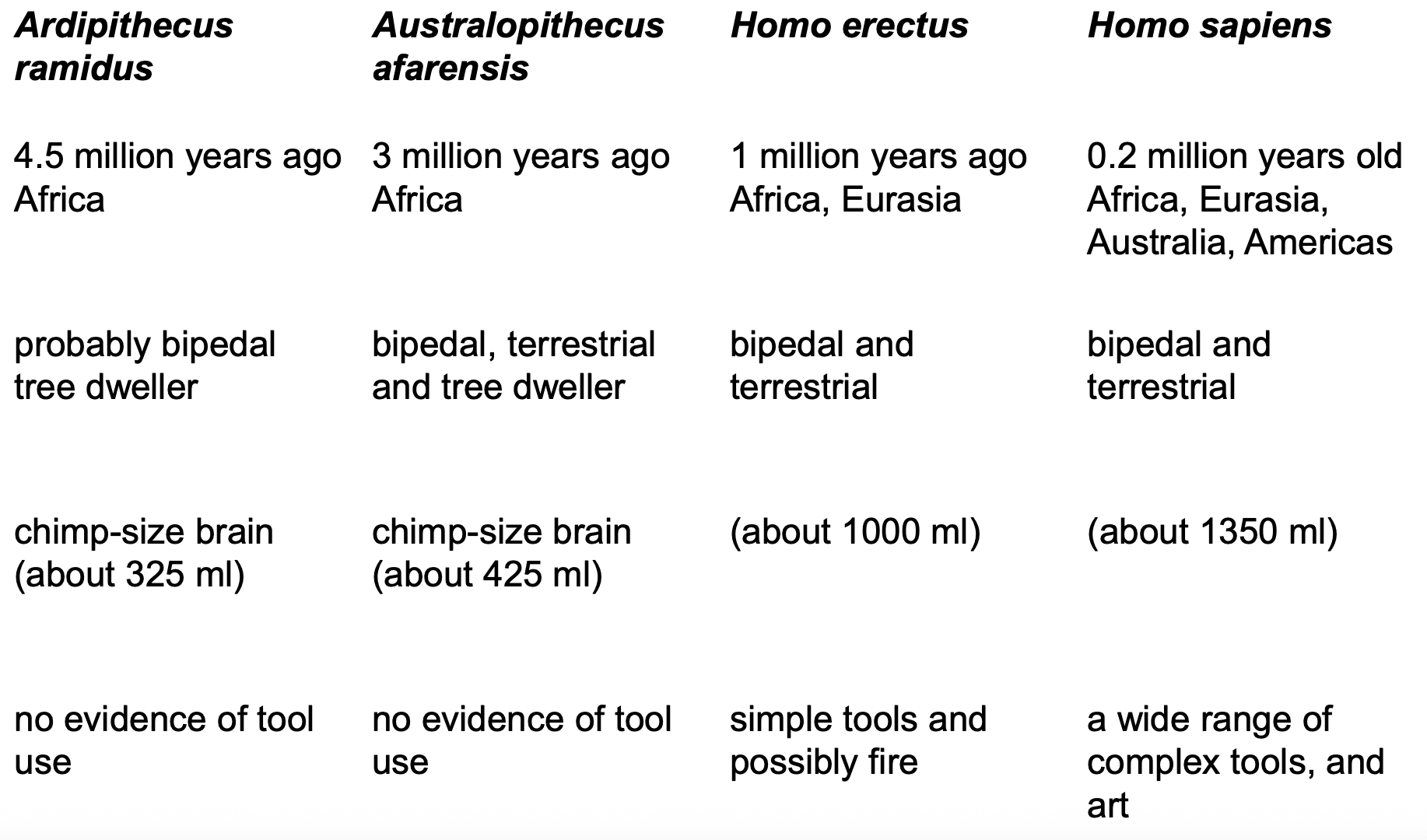
Human Evolution
Natural Selection
Evolution may also be defined as a change in allele frequency over time.
Organisms differ from each other, they are variable.
Some of the differences among organisms are inherited.
Some of the variations among organisms will affect their ability to survive and reproduce.
Natural Selection
→ When organisms with certain characteristics tend to produce more offspring
than other organisms in the same population.
- If natural selection acts on a characteristic that is inherited, then evolution may result.
- Natural selection does not result in evolution if the characteristic is not inherited.
- Natural selection does not necessarily result in evolution even if the characteristic is
inherited.
Modes of Selection:
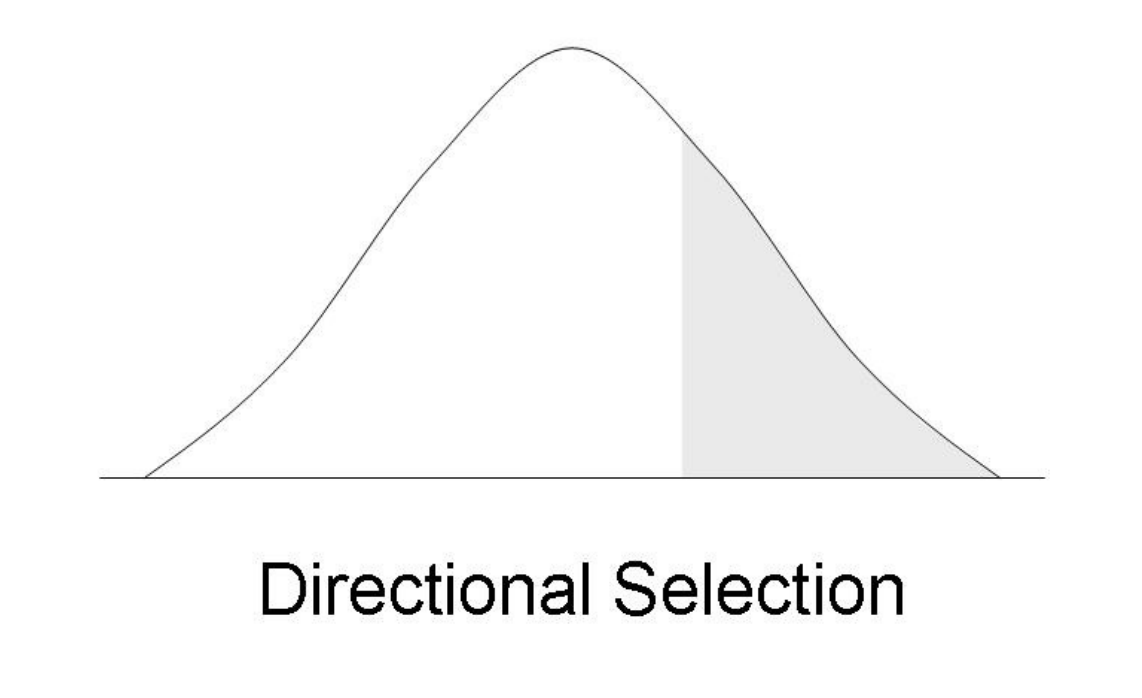
Directional Selection: Natural selection in which individuals at one end of the phenotypic range survive or reproduce more successfully tan do other individuals.
→ Implies you are better off at one of the ends.
→ Evolution will proceed.
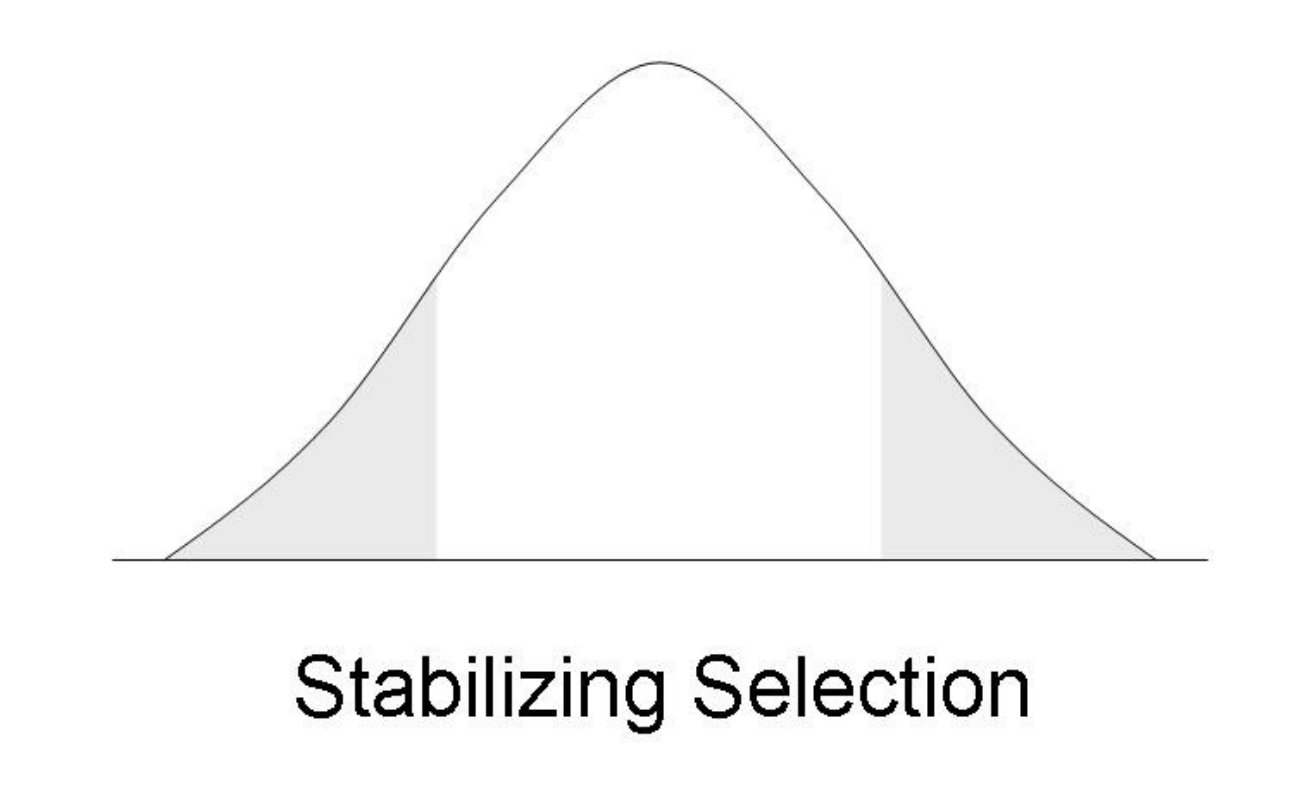
Stabilizing (Balancing) Selection: Natural selection in which intermediate phenotypes survive or reproduce more successfully than do extreme phenotypes.
→ Implies is the middle range that has the best change at reproduction.
→ Doesn’t lead to evolution generally.
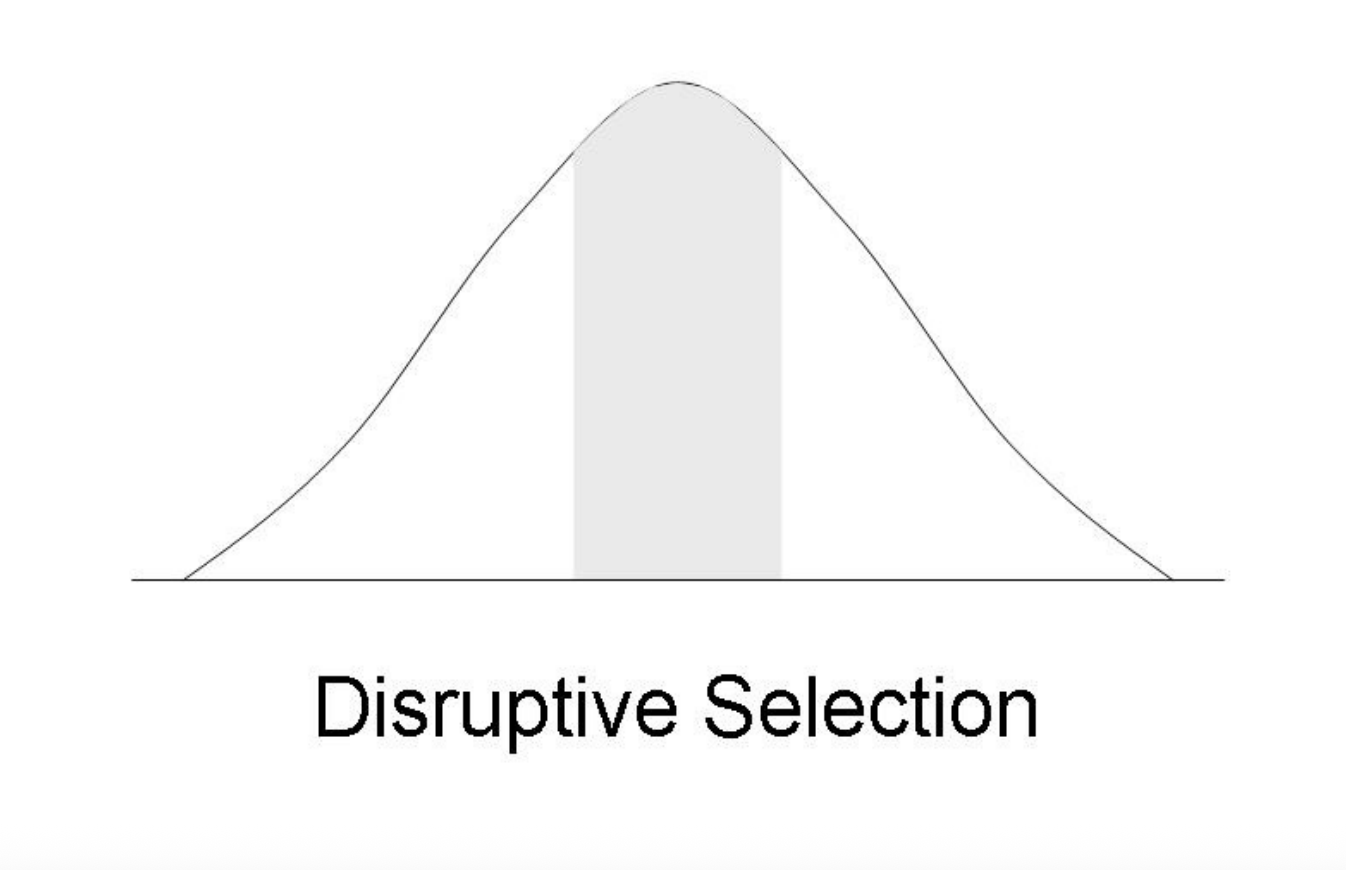
Disruptive Selection: Natural selection in which individuals on both extremes of a phenotypic range survive or reproduce more successfully than do individuals with intermediate phenotypes.
→ Implies that the intermediate values are not good.
- Natural selection is the result of different rates of reproduction.
- Natural selection often acts through survival, because the individual generally must survive
to reproduce.
- Natural selection can act directly through reproductive rate.
In sexually-reproducing organisms, natural selection can also act through access to mates: Sexual Selection.
Natural selection (including sexual selection) is the only known mechanism that drives the
evolution of adaptations.
Adaptation: Inherited characteristic of an organism that enhances its survival and reproduction in a specific environment.
Evolution may also be driven by Genetic Drift.
Genetic Drift: Changes in allele frequency due to chance.
Evolution by natural selection is an opportunistic process.
It is not a perfecting process.
New genetic variation come from mutation.
Common descent?
Speciation: The evolution of reproductive isolation within an ancestral species, resulting in two or more descendant species.
→ geographic isolation (physically separated)
→ once separated, each group can go through independent evolution
→ gradual reproductive isolation (this will allow groups to become more and more different)
Species: No one definition for species. Speciation is often gradual. After many generations, perhaps interbreeding is still possible but sometimes fails.
→ Biological Species Concept: A species is a group of organisms that can potentially interbreed successfully. (only applies to sexual reproducing organisms)
Proposed RNA world origins.
-RNA forms. (from clay)
-Ribozymes catalyse RNA replication.
-RNA catalyses protein synthesis.
-RNA encodes both DNA and protein. (in phospholipid layers)
-Protein catalyze. (forms a cell membrane)
Biochemistry
Pseudogenes.
Universality of DNA as the genetic material.
Universality of codons.
Pattern of genetic similarity among related groups, even in non-coding DNA.
Eg. A two ton carnivorous aquatic whale is more genetically similar to a sheep than it is to a two ton carnivorous aquatic fish.