Immune System
Key Terms
Purpose
To protect the individual (and survival of the population) from a range of threats that could alter homeostasis:
– Bacteria (not all are bad!)
– Viruses
– Fungi
– Parasites
– Foreign cells
– Cancer cellsTo clean the body ie. clearing up dead, damaged or misfunctioning cells
To aid healing after injury
WBCs (leukocytes) have an important role in defence and immunity

Lymphoid organs

Functions
Non-specific defence
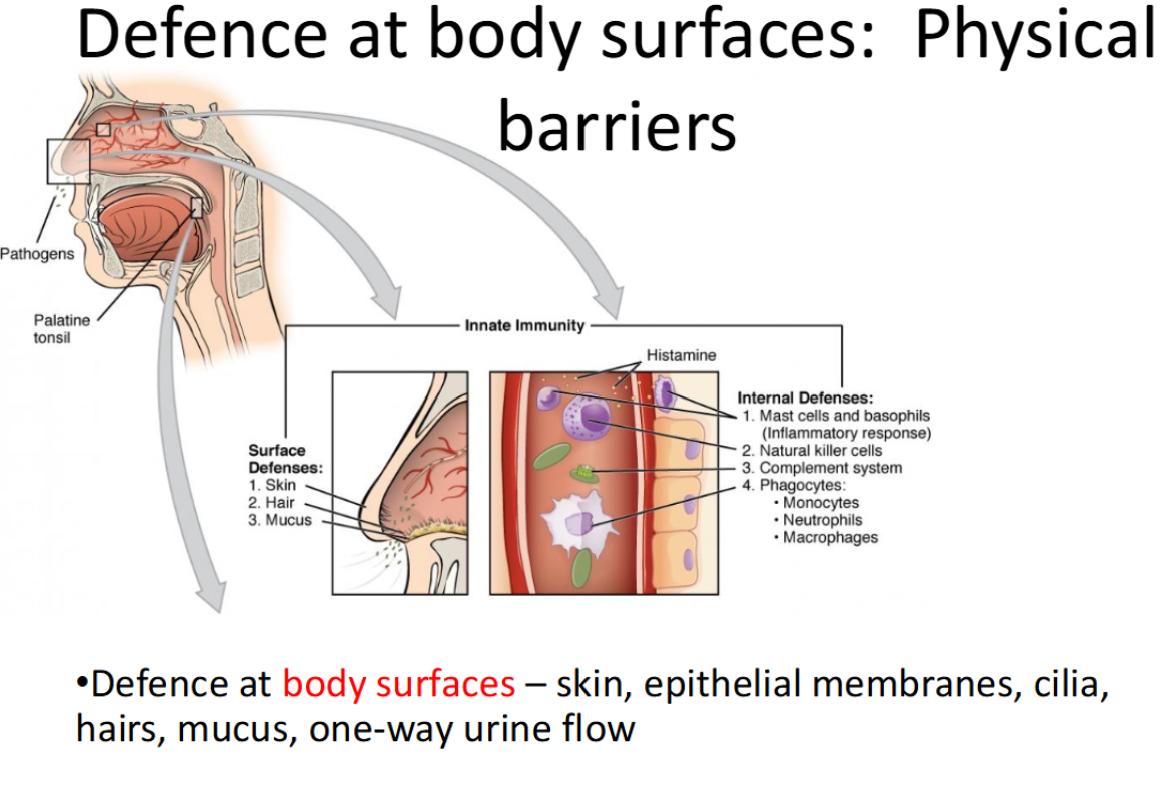
– Defence at body surfaces
• Physical barriers: skin, mucus, hair, cilia
• Natural antimicrobial substances ie. some chemicals / enzymes:
HCl, lysozyme, Ab, saliva, interferons, complement
– Innate immune cells:
• Phagocytosis: Macrophages, granulocytes
• Immune surveillance: natural killer cells
– Inflammation
Specific defence
– Adaptive immune system:
• Cell mediated immunity (T-lymphocytes)
• Humoral (Ab) immunity (B-lymphocytes)
Innate immunity
Features
fast
non-specific
different trigger
Generic
same response
Defence at body surfaces
•Physical barriers
•Natural antimicrobial substances
Innate immune cells
•Phagocytosis
•Immunological surveillance
Inflammation
Physical Barriers
Antimicrobial substances
Natural antimicrobial substances
lysozyme (tears)
saliva
HCl normal gut
skin flora
pH of urine (acidic)
pH and flora of vagina
sweat,
made by the adaptive immune system and switch on the innate immune system
Ab - antibodies
interferons - made my T- cell
complement

Innate Immune system
Phagocytes
professional phagocytes - Macrophages, neutrophils and dendritic cells are all considered
engulf, break down and present its products to the adaptove immune system
•Phagocytes endocytose and digest pathogens.
•They also activate the adaptive immune system by presenting small particles on MCH-II.