P4: electricity and magnetism
Ends of magnetics are poles
north and south pole
magnetic forces are strongest at poles
like poles repel
opposite poles attract
→ non-contact force
Uses:
Permanent:
compasses
toys
fridge magnets
Electromagnets:
MRI scanners
speakers and earphones
Magnetic materials: iron, cobalt, nickel, steel
will always be attracted to the magnet (regardless of poles)
magnet → repelled by known magnet
magnetic material → attracted to known magnet
non-magnetic material → not attracted/repelled
Permanent magnets: made of permanent magnetic materials like steel. Produces its own magnetic field.
Temporary (induced) magnetism: material with a soft iron core → becomes a temporary magnet when placed in a magnetic field
force of attraction between permanent magnet → magnetised
end close to the magnet will have opposite pole of the magnet
removed → lose its magnetism
Magnetic fields: a region in which a magnetic pole experiences a force
becomes weaker as the distance from the magnet increases
→ magnetic field lines get further apart
Magnetic field lines: an arrow indicating the direction of field line
shows the direction that the magnetic force would act
always north. → south
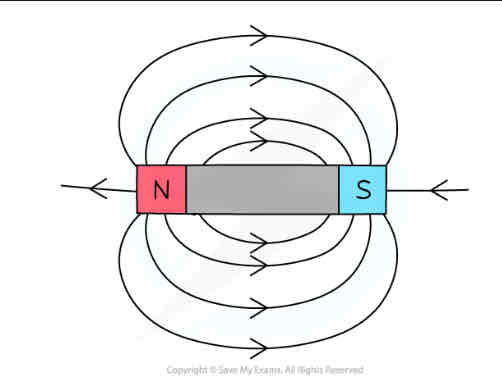
Strength of magnetic field is shown by spacing of the magnetic filed lines
close: strong
far: weak
Electric charge
Charging by friction: insulating solids that are rubbed together → electrically charged
One gains a positive charge
electrons move away from the object
one gains a negative charge
gains electrons
→ both objects are attracted to each other
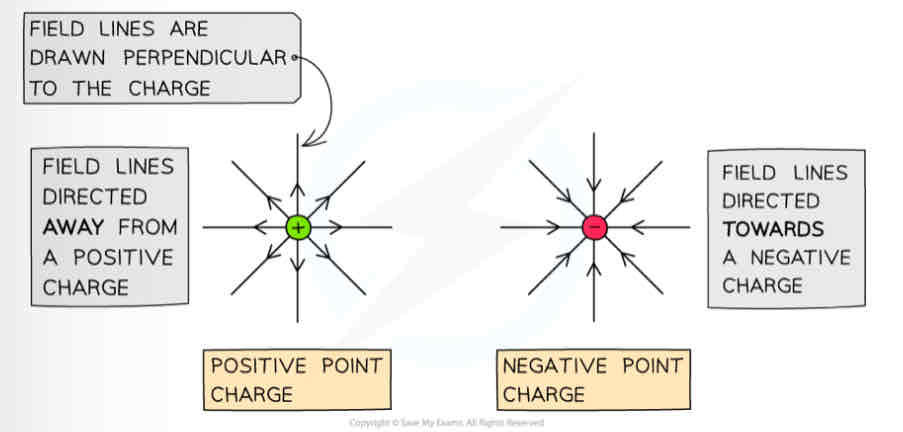
Electric fields: a region of space in which an electric charge experiences a force
Direction of an electric field: direction of a for e on a positive charge at that point
used to represent the direction and magnitude of an electric field
positive → negative
Conductors: a material that allows charge to flow
silver
copper
aluminum
steel
Insulators: a material with no free charges → does not allow the flow of charge
rubber
plastic
glass
some can only conduct charge in the form of static electricity
Current
The flow of positive charge (conventional current): positive terminal → negative terminal
opposite direction to electron flow
current flows: when a circuit forms, charge flows from positive terminal → negative terminal
measure using an ammeter (A) and in amps
connected in series
digital or analogue
wires in an electric circuit are made of metal (good conductor of electric current
current is a flow of negatively charged electrons in wires
I = Q/t
Q = charge in coulombs (C)
I = current in amps (A)
t = time in seconds
Electromotive force (e.m.f)
electrical work done by a source in a moving unit charge around a complete circuit
measured in volts (V)
E = W/Q
E = e.m.f in volts
W = energy transferred to the charges from the power source in joules (J)
Q = charge moved in coulombs
Potential difference
Work done by a unit charge passing between two points in a circuit
measured in volts (V) using voltmeter in parallel with component
electrons flow through a cell → gain energy
electrons flow through a circuit → lose energy
V = W/Q
v - potential difference (V)
W - energy transferred to the components in Joules (J)
Q - charge moved in coulombs (C)
1V = 1 J/C
Ohm’s law
Resistance: the opposition to current
Occurs when free electrons in the circuit collide with metal ions in the wire → slow down the flow
Higher resistance → lower current
Can be increased by adding resistors
directly proportional to length
longer wire → greater resistance (more ions)
inversely proportional to cross-sectional area
thicker wire → smaller resistance (more space to flow)
Current and resistance are inversely proportional
R = V/I
R - resistance in ohms
V - potential difference (V)
I - current (A)
Resistors are used to control:
current in branches of the circuit
potential difference across certain components
Current decreases as resistance increases
p.d increases as resistance increases
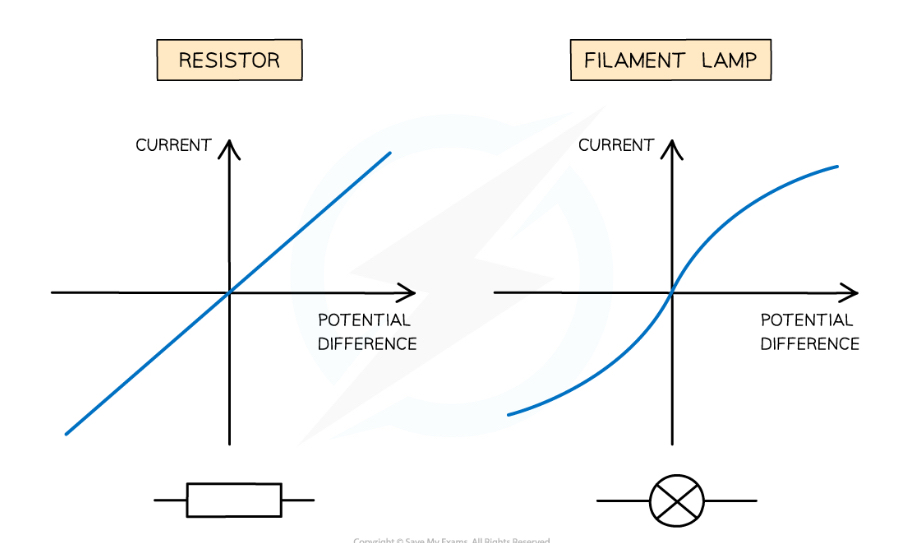
Current-voltage graphs
current - p.d → linear
current - voltage → non-linear
Electrical energy
amount of energy transferred by an electrical appliance depends on:
how long it runs for
power rating of the appliance
E = VIt
E - energy (J)
V - p.d (V)
I - current (A)
t - time (s)
Electrical power
The rate at which energy is transferred by an appliance
P = E/t
P - power (W) or (J/s)
E - energy transferred (J)
t = time (s)
Power dissipated by a component:
P = IV
P - dissipated power (W)
I - current (A)
V - p.d (V)
Circuit components
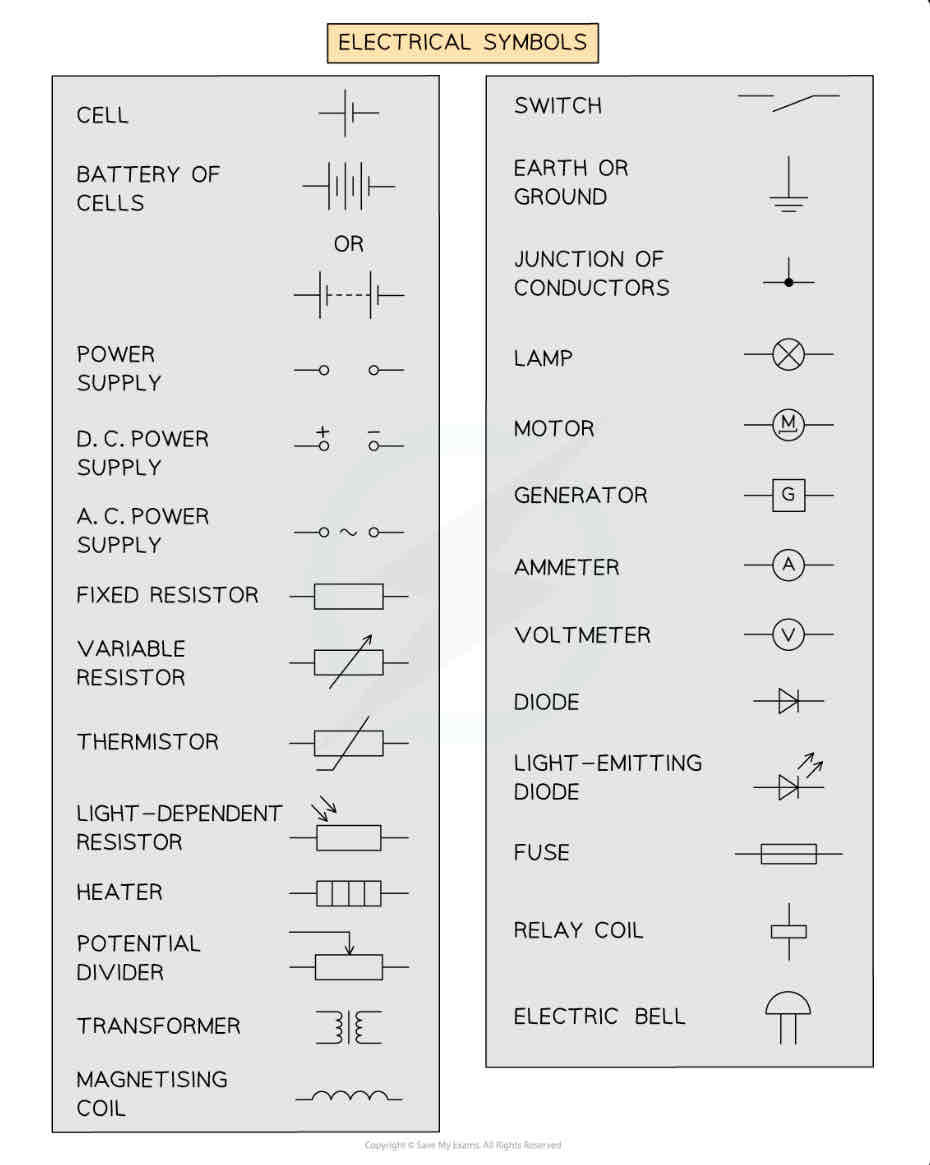
Fuses: protect expensive components from current surges and act as a safety measure against fire
Diodes: only allows a current in one direction
Current in series circuits: same value at any point
all components in a closed-loop have the same current
increasing voltage drives more current around the circuit
increasing components increases resistance→ less current flows through the circuit
Current in parallel circuits: current splits along each branch → current from the source is larger than current in each branch
amount of current flowing into junctions is equal to the amount of current flowing out (charge is conserved)
doesnt always split equally
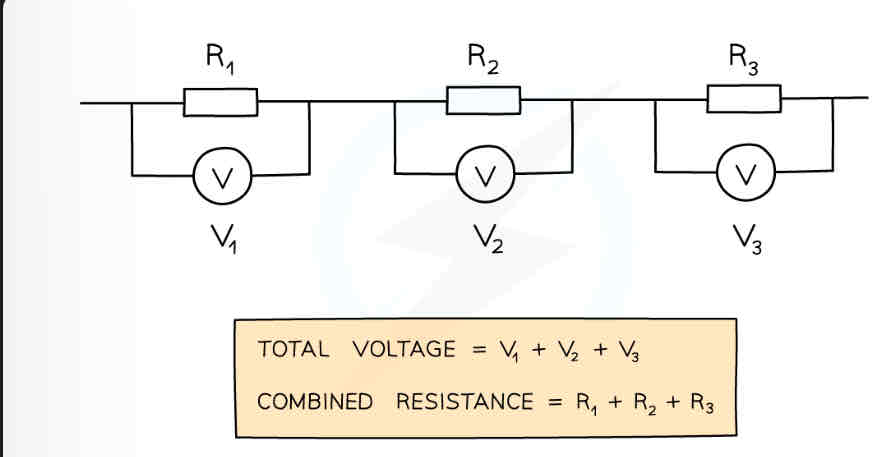
P.d in series circuits
sum of p.d across components is equal to the total e.m.f
P.d in parallel circuits
The potential difference across each branch of a parallel circuit is the same as the e.m.f. of the power source
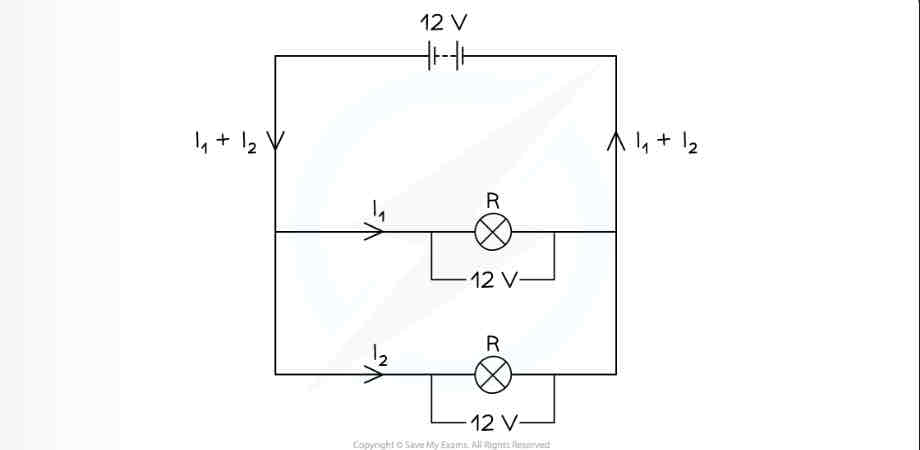
if one branch has multiple components → current splits within the branch
Combined resistance
series: combined resistance of the component = sum kf individual resistances
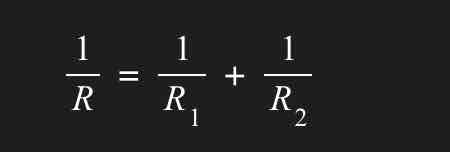
Parallel: combined resistance is less than resistance of individual components
2 resistors of equal resistance → resistance halves
resistor with the largest resistance → greater p.d
resistance is increased→ gets a greater share of p.d
Electrical safety
Common electrical hazards include:
damaged insulation
overheating cables
damp conditions
excess current from overloading of plugs, extension leads, single and multiple sockets when using a mains supply
All electrical appliances are connected to the mains supply
A mains circuit consists of:
a live wire: carries the altering current from main supply to circuit
a neutral wire: form the opposite end of the circuit to the live wire to complete the circuit
an earth wire: acts as a safety wire to stop the appliance from becoming live
safety features built into domestic appliances:
double insulation: 2 layers of insulation
earthing: provides a low resistance lath to the earth
fuses: located in the plug and cut off flow of electricity if the current becomes too large. made of a thin metal wire
trip switches: control the amount of current supplied to each circuit within the house
When the current is too high the switch 'trips' (automatically flicks to the off position)
This stops the current flowing in that circuit
electromagnetic induction
Induced e.m.f: whenever there is relative movement between conductor and a magnetic field
could be when:
conductor moves in a stationary magnetic field
conductor is stationary in a changing magnetic field
Induced e.m.f. due to a moving conductor
For an electrical conductor moving in a fixed magnetic field:
the conductor (e.g. a wire) cuts the field lines
an e.m.f. is induced in the wire
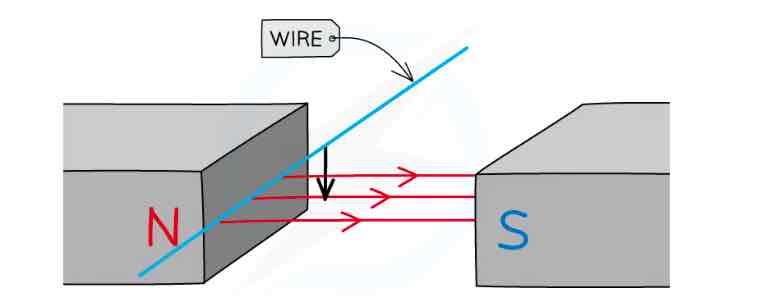
- Induced e.m.f. due to a moving conductor
For an electrical conductor moving in a fixed magnetic field:
the conductor (e.g. a wire) cuts the field lines
an e.m.f. is induced in the wire
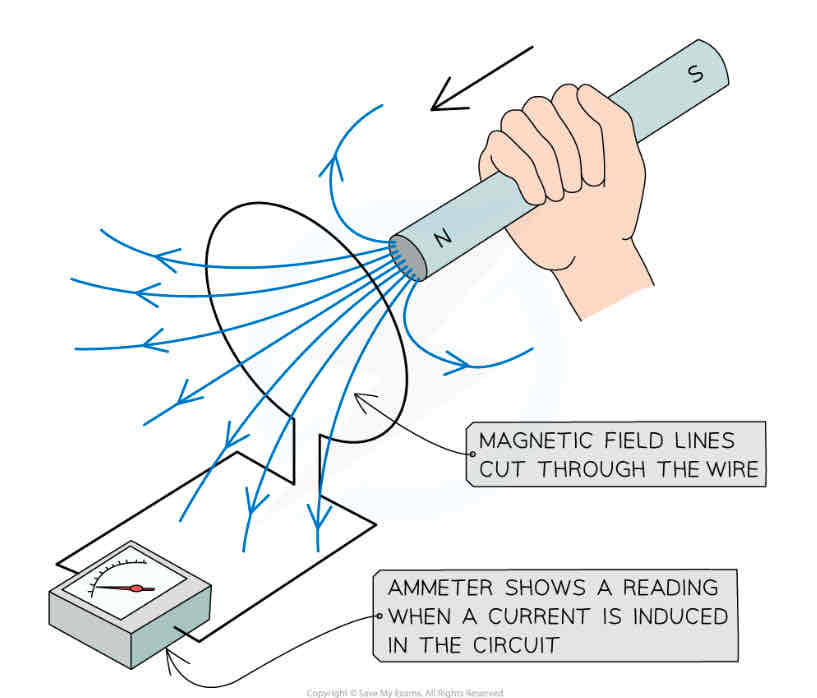
Lenz’s law: direction of an induced emf always opposes the change causing it
any magnetic field created by an induced emf will act so that it tries to stop the wire or magnet from moving