1.3 changes in the magnitude of the water cycle
Using Fig 1 on P12 organise the list of water storage in order of duration Card sort
Soil, seasonal snow/rivers, glaciers, lakes, shallow groundwater, deep groundwater
Can they be linked as flow diagrams?
Glaciers/snow --> rivers --> lakes --> soil --> shallow groundwater --> deep groundwater
What processes can change how or where water is stored?
Evaporation, freezing, percolation
Where do changes occur?
In flows and transfers
Global Air Circulation
Add diagram
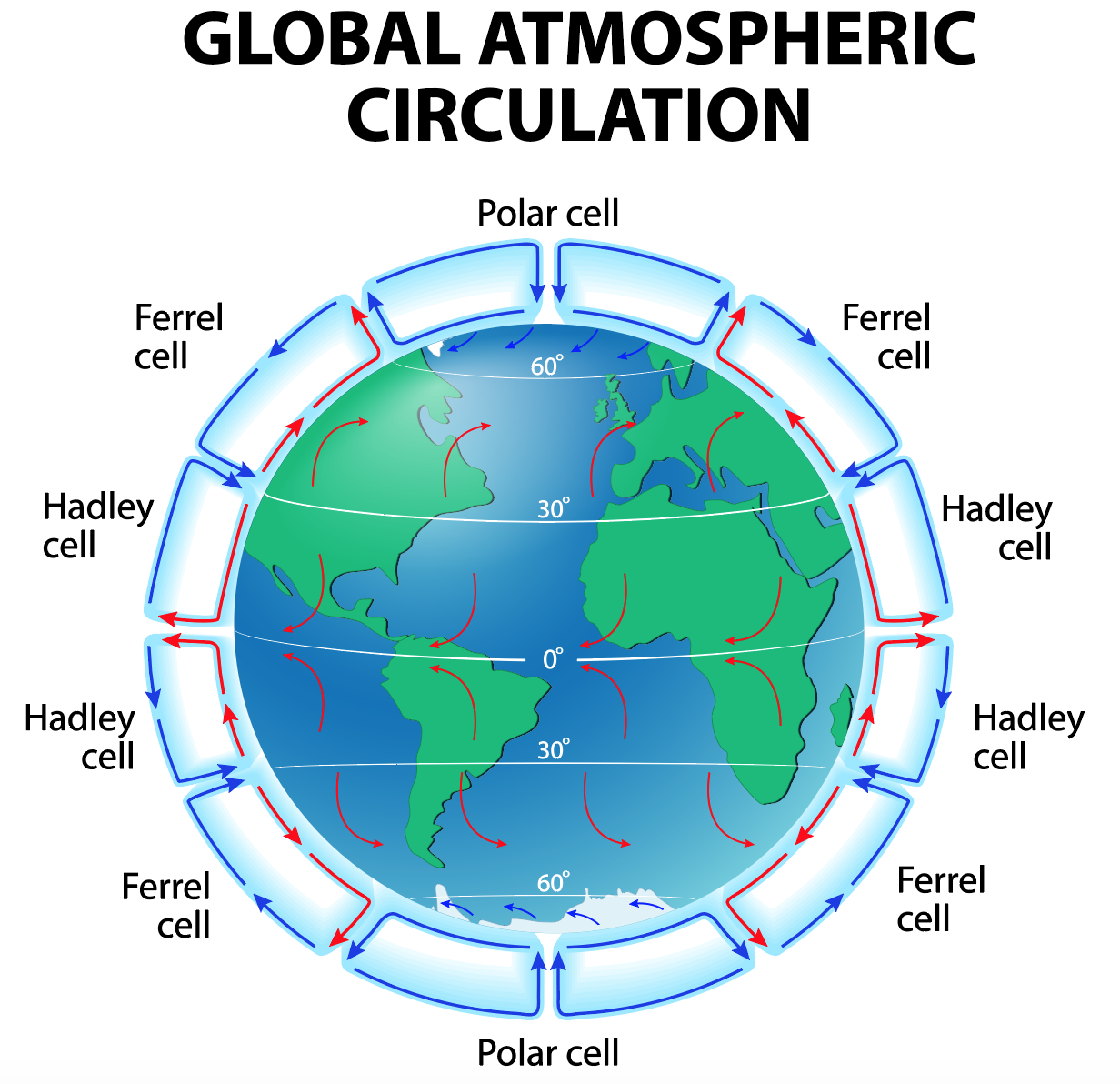
Describe the GAC
Air circulates in alternating directions in the cells in the atmosphere and the air flows in alternating directions depending on the latitude, alternating low and high pressure through the rise and descent of the air, creating different ecosystems linked to the weather patterns. The different circulations are grouped into cells called the Hadley, Ferrel and polar cells. The Hadley cells create a low pressure giving warm and wet climates creating ecosystem's like rainforests, Ferrel cells create a low pressure making a temperate climate and there is high pressure at the poles and between the cells creating deserts with very little life
Cryosphere
What is the equilibrium line
The area between where snow and ice is accumulated, and the area where it is lost
Can you identify 5 world cities affected if the sea level rises by 50metres?
Jakarta, Bangkok, New York, Shanghai, Osaka
Local Scales – hillslope
Find a similar image to Fig 4 on P14 and add to your notes
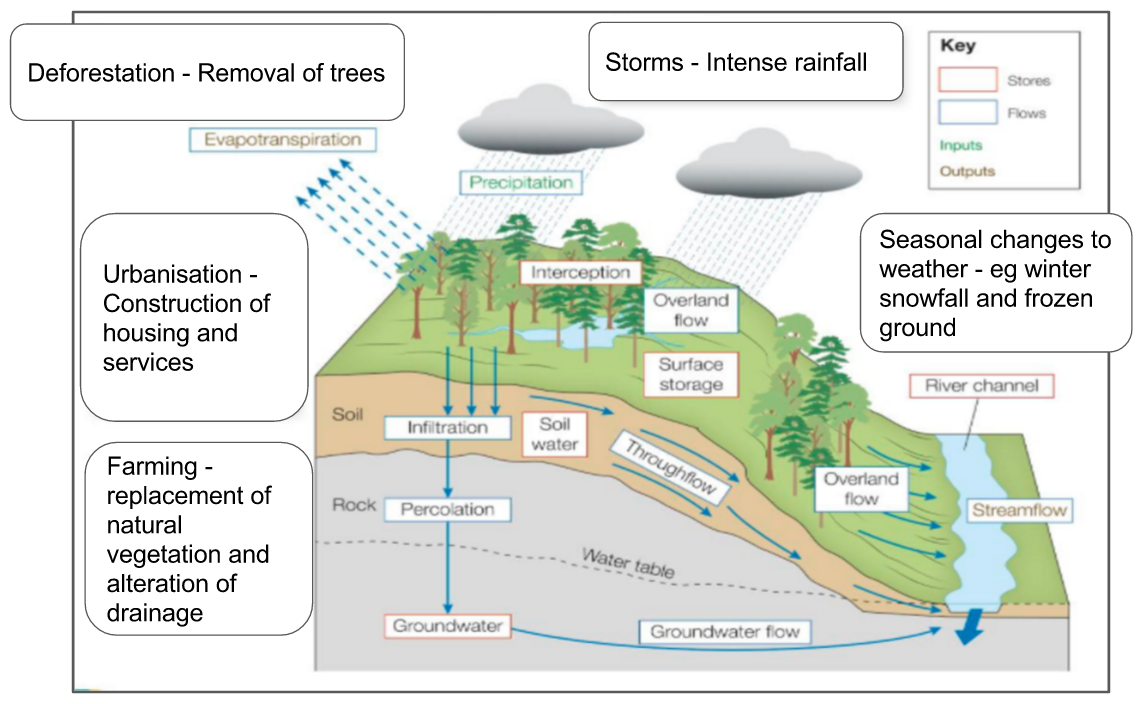
Shortest store?
Surface
Longest Store?
Groundwater
Which part is?
Most sensitive to Temperature
Overland flow
Most sensitive to a dam being built
Stream flow
Most sensitive to urbanisation
Interception and evapotranspiration
Most sensitive to deforestation
Interception and evapotranspiration
What is the effect of farming?
Can cause deforestation which interrupts some processes
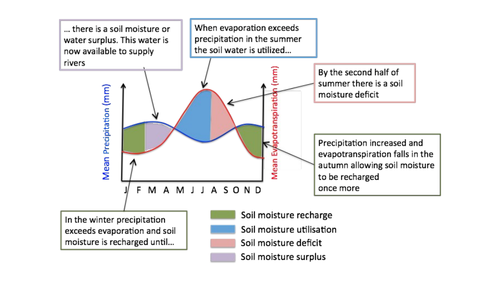
Soil Budget – Find similar graph to fig 5 P15
Describe the pattern of the graph in relation to the water cycle eg
Describe and think of reasons how would a desert be different to a rainforest
Having more water in the soil that allows water to absorb into the soil and be held there as a store from the winter and spring months, where there will be a greater water budget, compared to summer where there is a lower water budget, rather than sand which doesn’t have as good an ability to hold water, as there is less rainfall in the desert where it is almost constantly raining in the rainforest
See if you can find examples – share
Amazon rainforest vs Sahara desert
Can you think of a knock-on effect a dry winter might have on the summer phase
There will be less water in the soil for the soil budget, which will decrease even more with the lack of rainfall and greater evapotranspiration throughout the summer months
Or a wet summer with heavy rains
There will be a water surplus in the soil which will lead to saturated soil and therefore flash flooding in the spring when the rainfall cannot be absorbed
Some good points
You need to add depth to you soil budget answers eg Q7/8 how does it affect the soil budget not just plants