Lesson 20
Lesson 20: Aortic Aneurysm Repair: Open & EVAR
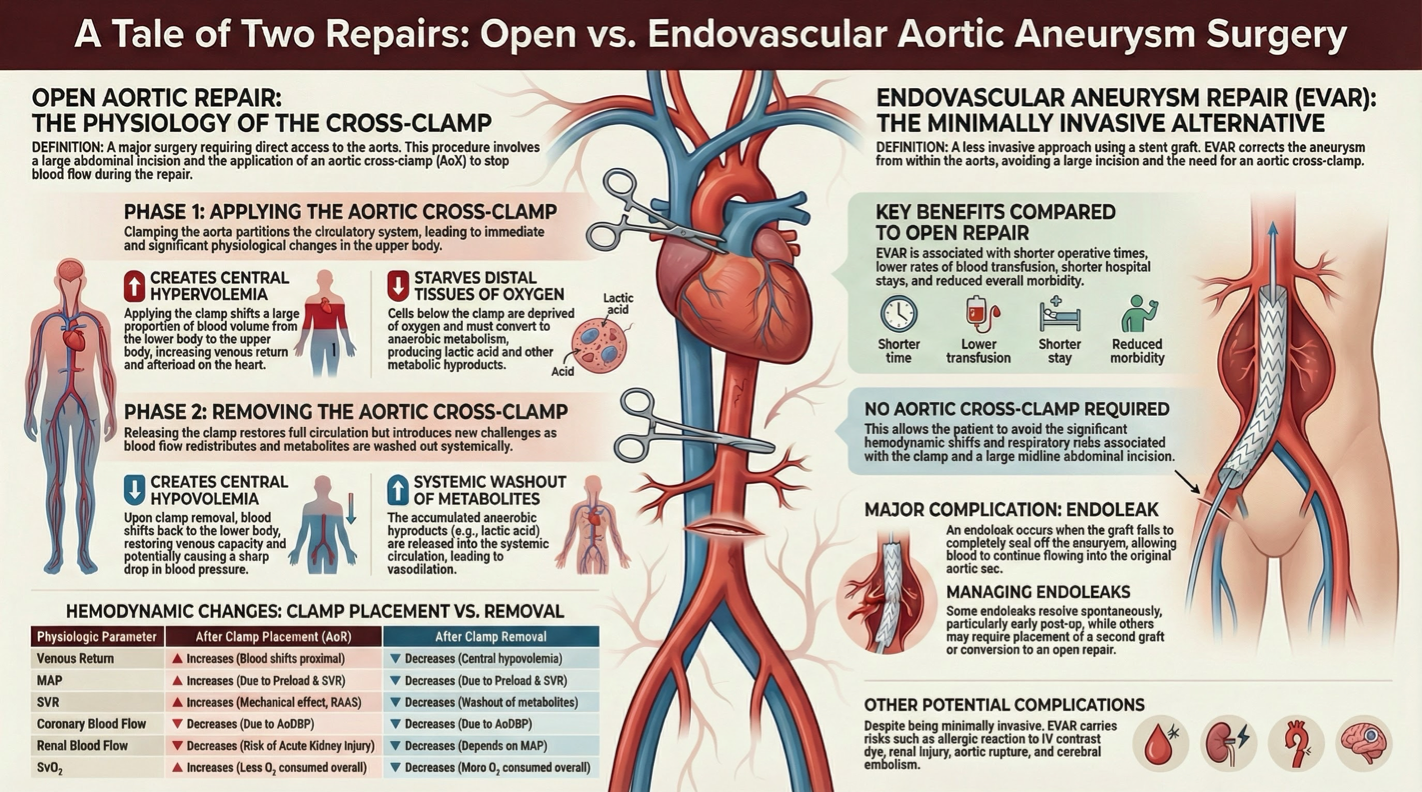
Aortic Cross-Clamping Effects:
Application: Creates central hypervolemia, increasing MAP, SVR, SVO2.
Removal: Causes central hypovolemia, decreasing CO, MAP, SVR, SVO2.
EVAR:
Minimally invasive procedure for abdominal aortic aneurysms.
Benefits: Shorter operative times, lower transfusion rates, shorter length of stay, and reduced morbidity compared to open surgery.
Endoleaks:
Occur when graft fails to prevent blood entry into aortic sac.
May resolve spontaneously or require further intervention.
Physiological Responses to AoX:
Factors: Location of AoX, intravascular volume, and cardiac reserve.
Starvation of distal tissues: Leads to anaerobic metabolism and increased lactic acid production, contributing to metabolic acidosis.
Impact on Organs: Increased risks of renal injury even with infrarenal clamps.
Monitoring During EVAR:
Blood pressure monitored via arterial line.
IV contrast may pose risks (e.g., allergic reactions, renal injury).
Vital to maintain urine output throughout procedure.
Risks in EVAR:
Potential complications: baroreceptor reflex activation, hemorrhage, aortic rupture, cerebral embolism.
Comparative Technique: Better outcomes with regional/local anesthesia over general anesthesia due to reduced respiratory risks.