Cloud Computing Overview
Cloud Computing
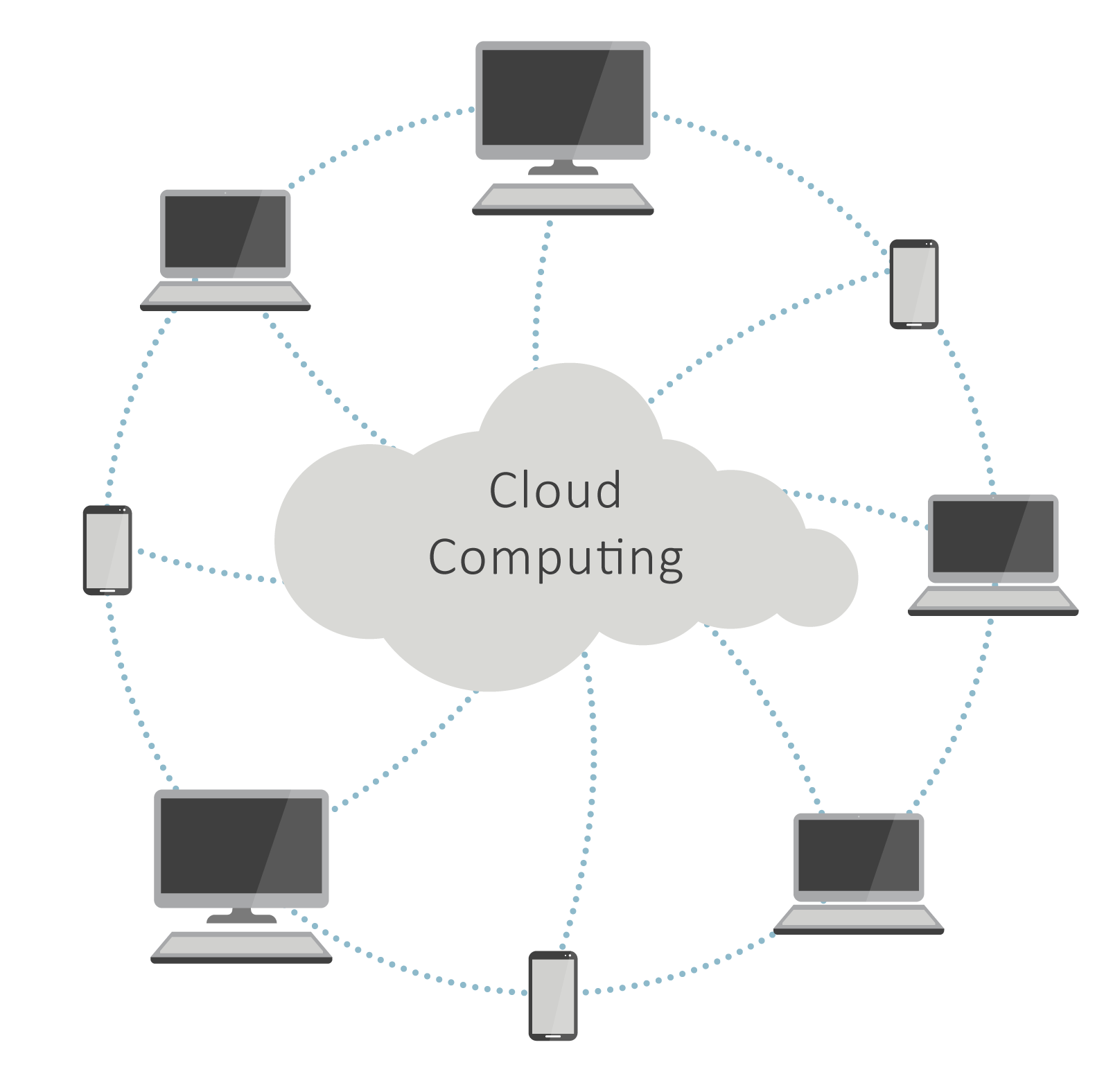
Diagram. Cloud computing.
Cloud computing may be the most commonly used term in IT, but if you ask an IT professional to define it, you will likely get the response, “It depends.” Pinpointing a single definition for cloud computing is difficult because it is many things to many people. Instead of trying to find one all-encompassing definition, consider the meaning and business implications for some of the more well-known and accepted characteristics of cloud computing: on-demand, self-service, resource pooling, elastic, accessible, and measurable.
Business owners and executives do not usually make impulse decisions about strategic direction, mergers and acquisitions, or massive marketing campaigns, but it can seem that way if IT is left out of the decision-making process. Implementing change takes time, and in the business world, time can cost you opportunities. Therefore, a quick reaction time within IT is critical to the success of the business. Without cloud computing, it may take weeks to acquire the necessary hardware, software, and manpower to satisfy the new business needs. The on-demand nature of cloud computing provides IT professionals the means to provision new servers, applications, and other resources in a self-service manner, often within minutes of the request.
Cloud providers, such as Amazon (AWS), Google (GCP), and Microsoft (Azure), purchase and manage vast quantities of compute, storage, and networking resources around the world. In doing so, they are able to pool these resources to achieve economies of scale, which can improve pricing and provide additional capacity to their customers for sudden bursts in their businesses. It is in this elasticity where cloud computing proves to be an immense business asset. Consider that you run a retail business with an e-commerce website. Most of the year, your website traffic is predictably average, but during the three months of the holiday shopping season, your website receives so much traffic that it occasionally crashes or performs so poorly that customers go elsewhere. What you need is a data center that can dynamically increase in size during the busy months and then shrink back down to size during the rest of the year. This elasticity, often referred to as scalability, is yet another key benefit of cloud providers. During your busy months, you could leverage the resources of a cloud provider to keep up with customer demand and then recede back to your own data center during the rest of the year.
Another reason cloud computing is so popular is the global reach that it provides companies. Consider again the retail business example. Imagine the business is located in a small town in the middle of the United States, but its products and services attract a global customer base. Currently, the business’s website is hosted in one location in the United States, which is great for U.S. customers, but the site is slow when accessed from Europe or Asia. To counter this problem, the company could leverage the global presence of cloud providers to host their website in data centers around the world. This improves their customer’s experience, which in turn may improve sales.
Finally, services in the cloud must be measurable. This alludes to the way that you pay for services in the cloud. Much like the way you pay for electricity or water at your home, cloud providers tend to charge you only for what you consume. This could be the number of hours that your virtual machines are running, the amount of data storage you have consumed, or even the number of gigabytes of network bandwidth that your customers consumed while browsing your website. So, just as you turn the lights off as you leave a room, do the same in the cloud. When not using resources, such as test or development systems, power them down and remove extra and unnecessary data. Of course, if you tend to leave the lights on, they will stay on, but you can expect a hefty bill at the end of the month. Ultimately, if you are conscientious about how you consume cloud resources, you will likely find cloud computing to be a very affordable alternative to traditional data centers.
Products and services within cloud computing are organized based on the type of service being offered and by the location where the service is hosted. The various types of cloud services are categorized by the cloud service models, whereas the hosting locations are classified by the cloud deployment models.
\n