Lec 7 - Pressure & Pressure Measurement
What is pressure?
the exertion of force upon a surface by an obj, fluid, etc. in contact w/ it
F/A
Hydraulic behavior vs. Granular material
Fluids exhibiting hydraulic behaviour have their material conform to the dimensions of its container
For granular matter, the matl does NOT conform to “
Reference pts to pressure
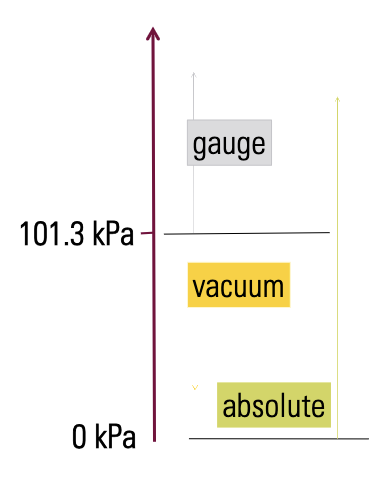
Abs pressure (Pabs)
measured value includes atm pressure (Patm = 101.3 kPa at sea level)
Gauge pressure (Pg)
the difference in pressure basically
or the pressure when its zeroed in the room whose P we’re measuring
Pabs = Pg + PatmVacuum pressure (Pv)
negative scale unlike ones above
Pv = Patm - PabsDifferential pressure
measures the difference btwn two applied pressures (used for high span of operating pressures or when high resolution of pressure is needed over a range < 10% of necessary operating span)
What do pressure sensors do?
They measure local pressure or differential pressure btwn 2 locations. So you must consider he operating presssure, max pressure, temp, electronic/nonelectronic, etc. of it.
Examples of pressure reference instruments:
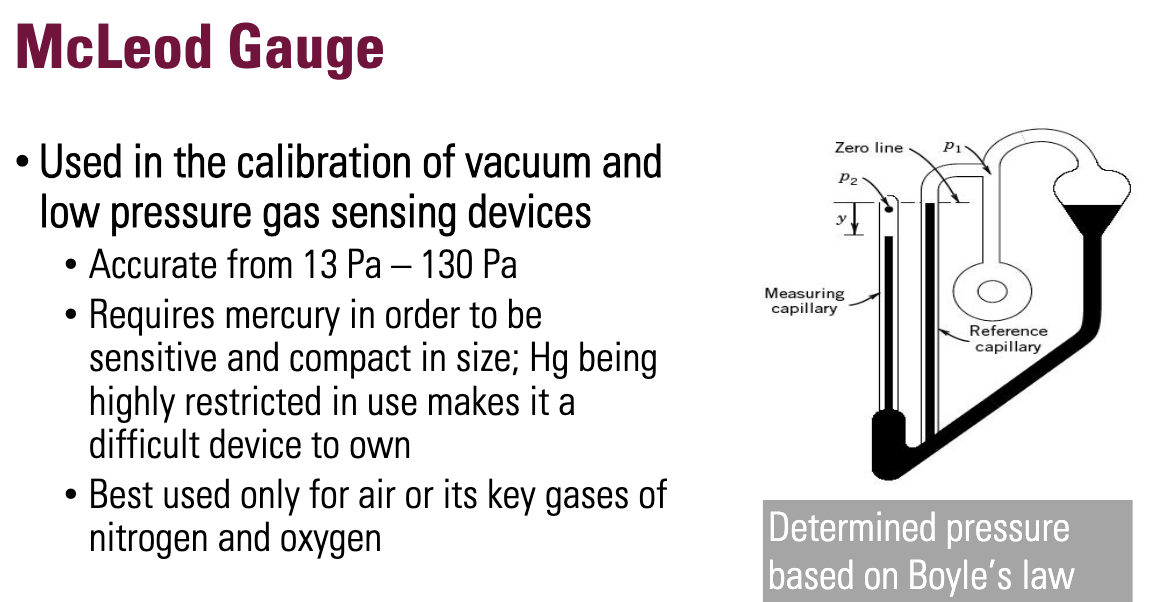
mcleod gauge
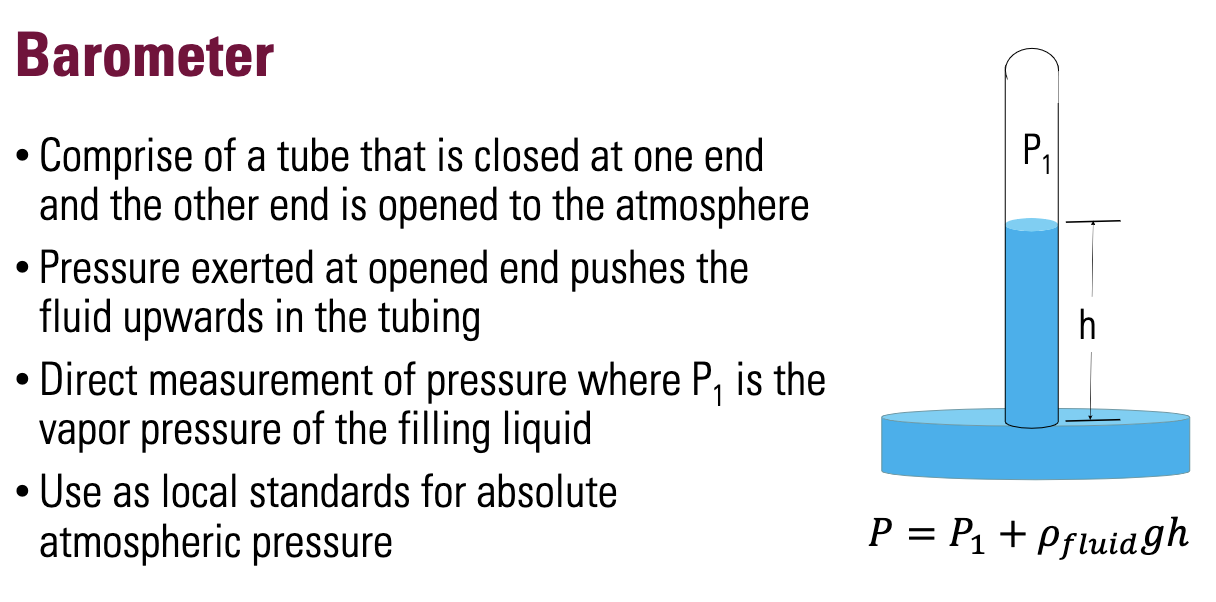
barometer
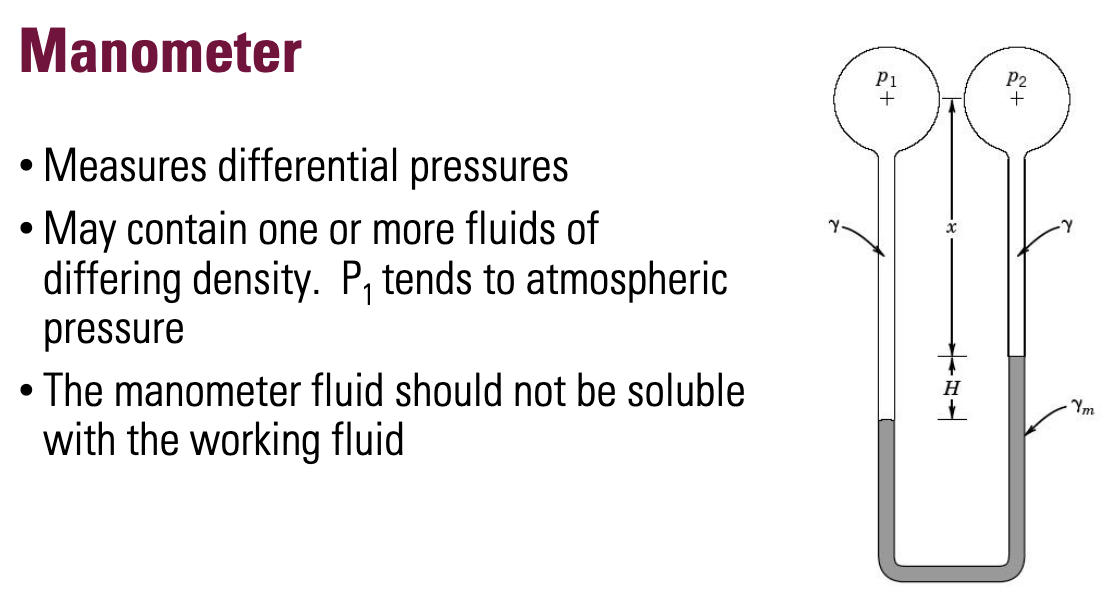
manometer
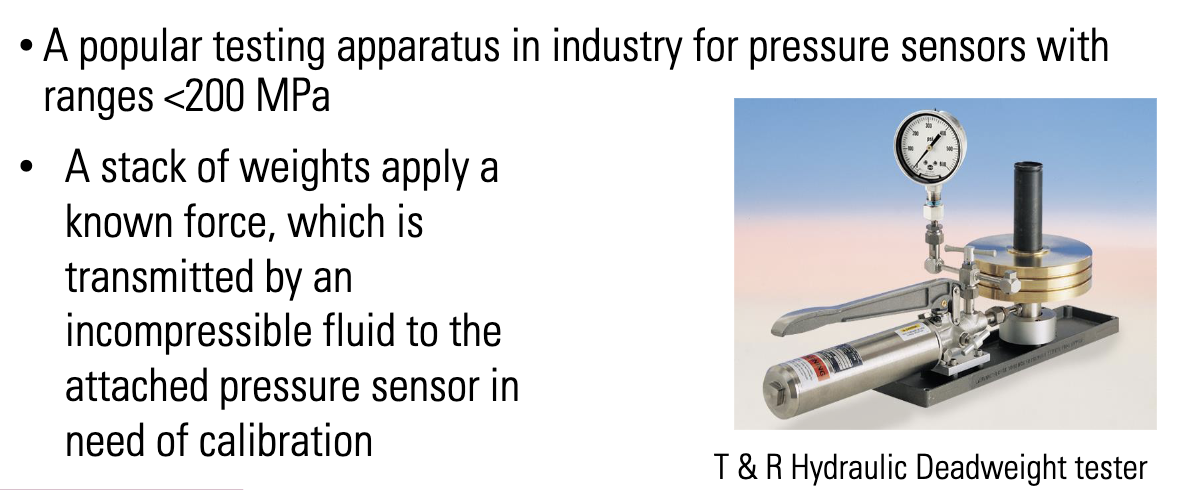
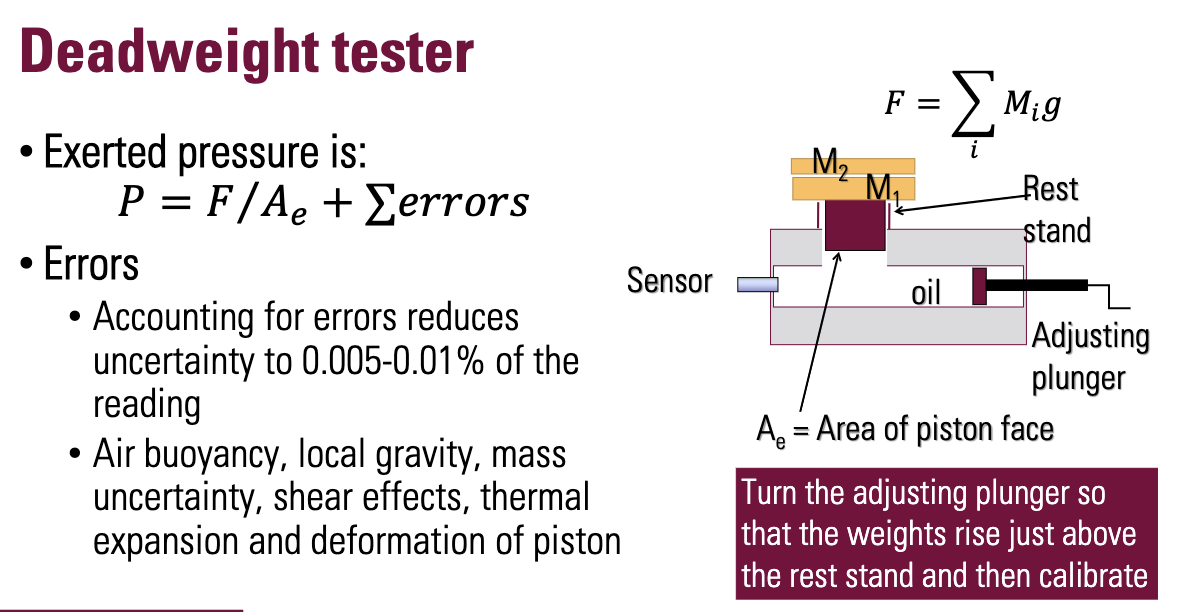
deadweight tester
—> errors that come w/ barometers & manometers:
-alignment error, zero error, temperature error, gravity error, capillary and meniscus error
However in PLANTS, we’re more likely to use pressure sensors and transducers…
i.e. Most pressure measurement devices are hybrids of sensor + transducer
What’s the sensor?
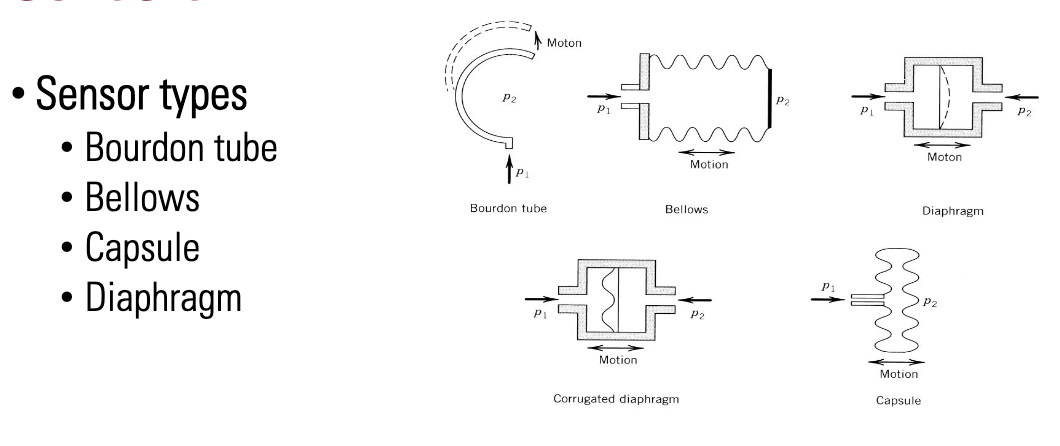
an elastic element which deforms/deflects under intended pressure range
What’s the transducer?
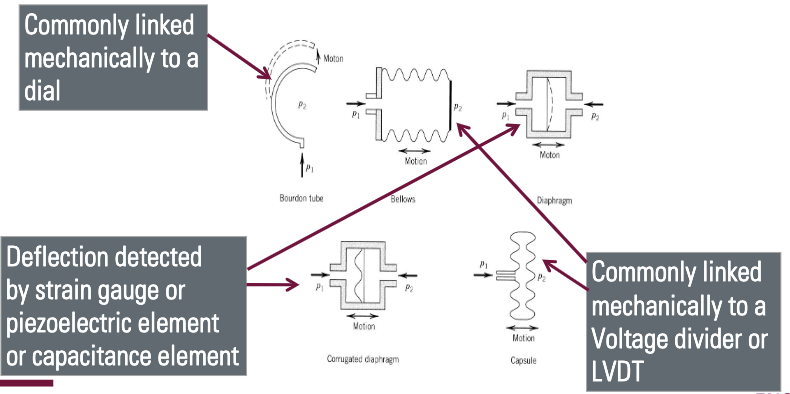
converts deflection into a measurable signal (mechanical or electrical)
Now we will talk more about each sensor…
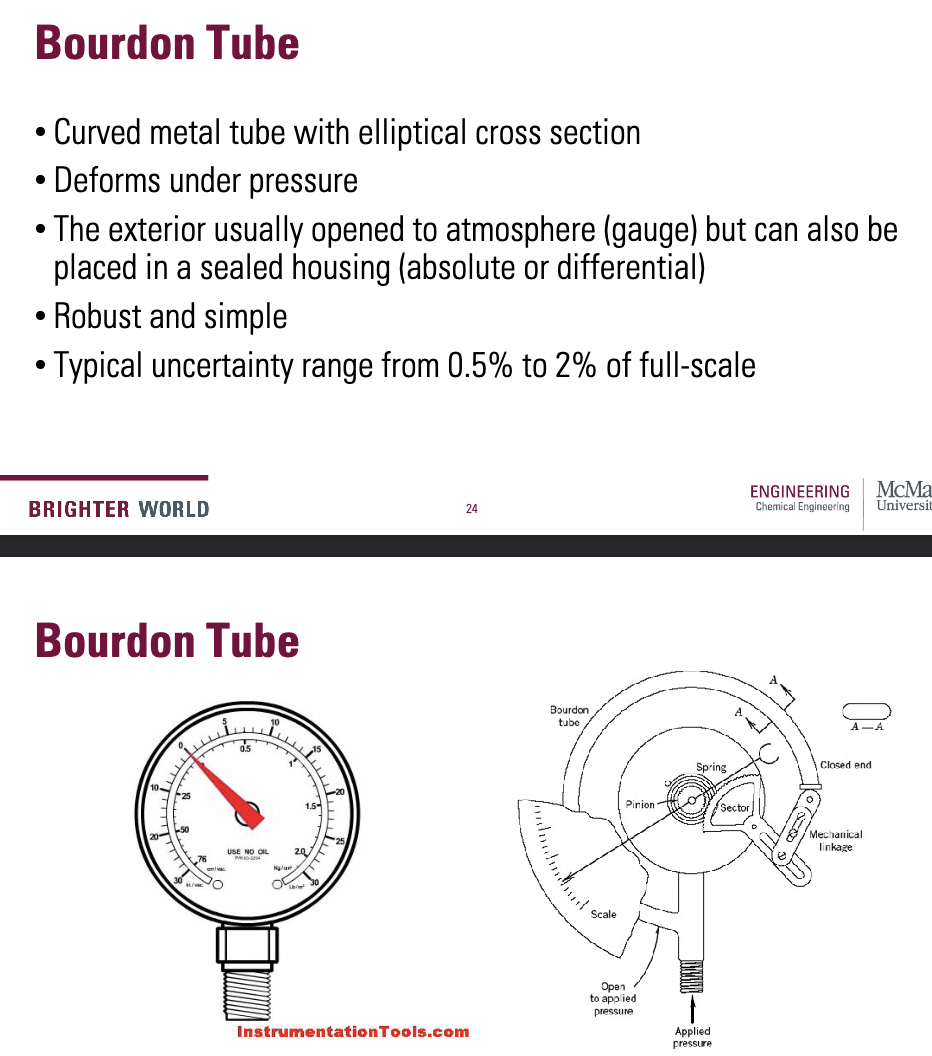
Bourdon Tube
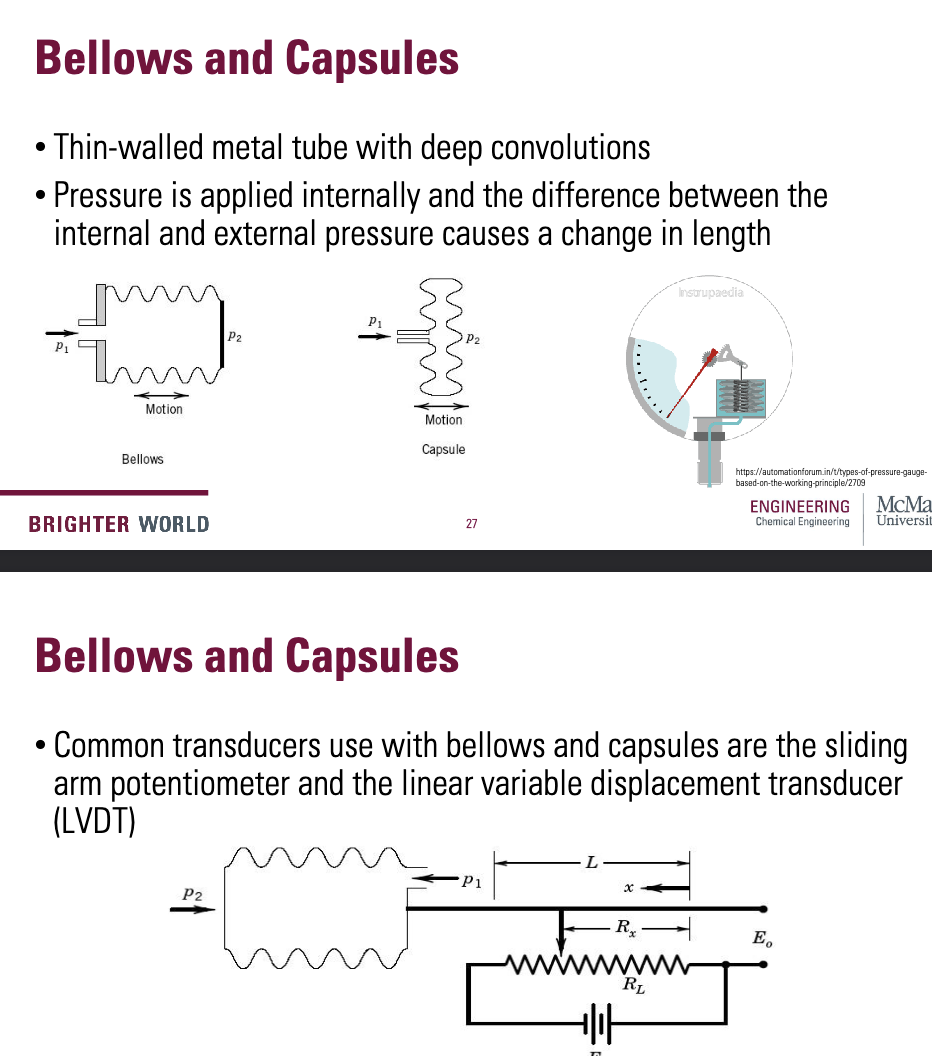
Bellows and Capsules
-same idea because they’re both shells, but the corrogation for a capsule is on the sides and the corrogation for a bellow is along the length
-common transducers used w/ bellows + capsules are the sliding arm potentiometer and the linear variable displacement transducer (LVDT)
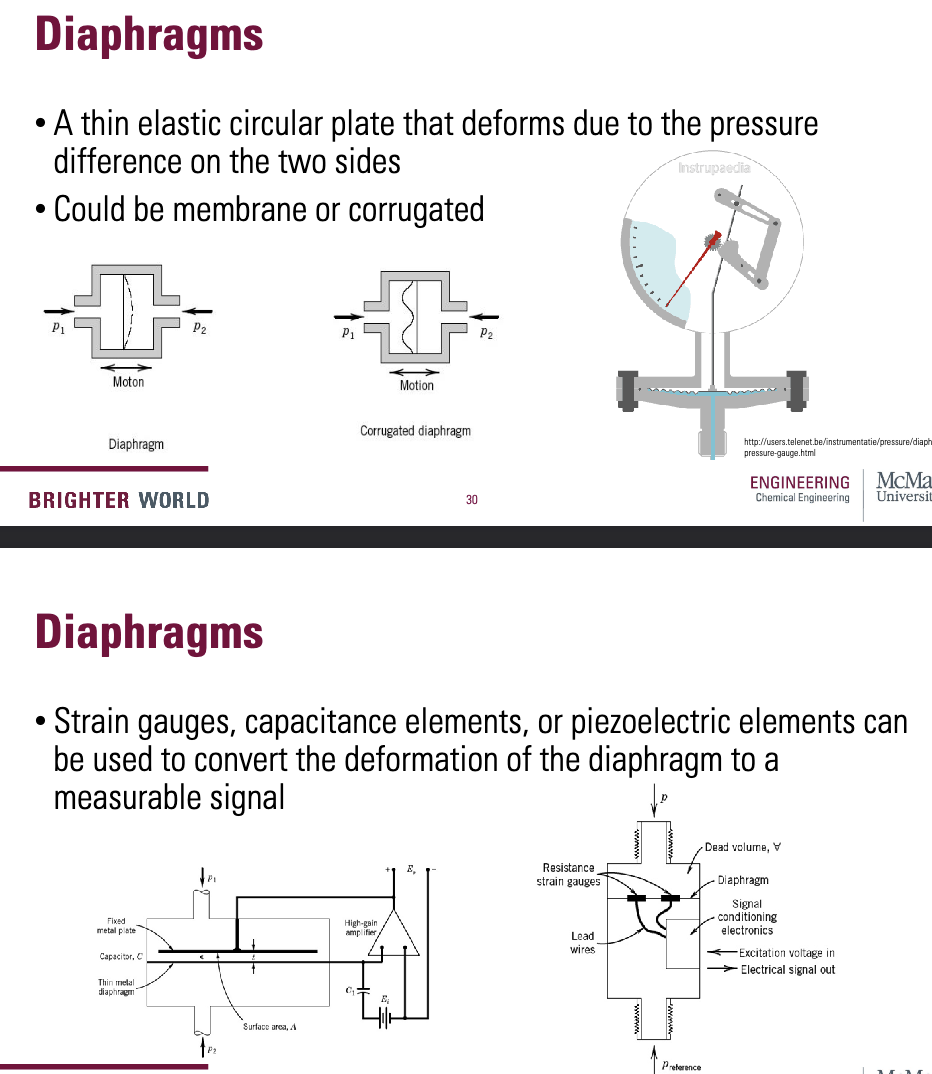
Diaphragms
-common transducers used w/ diaphragms are capacitors, strain gauges, piezoelectric elements etc.
How can we select the right sensor for the job?
-consider corrosion, rxns, high T, food/drug contamination, etc
-sensors should be able to accommodate the range of Pressures needed
Why is sensor selection so important?
-cuz the pressure transducers r directly exposed to the env. of measure, so the sensor + its components/materials r crucial
-sensor affects response time of device, and the response time is important to know in order to set the sampling rate on DAQ
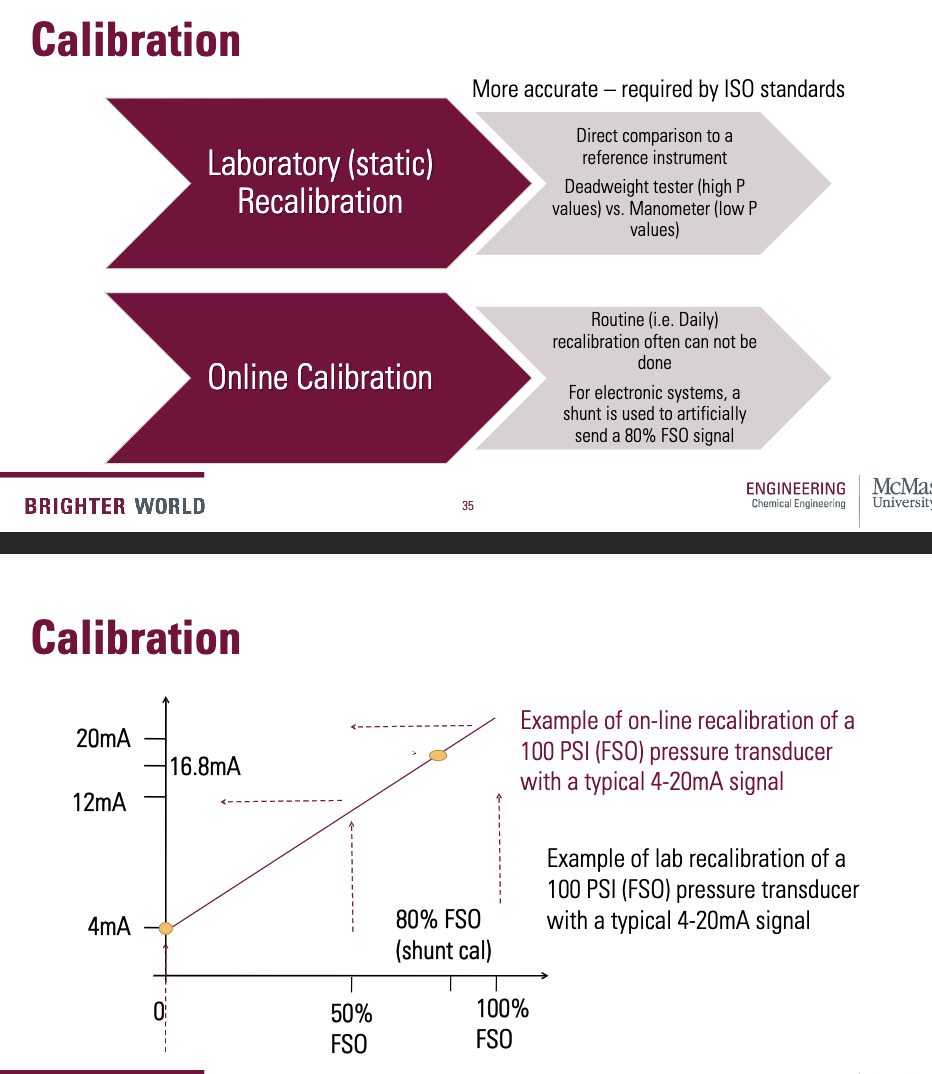
How do we calibrate sensors?
How can we select the right transducer for the job?
look at spec sheets!
-the accuracy of a transducer is given usually as percentage of the FSO (Full Scale Output)
-this is usually provided by the vendor
e.g. 10,000 psi FSO with 0.5% FSO accuracy means that the transducer can not differentiate two pressure measurements within a 50 psi limit (25 psi and 50 psi are the same pressure)
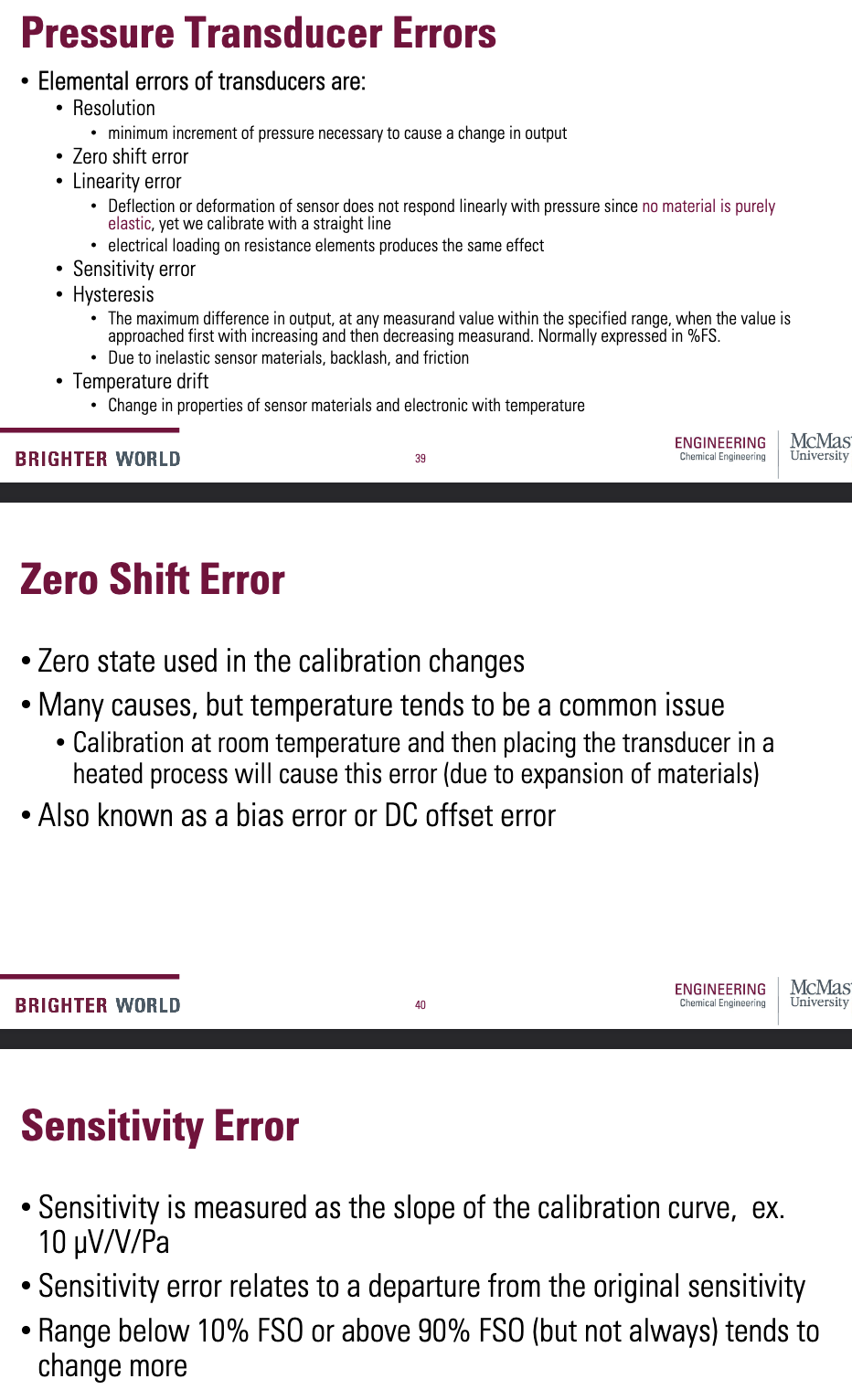
—> errors that come w/ transducers:
Transmitter vs. Transducer
difference btwn them is not clear…
-a pressure transducer’s output signal is generated by the primary sensing elemnt
-a pressure transmitter IS a pressure transducer but w/ additional electronics to transmit a 4-20 mA output signal (so helpful for transmitting signals over large distances in a plant)
What are the mechanical sensors used in pressure sensors?
-strain gauge
-displacement sensors (like the aforementioned potentiometer transducer, LVDT)
More about strain gauge
slides 47-54
What is the gauge factor?
all the math he skipped earlier is grouped up into the gauge factor (slide 55)
blah blah
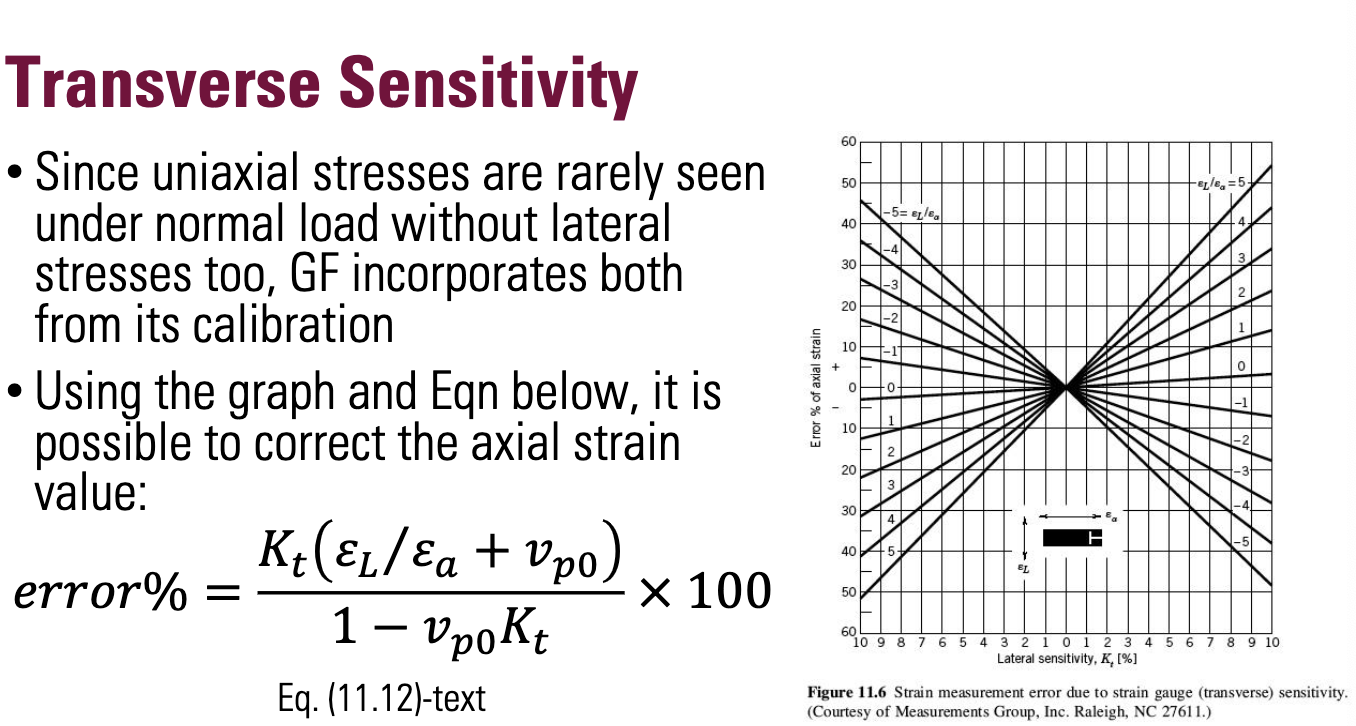
if ur going off the axis of ur measurements, u can look at a graph fig 11.6 or eqn to estimate strain measurement error or sensitivity
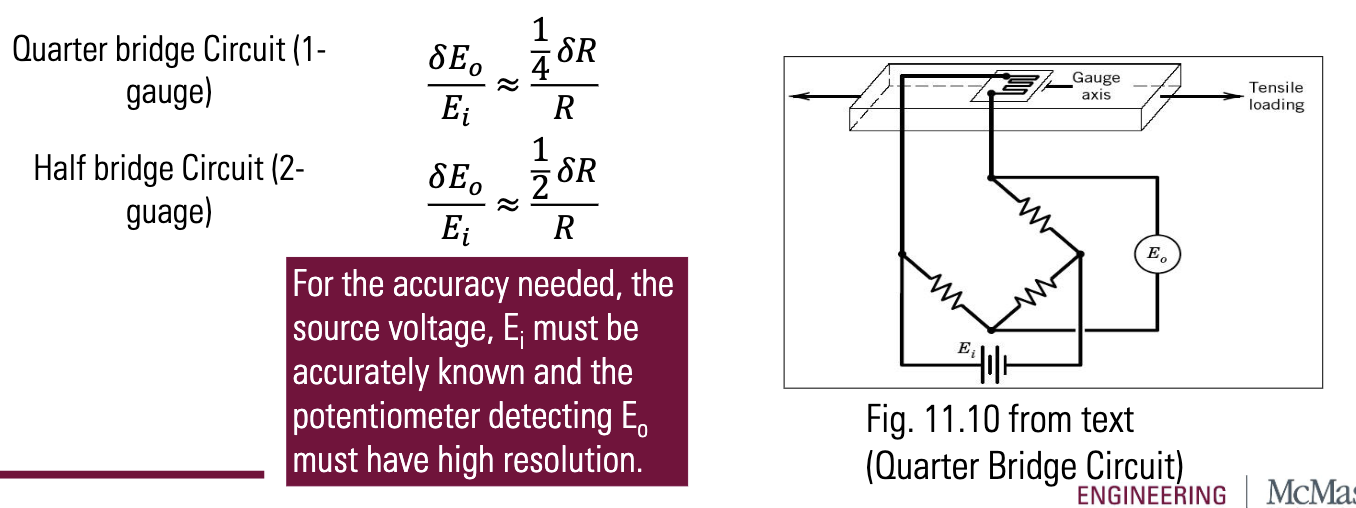
To detect a small change in resistance, a Wheatstone bridge (full, half, quarter) is used. the bridge is simply a circuit of resistors
Temperature (slides 58-59)
More about displacement sensors (incl. potentiometer transducer, LVDT)
(slides 62-66)
TRANSDUCER vs TRANSMITTER
Transducer: Converts one form of energy into another. For example, a temperature transducer turns heat (temperature) into an electrical signal (like a voltage).
Transmitter: Takes the signal from the transducer, processes it, and "transmits" it over a longer distance, usually as a standardized signal like 4-20 mA or 0-10 V. It's what sends the information to a controller or display.
SUMMARY
McLeod Gauge: Measures vacuum and low-pressure gas levels (13–130 Pa) using Boyle's law. It requires mercury, making it compact but less practical due to environmental restrictions.
Barometer: Measures absolute atmospheric pressure using fluid height in a closed tube. Pressure pushes the fluid up, and readings depend on fluid density and height.
Manometer: Measures differential pressure using one or more fluids of varying density. The fluid column height difference indicates pressure between two points.
Deadweight Tester: Calibrates high-pressure sensors (<200 MPa) by applying a known force through weights on a piston. Errors from buoyancy, gravity, and thermal effects can be reduced to achieve high accuracy.
Bourdon Tube: A curved metal tube that deforms under pressure to measure gauge, absolute, or differential pressure. It is robust and widely used, with typical accuracy between 0.5% and 2%.
Bellows and Capsules: Thin-walled tubes or structures that change length due to internal pressure differences. Often paired with transducers like potentiometers or LVDTs to measure deformation.
Diaphragms: Thin elastic plates that deform under pressure differences. Deformation is converted into signals using strain gauges, piezoelectric, or capacitance elements for precise measurement.