HS unit 2 notes
Addiction
Definition- Habits that have gotten out of control, and the habit becomes an addiction when it starts to hurt a person's life or daily skills.
To what can we become addicted?
Alcohol
Drugs
Video games
Food
Sex
Gambling
Strange addictions!!
Basically, anything that causes a pleasurable rush in brain chemicals in a person
The brain's “ pleasurable rush.”
Types of addiction
Physical addiction- there is a substance introduced into the body that produces the pleasurable rush in brain chemicals (drugs)
Emotional or psychological addiction- the brain's own chemicals become the drug that produces the rush (gambling, sex, etc.)
Withdrawal symptoms and tolerance
Withdrawal symptoms and tolerance are caused by substances that produce physical.
Addictionaddiction
But some drugs (like cocaine or marijuana) don’t really cause withdrawal symptoms, and you don’t need more to get the same high (tolerance)…BUT you can still become addicted psychologically because of the rush of dopamine in the brain
Is addiction a disease or a choice?
At some point, the person chose to engage in the behavior (or take the substance), but some people can do that and not become addicted, while others are more likely to become addicted
so its kind of a combination
Lack of positive coping strategiesLack of positive coping strategies
Lower SES- why do you think?
Impulsive, thrill-seeking, risk-taking personality type
People who are more aggressive, prone to anger, and antisocial
Have another mental illness or another addiction
50% with an addiction have a psychiatric disorder, and out of all those with a psychiatric disorder, 20% have an addiction as well
Genetic predisposition
Regular chances of alcoholism, 1 in 10
If the parent is an alcoholic, 1 in 4
If a fraternal twin is an alcoholic, 1 in 4
If an IDENTICAL twin is an alcoholic…1 in 2, why not 100%, same genetics??
Environment- modeling (twins raised apart or who had different influences)
How is drug addiction treated?
Successful treatment has several steps:
Detoxification (the process by which the body rids itself of a drug)
Behavioral counseling
Medication (for opioid, tobacco, or alcohol addiction)
Evaluation and treatment for co-occurring mental health issues, such as depression and anxiety
Long-term follow-up to prevent relapse
A range of care with a tailored treatment program and follow-up options can be crucial to success. Treatment should include both medical and mental health services as needed. Follow-up care may include a community- or family-based recovery support system.
What are the signs of addiction?
Withdrawal symptoms
Trouble sleeping, shakiness, nausea, sweating, racing heart, irritability, anxiety
Craving and tolerance
Strong urge to drink or use drugs even when you don't want to
Health and social problems
Unsafe situations
Changes in obligations and activities
Inability to stop and time spent
Dos and Don'ts
X Don't become an enabler
X doesn't sweep the issues under the rug
! Help your loved one seek professional help
!approach with honesty and open communication
4 ways to prevent drug addictions
Learnt to deal with life pressures
Don't give in to peer pressure
Develop close family ties
Develop healthy habits
Alcohol
What is binge drinking?
We can metabolize about one drink in an hour.
How can we decrease the “bad” and increase the “good” things about alcohol?
-If you limit yourself to 4 drinks in a night, your body should be able to metabolize that amount pretty well and still get the good effects of alcohol
- 1 drink equals about 0.02 BAC
- The legal limit is 0.08 or higher, meaning it would be around 4 drinks as the legal limit
What we lose when we drink…
0.005-0.02 = inhibitions (good part, fitting in, feeling comfortable, having fun)
0.03-0.05 = judgment (bad judgment skills)
0.05-0.08= Fine motor control (legal limit)
0.09-0.19= memory and/ or consciousness (either or both at the same time) (pain)
0.2 or above= muscle control (watch for passing out, breathing, heart rate, swallowing)
0.35= possible onset of coma ( equals surgical anasthesia)
Other things about alcohol…
Drink, water, drink, water
Carbonation
Tolerance doesn't change
Sedative hypnotic
State dependence
Dying from alcohol poisoning biggest risk in drinking
Aspirated pneumonia, rare
Alcoholism, cirrhosis of the liver, rare
Sexual risk, violence, rape, bad decisions, pregnancy
35% of college students average 0 drinks weekly
54% report not participating in binge drinking
HS binge drinkers are 3X more likely to binge drink in college
White, male, under 24, athlete, fraternity are the most common binge population
Athletes are the heaviest binge drinkers on campus, with 57%
86% of Greek system reports drinking regularly, not necessarily binge drinking
80% of alcohol related care accidents are from binge drinking
Binge drinkers cannot judge their own level of intoxication
Binge drinkers often lose count of how many drinks they’ve had
Intoxicated individuals overestimate their driving abilities and constantly demonstrate their inability in research studies
75% of men, and 55% women report intoxication in rape cases
Pregnancy- safest to drink in the last stage, but highly recommended not to drink at all
Alcohol emergencies: when someone has passed out
Drinking age is 21, some bars are 18, most are 21
Preventing hangovers= hydrating. Your body needs lots of water to stay super hydrated.
How to sober up faster = eating something, hydrating, DONT do cold showers, DONT do coffee, the best thing is TIME, put them to bed.
NEVER use hard liquor in a bong, best to use beer.
Does drinking relieve stress?
It does not; it just magnifies the emotion you're presenting
Light beer is light on….. Calories, not light on alcohol
Passing out is not a normal thing, and when it happens in a setting, it is dangerous, and people can puke.
A guy would rather have you say no to a drink; it should be an obligation to talk more.
Drunks run stop signs. Pot heads wait for them to turn green!
Cannabis: not just another plant
Anything you do at 15-16 has a permanent effect
Myths
Marijuana is safe because it is an herb…..
560+ chemicals
State-dependent learning. IF YOU LEARN SOMETHING HIGH, YOU REMEMBER IT HIGH,
Teens using MJ for the first time after 18 years, compared to those using it by 15 years, are
3.6 times more likely to get a HS degree
2.3 times more likely to enroll in college
3.7 times more likely to get a college degree
CardioVascular Disease
The cardiovascular system-
Heart
Vessels
Arteries-(take blood away)
Veins-(take blood to)
Capillaries-connecting (oxygen/materials exchange in organ tissue)
Getting blood to the lungs to get oxygenated, then distributing it through the body, is the main task of the system
But also, nutrients and hormones need to be distributed throughout the body
And getting rid of wastes is also important (carbon dioxide, urea, creatinine, etc.)
When lungs are included in the system- is called the cardiopulmonary or cardiorespiratory system.
Arteries
Usually carry oxygen rich blood, except for the pulmonary artery
Veins
Usually, care for oxygen-poor blood, except for the pulmonary veins
Coronary artery
The artery that carries oxygen-rich blood to the heart itself for use by the heart
Cerebral arteries
Arteries that cary oxygen rich blood to the brain
Atria
Top chambers of the heart
Ventricles
Bottom chamber of the heart
5-6 quarts of blood circulate once every minute, 2000 gallons per day
Vessels in your body are 60,000 miles long, which would go around the world twice!
Cardiovascular disease or CVD
AKA Heart Disease or HD (Which really includes more than just the heart, but also vessels and organs that vessels lead to), so CVD is a better term.
We often think of CVD as a disease of “old men”, which is a mistaken notion
#1cause of death overall,
#1 killer in men
#1 killer in women
1/3 of all heart attacks are under the age of 65
Types of CVD:
(most start with Atherosclerosis)

Atherosclerosis- plaque from fat and cholesterol build-up in arteries
makes arteries less elastic, and plaque inhibits free blood flow
can begin in childhood
If oxygenated blood is not able to get through the arterioles sufficiently….
blocks blood flow to the coronary artery- heart attack, angina
blocks blood flow to a cerebral artery- stroke,
blocks blood flow to a limb- peripheral arterial disease

Heart attack
Atherosclerosis can restrict blood flow to the heart itself
Sometimes part of the heart muscle can die, and sometimes it can repair itself
Symptoms?
Chest pain or pressure
Difficulty breathing
Excessive perspiration
Arm/neck/jaw pain
Less Common Symptoms- Women/Minorities/Diabetics (less likely to have chest pain)
Nausea
Vomiting
The faster the victim gets help, the more likely he/she is to survive and recover- don’t wait, call 911…if it’s heartburn, yay! ER’s are used to this and will be happy for you, too.
How to deal with Heart Attack emergencies
If conscious, ask if they have any medication or baby aspirin
If unresponsive, call 911
CPR administered
Defibrillation (AED)
If you are not trained, ask for anyone who is trained to do it until medical personnel arrive.
If nobody is trained:

Angina
(chest pain)
Atherosclerosis can block blood flow enough to cause pain
Not a complete blockage to cause a heart attack, but it is a warning sign and precursor to a heart attack
need testing and treatment- sometimes can have a stent or bypass surgery to correct the issue before a heart attack occurs
symptoms:
chest pain and pressure
Pain or pressure behind the breastbone or the shoulder blades
pain or pressure in the shoulder, neck, arm, or hand
Stroke
Blockage of blood flow (atherosclerosis) or rupture that prevents proper blood flow to the brain
The brain can improve and recover sometimes, depending on the damage done and how quickly treatment is given
Again…the quicker someone receives medical treatment, the better the chances of survival and recovery. If you suspect stroke, don’t wait, call 911!! Better to be safe, maybe a bit embarrassed at the ER, than to wait and be mistaken.
Symptoms:
Sudden Weakness (especially on one side of the body)
Sudden Numbness (especially on one side of the body)
Speech Difficulties
Dizziness
Confusion
( BEFAST )

Peripheral arterial disease or PAD
Atherosclerosis can lead to insufficient blood flow to the limbs (arms/legs)
This can cause pain, aching, or fatigue in limbs
It can result in a poorer quality of life
BUT…it also increases the person’s chance of a heart attack, stroke, and other CVDs
Should indicate the need for more tests/screening for other CVD and lifestyle changes
Other symptoms (besides pain and fatigue in limbs):

Arrhythmias
change in heart rate-irregular rhythm (too fast, too slow, quivering, etc.)
electrical impulses in the heart don’t work properly
might feel pain, a fluttering feeling in the chest, lightheaded/dizzy, or no symptoms at all
Some are serious, others are very common and not serious at all
treatments could be medication, surgery, medical devices/implants, etc.
Other types of CVD
Congestive heart failure- the heart can’t keep up with the body’s needs, so fluid builds up in parts of the body and causes swelling
Congenital heart disease- heart irregularities that people are born with, the most common CVD in children
Infections like Rheumatic fever cause heart damage, resulting from 3% of untreated strep infections.
Are you at risk for cardiovascular disease?
Chances are that you aren’t really “at risk” yet at your age
Symptoms show up after many years of damage
But, your behaviors now can make a difference later (remember the adolescent artery plaque study)
And…you should know these for your loved ones, parents, grandparents, etc.
And…you should know these things for your possible careers in Kinesiology (you’ll see physical activity and exercise mentioned in this chapter several times)
Your CVD risk: unchangeable risk factors
Gender and Age
0 points for females age 55 or younger or males age 45 or younger
2 points for females over age 55 or males over age 45
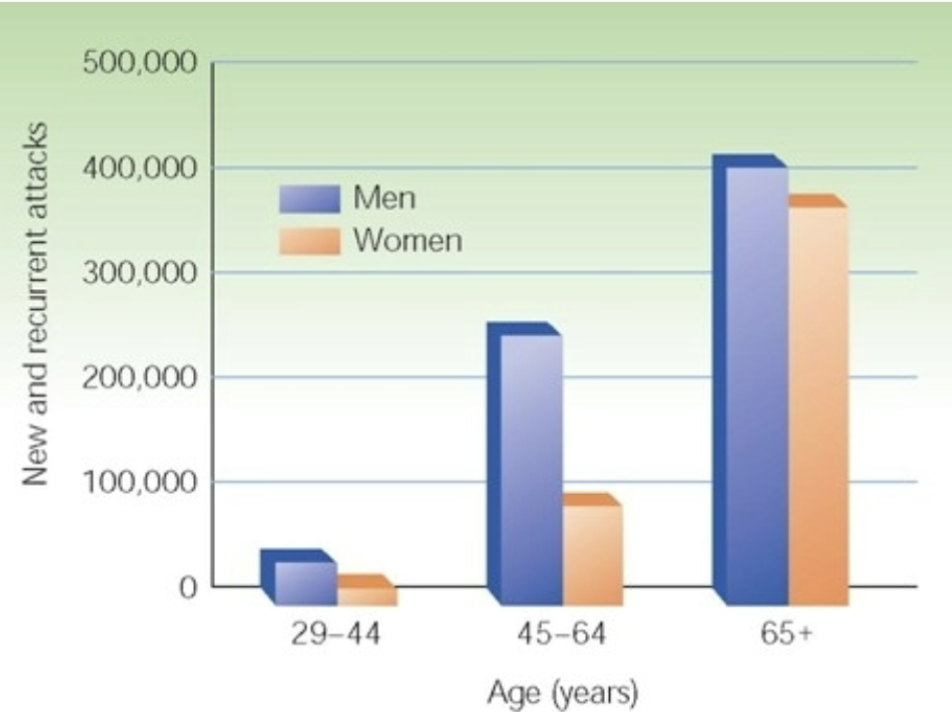
Women are less likely to have a heart attack until the average age of 65+
Women are protected by estrogen until menopause, then the hormone decreases and risk levels out
Estrogen also increases the risk of cancer
Women are more likely to have a heart attack that shows no symptoms
Women are more likely to die after having a heart attack
Heredity/Genetics
0 points for Neither parent suffered a heart attack or stroke before age 60
3 points for one parent who suffered a heart attack or stroke before age 60
7 points for both parents who suffered a heart attack or stroke before age 60
A parent or sibling with CVD doubles your chances of having CVD
A parent or sibling with CVD at a younger age makes that 7X (instead of 2X)
If it is a female relative, the risk increases even more!
Why is it important to know this if you can’t control it??
You can work harder at the Changeable or Controllable risk factors
You might need earlier/more screening, pay attention to symptoms more closely
These risk numbers are actually low compared to some of the major controllable risk factors
These have no point values associated with them in the assessment, but are worth mentioning…
Race- see chart
Time of Day- midnight to 6 am
Time of Year- winter

CVD risk-controllable risk factors
The #1 Preventable Cause of CVD…
1/5 of all CVD deaths are due to this controllable risk factor
Smoking!
0 points for Never Smoked
3 points for Quit more than 2 years ago
6 points for Quitting less than 2 years ago
8 points for Currently smoke less than ½ pack per day
13 points for Currently smoke more than ½ pack per day (but less than 1 pack)
15 points for Currently smoke more than 1 pack per day
These are the highest points on this assessment!!
1 pack/day doubles the risk of CVD
2 pack/day triples your risk
All Smokers are 2X-4X more likely to die from a heart attack
MORE ABOUT SMOKING…
Women who smoke and take hormones (the pill) for contraception are at a much higher
risk for CVD and blood clots
32X more likely to have a heart attack!!!
20X more likely to have a stroke!!
Don’t smoke and take the pill! Quit smoking, first of all! If you can’t do that immediately,
Ask your Dr. about other contraceptive methods that would be safer for you to use. Never
Lie to your Dr. about this, they are asking if you smoke for a good reason!
Environmental Tobacco Smoke (ETS) or Second-Hand Smoke
0 points for Do not live or work with smokers
2 points for Exposed to ETS at work
3 points for Live with a smoker
4 points for both live and work with smokers
ETS increases the risk of death from CVD by 30%
High Blood Pressure or Hypertension
The average of the last three readings is best:
0 points for 120/80 or below
1 point for 121/81 to 130/85
3 points for “Don’t know”- because it is a risk factor to not know
5 points for 131/86 to 150/90
9 points for 151/91 to 170/100
13 points for Above 170/100

Cholesterol
Lipoproteins carry cholesterol through the blood to and from the liver
Two types of Lipoproteins- Low-Density and High-Density
LDL- Low-Density Lipoproteins (Lousy)- organs need some cholesterol, but when too much can deposit in vessels
HDL- High Density Lipoproteins (Happy)- cleans out unused and sends back to the liver- protects against buildup and CVD
We used to look at Total Cholesterol only, but now we know that HDL and LDL are very different, we want HIGH HDL and low LDL
We can do this by:
Reducing saturated fats and increasing unsaturated fats
Eliminating trans fat from the diet
Increasing fiber intake
Quit Smoking
Exercise (raises HDL)

Physical Activity
0 points for Exercising 3 X per week or more
1 point for Exercising 1-2X per week
2 points for occasionally exercising less than 1X per week
7 points for Rarely exercising
As we age, our physical activity level decreases- a bad combination for CVD
Exercising moderately just 30-60 minutes per day decreases risk substantially
Women who walk at least 3 hrs/week cut CVD risk in half
More is even better
Exercise affects a lot of the other controllable risk factors as well (blood pressure, cholesterol, diabetes, obesity, stress, etc.)
Obesity
Risk of CVD death is 2-3X more likely in obese individuals
Being overweight but fit does not seem to increase risk
Obesity is on higher end of the overweight continuum
Increases the risk of many health issues
How to change this:
Healthier diet
Exercise
Don’t tell someone to just lose weight
How to tell if you’re overweight
Body Fat/Lean Muscle Mass Percentage (Body Composition)
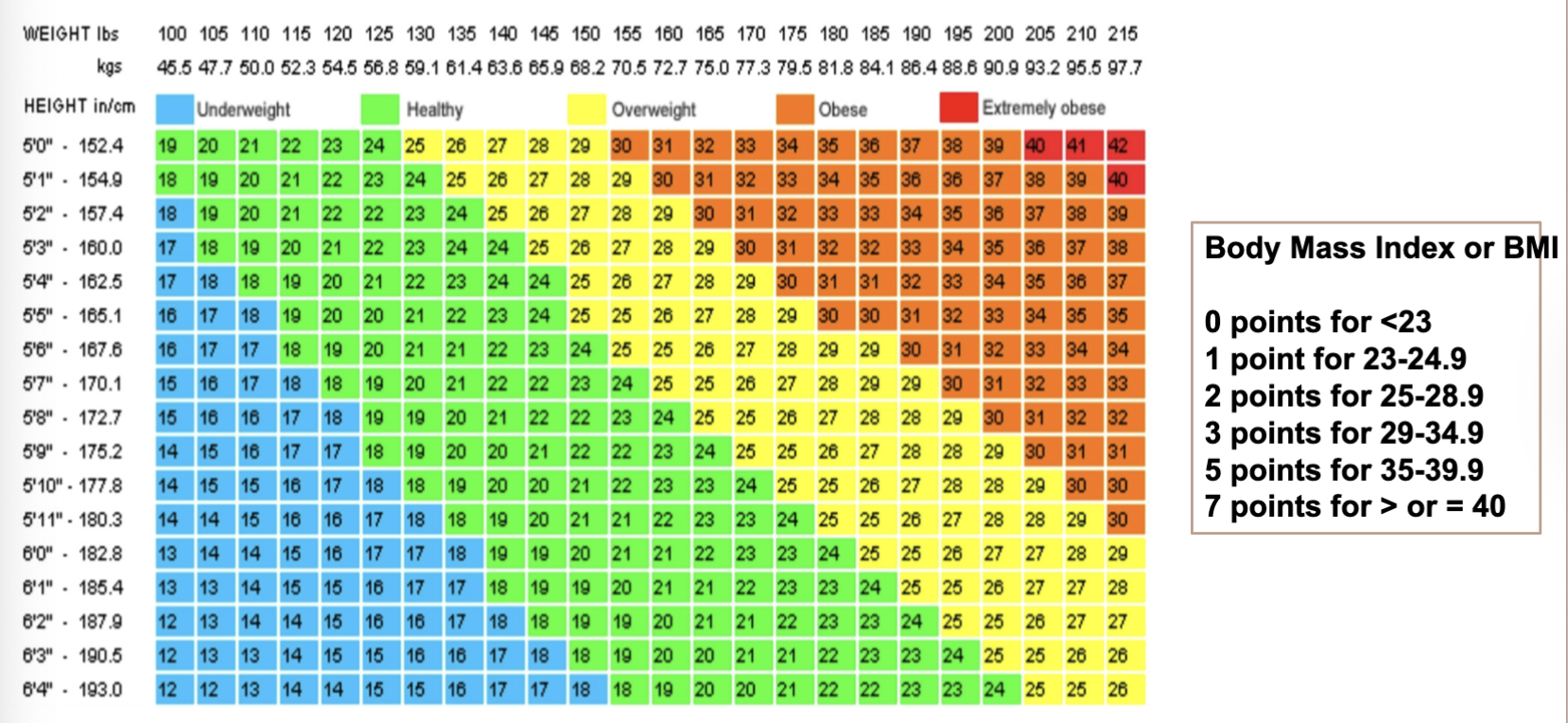
BMI
Problems with BMI
Height/Weight Ratio
Doesn’t factor in heavy (and healthy) lean muscle mass in athletes/fit
Where the fat is stored makes a difference in health (around the waist- omentum)
Why is BMI still used in the medical community, schools, insurance, et?.
It’s fast and easy, no tools needed, no training needed
It does work for couch potatoes (unfortunately, the majority of our population)
Diabetes
0 for No personal or family history
2 points for one parent with diabetes
6 points for two parents with diabetes
9 points for being a non-insulin-dependent diabetic
13 points for being an insulin-dependent diabetic
Diabetes is only sometimes controllable (Type 1 vs. Type 2). Control of blood sugar in diabetics also makes a difference
Type 2 Diabetes is brought on by lifestyle factors and can be prevented or even reversed in the prediabetic stage
Doubles the risk of CVD in men, Triples the risk of CVD in women
Stress and Poor Coping Skills
Men who are prone to anger are 2-3X more likely to have CVD
People who have depression and anxiety are more prone to CVD
People who isolate themselves socially or emotionally have higher rates of CVD
Some personality types are more prone to stress, anxiety, anger, etc., but we can learn coping strategies, get counseling, and sometimes medication to control
0 points for Relaxed most of the time
1 point for Occasionally stressed and angry
2 points for Frequently stressed and angry
3 points for Usually stressed and angry
Other Controllable Risk Factors that do not have point totals on assessment, but are worth mentioning:
High Triglycerides- blood fats from food- less sugar and starches, more physical activity, less alcohol, quit smoking
Alcohol Use- moderate or no alcohol use
Drug use- illegal drugs increase the risk of CVD, but also some prescription and over-the-counter medications can as well
Risk is probably low right now, but be aware of risk categories
Health behaviors now can show up later
Things you can do now to protect against CVD:
A diet low in saturated and trans fat
A diet high in fiber
Exercise Regularly
Don’t smoke
Have blood pressure measured regularly
Have cholesterol measured regularly
Develop positive coping skills for stress and anger
Manage risk factors and other medical conditions
Denis talks
Drugs, and how they get that way
Why does the snake cross the river? Same as drugs, unpredictable
Drugs- Any substance that enters the human body and changes either the function or the structure of the body. I.e. food, plants, vitamins, snake venom
Psychoanalytic drugs- anything that affects the brain functions, resulting in changes to perception, mood, and behavior
Where to start
Legality
Lethality
Addictiveness
Euphoria
Popularity
Expensiveness
effect
All drugs that make you go fast (stimulants)
Dilate pupils
Increase pulse rate
Increase blood pressure
Increase body temp
Increase alertness
Suppress appetite
(they give you energy when you SHOULD be tired!)
Drugs are like a swing. You go up, but then you go lower down, causing you to go back up.
A few favorites!
Crack cocaine (ICE) ^ Fastest
Methamphetamine / \
Cocaine / \ Faster
Amphetamine / \
Caffeine / \ Fast
Nicotine / \
Alcohol
NEVER drink champagne on an empty stomach!!!
All the same amount of alcohol!
One 1.5-oz shot of liquor
One 5-oz glass of wine
One 9-oz wine color
One 12-oz beer
7 DEADLY SINS
Body size (a small guy will get the effect before a big guy) (the Fat guy will get impaired before the lean guy)
Sex (Men have an unfair advantage; they can drink more than females. They have a head start, along with hormones, drinking and drugs affect more hormones (ladies))
Age (Anyone under 25 has an unfair advantage; anyone over 55 is empowered more quickly)
Altitude (the higher you go, the higher you get, Cheap drunk)
Other drugs (Increase that impairment, even baby aspirin (increase by 20%))
recent/current illness or tiredness (more tired= drunk faster)
Stomach context (You need to eat before drinking, causing it not to work as fast. It's best to eat carbs, which soak it up, along with protein to coat the stomach)
Sedative hypnotics
Anesthetics, Barbiturates, major tranquilizers, Benzodiazepines, SSRIs
—------------------------------------------------------------------------------------------->
All drugs have 3 names.s
Perscribe name
Known name
Drug dealer's name
Never take with alcohol!!!
Narcotics, Drugs that are created from the poppy plant (opioids/ opiates)
Hallucinogens screw with your perception, which frames your reality.