Public Key Infrastructure
Refers to a set of roles, policies, hardware, software and procedures needed to create, manage, distribute, use, store and revoke digital certificates and manage public key encryption
PKI components
- Certification Authority (CA)
- Responsible for issuing certificates \n
- Registration Authority (RA)
- Responsible for verifying the actual identity of the individual requesting a certificate
- The type of validation depends on the type of certificate being requested \n
- Certification Revocation List (CRL)
- A signed document that contains information about which certificates have been revoked
- It contains the serial number of the revoked certificate, the time of revocation and the reason for revocation, for each certificate in the list
- the CRL is signed by the CA and then released at a CRL Distribution Point (CDP)

Online Certificate Status Protocol (OCSP)
Certification Repository and Revocation Information
- Holds the information about which certificates are still valid
Revocation
- After a CA certifies a key, there may be circumstances in which we may want to invalidate a certificate \n
etc.
Public Key Infrastructure (PKI) models and structures
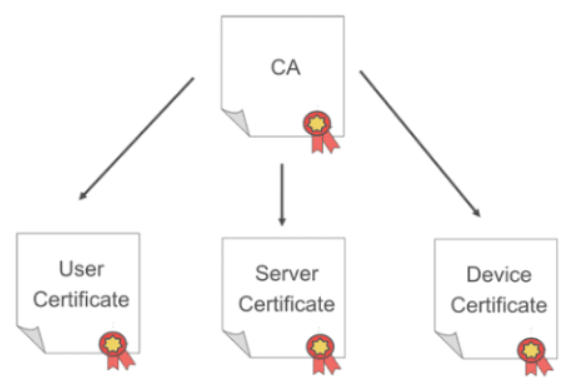
Simple Certification
- Having one CA that gives out certificates
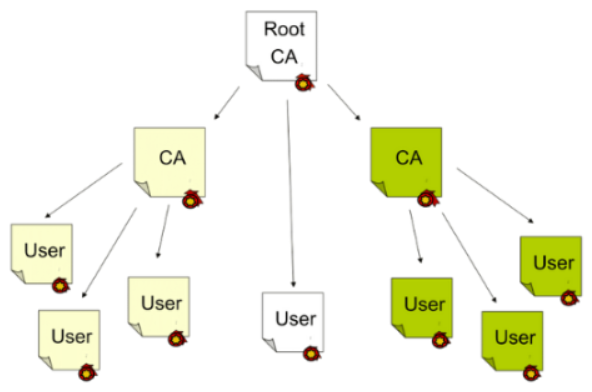
 \n Multi-Layer Certification
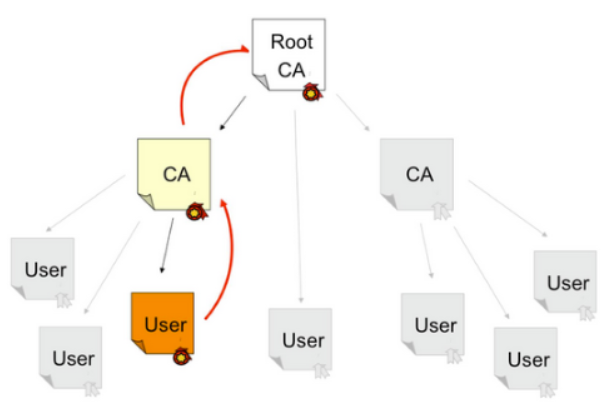
- Having a Root CA that delegates trust to other CAs, who then issue certificates for others
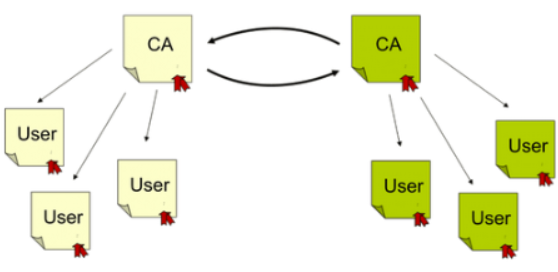
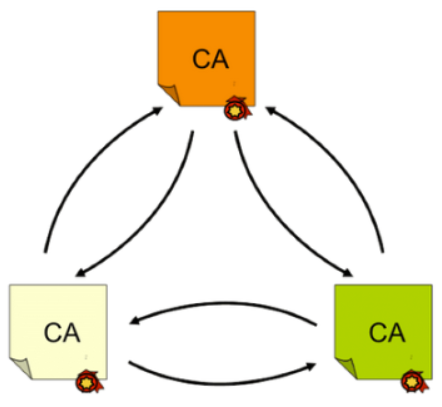
 \n Cross Certification
- Trusting one CA automatically leads to trusting the other
 \n Chain of Trust Certification Structure
- The entity receives a certificate, then goes up the chain all the way up to the Root CA to check who issued that certificate
 \n Multiple Cross Certification
- Multiple CAs can mutually cross-certify each other
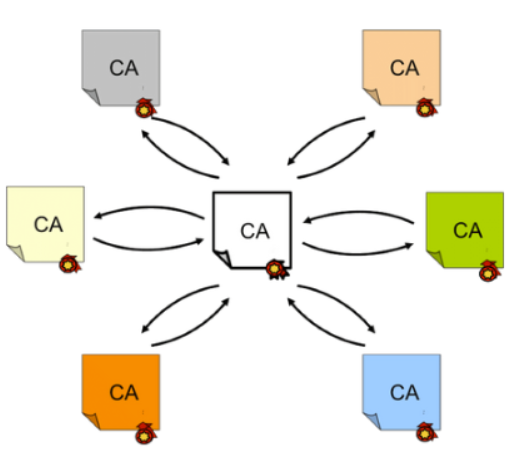
 \n Bridge Cross Certification
- One CA acts as a bridge that certifies all the other CAs, and all of the other CAs certify that one bridge