7.1-7.2 Primary Production
7.1 Primary Production
the creation of new organic matter from inorganic substrates— base of food web for marine life
usually refers to photosynthesis by algae and phytoplankton and also chemosynthesis by bacteria without light
6CO2 + 6H2O → C6H12O6 (glucose) + 6O2
Chemosynthesis
energy from oxidation of inorganic materials (hydrogen sulfide)
gross primary productivity— the amount of organic material made by producers
marine productivity is more efficient than terrestrial
7.2 The Producers
95% of marine primary produce from phytoplankton
3 types of phytoplankton
Diatoms- single celled algae, very high photosynthetic efficiency
Dinoflagellates
Coccolithophores— abundant in warm, open oceans
7.3 Factors Influencing Production
Factors: light and nutrients
Light:
needed for photosynthesis and only possible in the upper layers of the ocean
Nutrients:
needed by all marine primary consumers
major ones for phytoplankton are nitrogen and phosphorus
nutrients are not evenly distributed throughout the water column
surface waters are nutrient poor because its quickly eaten up by phytoplankton and more abundant in deeper water and usually stay there unless there is upwelling
Patterns of Primary Production
phytoplankton increases near coastal areas because they are located closer to nutrient runoff from land and because shallow waters prevent nutrients from sinker into unreachable waters
primary production is limited in coastal areas because of the significant thermocline that prevents nutrients from rising to the surface
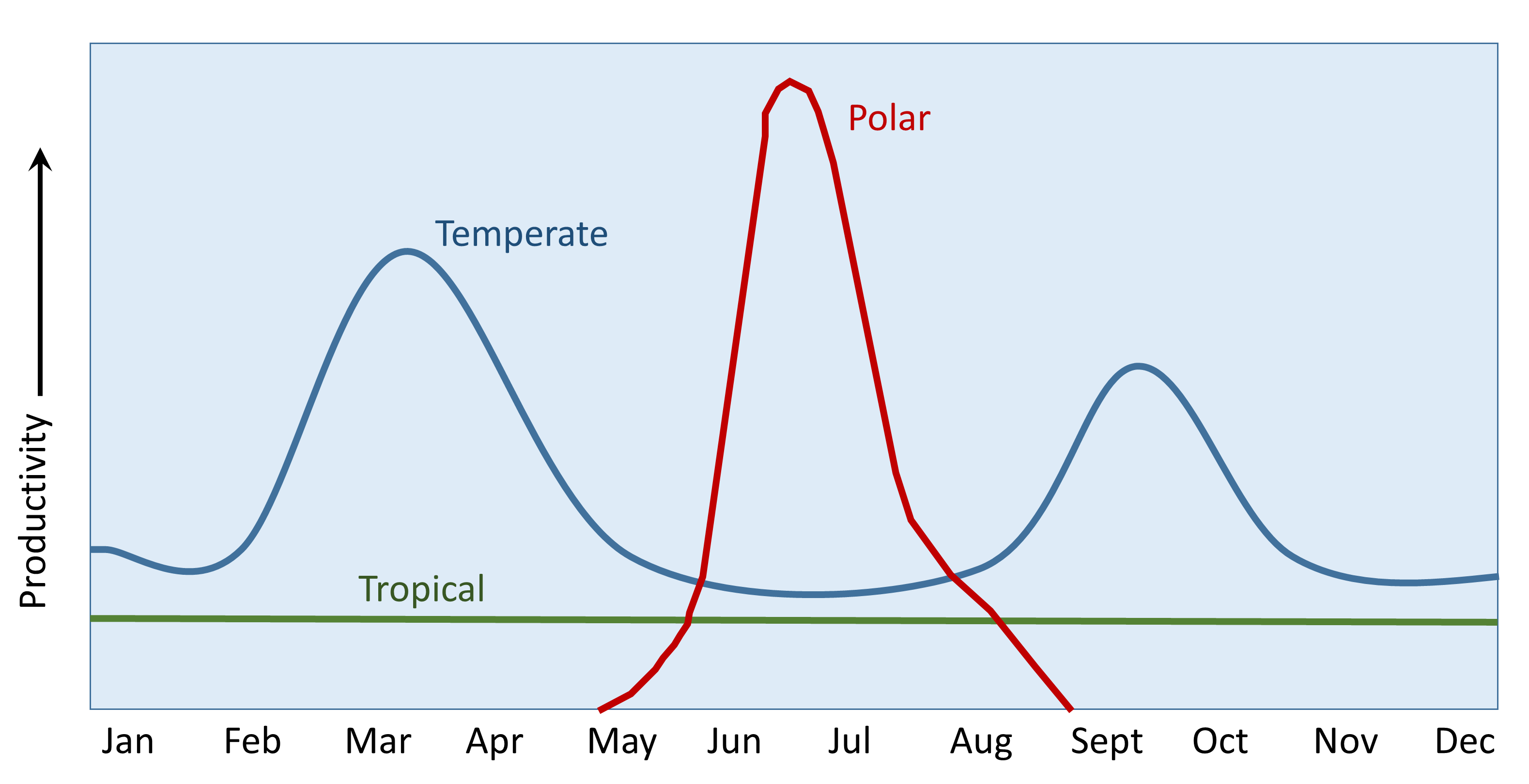
at the poles, theres less thermocline so they receive more nutrients but also get less sunlight (only in spring and summer will productivity spike)