Cerebral Cortex
cerebral cortex refers to the outer edge of the largest part of the brain, the cerebrum
longitudinal fissure separates the cerebrum into left and right hemispheres
corpus collosum: thick group of neurons that connect the hemispheres for quick communication
unlike the spinal cord, the outer part of cerebral cortex is grey matter, while the inside is white matter and basal nuclei
controls higher functions such as speech, emotions, behaviour, learning
the cortex has six different layers that arrange themselves into columns based on cell types
stellate cell: primary processing of sensory input
pyramidal cell: motor neuron that is part of a pathway which eventually terminates on skeletal muscle
gyri are the folds of the brain, sulci are the grooves
the central and lateral sulcus divide the cerebral cortex into lobes
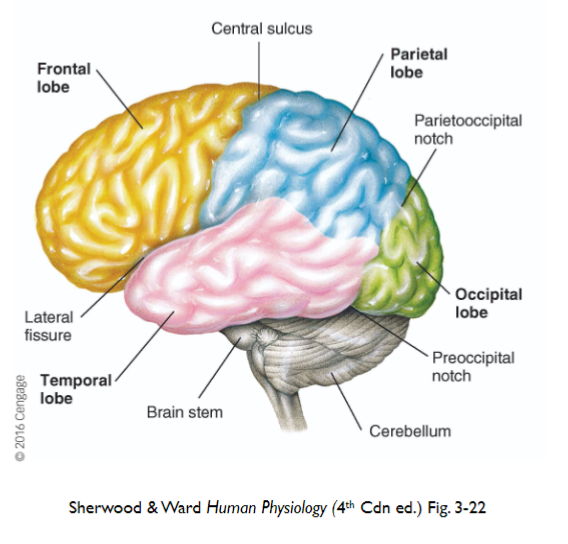
Primary Motor Cortex (Precentral Gyrus)
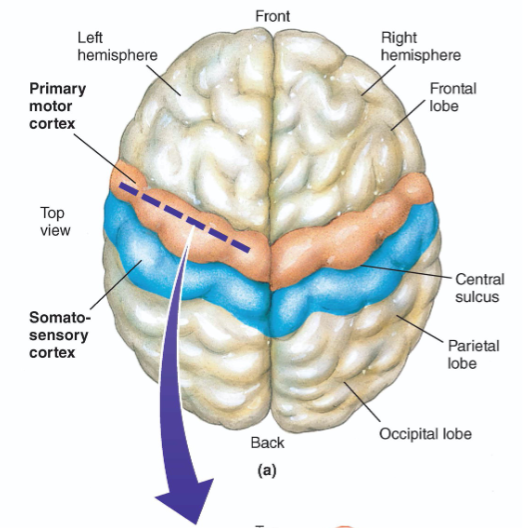
found in the frontal lobe
executes fine motor movements along with the premotor cortex
premotor cortex plans the movement
Betz cells: specialized type of pyramidal neuron
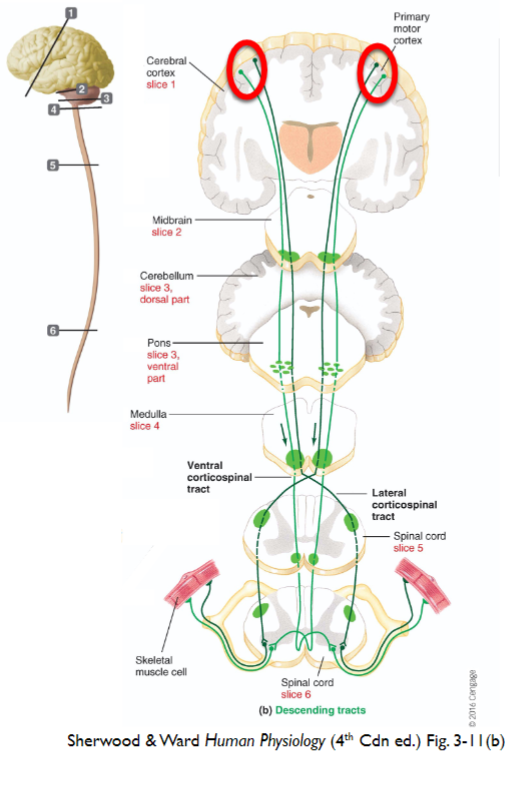
axons descend into the spinal cord
secrets neurotransmitter called glutamate, which is excitatory
glutamate synapses with alpha-motor neurons of skeletal muscles
Corticospinal Tract
controls voluntary motor movements
has both lateral and ventral tracts
lateral: bigger portion, controls muscles of the extremities
crosses at medulla, point of decussation
ventral: smaller portion, controls trunk muscles
crosses within spinal cord, point of decussation
both tracts start in the primary motor cortex within cell bodies of Betz cells
Upper motor neurons (Betz cells)
cell bodies found in motor cortex
decussates
Lower motor neuron (alpha-motor neuron)
found in spinal cord
somatic efferent
terminate on skeletal muscle
Motor Homunculus
primary motor cortex somatotopic map
location and relative amount of the motor cortex that is devoted to output to the muscles of each body part
Other Brain Regions Involved
motor program: essentially a list of instructions for movement to occur
carried out by:
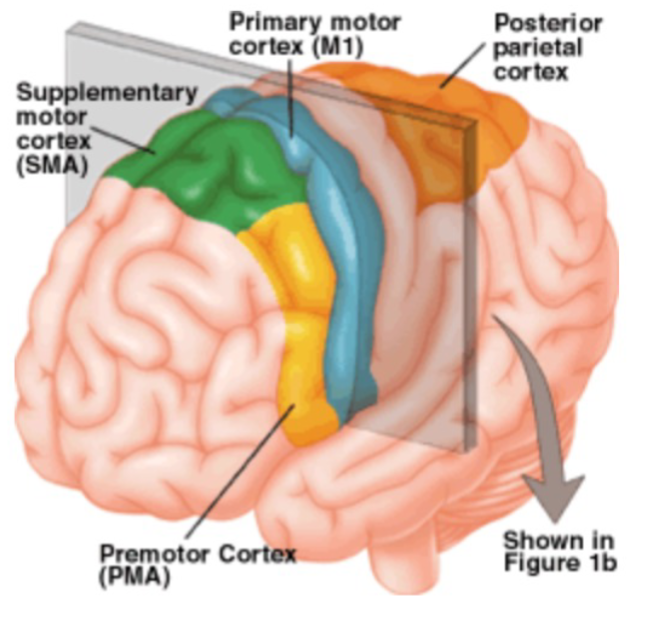
Cerebellum: proprioception and timing of movements, communicates to
Posterior parietal cortex: gathers and processes afferent/sensory information, communicates with
Pre-motor cortex: plans out movement, transmits to primary motor cortex
Supplemental motor area: prepares and plans for complex motor movements that require more the 1 muscle, coordinates muscle contractions
Readiness potential: electrical potential that is required to get the primary motor cortex ready to work
Primary Somatosensory Cortex/ Post-Central Gyrus
located in the parietal lobe, where sensory input and awareness is
crude sensory information is broken down to be able to tell the level and location of the signal on the body
initial cortical processing and perception of:
somaesthetic sensations
touch, pressure, heat, cold, pain
mild proprioception, main role is in sensory refinement
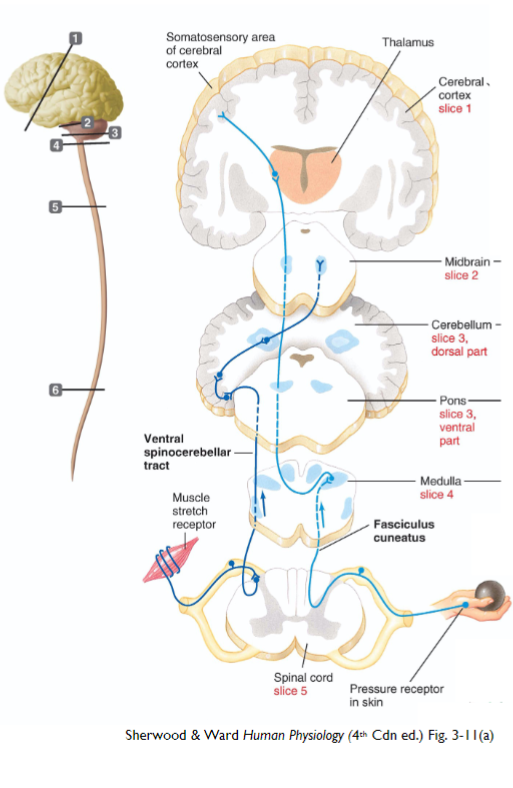
Fasiculus Cuneatus
sensory ascending pathway to detect fine touch, fine pressure, and mild proprioception
1st order neuron is a sensory afferent neuron, a receptor
1st neuron synapses with 2nd neuron at the medulla
2nd neuron synapses with the 3rd in the thalamus
3rd terminates on the somatosensory cortex
Sensory Homunculus
somatosensory cortex somatotopic map
cortical representation of body parts are larger for those that have higher sensitivity and use
use-dependent competition: the more a body part is used, the bigger its corresponding spot will be on the somatosensory cortex
Electroencephalogram (EEG)
recording of the electrical activity of the cerebral cortex
the collective postsynaptic potential activity in the cell bodies and dendrites (EPSPs + IPSPs)
variable waveforms are based on the degree of activity within the cerebral cortex
uses:
diagnostic tool (ex. for epilepsy)
legal determination of brain death
distinguishing stages of sleep